Understanding numbers Adding Up to 5 Worksheets for Ages 4-8
3 filtered results
-
From - To
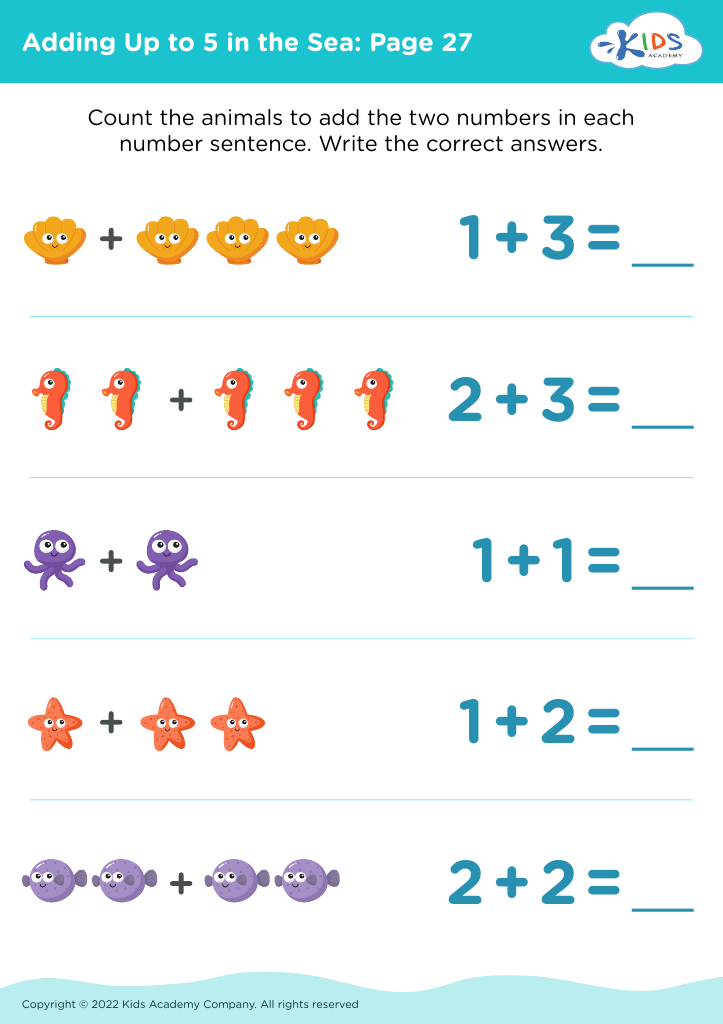
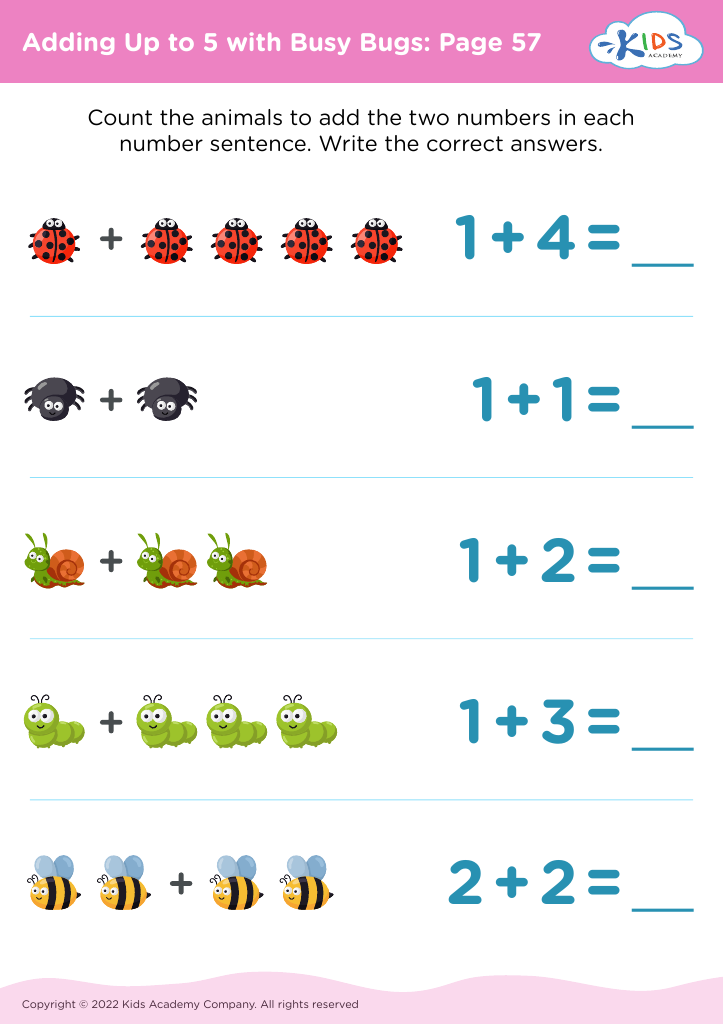
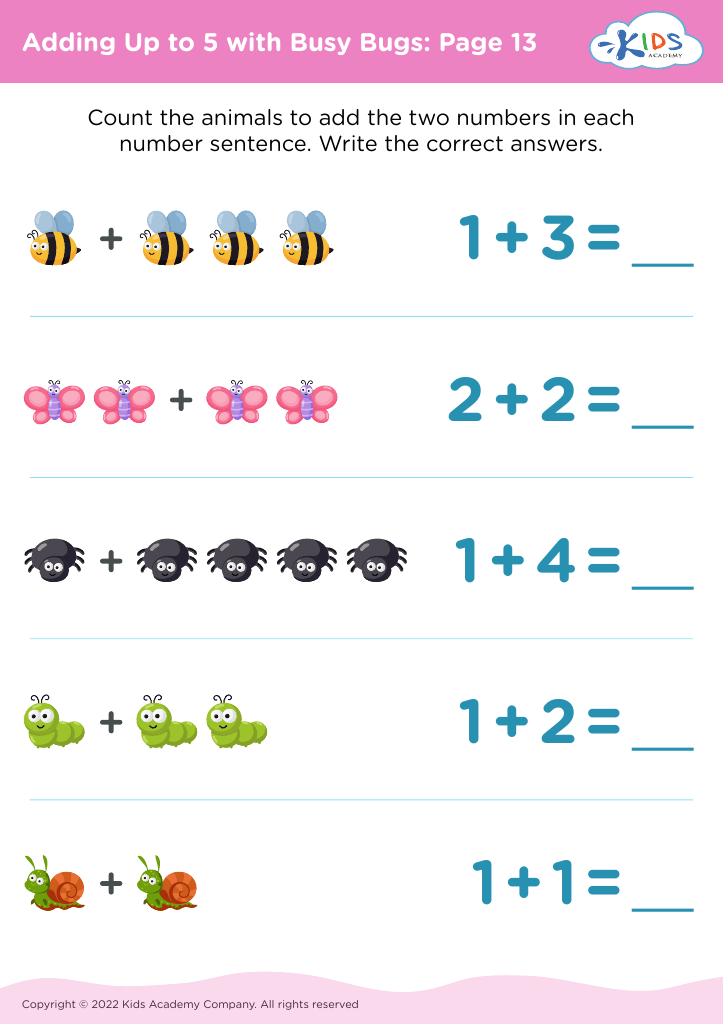
Explore our "Understanding Numbers Adding Up to 5 Worksheets" designed specifically for children aged 4-8. These engaging worksheets provide a fun and interactive way for young learners to grasp the concept of adding numbers up to 5. Featuring colorful illustrations and step-by-step exercises, kids will enhance their number recognition, practice basic addition skills, and develop critical thinking. These resources are perfect for home learning or classroom activities, promoting a solid mathematical foundation while keeping students excited about learning. Support your child's mathematical journey today and watch them flourish with confidence in their number skills!






.jpg)

Understanding numbers and the concept of addition, particularly adding up to 5, is crucial for children ages 4-8 for several reasons. Firstly, foundational math skills set the groundwork for future learning. Mastering the concept of addition helps young learners develop number sense and the ability to recognize patterns, which are essential for more advanced mathematical topics.
Engaging with numbers in this age group also fosters cognitive development. As children explore how different combinations of numbers add up to 5 (such as 0+5, 1+4, 2+3), they enhance critical thinking and problem-solving skills. This interactive learning promotes both mathematical understanding and cognitive flexibility as they learn to apply concepts in various contexts.
Moreover, grasping basic addition supports emotional growth and self-confidence. As children achieve tangible milestones in their understanding, like mastering addition, they experience a sense of accomplishment, reinforcing their motivation to tackle new challenges.
Teachers and parents play a vital role by creating engaging, hands-on learning experiences that can turn abstract concepts into relatable knowledge. Investing time in teaching about numbers may not only influence academic success but also build a strong positive attitude towards learning in general, which benefits children in all future endeavors.








