Understanding numerical values Adding Up to 5 Worksheets for Ages 4-8
4 filtered results
-
From - To
Welcome to our "Understanding Numerical Values: Adding Up to 5 Worksheets" designed specifically for children ages 4 to 8! These engaging worksheets provide a fun and interactive way for young learners to grasp the concept of numerical values while practicing addition. Through colorful visuals and age-appropriate exercises, kids will explore combinations of numbers that sum to 5, boosting their math skills and confidence. Ideal for both classroom settings and home learning, these resources promote foundational math understanding. Dive into a world of numbers and watch your child's mathematical abilities flourish with our thoughtfully crafted worksheets!
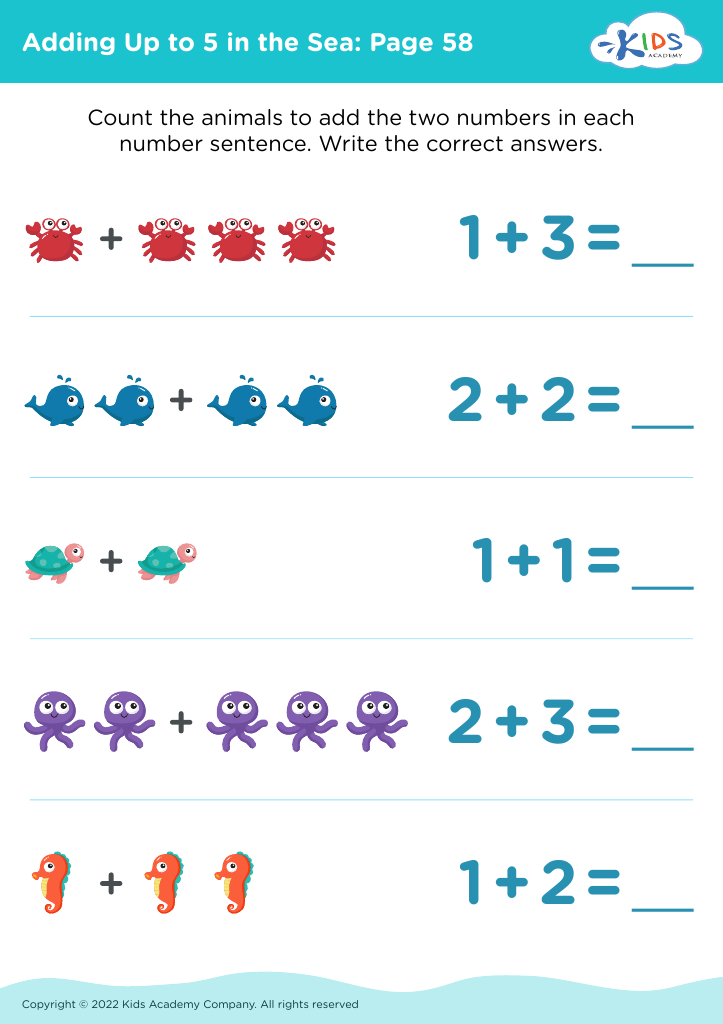
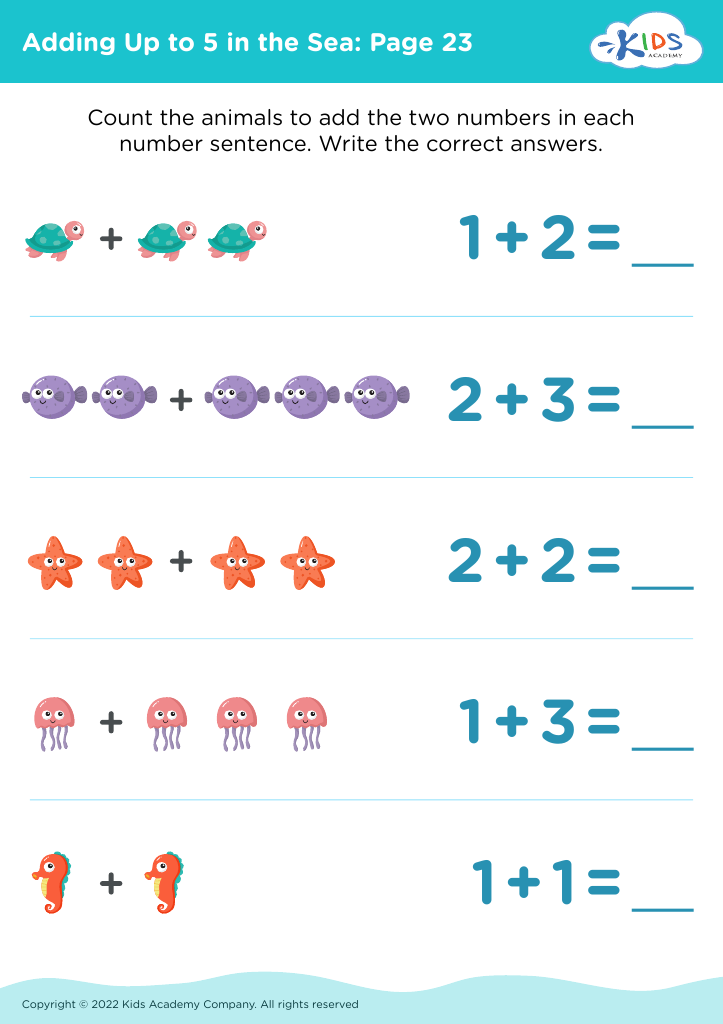
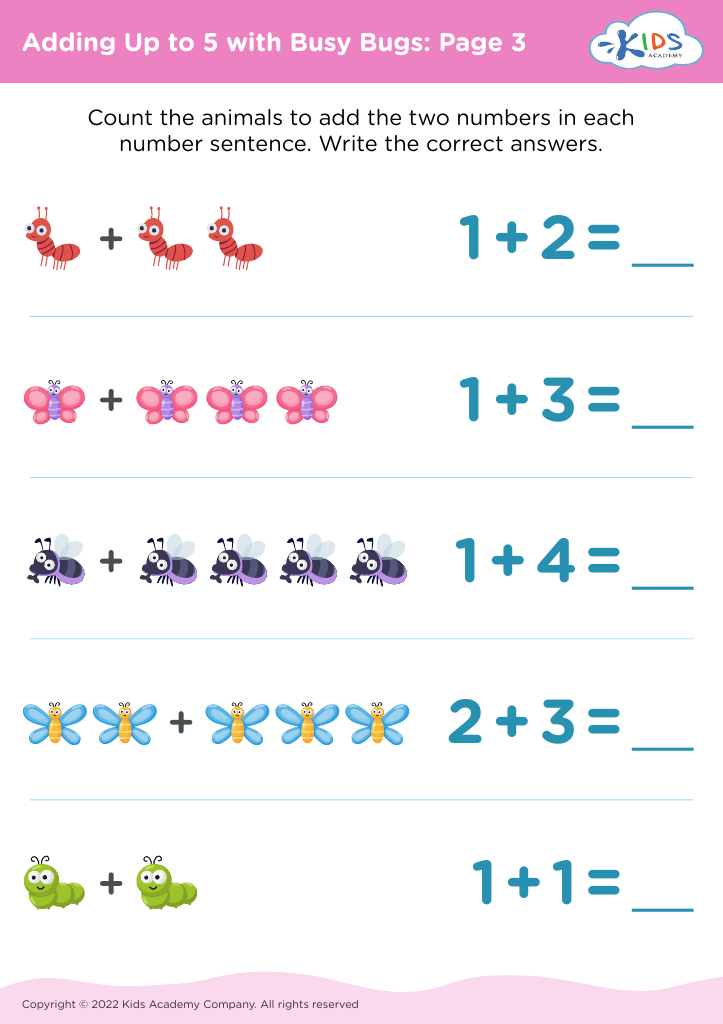
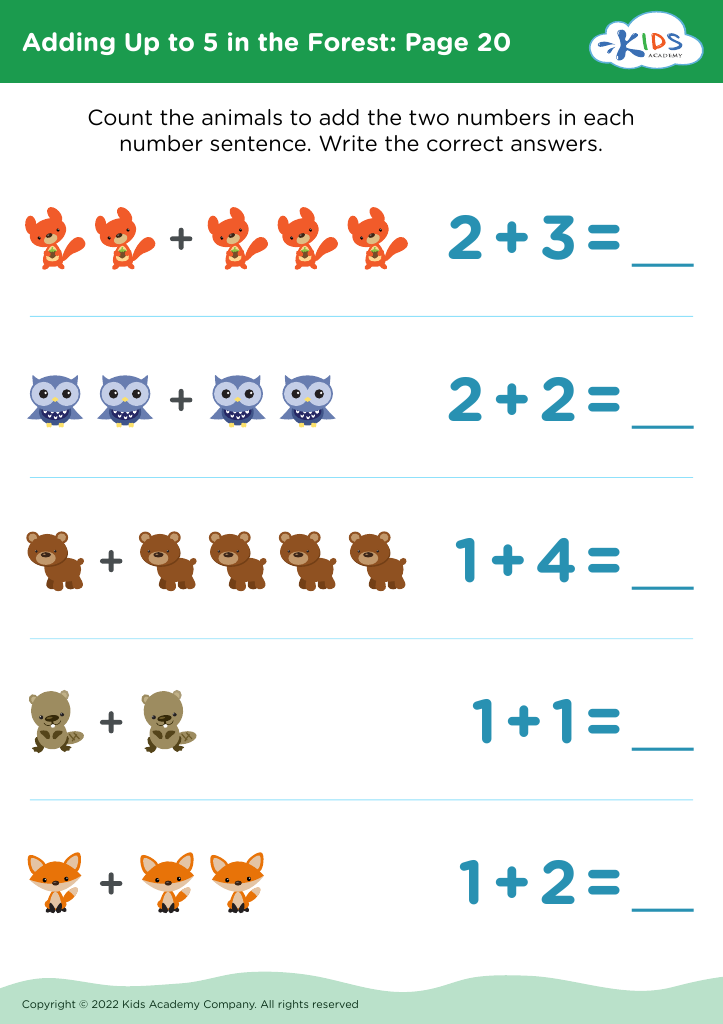








Understanding numerical values and the concept of adding up to 5 is essential for children aged 4-8 for several reasons. First, this foundational skill is critical in helping young learners develop basic math abilities, laying the groundwork for more complex arithmetic in later grades. By engaging with numbers within the context of 5, children learn to recognize quantities, understand simple addition, and build confidence in their problem-solving abilities.
Moreover, incorporating this skill into everyday activities enhances a child's cognitive development. When parents and teachers emphasize adding up to 5 through games, stories, and practical applications, they make learning engaging and interactive. Such experiences promote not only mathematical fluency but also critical thinking and logical reasoning skills.
Additionally, numeracy is linked to academic success across subjects; patterns and sequences found in math often reappear in science and literacy. Parents and teachers should care because fostering a solid numerical foundation empowers children to excel in school and navigate everyday situations, such as counting objects or sharing items equally. By prioritizing understanding numerical values and addition, adults play a crucial role in nurturing a child’s overall growth, confidence, and enthusiasm for learning.








