Develop critical thinking Adding up to 50 Worksheets for Ages 4-8
3 filtered results
-
From - To
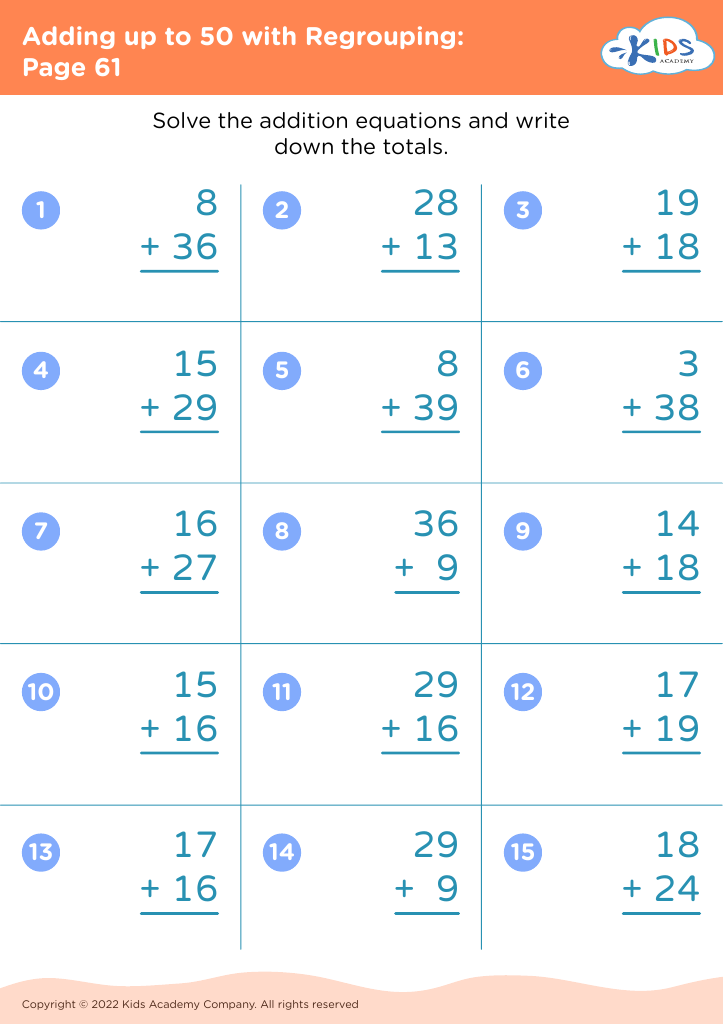
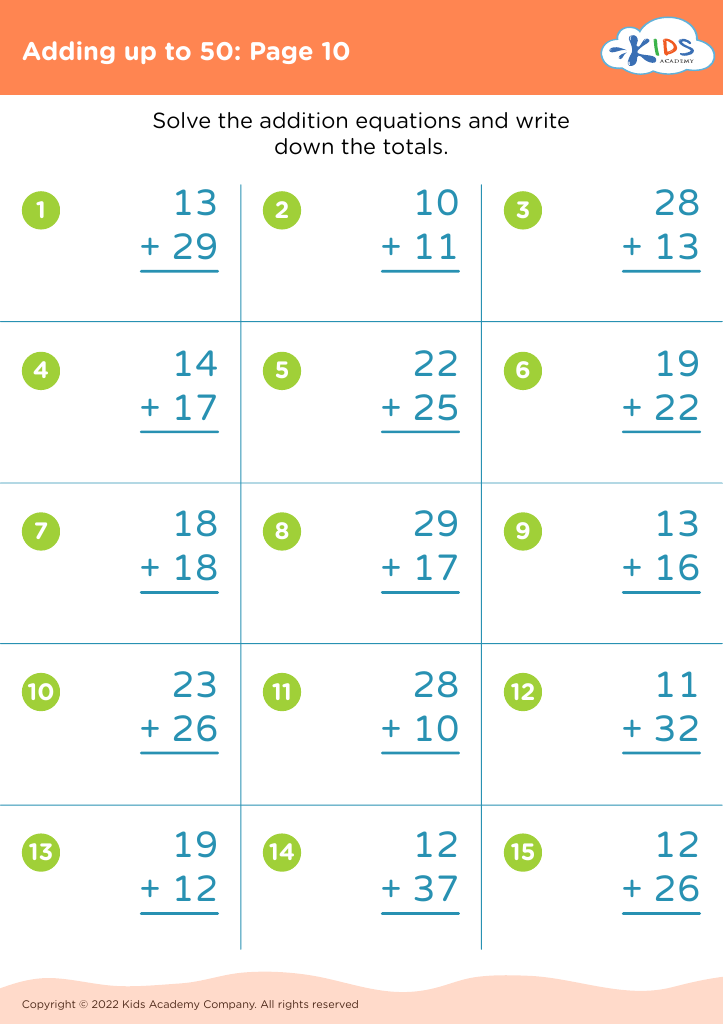
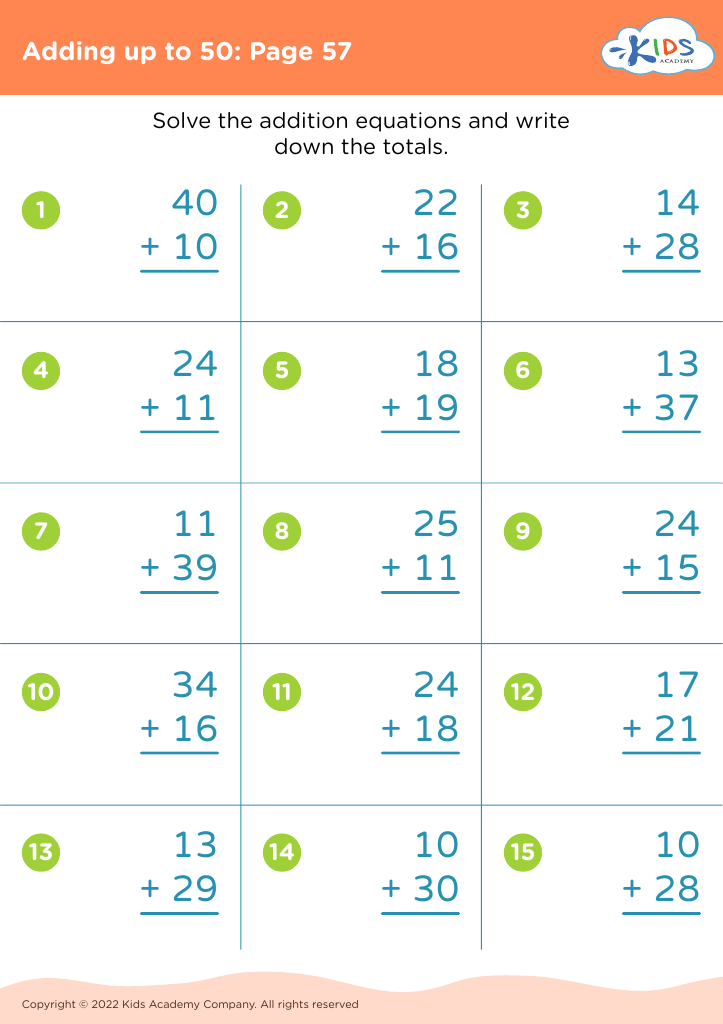
Unlock the power of critical thinking in young learners with our "Adding Up to 50" worksheets, specifically designed for ages 4-8! These engaging, interactive resources encourage children to explore numbers beyond simple addition, fostering problem-solving and analytical skills. With tasks that require reasoning and strategy, kids will enhance their understanding of math concepts while building confidence. That's not all—our worksheets also promote creativity and cognitive development, making learning both fun and effective. Ideal for home or classroom use, these worksheets are an essential tool for nurturing critical thinking skills that will benefit your child for years to come!




Critical thinking is essential for children ages 4-8, as it lays the foundation for lifelong learning and problem-solving skills. Parents and teachers should care about cultivating this skill because critical thinking empowers children to analyze situations, make informed decisions, and understand different perspectives. In a rapidly changing world, these skills become increasingly vital for navigating challenges and fostering independence.
Engaging in activities that promote critical thinking—such as puzzles, story analysis, and open-ended questions—helps children learn how to think rather than what to think. This approach nurtures curiosity and encourages a love for learning, making them more adaptable and innovative as they grow.
Moreover, developing critical thinking skills at an early age enhances children’s ability to communicate effectively and collaborate with peers. When children engage in discussions and share their ideas, they learn to articulate their thoughts clearly and listen to others. This fosters social-emotional skills, essential for building positive relationships.
By prioritizing critical thinking in early education, parents and teachers are equipping children with the tools they need for academic success and personal development, ultimately guiding them to become thoughtful, informed adults who can contribute positively to society.








