Recognizing Patterns Adding up to 50 Worksheets for Ages 4-8
7 filtered results
-
From - To
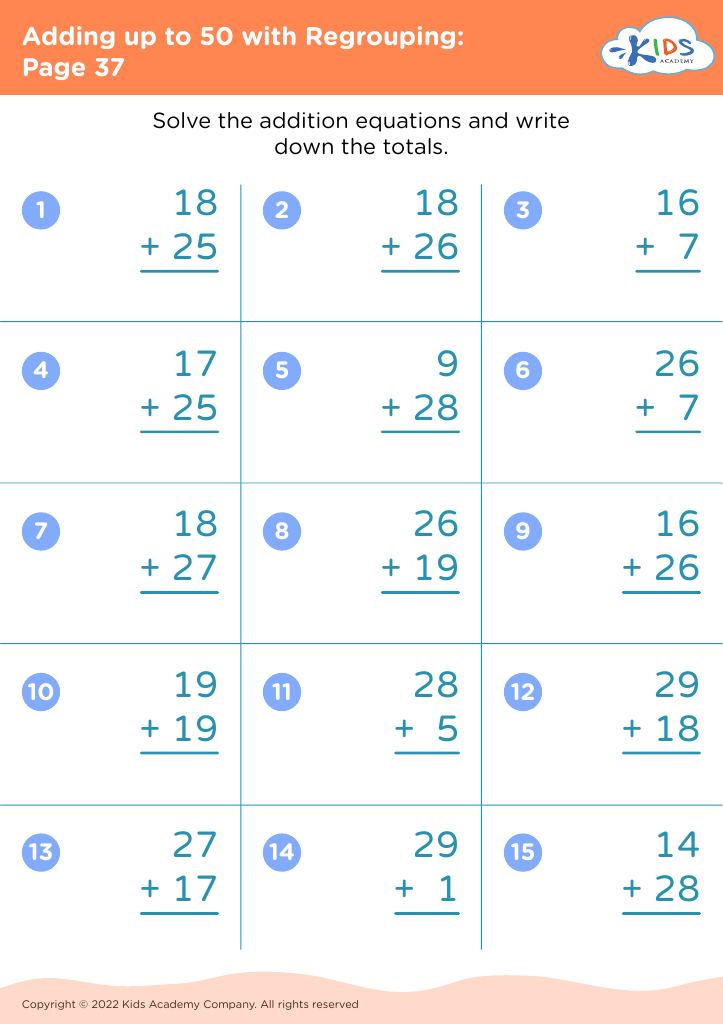
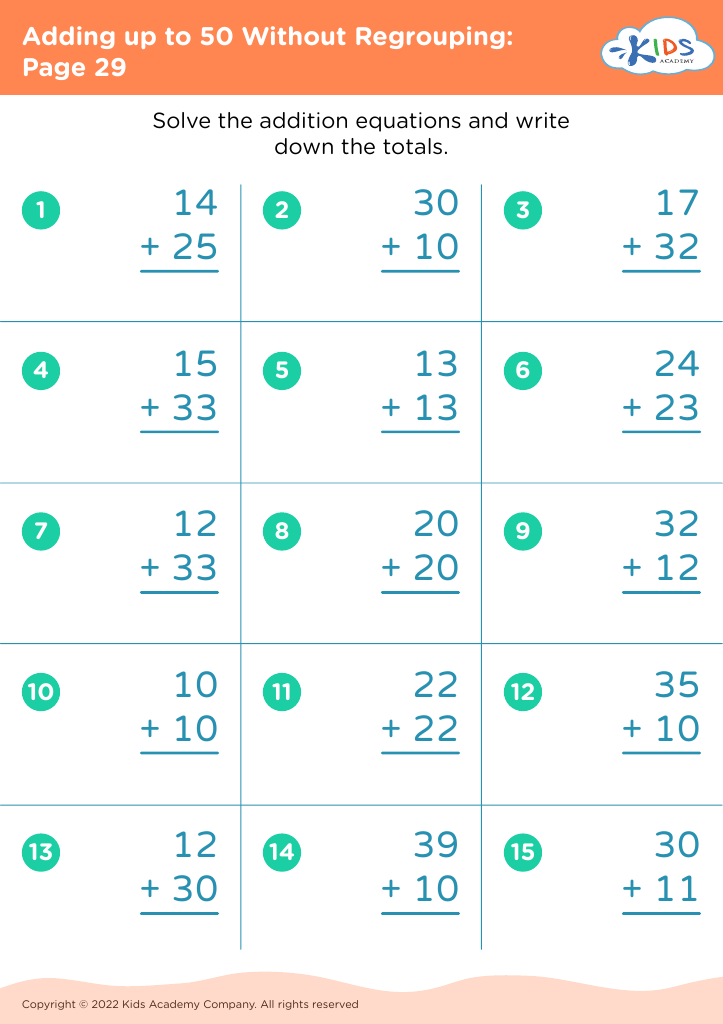
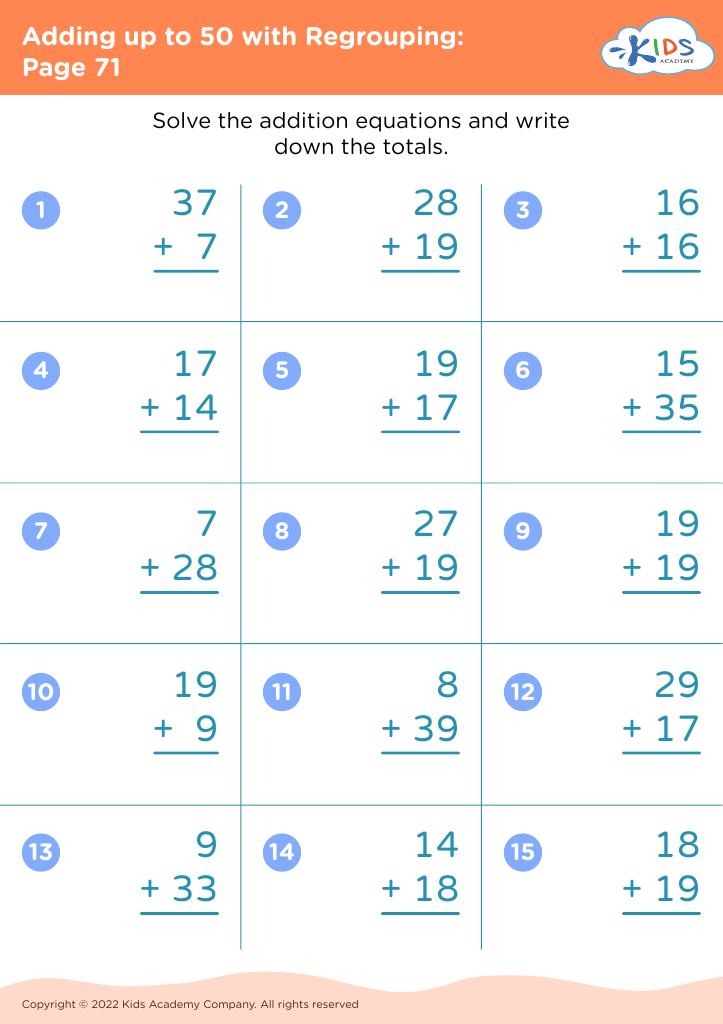
Discover our "Recognizing Patterns Adding Up to 50 Worksheets" designed for children ages 4-8! These engaging worksheets focus on helping young learners identify and understand numerical patterns that lead to the sum of 50. Tailored to align with early math skills, each worksheet incorporates fun illustrations and interactive exercises that make learning enjoyable. As children practice recognizing and creating patterns, they reinforce their addition skills and develop critical thinking. Ideal for teachers and parents alike, these resources will support your child's math journey while promoting confidence in their abilities. Download today and watch your little mathematicians shine!
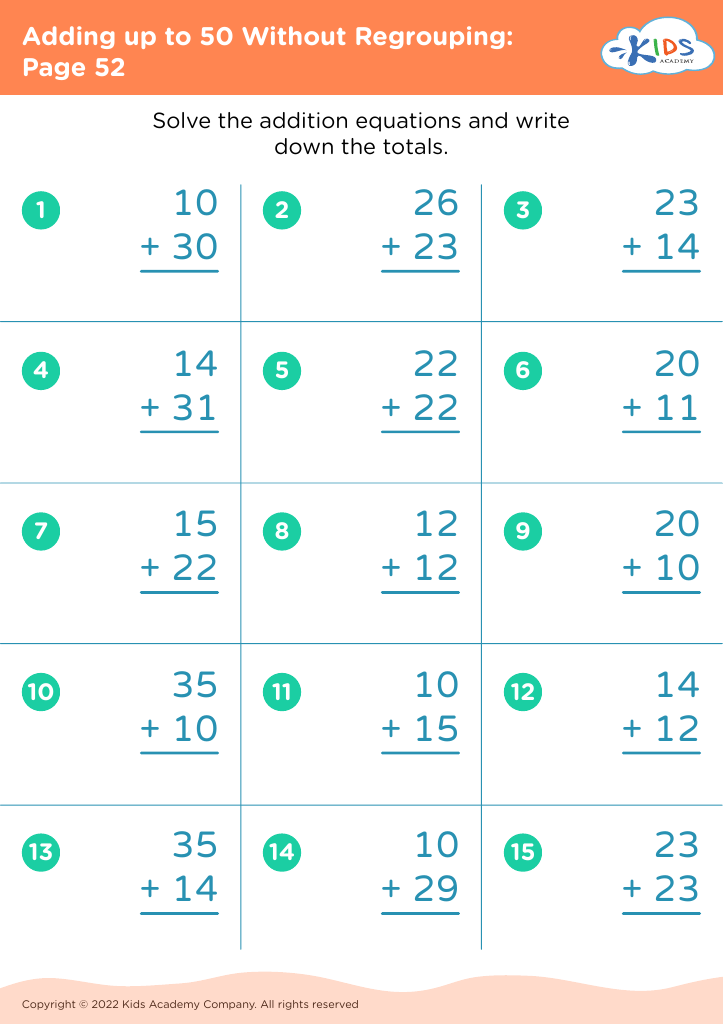
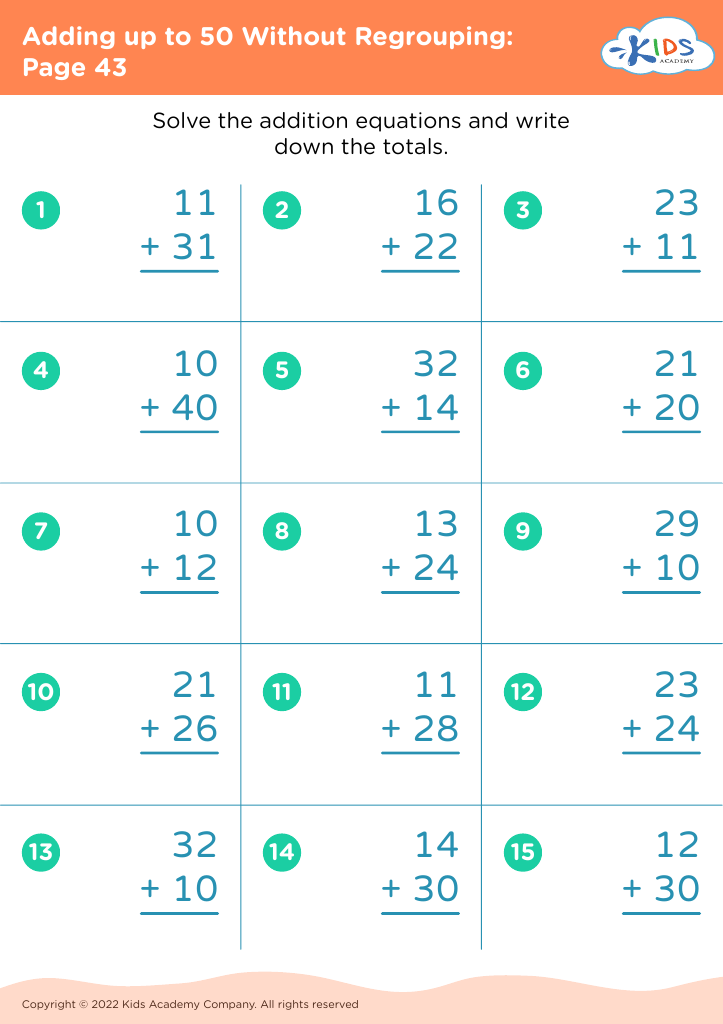
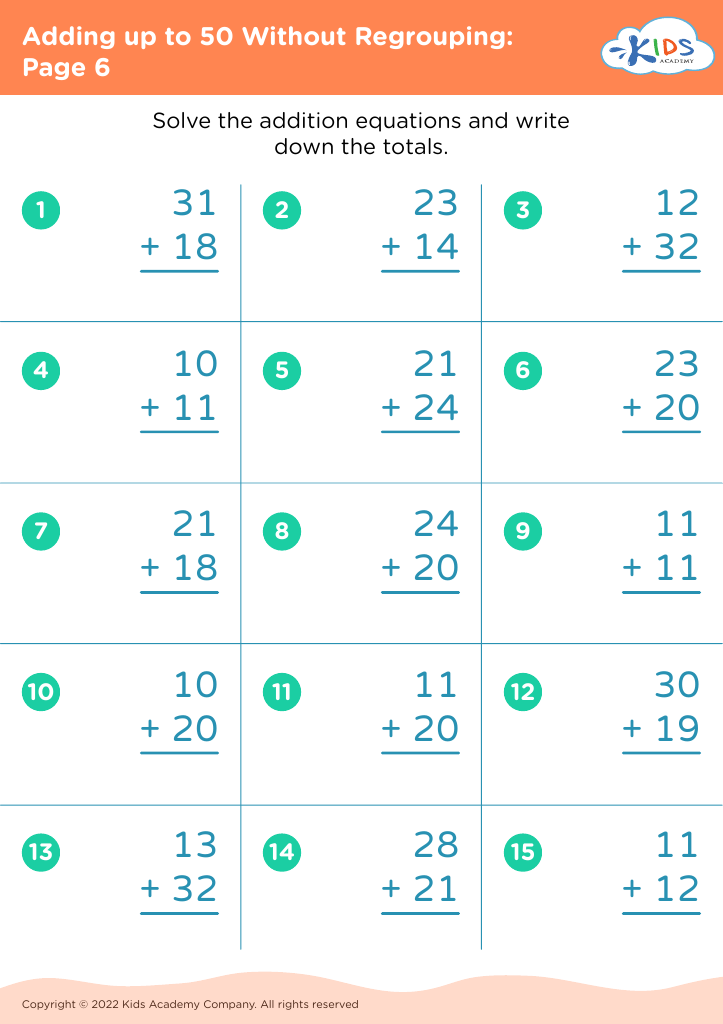
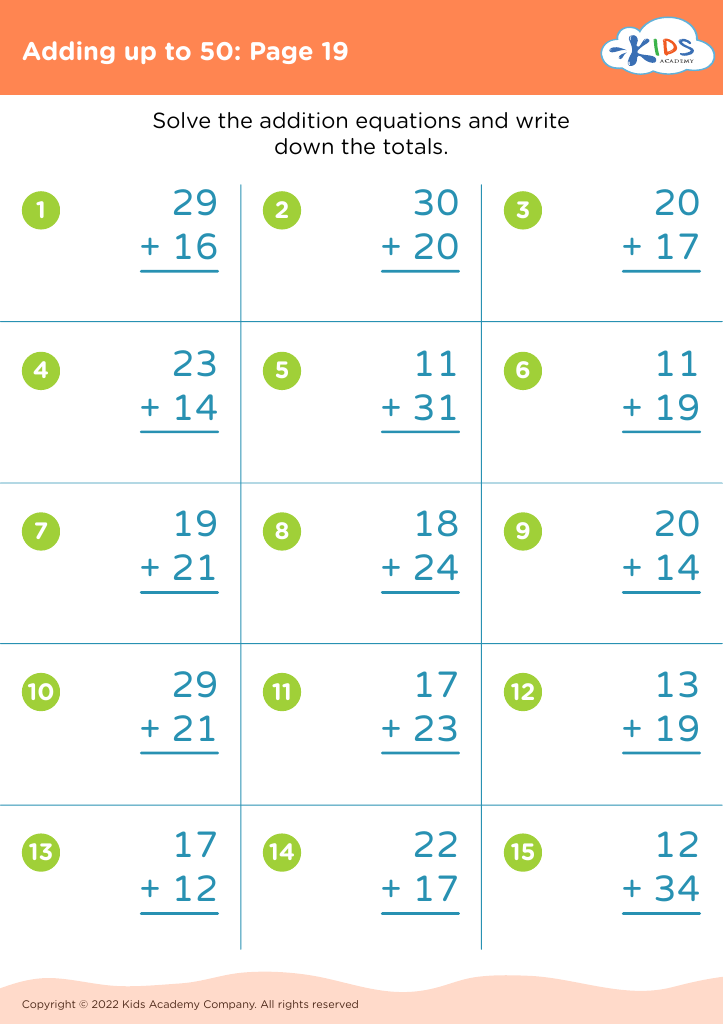




Recognizing patterns and mastering addition up to 50 is fundamental for children aged 4-8, laying a critical foundation for their mathematical understanding. Engaging with patterns helps children make sense of the world around them. It encourages them to identify recurring sequences and formulate predictions, which are essential skills not only in math but also in problem-solving and logic.
Moreover, learning to add up to 50 enhances number sense—a child's ability to understand and manipulate numbers. This skill is crucial for future math success, influencing their capability to tackle more complex mathematical concepts such as subtraction, multiplication, and division. Additionally, pattern recognition promotes cognitive development, as children learn to think critically and link mathematical concepts with real-life situations.
For parents and teachers, fostering these skills in young children cultivates their confidence in mathematics, making it a less intimidating subject as they progress in their education. By encouraging a positive attitude towards math through fun pattern games and activities, adults can help children build a strong mathematical foundation and develop lifelong learning skills. Overall, caring about pattern recognition isessential for academic success and instilling a love for learning in children.








