Understanding multiplication Adding up to 50 Worksheets for Ages 4-8
5 filtered results
-
From - To
Unlock the world of multiplication with our engaging "Understanding Multiplication: Adding Up to 50 Worksheets" designed for children ages 4-8. These printable worksheets provide a fun and interactive way for young learners to grasp multiplication concepts through simple addition. With colorful visuals and approachable math problems, kids will gain confidence in their ability to solve equations and understand the relationships between numbers. Tailored to help children see multiplication as repeated addition, these resources are perfect for homeschooling or classroom settings. Explore the joy of learning mathematics with worksheets that make understanding multiplication enjoyable and effective!
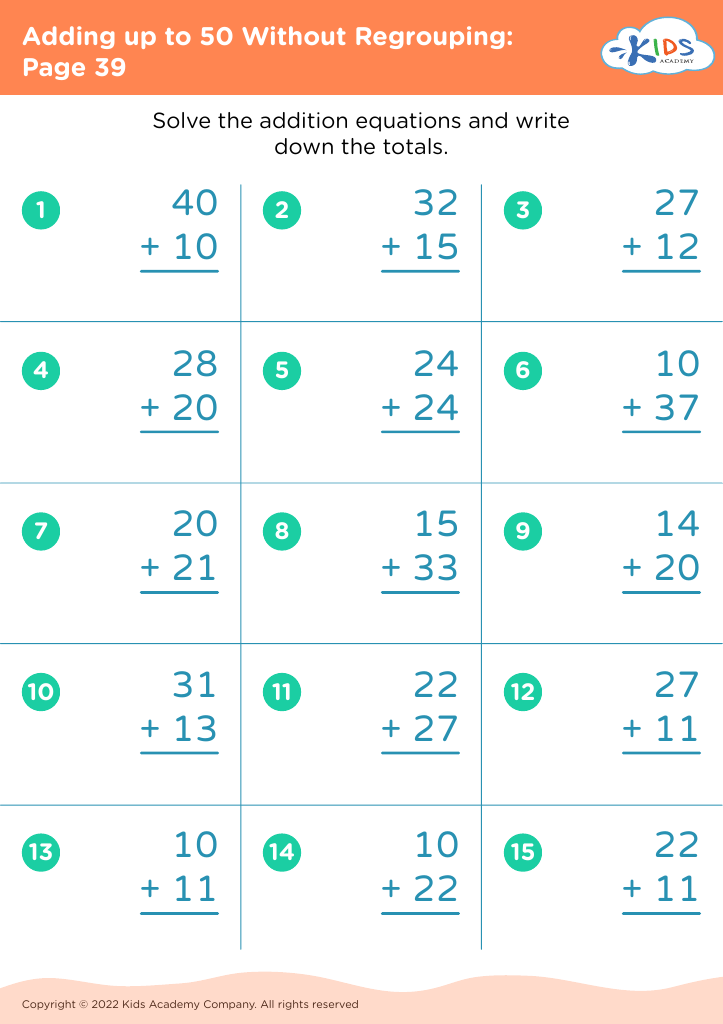
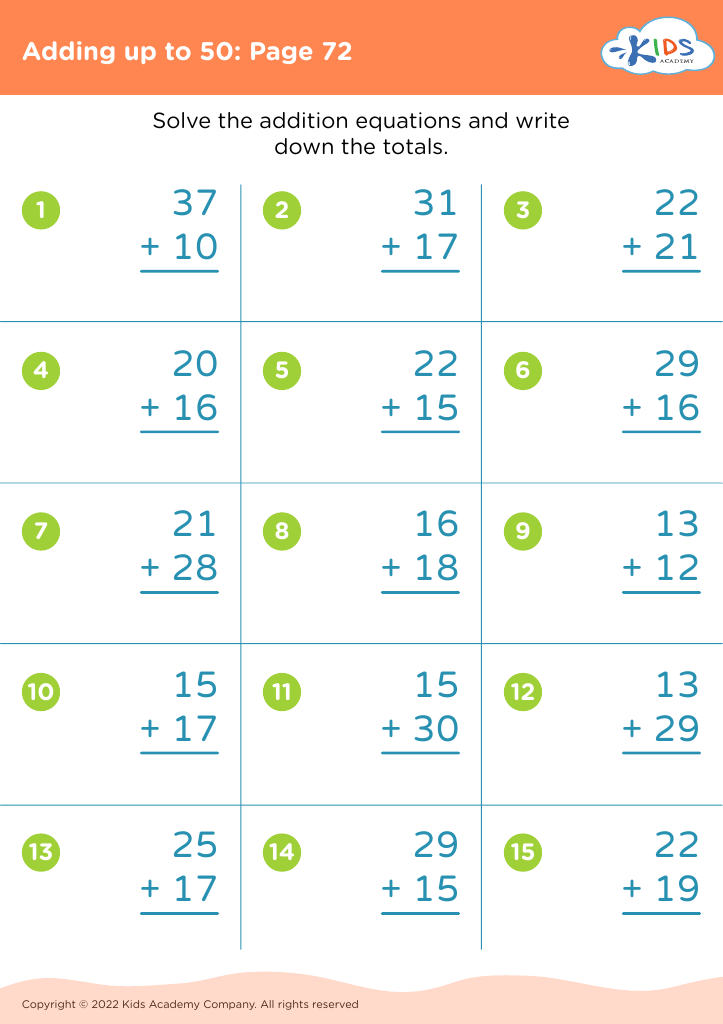
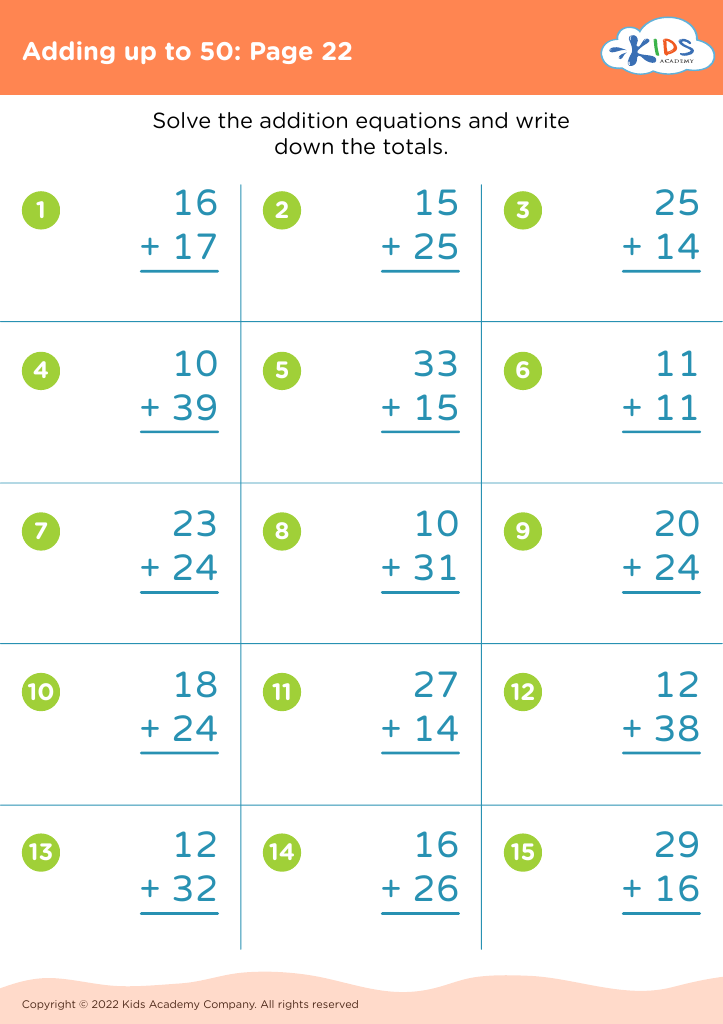
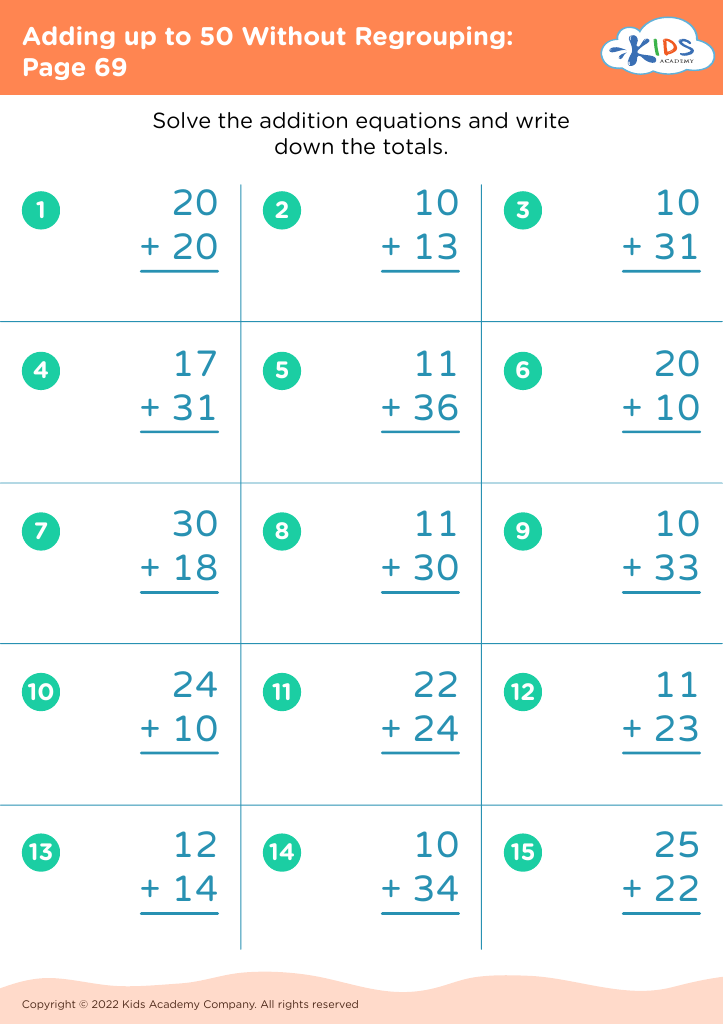
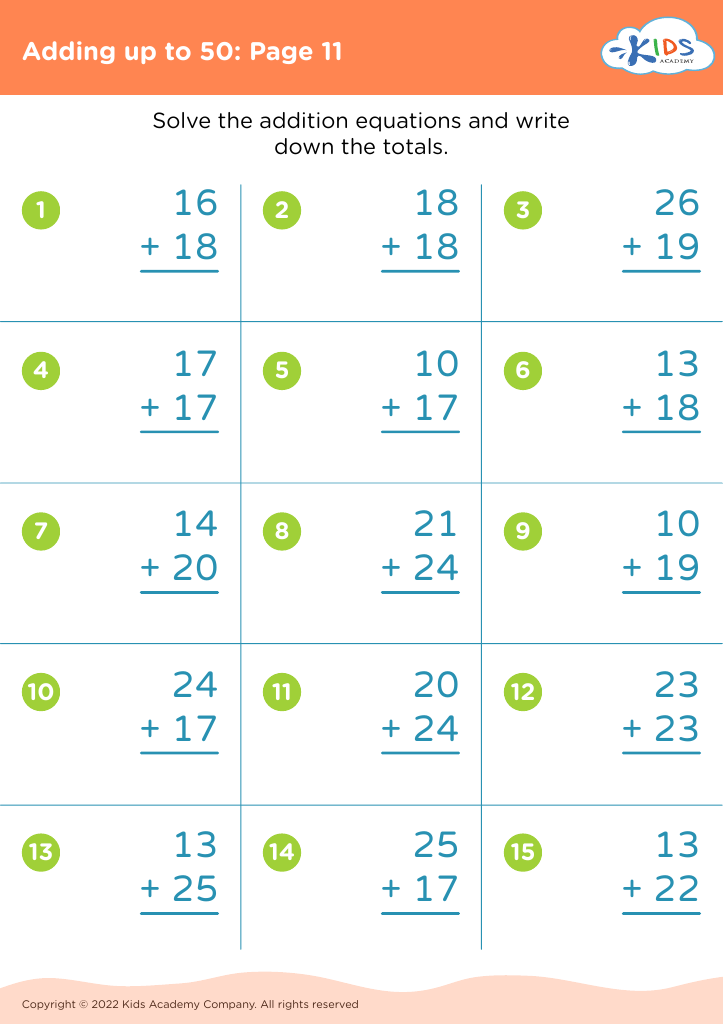




Understanding multiplication and the concept of adding up to 50 is essential for children aged 4-8 as it lays a fundamental foundation for their future math skills. At this developmental stage, children are beginning to grasp basic arithmetic, and introducing them to multiplication helps them make connections between addition and grouping concepts.
Parents and teachers should care because mastering these mathematical ideas enhances critical thinking and problem-solving abilities. Learning to multiply means understanding repeated addition, which can be visualized through everyday scenarios, making math more relatable and enjoyable. For example, children can count groups of objects, such as fruits or toys, helping them visualize quantities.
Additionally, reaching a total of 50 supports children's number sense, aiding in their ability to recognize, compare, and manipulate numbers. This not only boosts their confidence in handling mathematics but also prepares them for more complex concepts like division and fractions later on.
As they progress through elementary school, a firm grasp of multiplication and its relationship with addition is crucial for academic success, thereby empowering children to become proficient and passionate learners. Engaging in these foundational skills early gives students the tools they need to tackle more demanding math challenges in the future.








