Fine Motor Skills Adding with Busy Bugs Worksheets for Ages 4-8
8 filtered results
-
From - To
Enhance your child’s fine motor skills and math abilities with our “Adding with Busy Bugs” worksheets, designed for ages 4-8. These engaging exercises feature adorable bug characters to make learning addition fun and interactive. Children will develop their hand-eye coordination, pencil control, and numerical skills as they trace, count, and add delightful bugs. Perfect for early learners, these vibrant worksheets provide a hands-on approach to math practice, promoting focus and precision. Parents and teachers will love seeing their little ones excel and enjoy math with the playful and educational “Adding with Busy Bugs” collection. Make learning a buzzing success today!
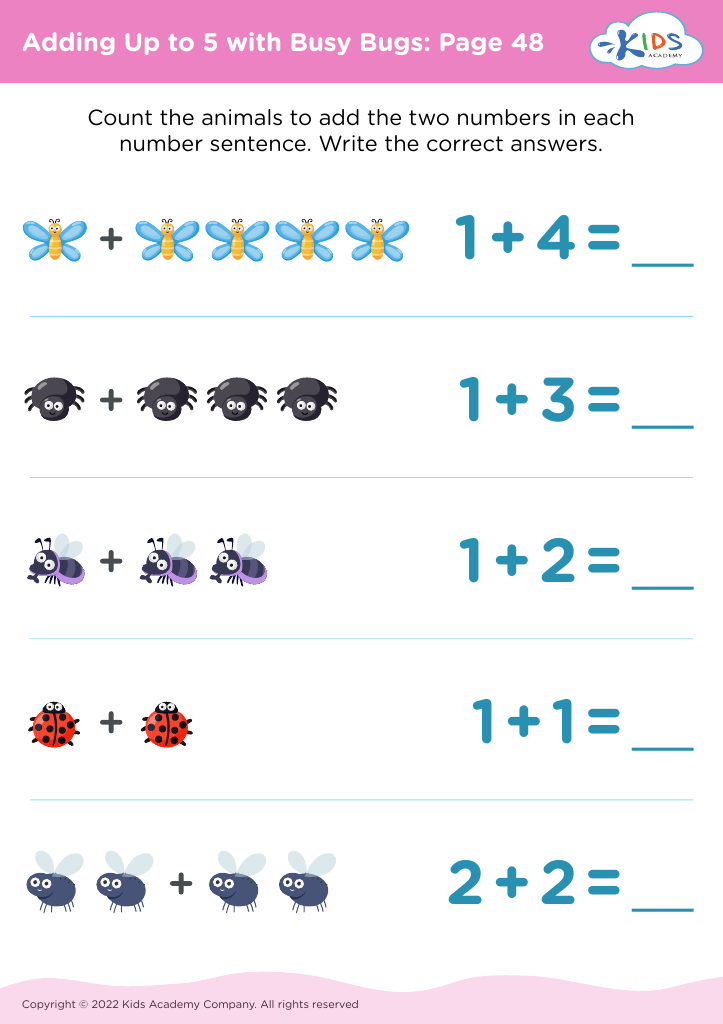
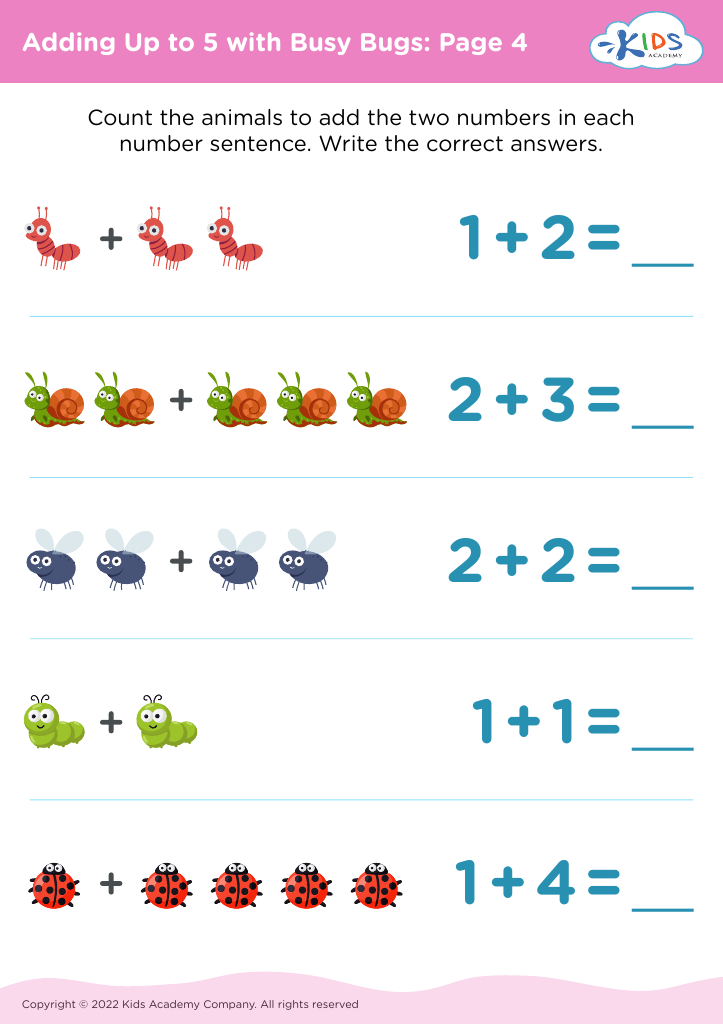
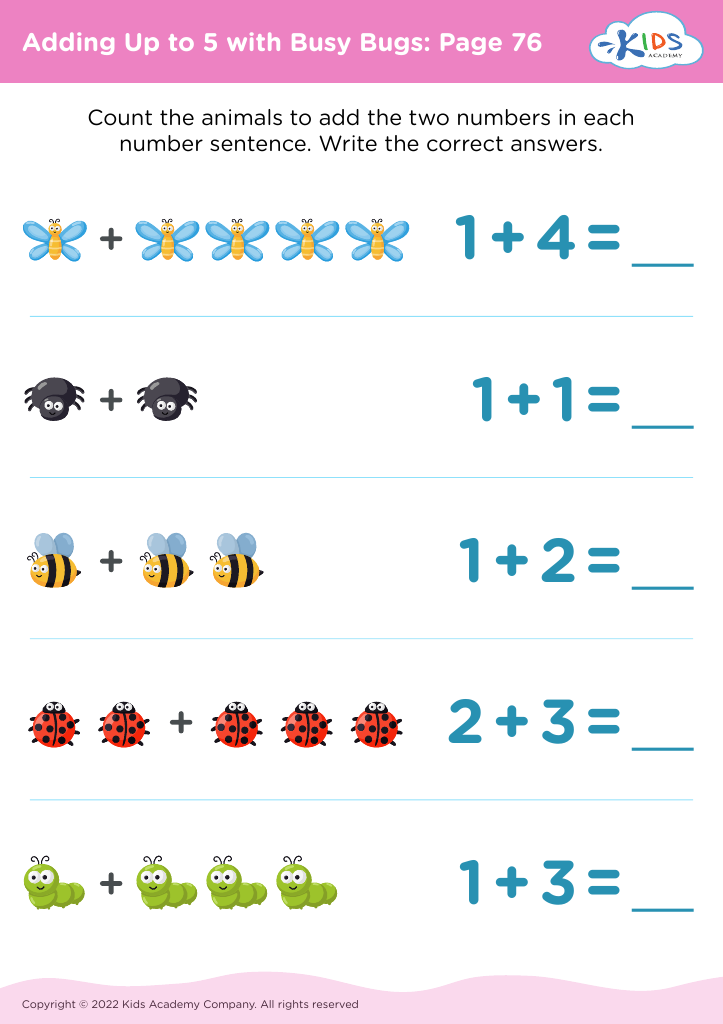
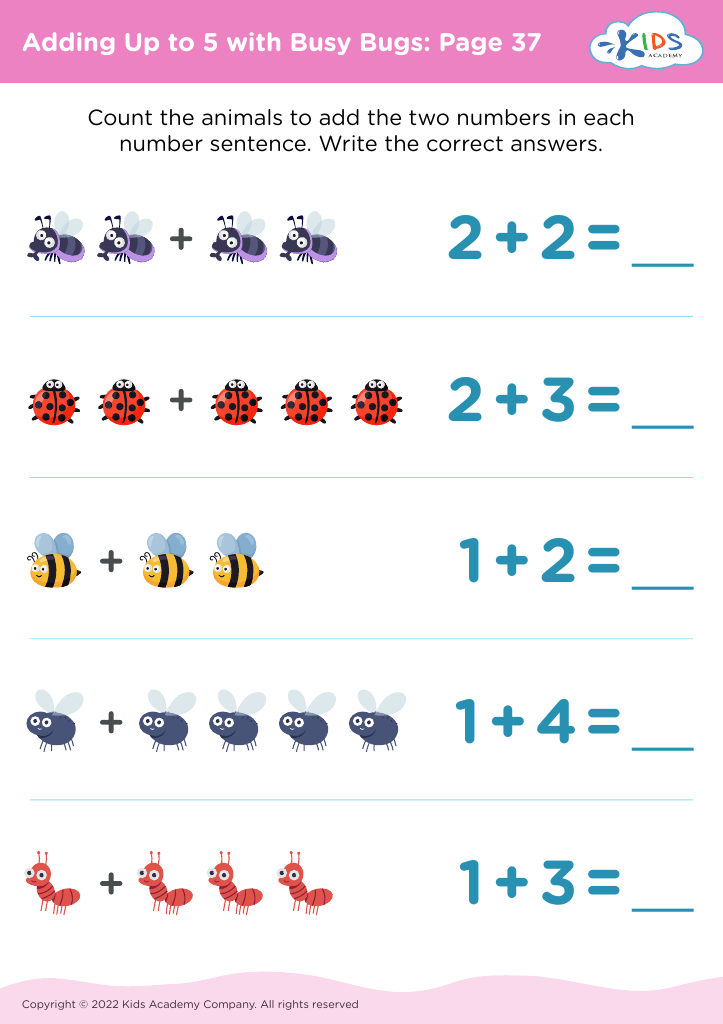
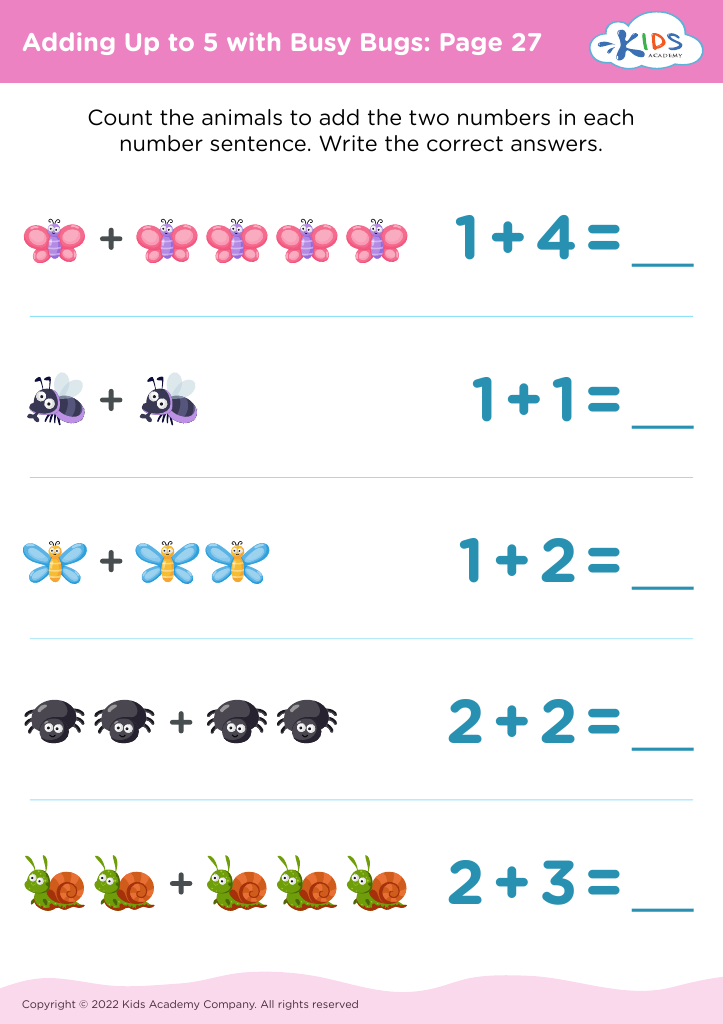
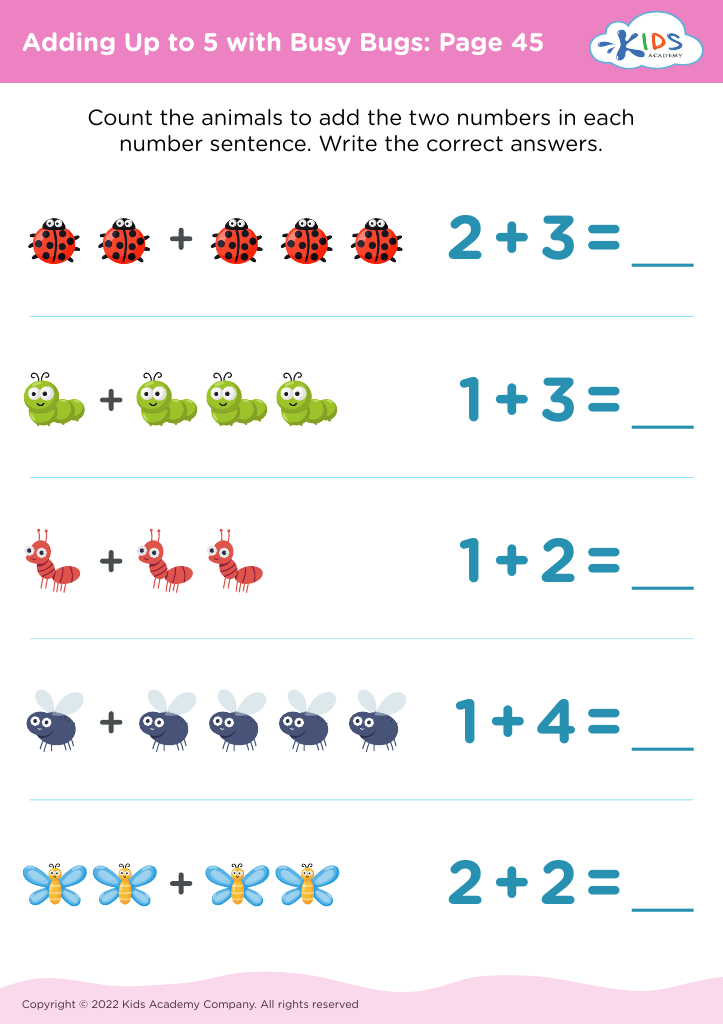
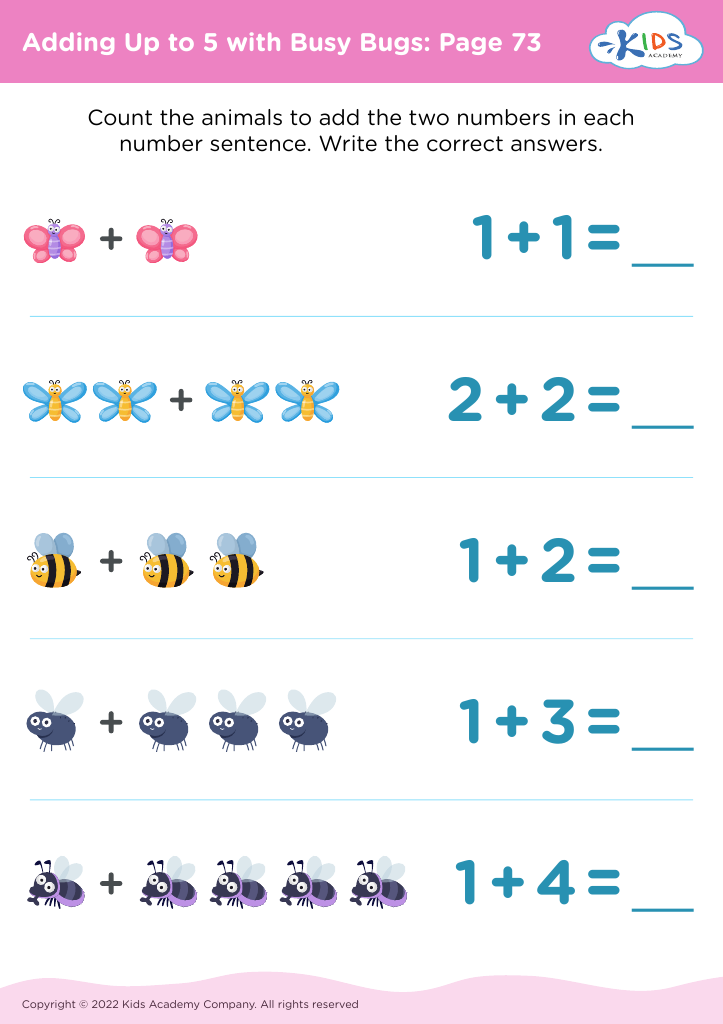
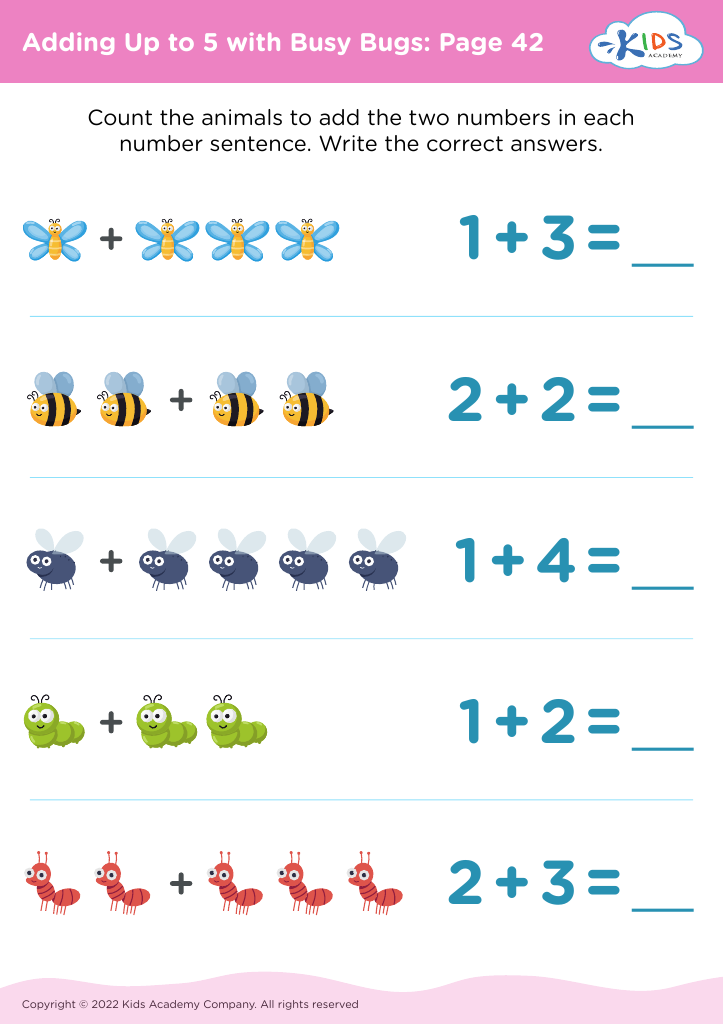



Fine motor skills are crucial for children's development, as they lay the foundation for tasks that require precision and coordination, such as writing, cutting, and buttoning clothes. "Busy Bugs" activities are an excellent way to enhance these skills for children aged 4-8.
In these hands-on tasks, kids grasp small objects, such as colorful bug counters. This helps strengthen hand muscles and increase dexterity. They also learn hand-eye coordination as they correctly place or move the bugs. As children focus on manipulating these tiny objects, they improve their ability to control smaller hand and finger movements, which is essential for academic tasks like handwriting and art.
Moreover, "Busy Bugs" incorporates elements of cognitive learning and basic math. Children may sort, count, and add with the bugs, which supports early numeracy skills. This multi-sensory approach can cater to different learning styles, making it more engaging and effective.
For teachers and parents, monitoring a child's progress with Busy Bugs provides invaluable insights into their fine motor development and readiness for more complex tasks. This early intervention can ensure children are well-equipped for future academic and personal activities, promoting both competence and confidence. Thus, making fine motor skill-building activities like "Busy Bugs" a priority is a proactive step in young children’s education and development.