Understanding quantity Adding with Busy Bugs Worksheets for Ages 4-8
7 filtered results
-
From - To
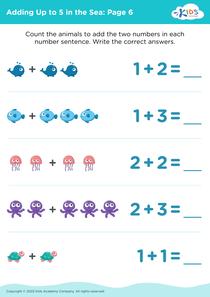
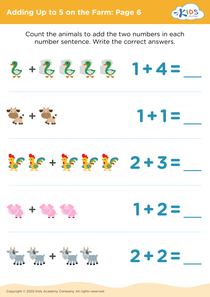
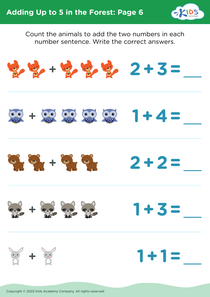
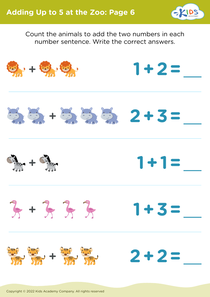
Introduce your child to the world of math with our "Understanding Quantity: Adding with Busy Bugs Worksheets" designed for ages 4-8. These engaging worksheets feature colorful bug-themed illustrations, making learning fun and interactive. By counting and adding the busy bugs, young learners will develop critical early math skills, including understanding quantities and basic addition concepts. Ideal for both classroom and home settings, these worksheets help children build a solid foundation in mathematics through playful activities. Get ready to watch your child’s confidence soar as they master the art of adding, all while having a blast with our busy bugs!
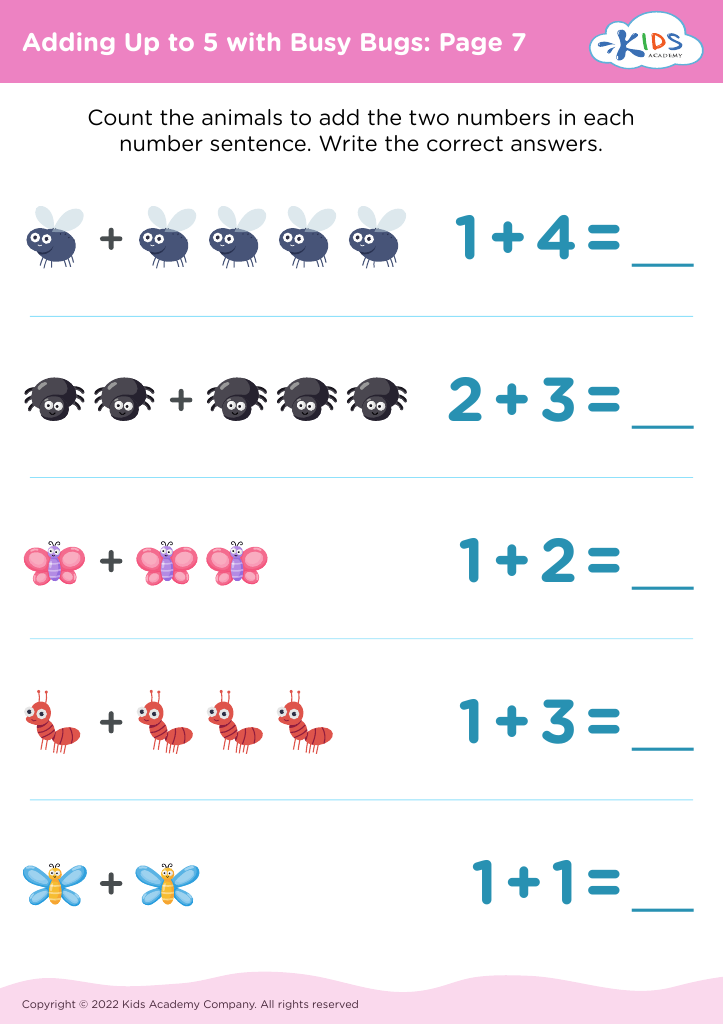
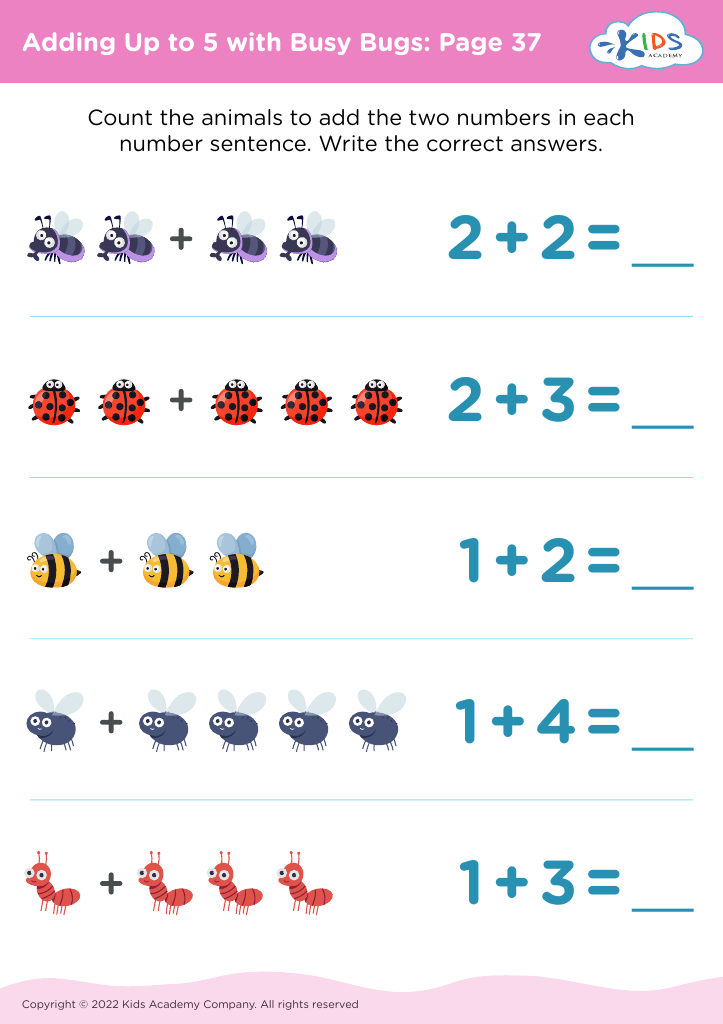
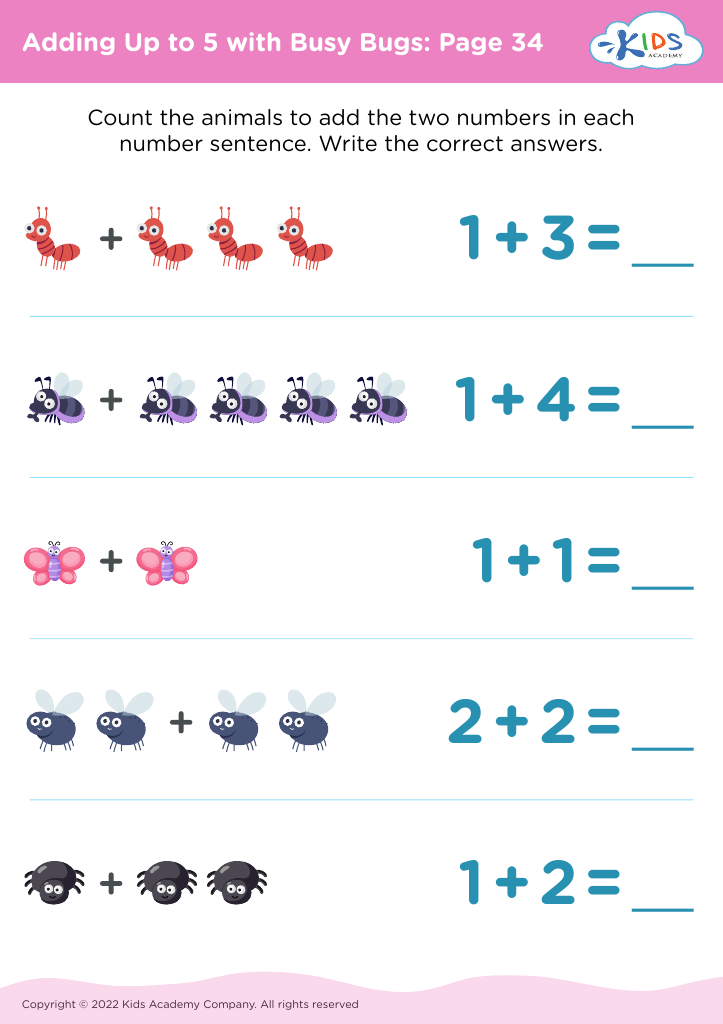
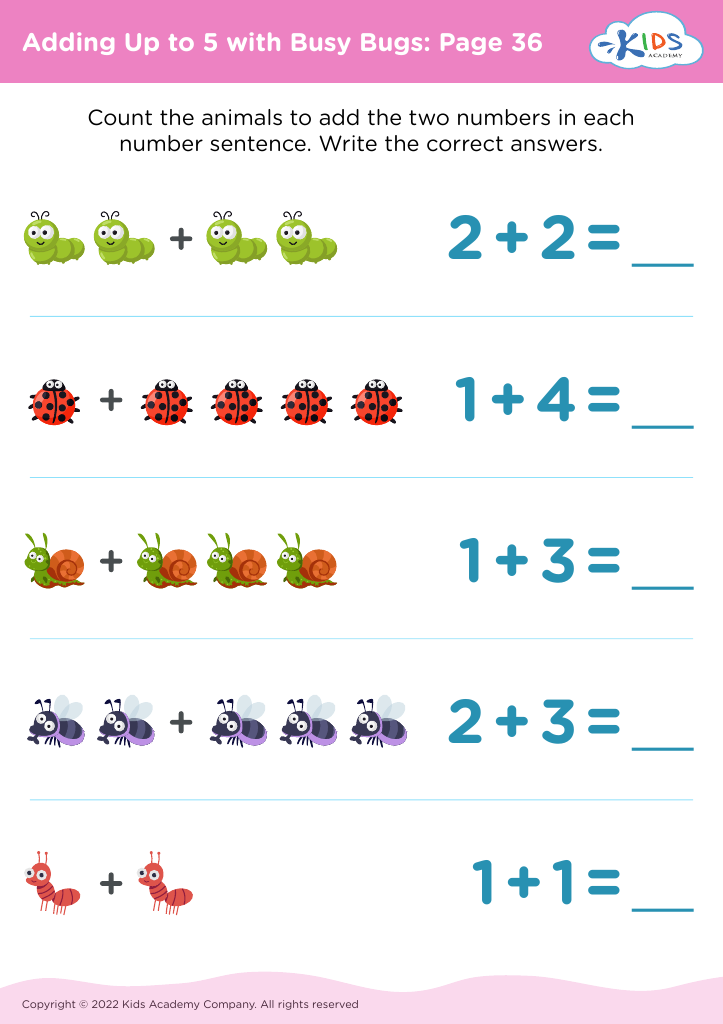
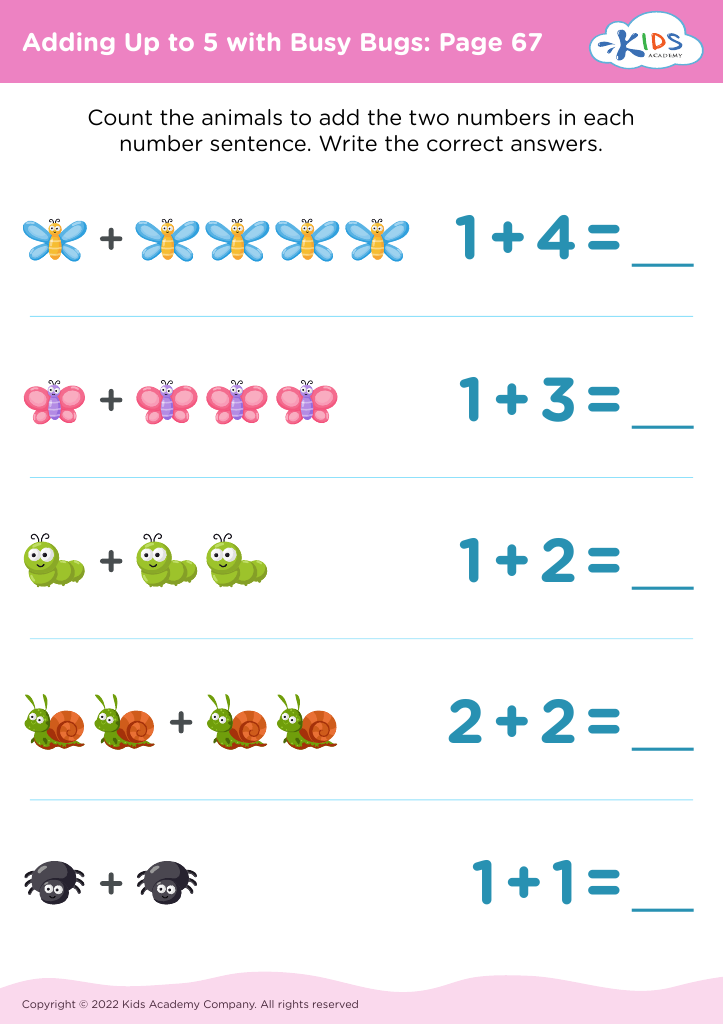
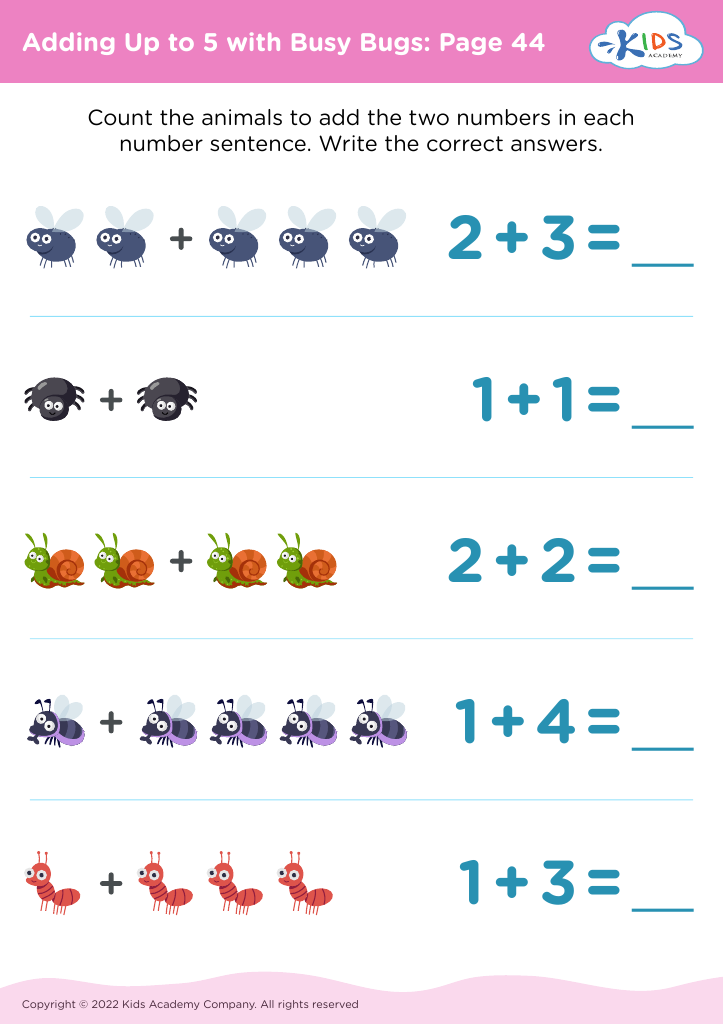
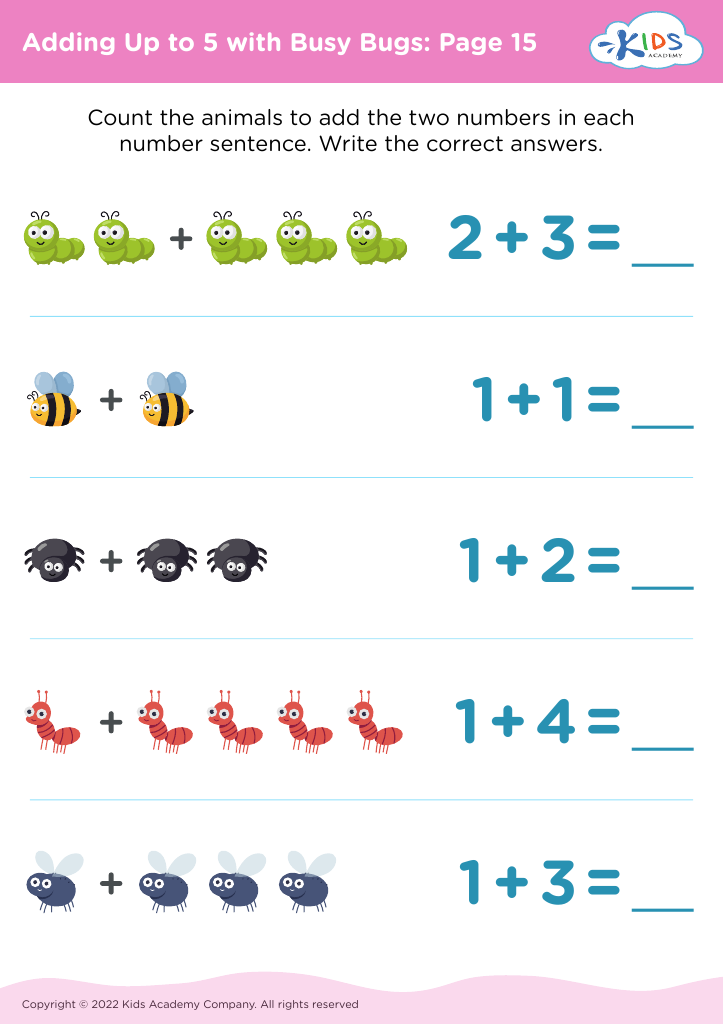



Understanding quantity and addition for young children, aged 4-8, is essential as these early math skills form the foundation for future learning. A fun and engaging tool such as "Adding with Busy Bugs" makes learning intuitive and enjoyable. Here's why parents and teachers should care:
-
Foundational Skills: Grasping concepts of quantity and addition is critical as it sets the groundwork for more advanced mathematical concepts. Early proficiency in these areas supports future academic success in mathematics.
-
Engagement and Interest: Tools like "Adding with Busy Bugs" use colorful, animated characters to capture children's attention, making learning feel like play. This positive association fosters a love for math from an early age.
-
Cognitive Development: Engaging in activities that require counting and simple addition helps develop children’s cognitive abilities including logical thinking, problem-solving, and memory.
-
Confidence Building: Successful interaction with these tools boosts self-confidence. When children see they can solve problems on their own, they develop a sense of accomplishment which encourages further learning.
-
Versatile Learning: Interactive tools cater to various learning styles—visual, auditory, and kinesthetic. This ensures all learners can benefit, making inclusive education feasible.
By focusing on understanding quantity and addition through engaging methods, parents and teachers empower children with essential skills for lifelong learning.