Visual Learning Addition and Subtraction Word Problems Worksheets for Ages 4-8
5 filtered results
-
From - To
Discover our "Visual Learning Addition and Subtraction Word Problems Worksheets" designed specifically for children aged 4-8. These engaging worksheets combine colorful visuals with relatable scenarios to help young learners master basic math concepts in a fun, interactive way. Each activity reinforces addition and subtraction skills while fostering critical thinking and problem-solving abilities. Ideal for classroom use or at-home practice, the vibrant imagery captures children's attention, making learning enjoyable and effective. Empower your child with a strong mathematical foundation through captivating visual aids that make word problems easy to understand. Explore our resources today and watch your child excel in math!
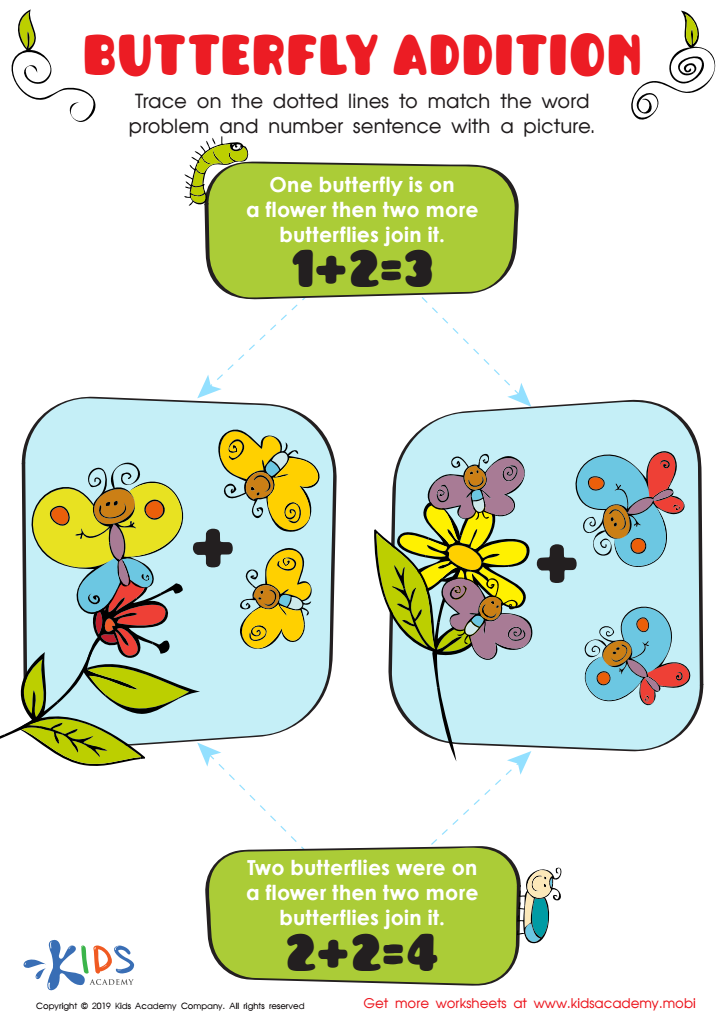
Butterfly Addition Worksheet
 Assign to My Students
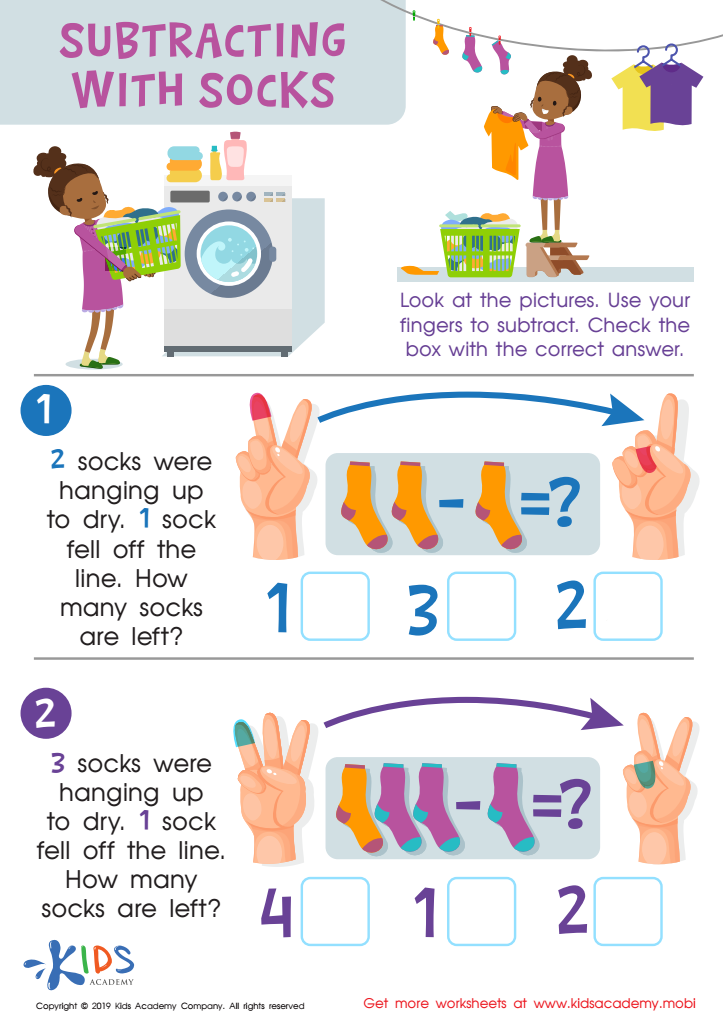
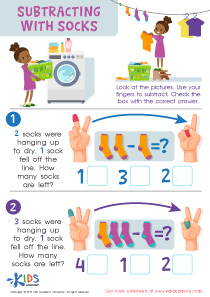
Subtracting Socks Worksheet
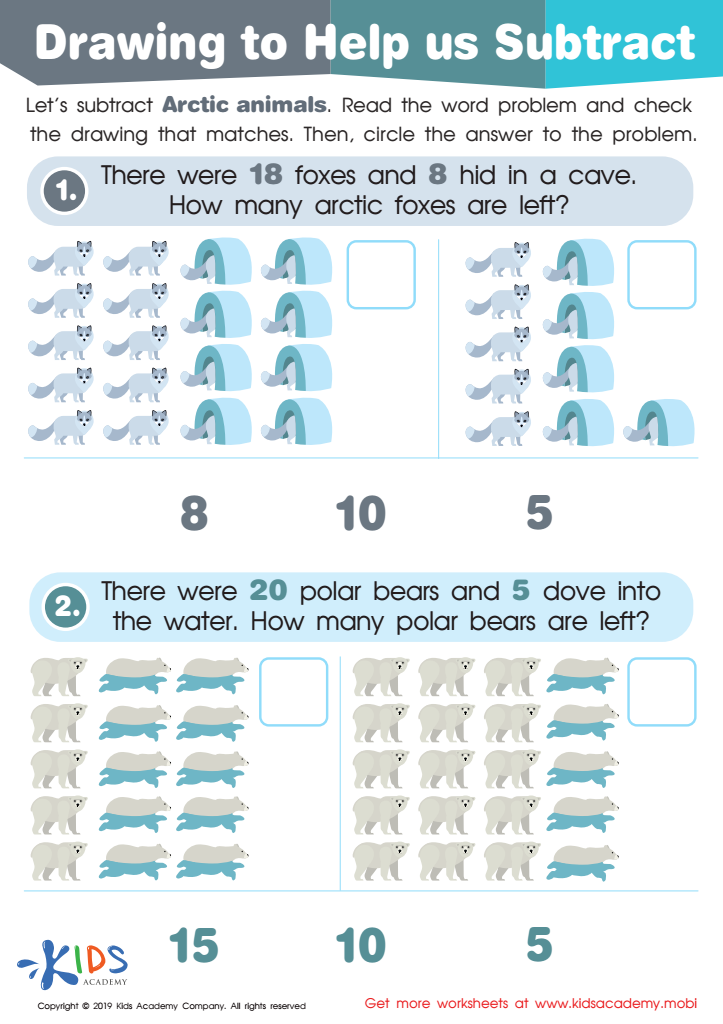
Drawing to Help Us Subtract Worksheet
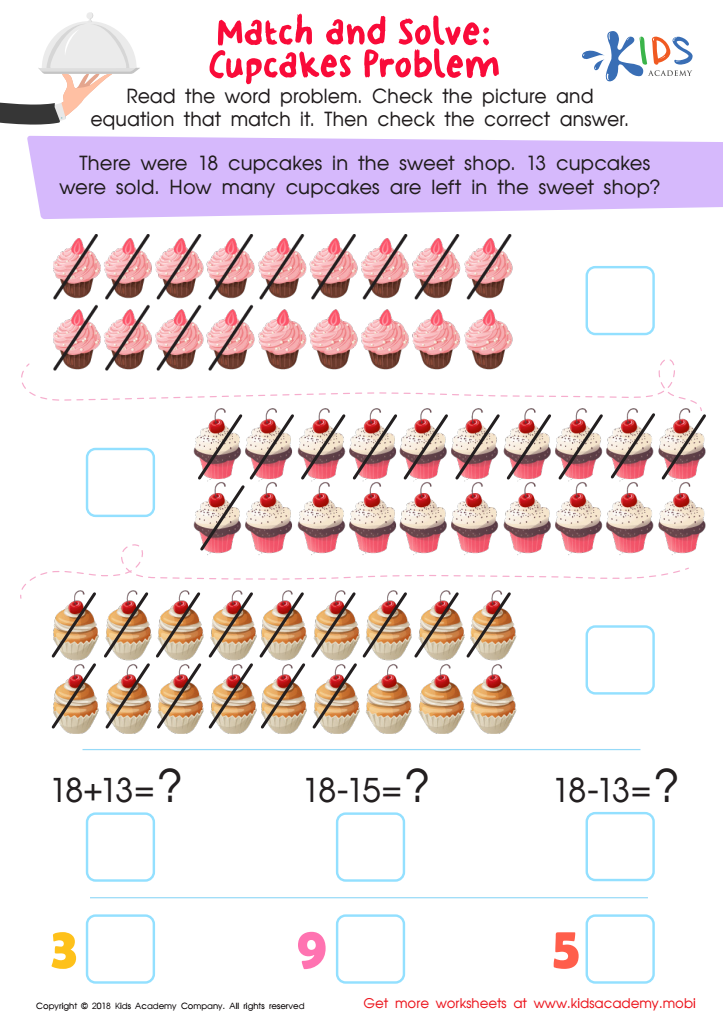
Match and Solve: Cupcakes Problem Worksheet
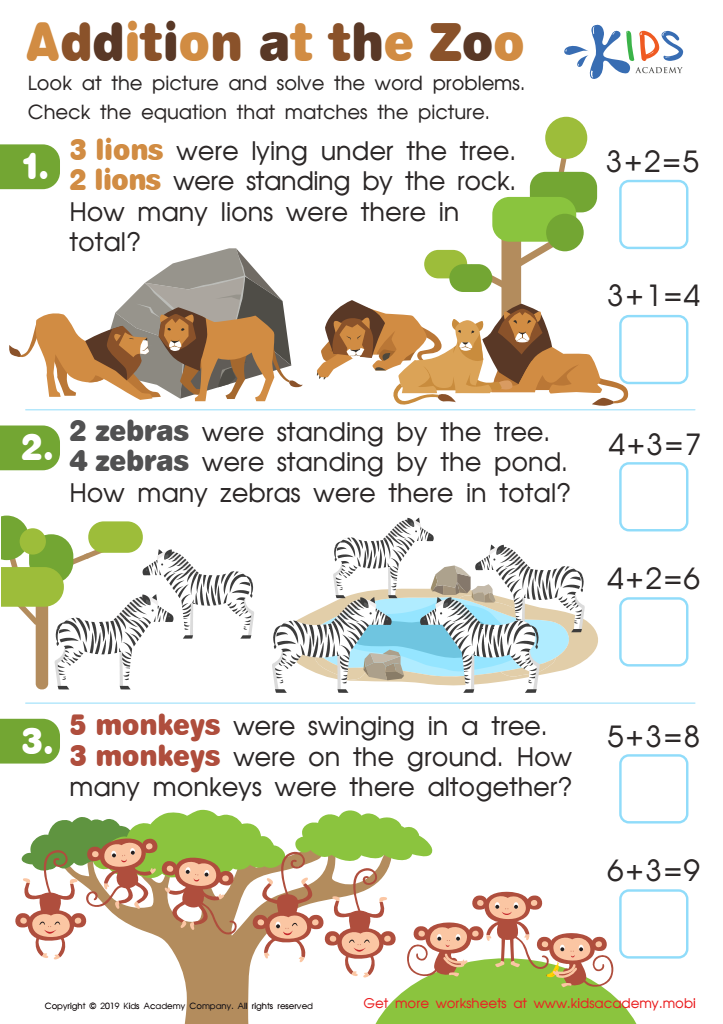
Addition at the Zoo Worksheet








Visual learning is a powerful tool for teaching young children, particularly when it comes to complex concepts like addition and subtraction word problems. For children aged 4-8, cognitive development is at a critical stage, and they thrive when abstractions are translated into visual formats. By incorporating visual aids—like drawings, diagrams, or manipulatives—children can better understand mathematical relationships and operations.
When parents or teachers emphasize visual learning, children can deconstruct word problems into manageable parts, making the problem-solving process less intimidating and more engaging. This method encourages critical thinking, as children learn to visualize scenarios and develop mental models for mathematical ideas.
Furthermore, word problems often present practical, real-world situations, making math relevant and relatable. This connection fosters a greater interest in math and illustrates its everyday applications. For educators and parents, facilitating a visual learning approach nurtures a child's autonomy in problem-solving, boosts confidence, and establishes a strong mathematical foundation.
By investing time in visual addition and subtraction strategies, adults help cultivate resilient, enthusiastic learners who see math not as a hurdle, but as an exciting tool for understanding the world around them. It becomes less about rote memorization and more about meaningful comprehension.