Addition of fractions Addition & Subtraction Worksheets for Ages 4-8
3 filtered results
-
From - To
Discover our engaging Addition of Fractions Worksheets, specially designed for young learners aged 4-8! These interactive resources help children build a strong foundation in math while developing their understanding of fraction concepts. Our worksheets include colorful illustrations and fun activities that make learning enjoyable. From basic fraction addition to comparing different fractions, each sheet offers easy-to-follow instructions that encourage independent practice. Perfect for home or classroom use, these worksheets not only enhance math skills but also foster critical thinking. Give your child the tools they need to excel in math with our comprehensive addition and subtraction fractions worksheets today!
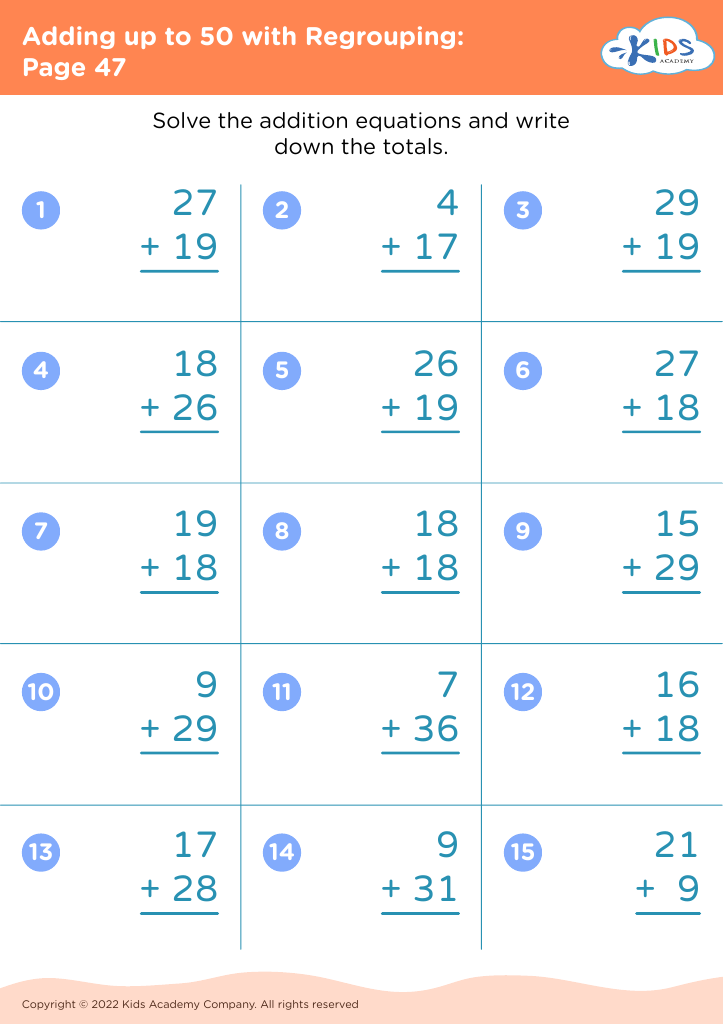
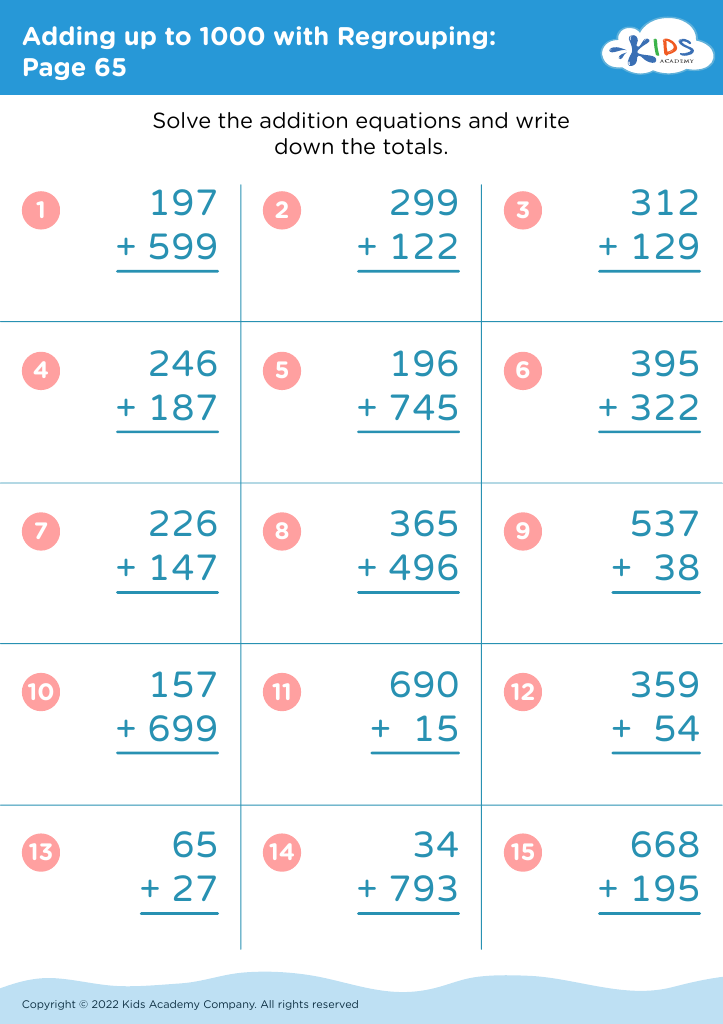
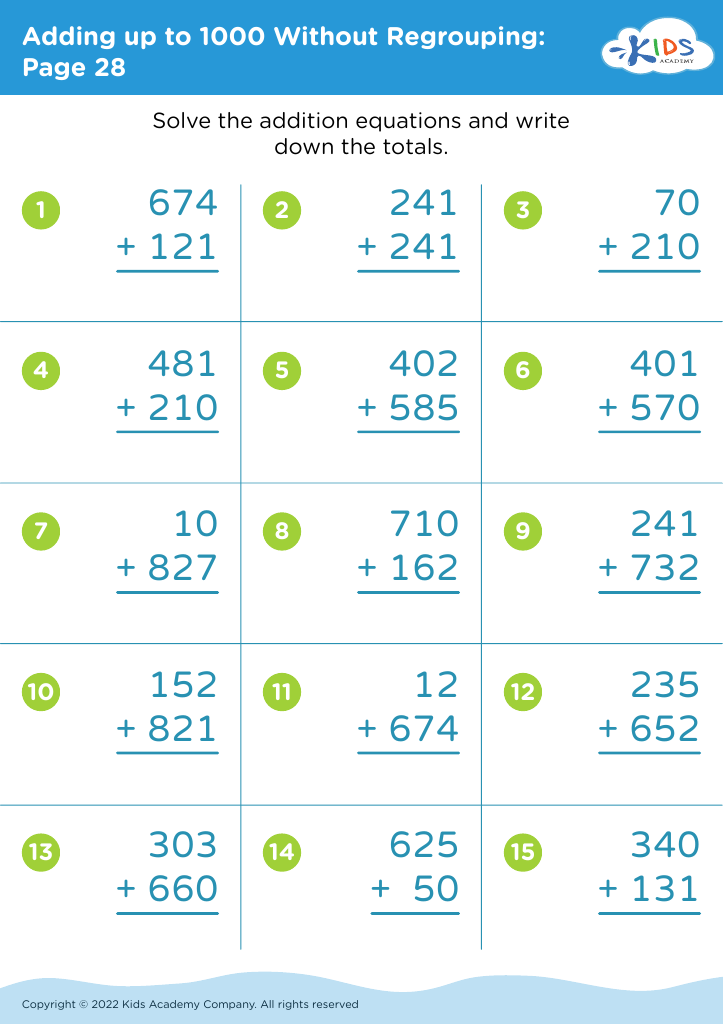








Parents and teachers should care about the addition and subtraction of fractions for children aged 4-8 because these concepts lay a crucial foundation for mathematical understanding and problem-solving skills. At this developmental stage, children are beginning to grasp the idea of parts and wholes, making it an ideal time to introduce fractions. By using visual aids, such as pizza slices or pie charts, children can see how parts make up a whole, which enhances their comprehension.
Understanding the addition and subtraction of fractions impacts children's ability to manage more complex mathematical concepts later on, like ratios and proportions. Early mastery of these skills also boosts confidence and allows children to approach math with a positive mindset. This builds a strong mathematical identity, promoting a love for learning.
Furthermore, introducing these concepts can foster critical thinking and reasoning skills, which are essential for everyday problem-solving both in school and beyond. Parents and teachers play a pivotal role in guiding children through this exploration, making learning interactive and enjoyable. Ultimately, by emphasizing the importance of fractions, they help children develop essential life skills needed for academic success and practical situations they will encounter throughout their lives.








