Decision making skills Addition & Subtraction Worksheets for Ages 4-8
3 filtered results
-
From - To
Our "Decision Making Skills Addition & Subtraction Worksheets for Ages 4-8" are thoughtfully designed to enhance both math abilities and critical thinking skills in young learners. These engaging worksheets encourage children to solve simple math problems while making decisions that help them understand everyday problem-solving situations. By combining fundamental addition and subtraction exercises with practical applications, our materials support cognitive development and foster decision-making confidence. Ideal for home or classroom use, these resources aim to make learning math fun and meaningful, ensuring a solid foundation in both numerical skills and logical reasoning. Help your child excel by downloading our worksheets today!
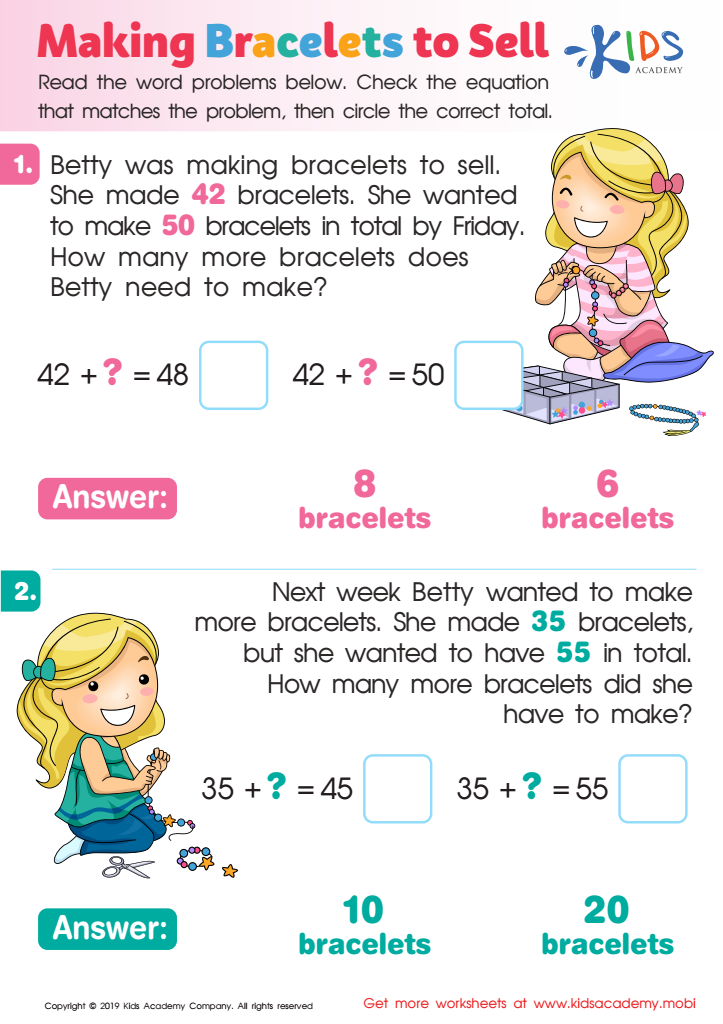
Making Bracelets to Sell Worksheet
 Assign to My Students
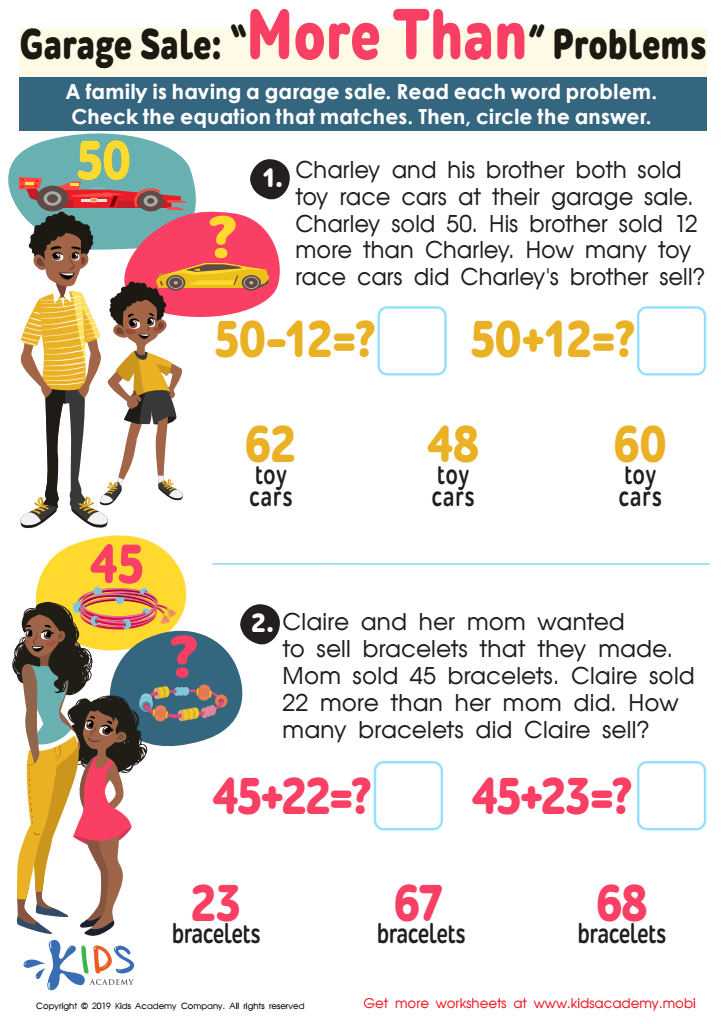
Garage Sale - More yhan Worksheet
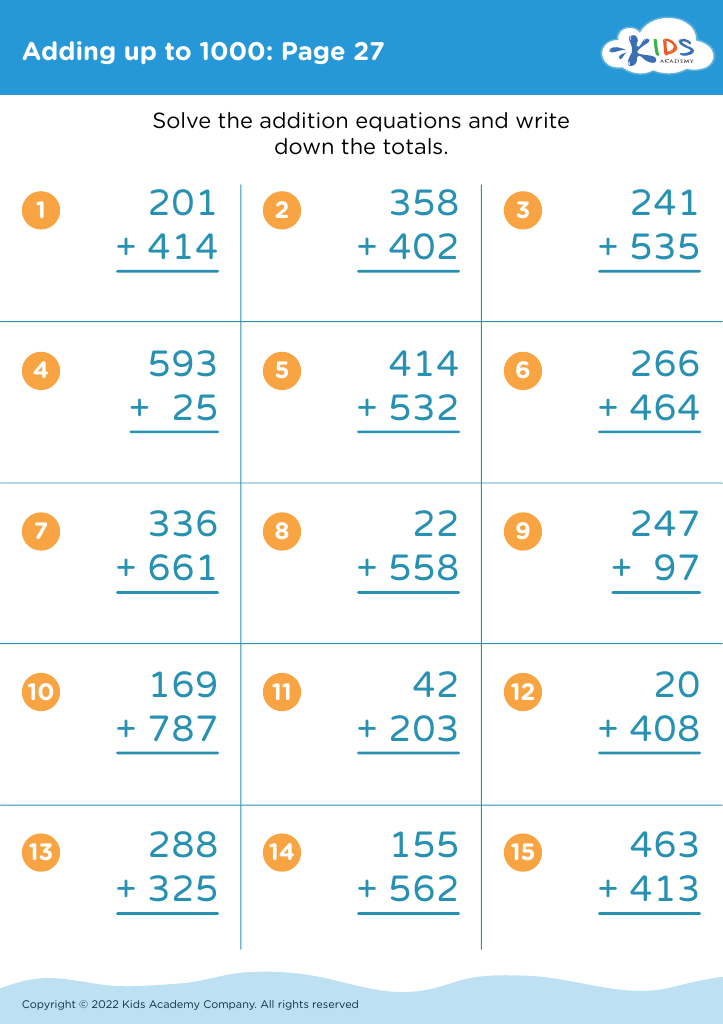








Developing decision-making skills alongside mathematical abilities such as addition and subtraction for children ages 4-8 is crucial for several reasons. Firstly, these formative years are a period of significant cognitive development. Introducing decision-making skills helps children learn to think logically and make informed choices. This foundational skill will aid them in problem-solving across various life situations, both academically and socially.
Furthermore, integrating decision-making with addition and subtraction promotes critical thinking. For instance, when a child decides how many apples to add to reach a certain number, they are actively engaging in a thought process that enhances their numerical understanding and arithmetic skills.
Additionally, fostering these skills early on lays the groundwork for future academic success. Children who develop competence in both decision-making and basic math are more likely to perform well in more complex subjects later. They also grow their confidence in tackling new challenges.
Lastly, these skills equip children with the tools necessary for everyday life. Simple decisions related to budgeting, time management, and resource allocation are easier for those with a solid grasp of basic addition, subtraction, and reasoning.
In essence, the combination of decision-making skills with basic math fosters a well-rounded and proficient young learner, better prepared to navigate the intricacies of both education and life.








