
Enhancing critical thinking Addition & Subtraction Worksheets for Ages 4-8
5 filtered results
Difficulty Level
Grade
Age
-
From - To
Subject
Activity
Standards
Discover our “Enhancing Critical Thinking: Addition & Subtraction Worksheets” designed specifically for children aged 4-8. These engaging worksheets provide a unique blend of fun and learning opportunities, helping young learners build strong mathematical foundations while fostering critical thinking skills. Through a variety of problems—ranging from simple calculations to challenging puzzles—children will enhance their problem-solving abilities and deepen their understanding of addition and subtraction concepts. Perfect for home or classroom use, our thoughtfully crafted worksheets promote active engagement, encouraging kids to think creatively and strategically about mathematics. Unlock the potential of your little learners today with our enriching resources!
Favorites
With answer key
Interactive
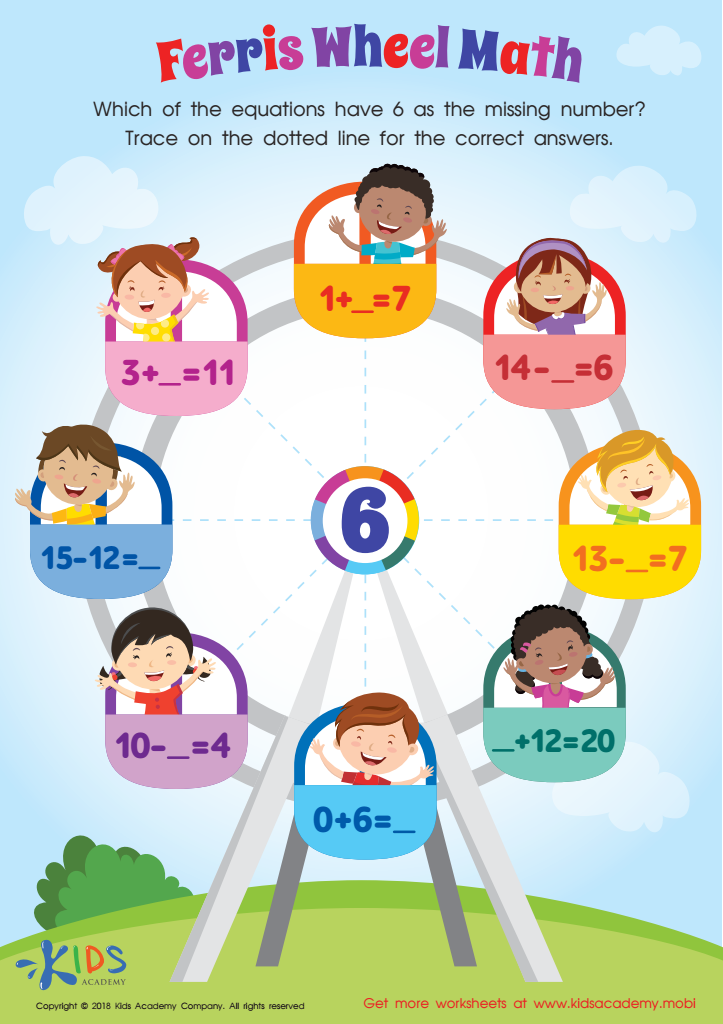
Missing Number: Ferris Wheel Math Worksheet
Hop on the Ferris wheel and solve the equations in the baskets! If the missing number is 6, draw a line from the basket to the middle of the wheel. Kids Academy's addition worksheet will not only help practice pre-algebra but also keep kids entertained with its vibrant illustrations. So, go round and round and have fun with math!
 Assign to My Students
Missing Number: Ferris Wheel Math Worksheet
Worksheet
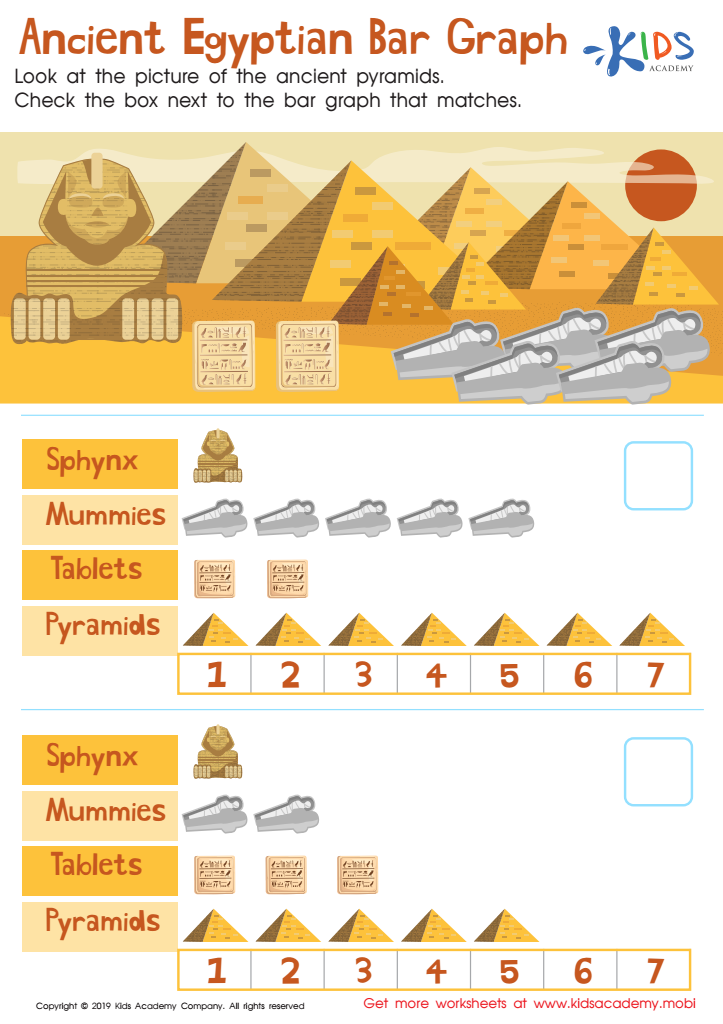
Egyptian Bar Graph Worksheet
Help your kids get a hang of bar graphs with this fun worksheet. Examine the picture of the ancient pyramids and help them match the bar graph to it. Check the box next to the correct bar graph and watch your little ones learn quickly!
Egyptian Bar Graph Worksheet
Worksheet
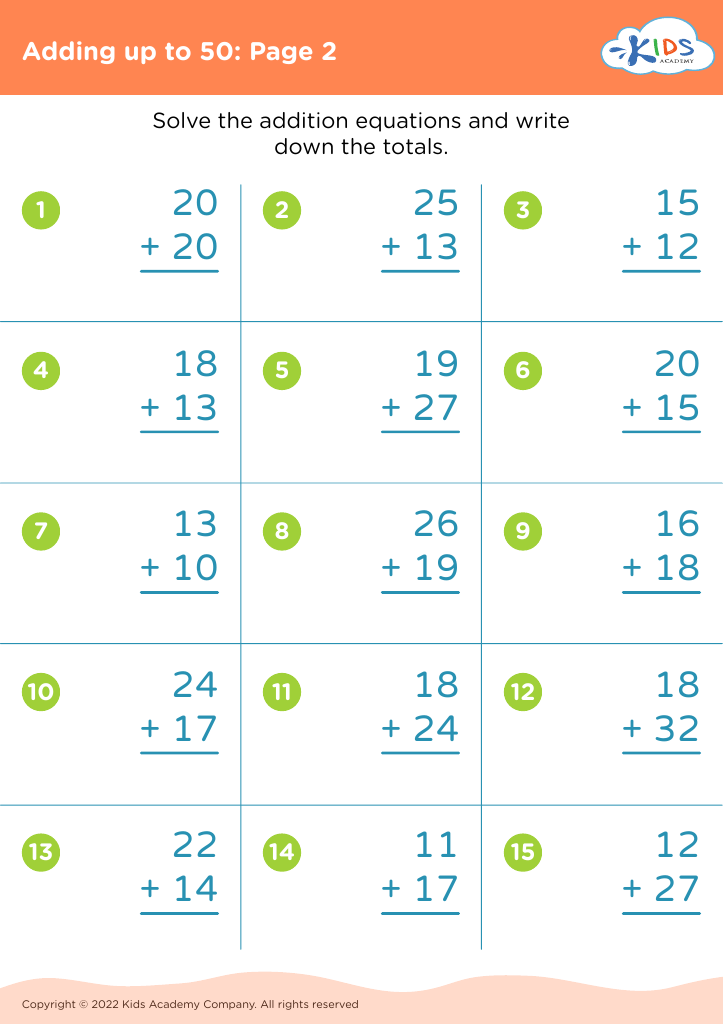
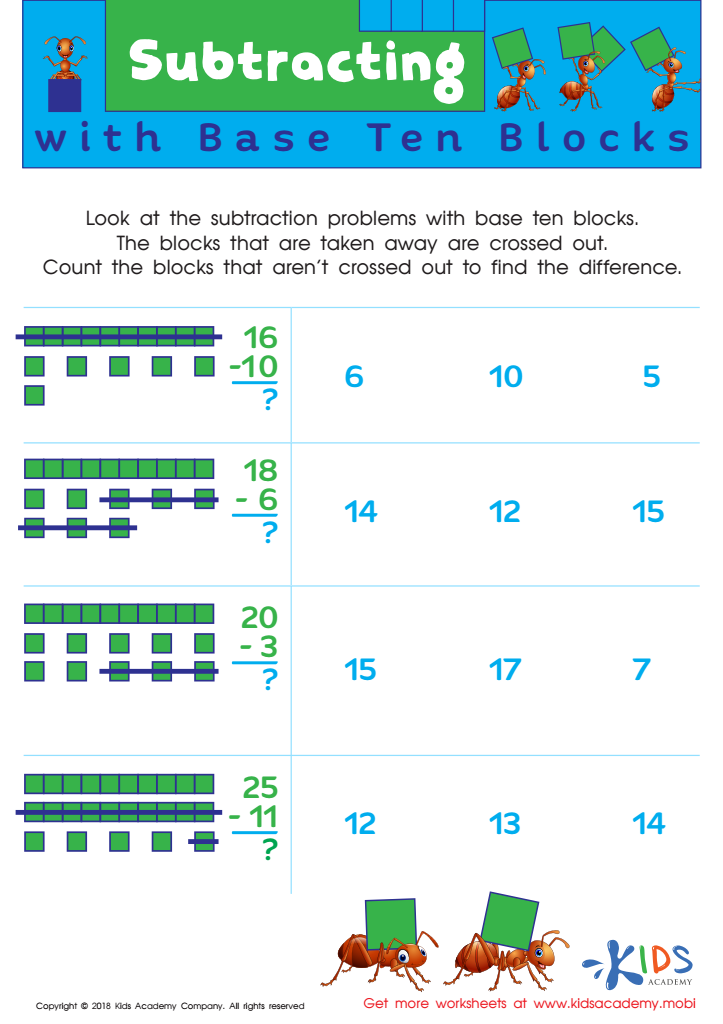
Subtracting with Base Blocks Worksheet
Little mathematicians can use base ten blocks to understand place value for subtraction. This worksheet helps them cross out blocks to solve problems with accuracy. Seeing equations like this boosts their number reasoning skills and helps them work with larger numbers.
Subtracting with Base Blocks Worksheet
Worksheet
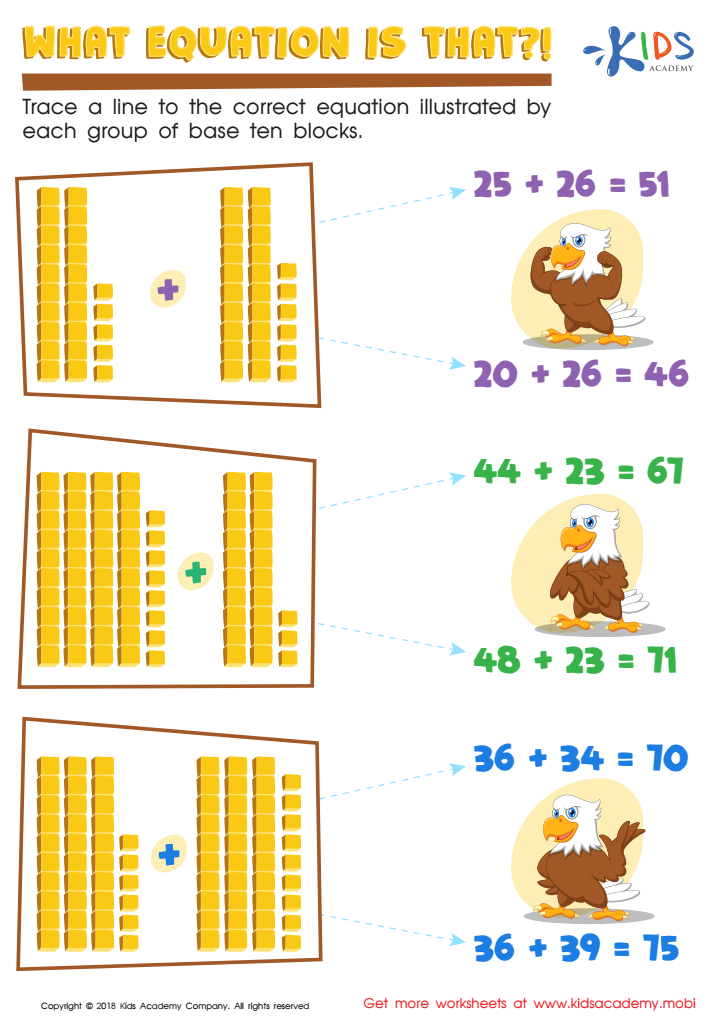
What Equation Is That? Worksheet
Have your students practice counting with base ten blocks. This will help them with math struggles. Homework and worksheets will help them improve; ask them to trace lines to the correct equation on a tracing sheet. Guide them as they count the blocks and trace the lines.
What Equation Is That? Worksheet
Worksheet
Join Kids Academy for Free
Who is primarily going to use this learning content?








Enhancing critical thinking skills in young children, particularly in areas like addition and subtraction, is essential for their overall cognitive development. For ages 4-8, foundational math concepts are being formed, laying the groundwork for future learning. Critical thinking in mathematics goes beyond rote memorization; it involves problem-solving, reasoning, and the ability to make connections between concepts.
Parents and teachers should prioritize this enhancement because these skills foster a deeper understanding of mathematical principles. Engaging children in activities that promote critical thinking encourages them to explore various strategies, leading to more creative solutions. For instance, rather than simply teaching addition as “2 + 3 = 5,” educators can prompt children to visualize the problem or use manipulatives, which cultivates their analytical skills and boosts their confidence.
Moreover, critical thinking in math helps children relate their learning to real-world situations, increasing engagement and interest. As they learn to think critically, they also develop resilience in tackling challenges, equipping them with the skills to navigate complex problems in the future. In essence, fostering critical thinking in early math education is crucial as it not only enhances academic performance but also prepares children for lifelong learning and understanding.








