Improves number recognition Addition & Subtraction Worksheets for Ages 4-8
3 filtered results
-
From - To
Enhance your child's math skills with our specially designed Addition & Subtraction Worksheets for ages 4-8. These engaging activities, available at Kids Academy, focus on improving number recognition while building a strong foundation in arithmetic. Perfect for young learners, these worksheets combine fun illustrations with effective practice exercises that make mastering numbers, addition, and subtraction a delightful journey. Watch your child confidently develop critical math skills as they work through a variety of challenges tailored to their age and ability. Give your child the advantage in math and set them up for success with our expertly crafted resources.
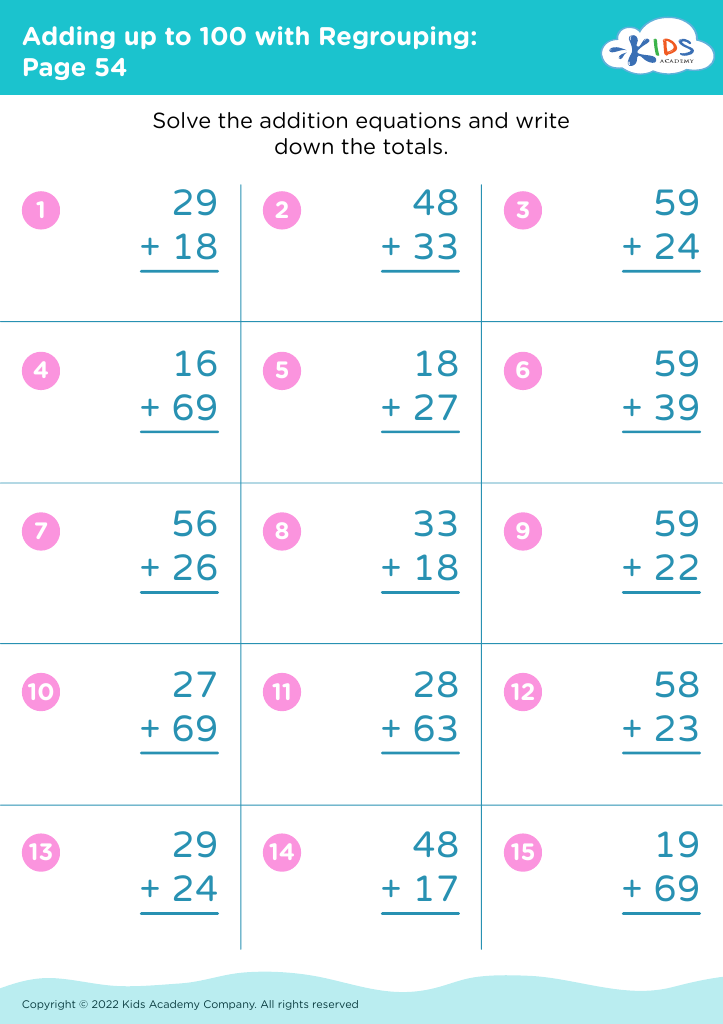
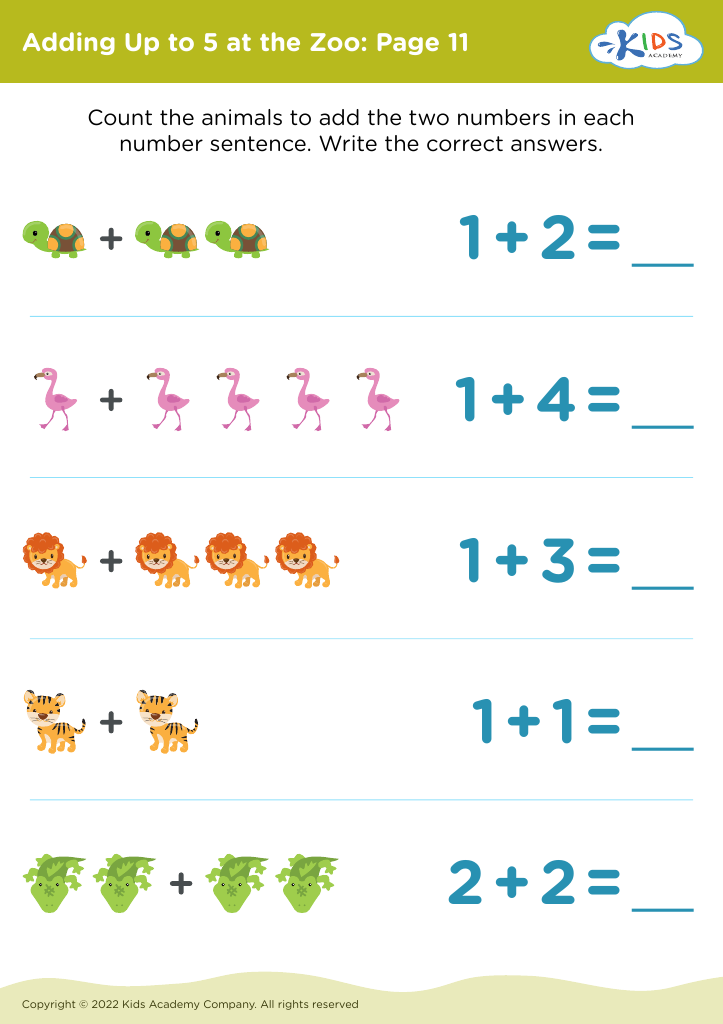
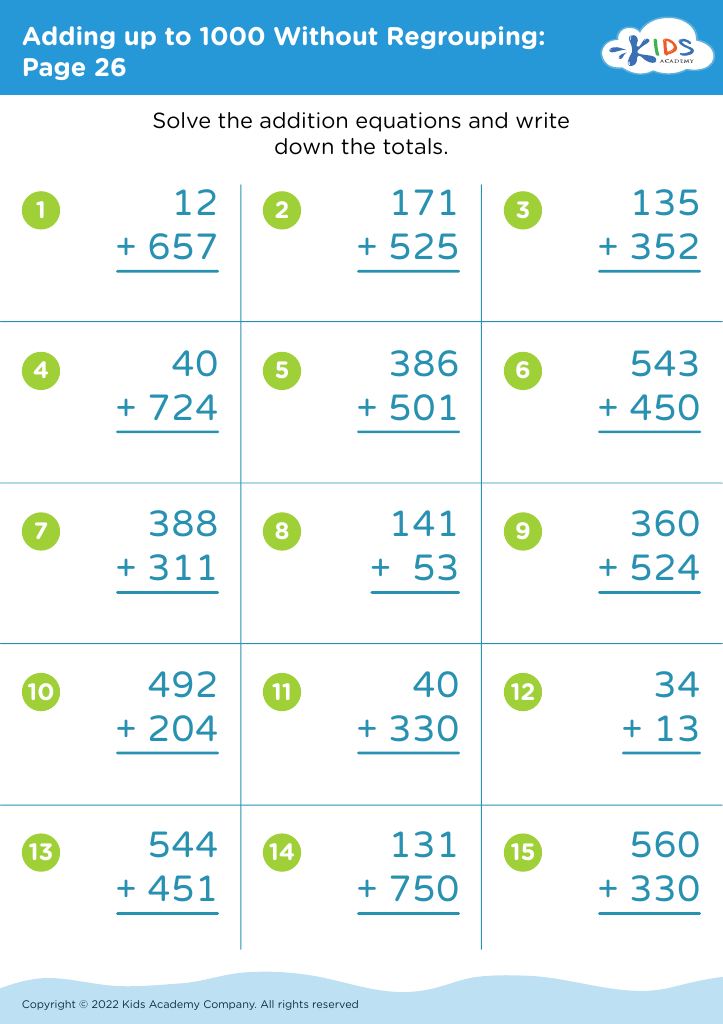








Parents and teachers should prioritize improving number recognition and basic arithmetic (addition and subtraction) in children aged 4-8 because these foundational math skills are critical to their overall academic success and cognitive development. At this crucial developmental stage, children are highly receptive to learning and establishing the fundamental building blocks that will support their future understanding of more complex mathematical concepts.
Early proficiency in number recognition enables children to identify, understand, and use numbers in various contexts, thus enhancing their everyday problem-solving capabilities. By mastering addition and subtraction, children learn to perform basic calculations, develop logical thinking, and sharpen their ability to reason quantitatively. These skills are essential for progressing in math and other STEM (science, technology, engineering, and math) fields, which are increasingly important in our technology-driven world.
Moreover, success in early math has been linked to greater confidence and enthusiasm in learning. Children who experience success in math during their early years are more likely to develop a positive attitude toward the subject, which contributes to higher academic performance throughout their schooling years.
In sum, investing time and effort into mastering these basic math skills sets young learners on a path to academic success, fosters critical thinking, and builds confidence, making it essential for parents and teachers to give it the attention it deserves.








