Practicing addition Addition & Subtraction Worksheets for Ages 4-8
4 filtered results
-
From - To
Unlock the magic of math with our Practicing Addition & Subtraction Worksheets designed for children ages 4-8. Created by educational experts at Kids Academy, these worksheets offer engaging and interactive exercises that help young learners master essential math skills. With colorful illustrations and fun problems, children can practice basic addition and subtraction while developing their critical thinking and problem-solving abilities. Perfect for parents and teachers seeking to strengthen foundational math concepts, these printable resources make learning enjoyable and effective. Dive into a world of numbers and boost your child's confidence in math today!
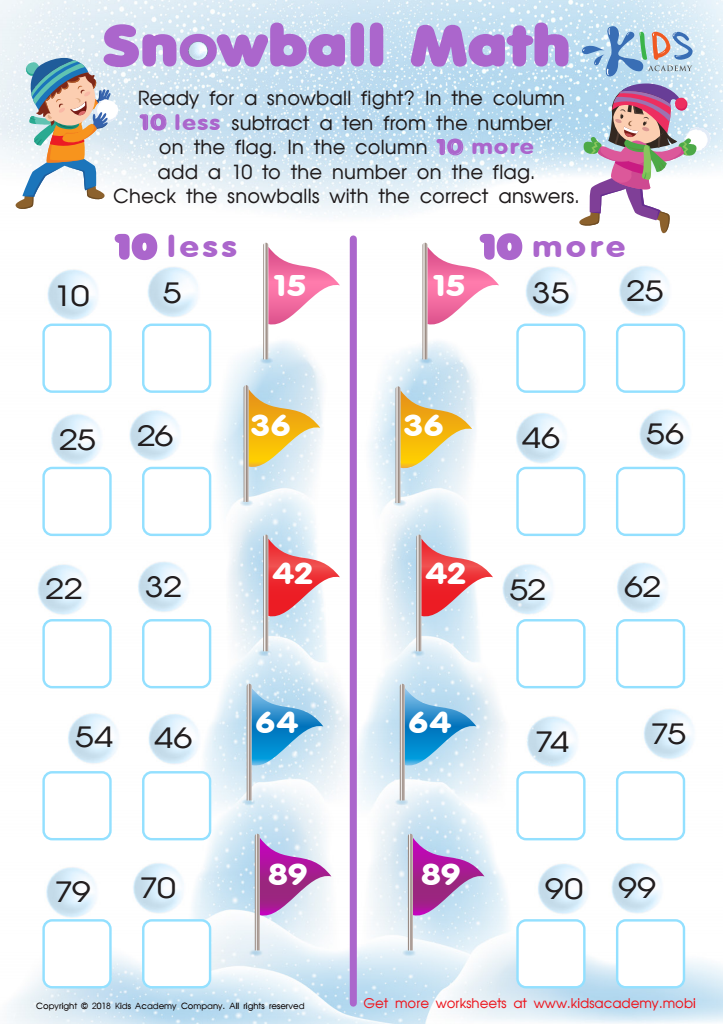
Snowball Math Worksheet
 Assign to My Students
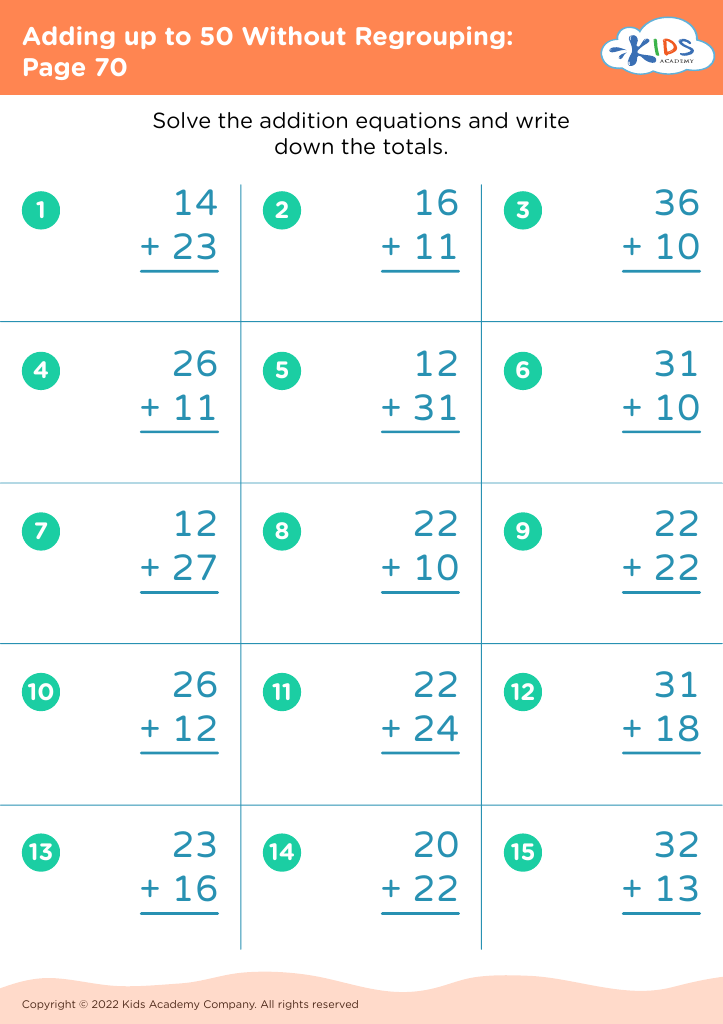
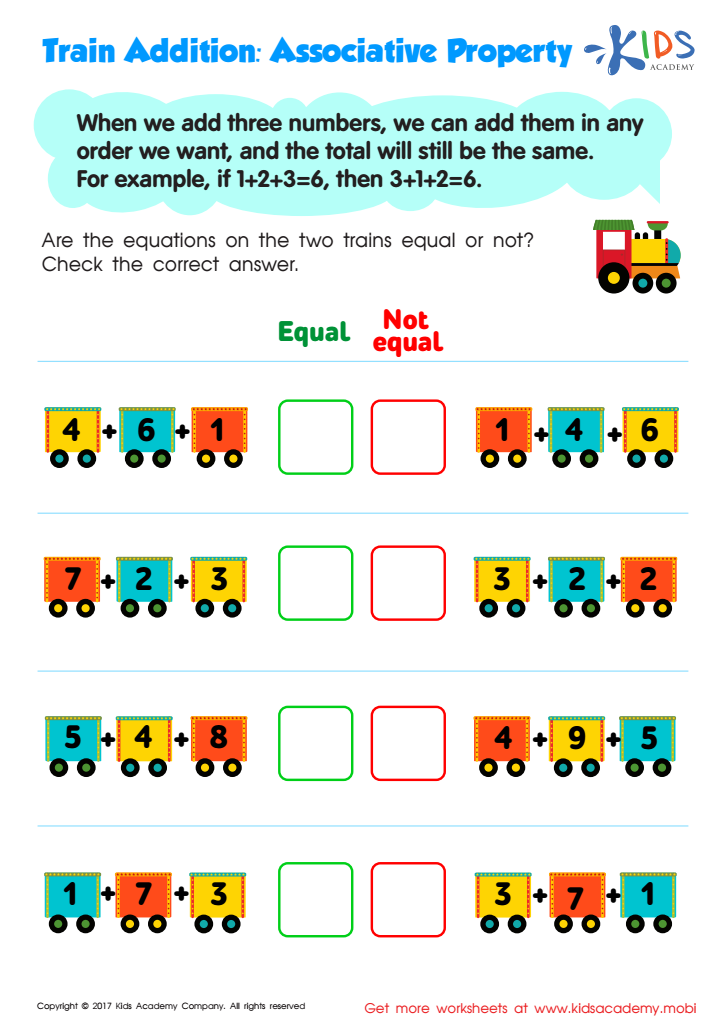
Train Addition: Associative Property Worksheet
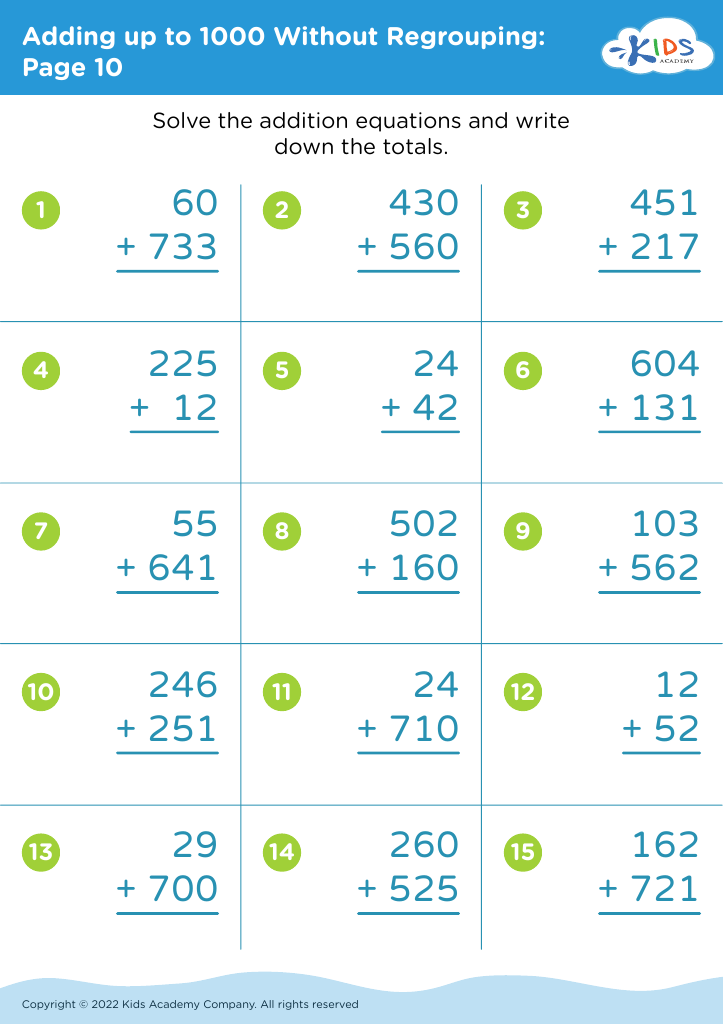








Practicing addition and subtraction for children aged 4-8 is crucial because these early math skills lay the foundation for all future mathematical learning. At this age, children are in a critical development period where their brains are exceptionally receptive to learning and absorbing new information. Mastery of basic arithmetic helps build confidence and a positive attitude towards math, which is crucial for their overall academic success.
Basic arithmetic skills foster critical thinking and problem-solving abilities. When children practice addition and subtraction, they learn to approach problems methodically and develop the ability to think logically. Understanding these concepts early on also helps children better grasp more complex mathematical concepts later, such as multiplication, division, fractions, and geometry.
Moreover, these skills are essential for daily life activities, such as counting money, telling time, measuring ingredients in a recipe, and planning. Early proficiency in math supports the development of strong general analytical skills and numeracy, which are essential in a wide range of everyday tasks and future academic subjects.
Parents and teachers play a key role in fostering a supportive and engaging learning environment. By encouraging practice in fun and interactive ways—using tools like number games, puzzles, and real-life scenarios—they help children build a strong, positive foundation in mathematics.








