Recognize patterns Addition & Subtraction Worksheets for Ages 4-8
11 filtered results
-
From - To
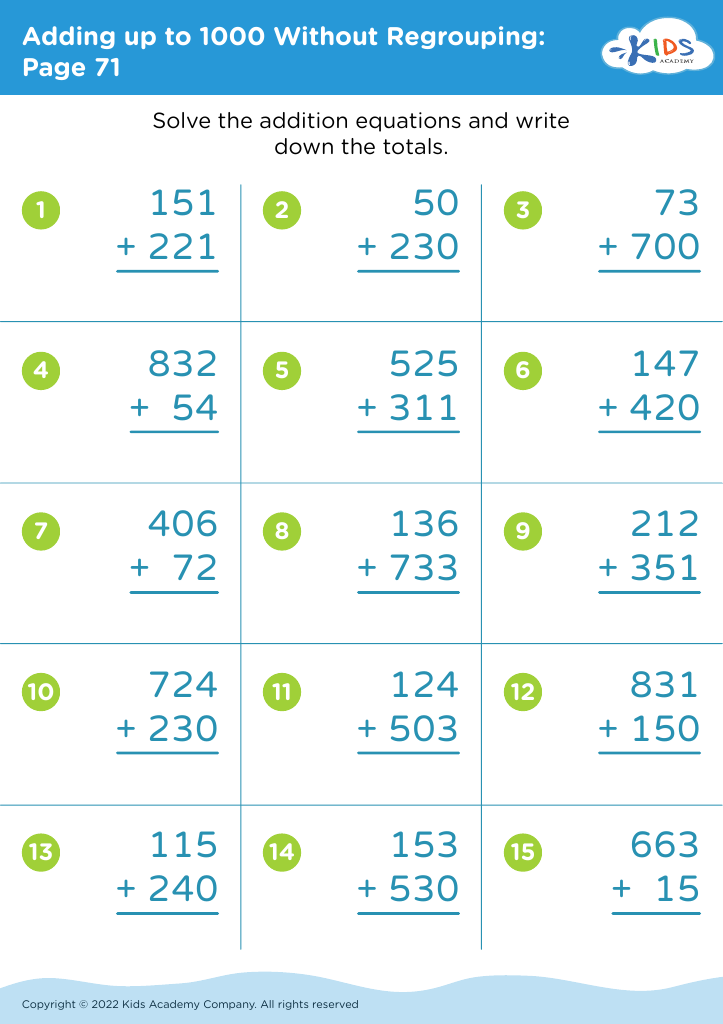
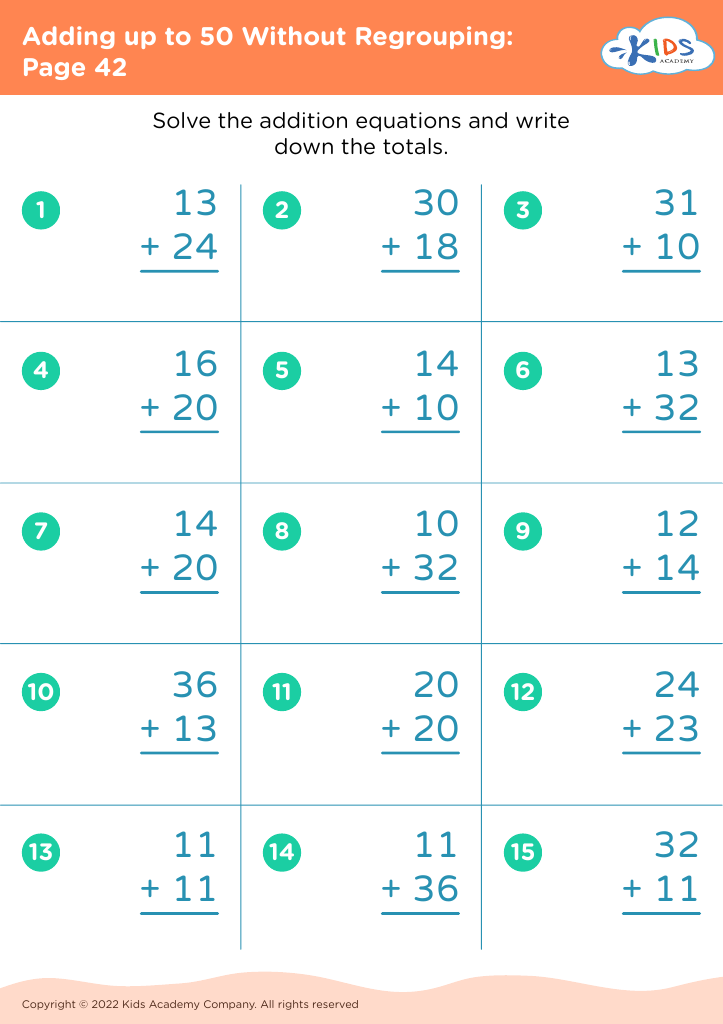
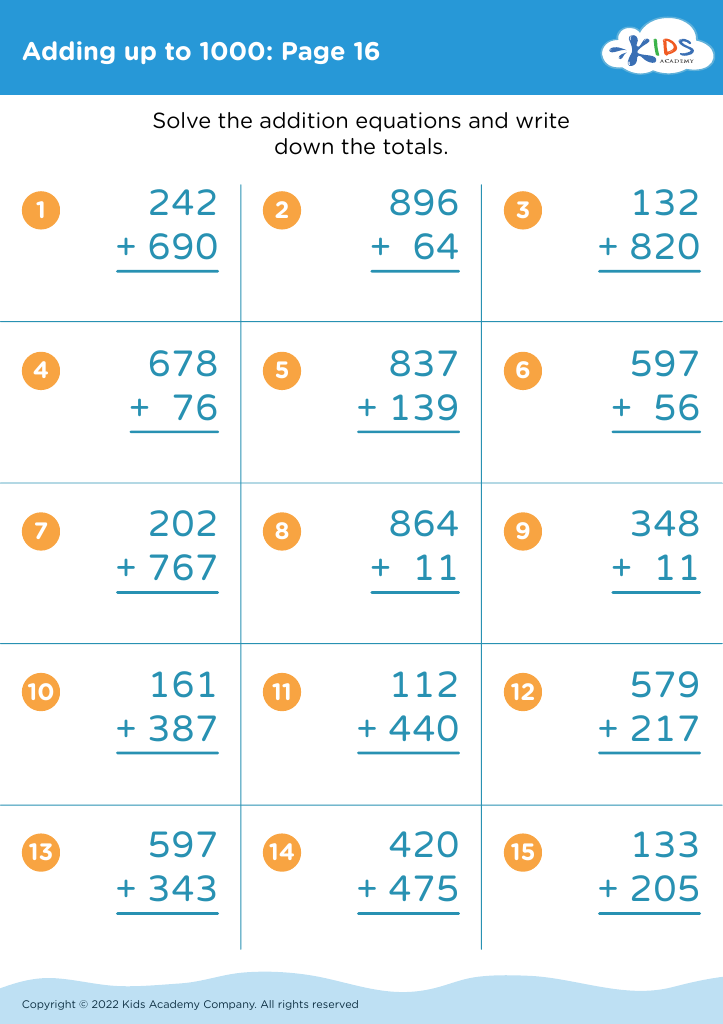
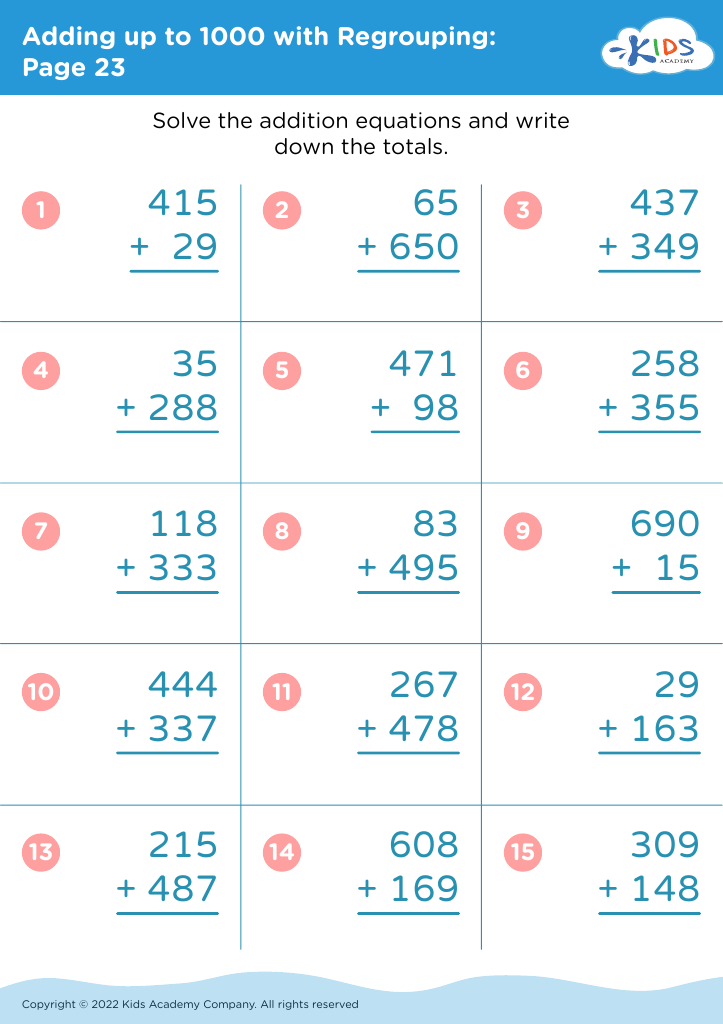
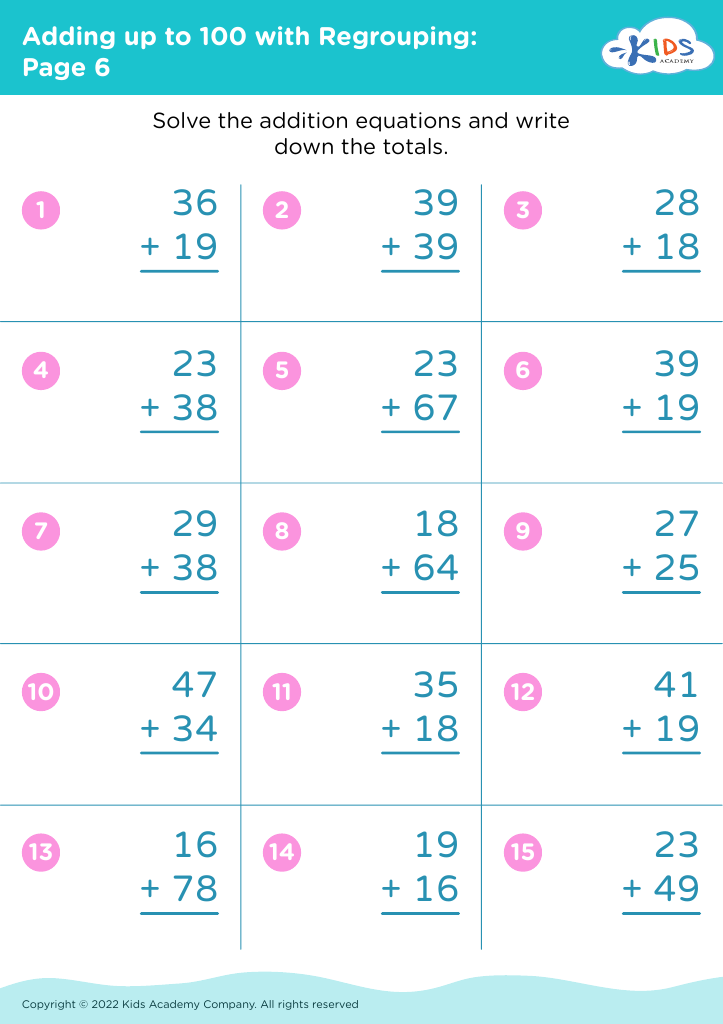
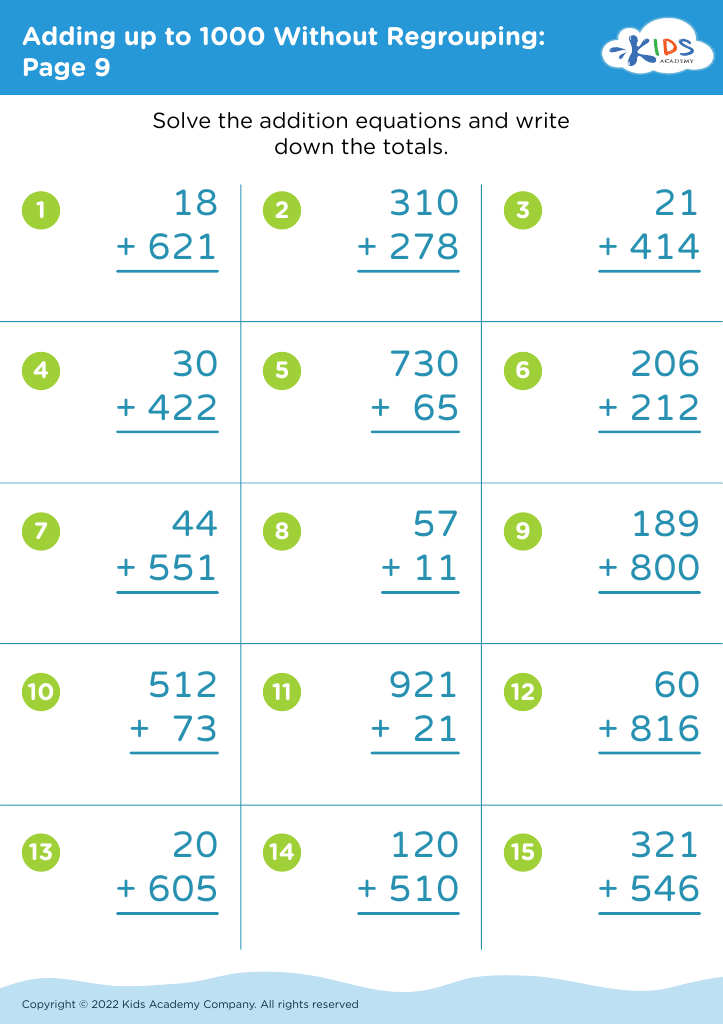
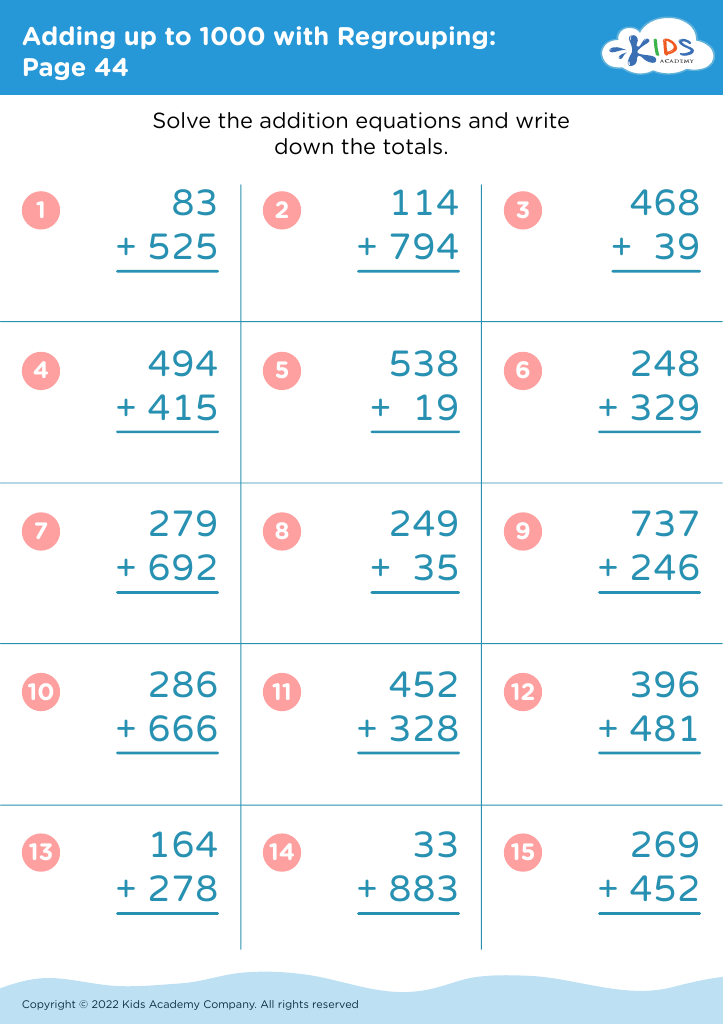
Explore our collection of "Recognize Patterns Addition & Subtraction Worksheets" designed for children aged 4-8. These engaging worksheets help young learners identify numerical patterns, enhancing their mathematical understanding and problem-solving skills. By practicing addition and subtraction through pattern recognition, children develop a strong foundation in math while boosting their confidence. Each worksheet features colorful illustrations and age-appropriate challenges that encourage critical thinking and creativity. Perfect for classroom or home use, our resources cater to diverse learning styles, making math fun and accessible for every child. Start your child's math journey today and watch them thrive with our interactive learning tools!
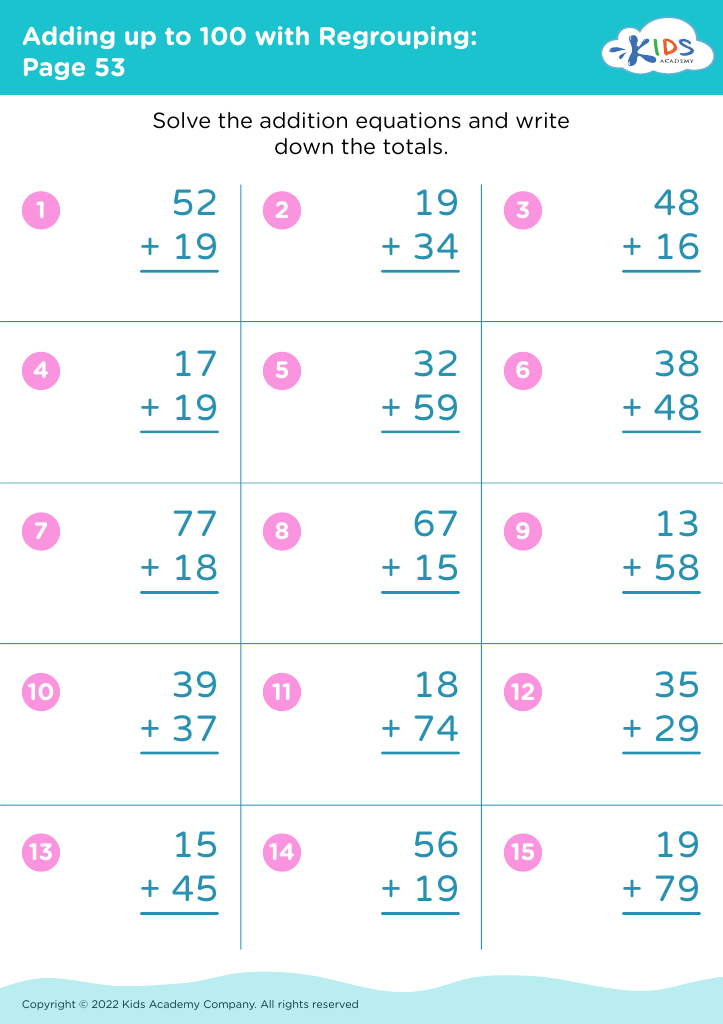
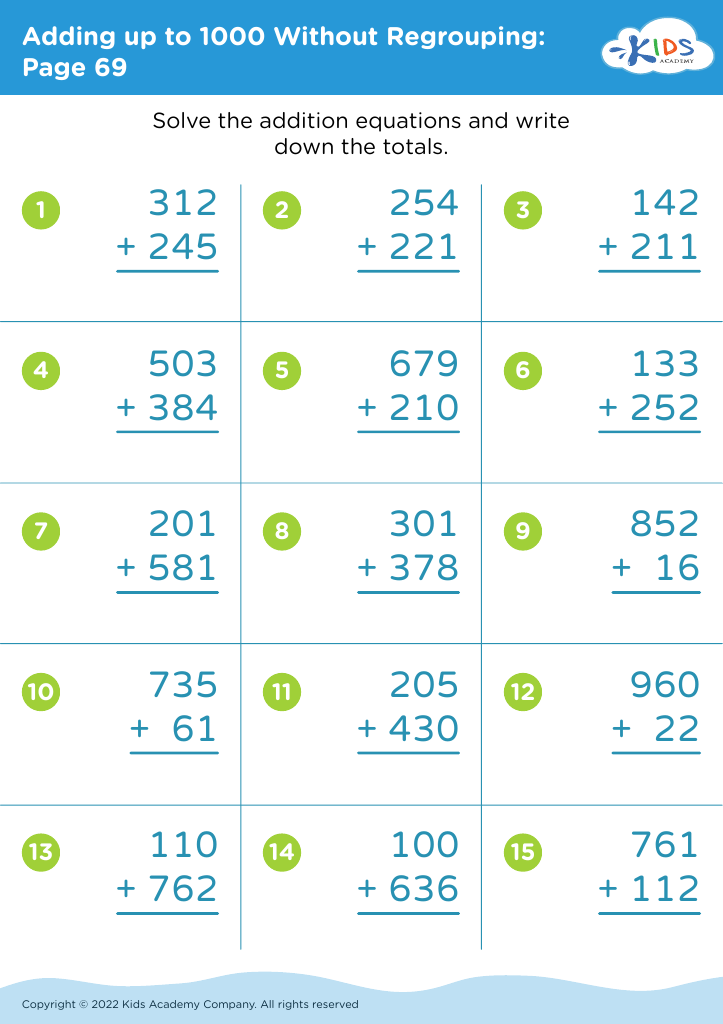
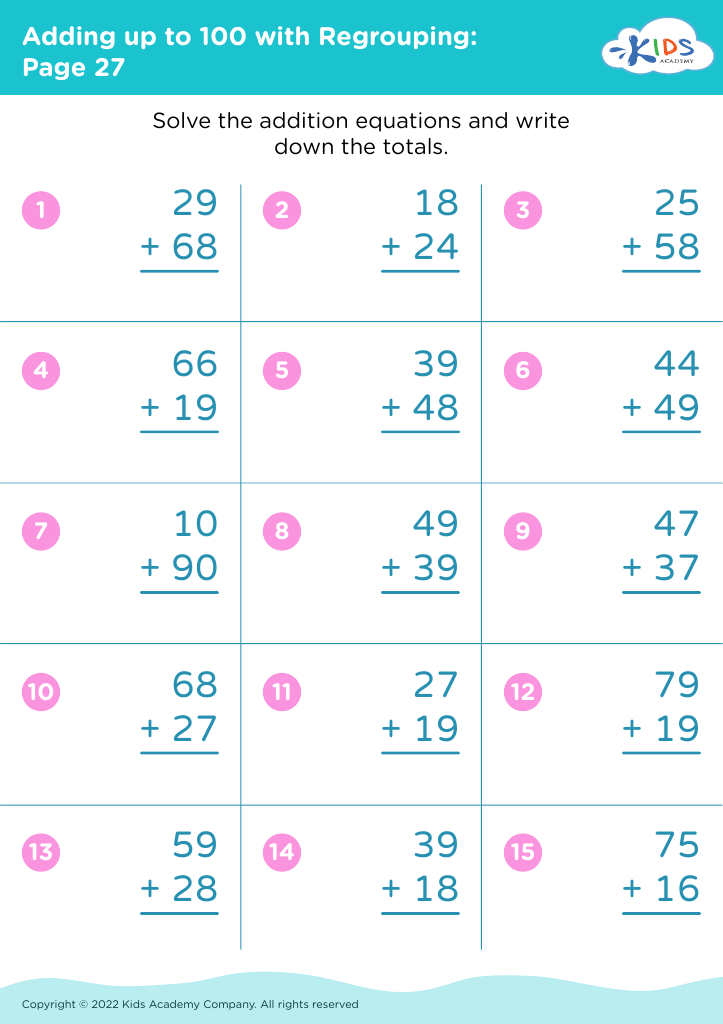
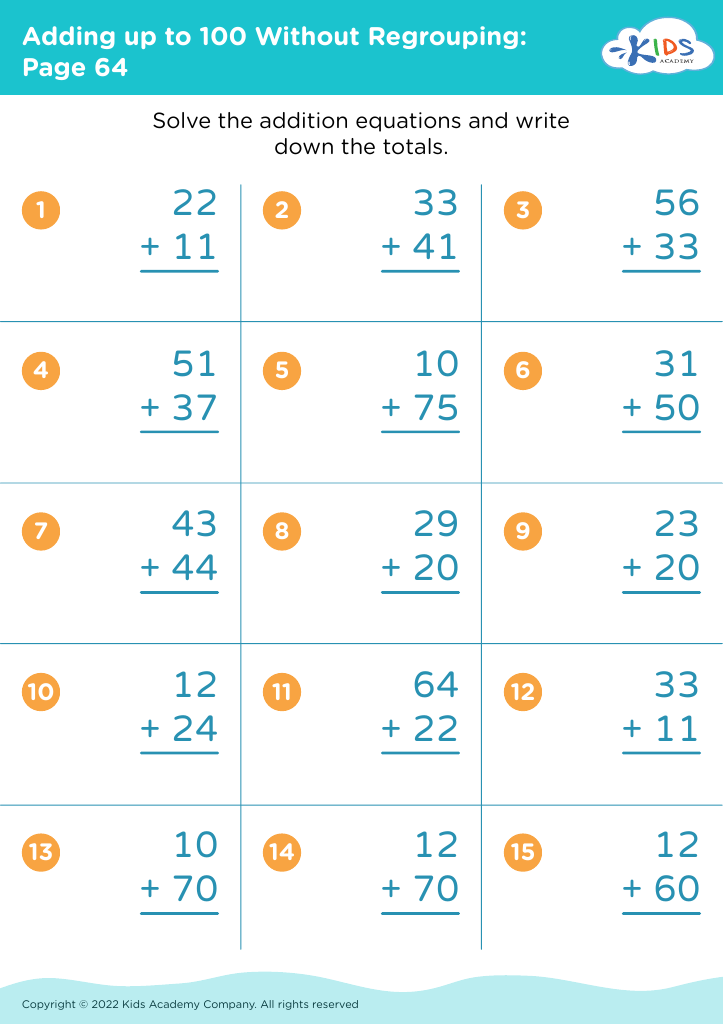








Recognizing patterns in addition and subtraction is crucial for children aged 4-8 as it lays the groundwork for essential mathematical skills. Understanding patterns not only helps children solve problems more efficiently but also aids in developing critical thinking and logical reasoning. By recognizing patterns, young learners can identify relationships between numbers, which facilitates easier manipulation of basic arithmetic operations.
For parents and teachers, nurturing this skill fosters a sense of confidence and competence in math. Children who grasp patterns are better equipped to tackle more complex concepts as they progress through their education. Moreover, recognizing patterns can make learning more engaging and fun; interactive games and activities can incorporate pattern recognition, turning challenging subjects into enjoyable experiences.
Additionally, developing proficiency in patterns enhances children's ability to make predictions and strategize, skills that are invaluable beyond math. Ultimately, supporting young learners in recognizing patterns in addition and subtraction establishes the foundational numeracy skills needed for success in their academic journeys and everyday life. This advocacy not only encourages a strong mathematical mindset but also ensures that students can transition smoothly to higher-level math concepts in later years.








