
Recognize shapes Addition & Subtraction Worksheets for Ages 4-8
9 filtered results
Difficulty Level
Grade
Age
-
From - To
Subject
Activity
Standards
Empower young learners with our "Recognize Shapes Addition & Subtraction Worksheets" designed for ages 4-8. These engaging worksheets integrate foundational math skills with vivid shape recognition activities, fostering both mathematical and cognitive development. Ideal for preschool through early elementary, each worksheet combines fun visuals with interactive problems to solidify understanding of basic arithmetic while identifying various shapes. Tailored to align with core learning standards, these printables provide a perfect blend of education and enjoyment, enhancing problem-solving abilities. Give your child the tools to excel in math, building a strong academic foundation early on. Download now and make learning a delightful adventure!
Favorites
With answer key
Interactive
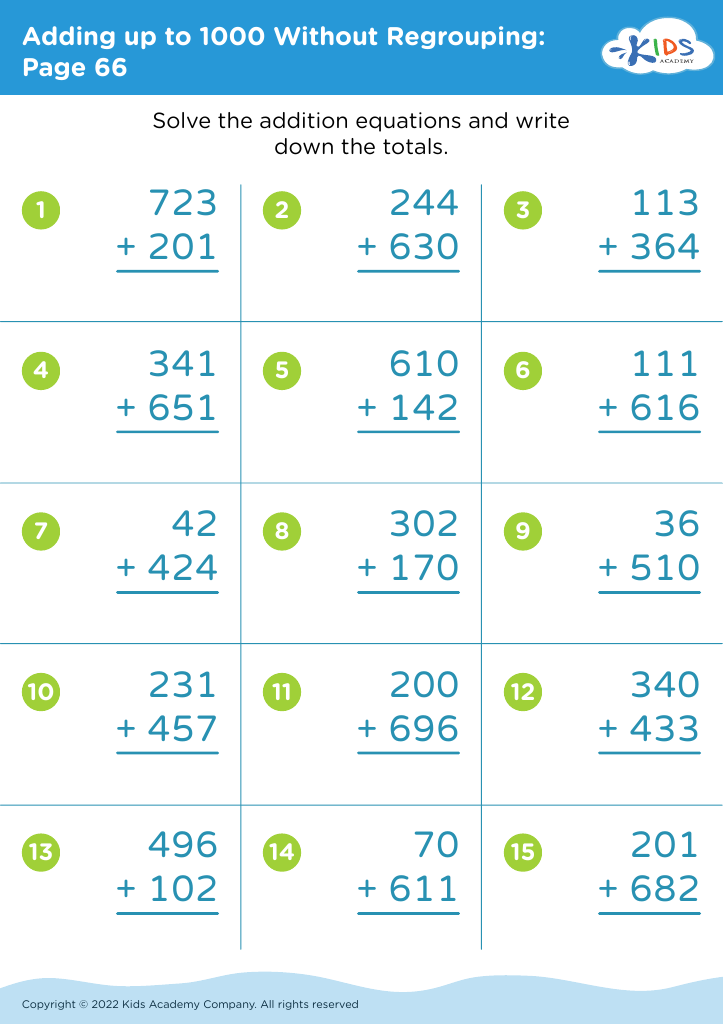
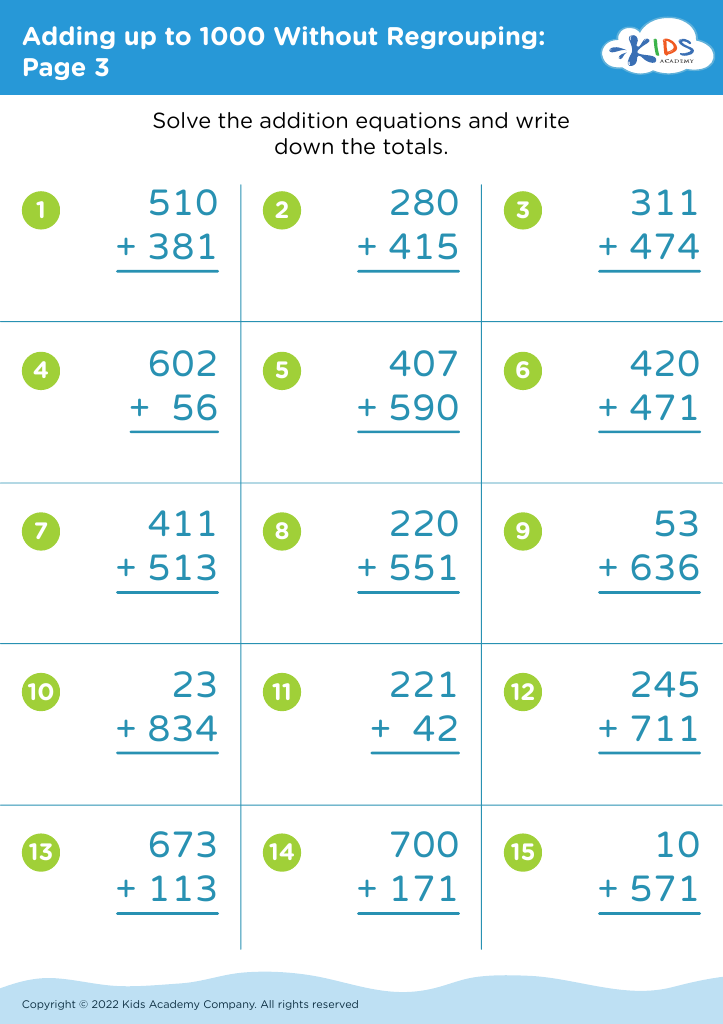
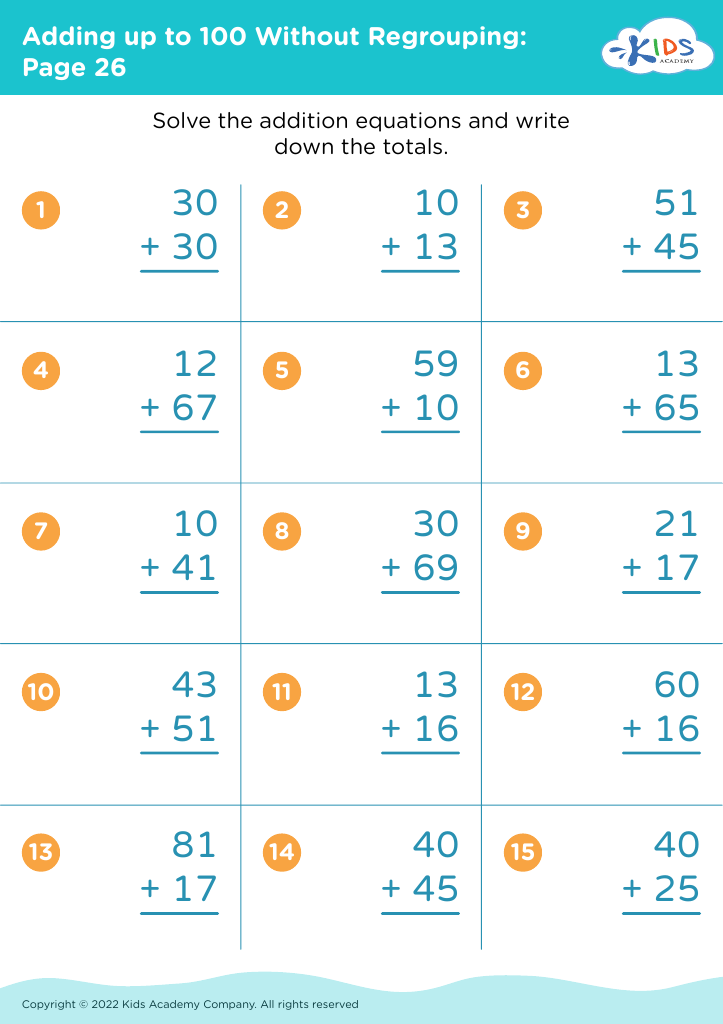
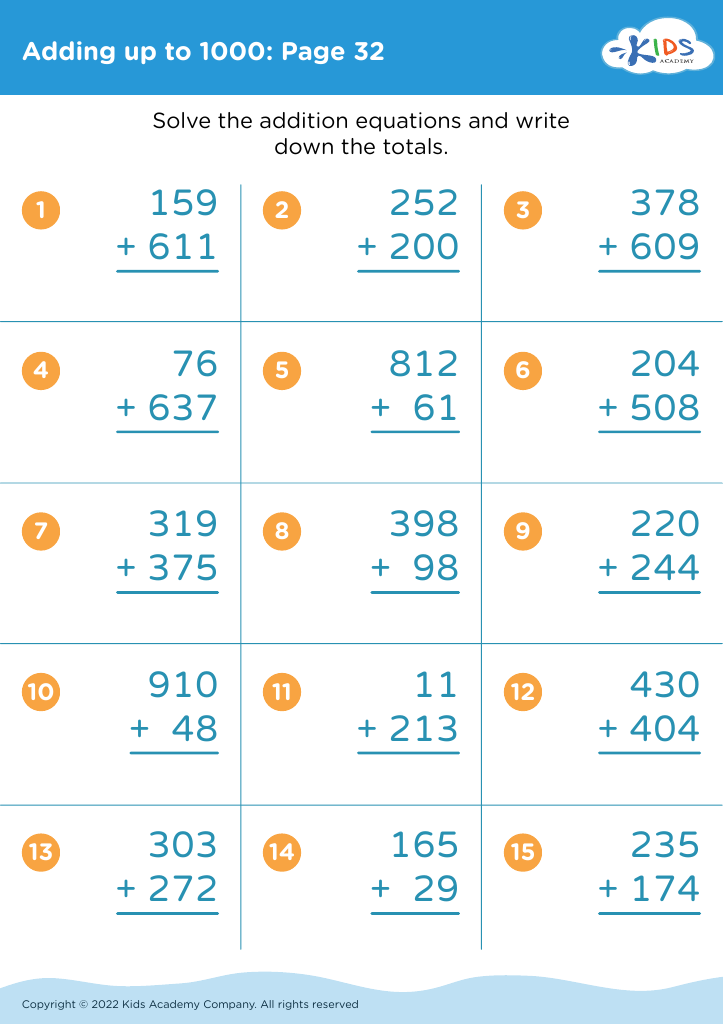
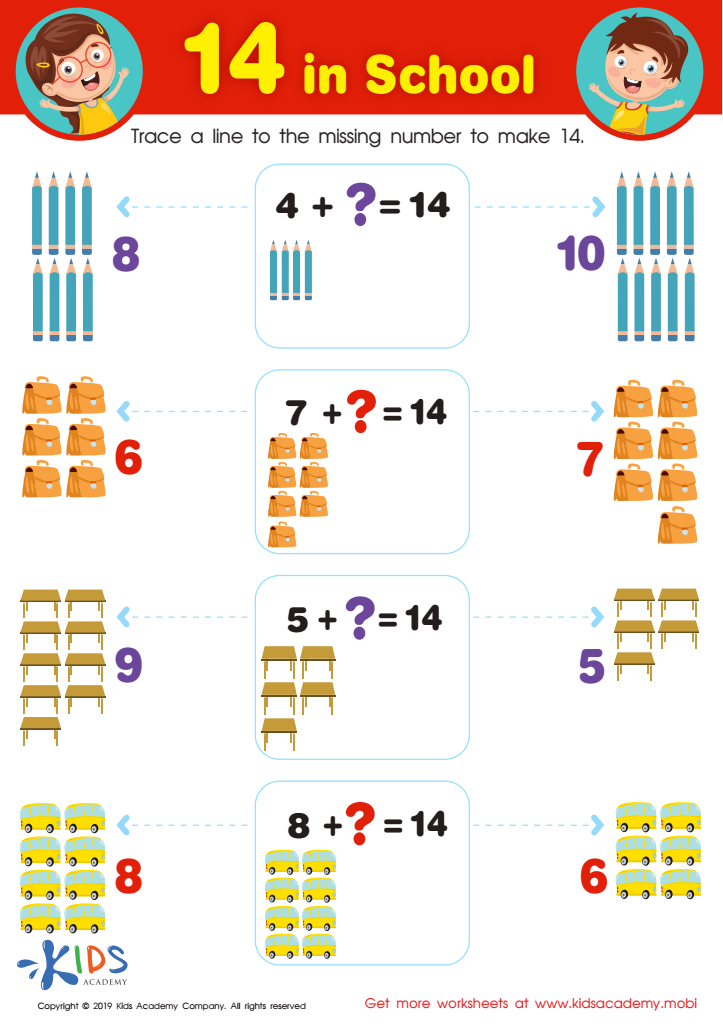
14 in School Worksheet
Remind your kids that adding different sets of numbers can give the same total (e.g. 2+3=5, 4+1=5). Ask them for more examples. Afterwards, work through the exercise. Help them count the objects and trace a line to the missing number that makes the total 14.
 Assign to My Students
14 in School Worksheet
Worksheet
Join Kids Academy for Free
Who is primarily going to use this learning content?








Parents and teachers should place a high emphasis on young children's ability to recognize shapes and basic arithmetic skills like addition and subtraction for several compelling reasons. First, understanding shapes is foundational to geometry, a crucial branch of mathematics. Knowing shapes helps children comprehend spatial relationships and properties, enhancing their ability to solve problems and understand the world around them. This skill is also linked to early literacy, as recognizing shapes often assists in developing the ability to differentiate letters and numbers, critical components of reading and writing.
Addition and subtraction are the building blocks of mathematical understanding. Mastery of these skills at an early age fosters logical thinking and problem-solving abilities. By learning to add and subtract, children develop number sense, which includes understanding the value of numbers, their relationships, and how they can be manipulated. These abilities are vital not only for more complex math concepts they will encounter in higher grades but also for everyday tasks and decision making.
Furthermore, early proficiency in these areas boosts confidence and academic readiness. Children who find early success in math are more likely to enjoy and pursue subjects involving complex reasoning and analytical thinking. Therefore, focusing on these fundamental concepts can set a solid educational foundation, promote long-term academic achievement, and instill a love for learning.








