Understand number relationships Addition & Subtraction Worksheets for Ages 4-8
3 filtered results
-
From - To
Discover our "Understand Number Relationships: Addition & Subtraction Worksheets" designed for children ages 4-8. These engaging worksheets help young learners explore the connections between numbers through fun, interactive activities. By promoting a solid foundation in addition and subtraction, these resources enhance essential math skills while fostering a deeper understanding of number relationships. Each worksheet features colorful illustrations and age-appropriate challenges, ensuring an enjoyable learning experience. Perfect for classrooms or at-home practice, our worksheets align with educational standards and make mastering math concepts accessible and fun. Empower your child's mathematical journey today with our carefully crafted materials!
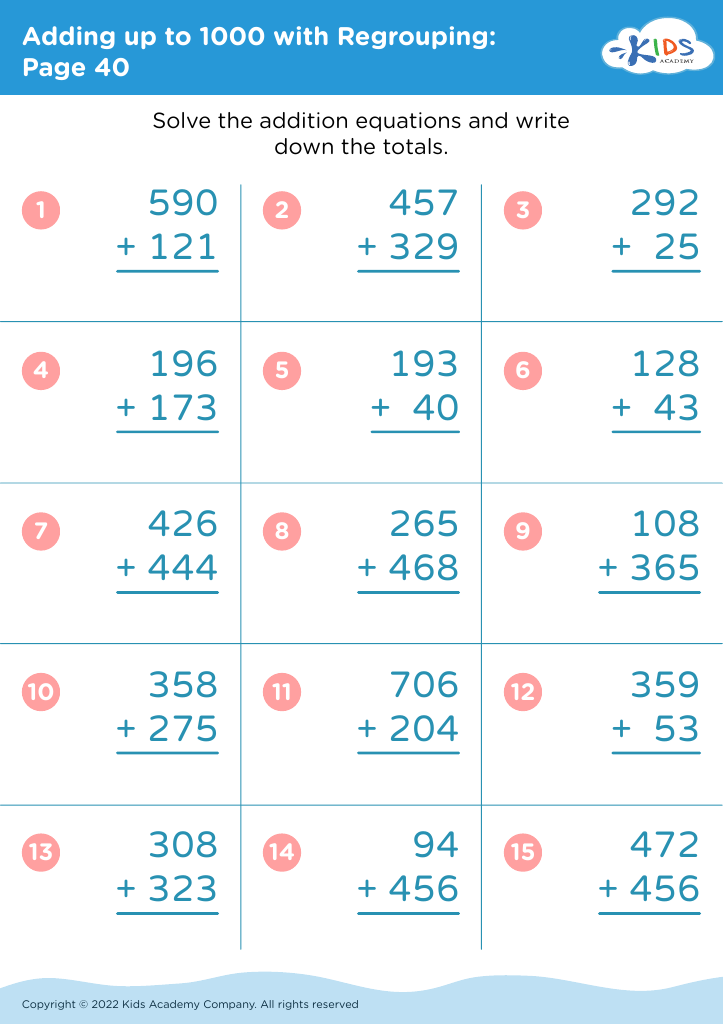
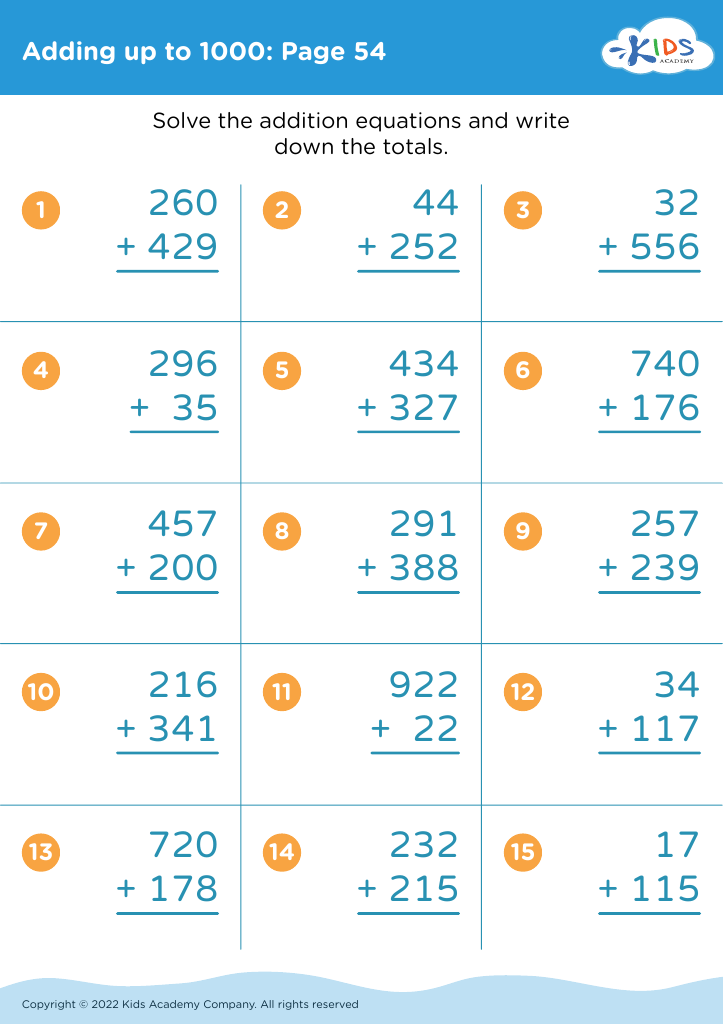
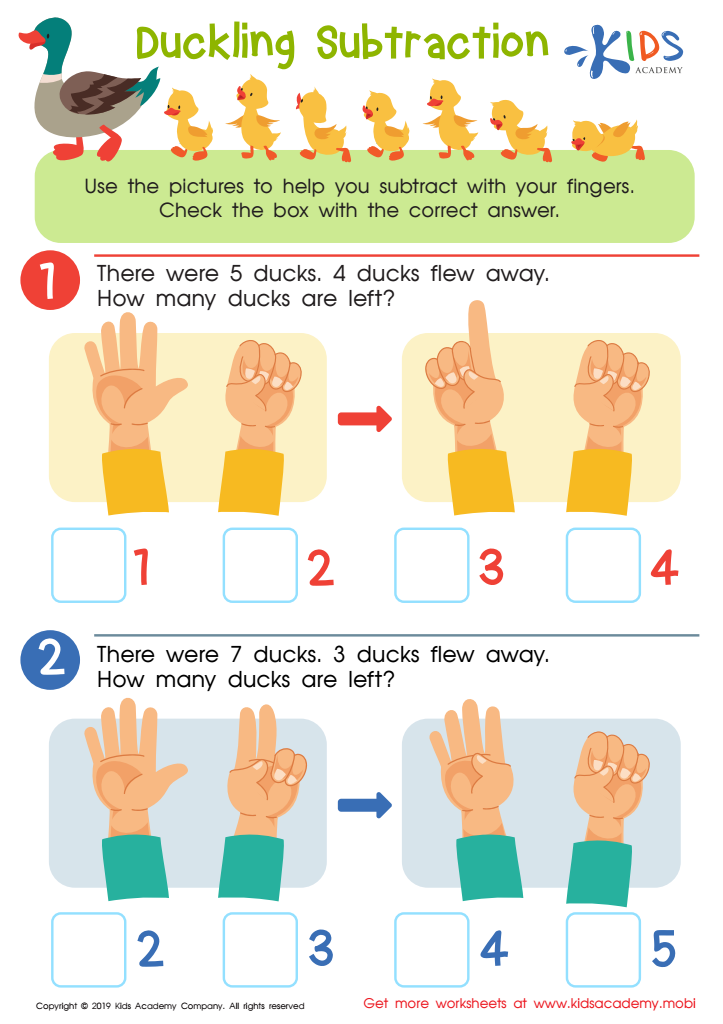
Duckling Subtraction Worksheet
 Assign to My Students








Understanding number relationships in addition and subtraction is crucial for children aged 4-8 as it forms the foundation for all future mathematical concepts. During these formative years, kids develop essential skills to comprehend how numbers interact with one another. This comprehension not only helps them perform basic operations but also enhances their problem-solving abilities.
By grasping concepts such as “more than” and “less than,” children become equipped to compare quantities and engage in meaningful mathematical conversations. It fosters their ability to visualize problems, crucial for developing higher-order thinking skills later on. Additionally, early number relationships encourage a sense of curiosity and motivation, making math more approachable and enjoyable.
Teachers and parents should care because infants to this age group are natural explorers and learners. By providing a solid grounding in number relationships, they help shape confident, capable individuals who can tackle increasingly complex tasks as they progress. Moreover, a strong foundation in these skills can significantly impact a child’s academic success, influencing not only math-related subjects but overall learning. Establishing this understanding will create lifelong learners who appreciate mathematics beyond the classroom.








