Understand patterns Addition & Subtraction Worksheets for Ages 4-8
6 filtered results
-
From - To
Discover our engaging "Understand Patterns: Addition & Subtraction Worksheets" designed specifically for children aged 4-8. These worksheets help young learners grasp the essential concepts of addition and subtraction through interactive pattern recognition activities. By identifying and creating patterns, kids build a strong foundation in math while enhancing their critical thinking skills. Each worksheet is thoughtfully crafted to make learning fun and enjoyable, allowing children to practice at their own pace. Ideal for home or classroom use, our resources promote a deeper understanding of numeric relationships and foster a love for mathematics. Start exploring today to inspire creativity and confidence in your child's math journey!
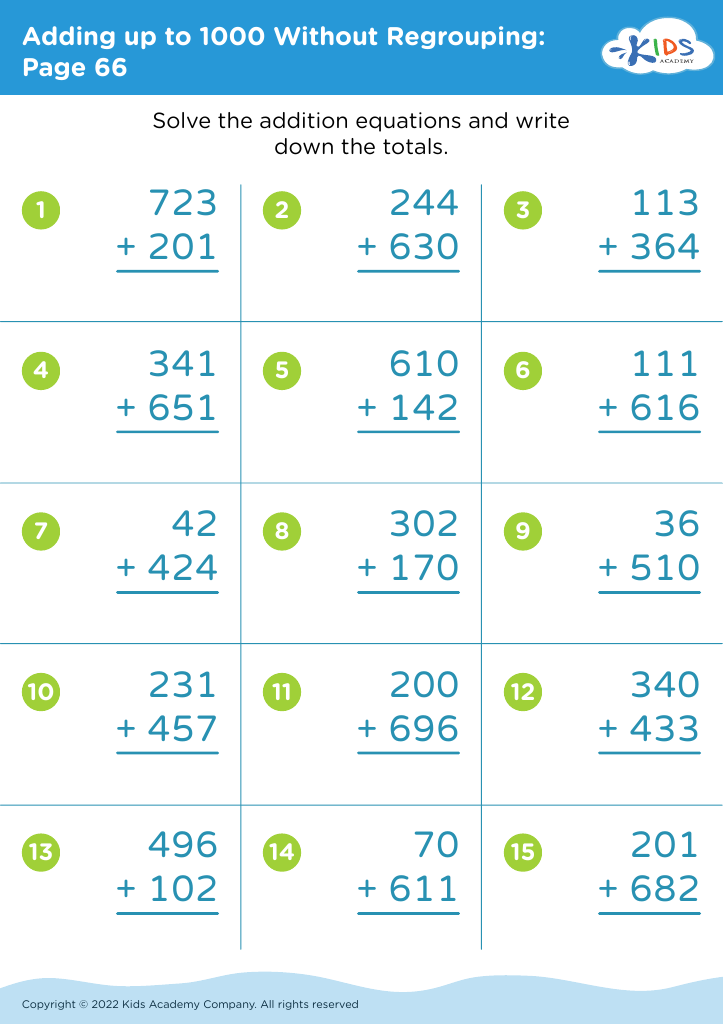
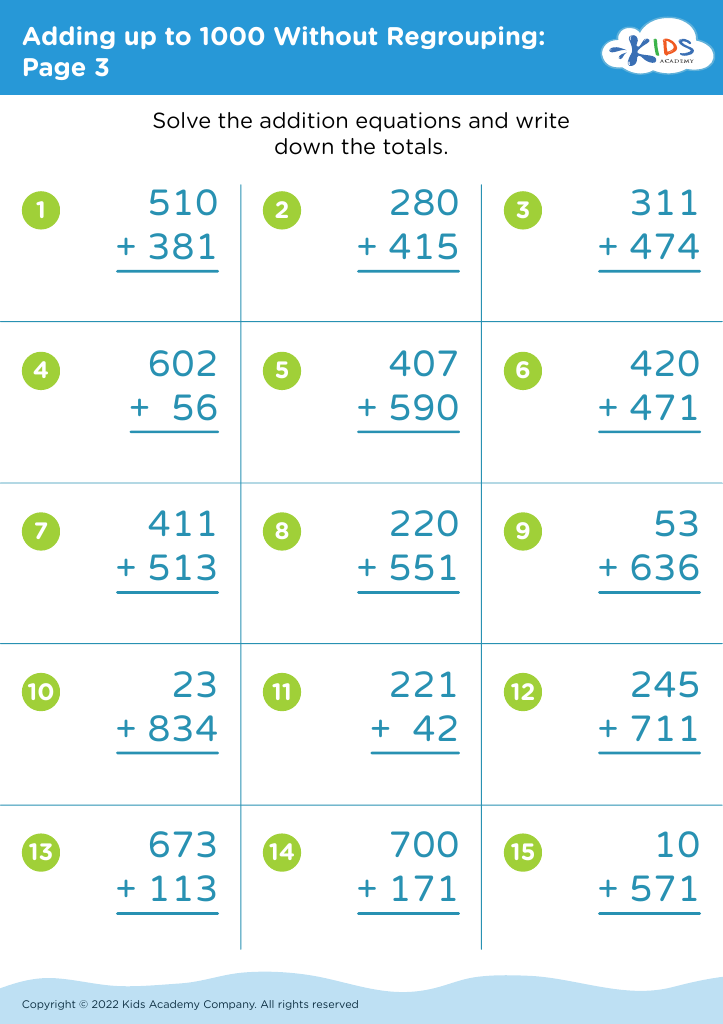
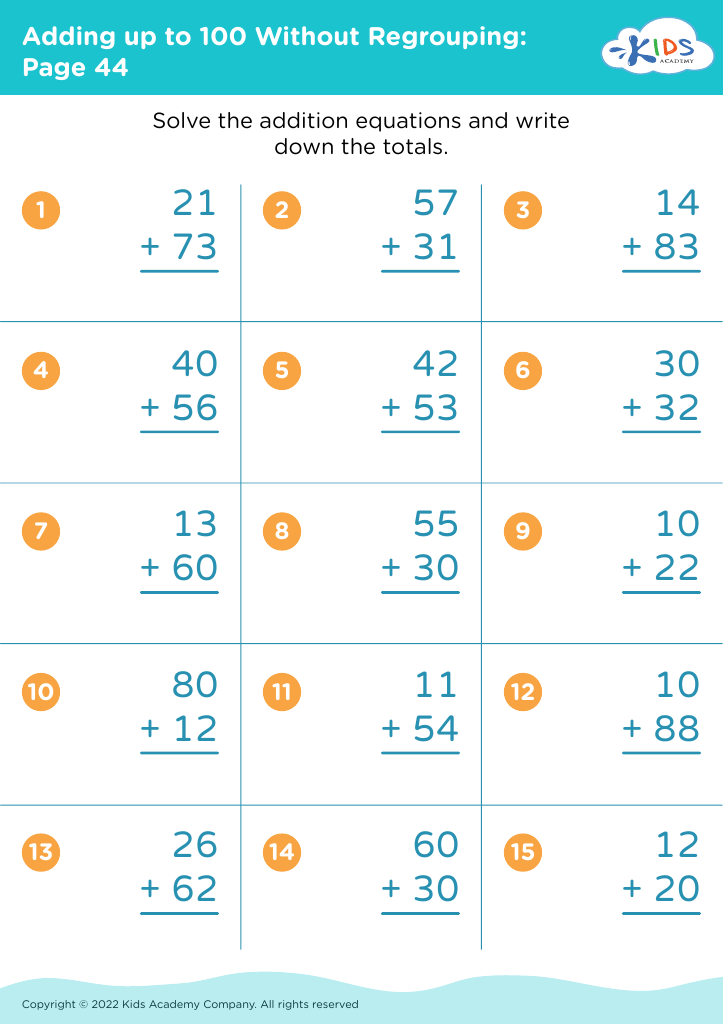
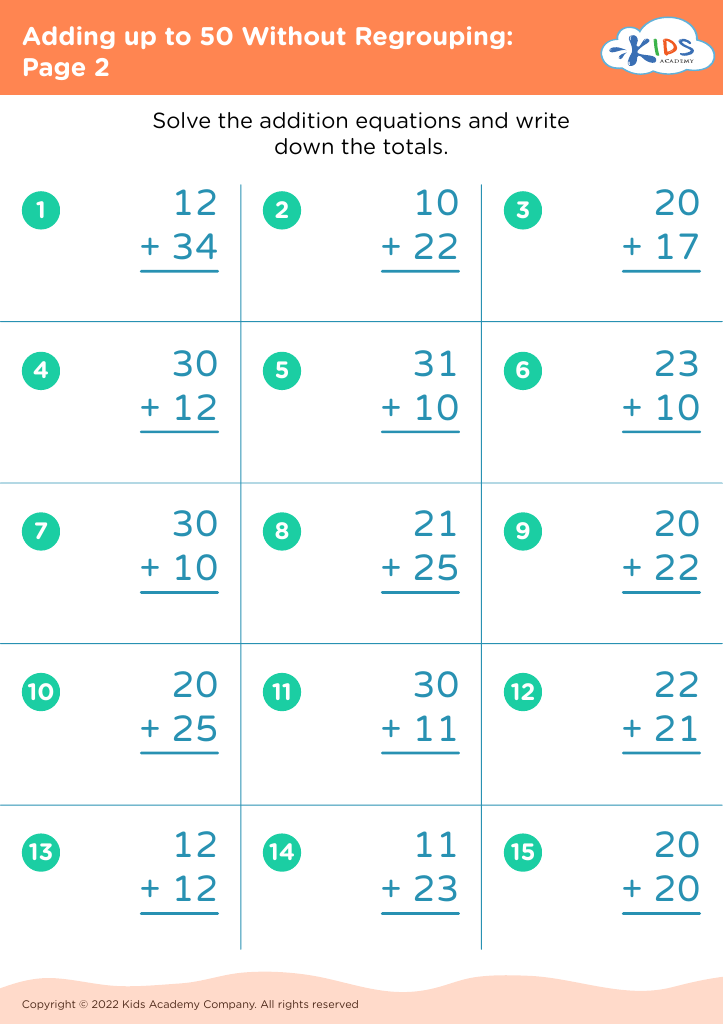








Understanding patterns in addition and subtraction is crucial for children aged 4-8, as it lays a foundation for their future mathematical skills. When children engage with patterns—recognizing, predicting, and creating—they develop critical thinking and problem-solving abilities. This understanding allows young learners to make sense of numbers more easily, as they can identify relationships between quantities, which is essential for grasping the concepts of addition and subtraction.
For parents and teachers, fostering this knowledge means helping children build confidence in their mathematical abilities. As children recognize patterns, they often find math less intimidating and more enjoyable. Additionally, explaining patterns can make the connection to real-world scenarios, such as sharing snacks or understanding schedules, making learning more relevant.
Moreover, mastery of basic addition and subtraction through patterns can lead to improved performance in more complex mathematical concepts later on. Early intervention in these foundational skills also encourages a growth mindset—instilling an understanding that challenges can be met with persistence and practice. By nurturing pattern recognition, parents and teachers are not only enhancing mathematical understanding but also promoting cognitive development and lifelong learning skills in children.








