Understanding equations Addition & Subtraction Worksheets for Ages 4-8
7 filtered results
-
From - To
Help children master essential arithmetic skills with our "Understanding Equations: Addition & Subtraction Worksheets for Ages 4-8." Tailored for young learners, these fun and engaging worksheets simplify complex concepts, making math both accessible and enjoyable. Kids will develop a solid foundation in understanding and solving addition and subtraction equations through a variety of colorful, age-appropriate activities. Perfect for both home and classroom settings, our worksheets feature interactive problems and reward-based learning to keep little minds motivated. Equip your child with the confidence and skills needed for future math success today! Start their exciting learning journey now!
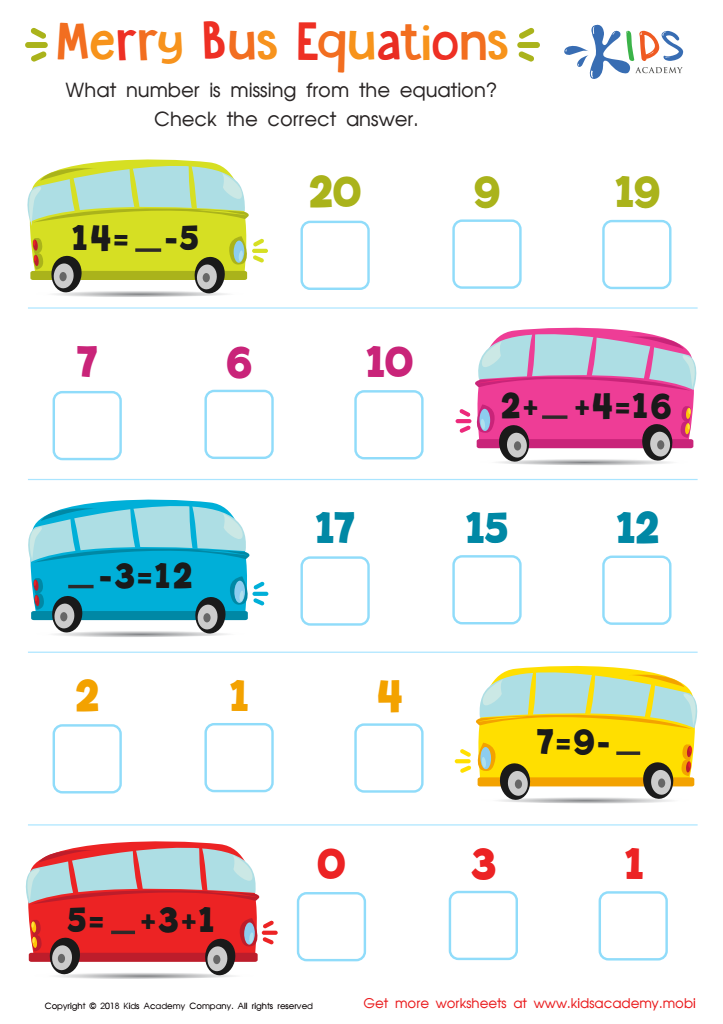
Merry Bus Equations Worksheet
 Assign to My Students
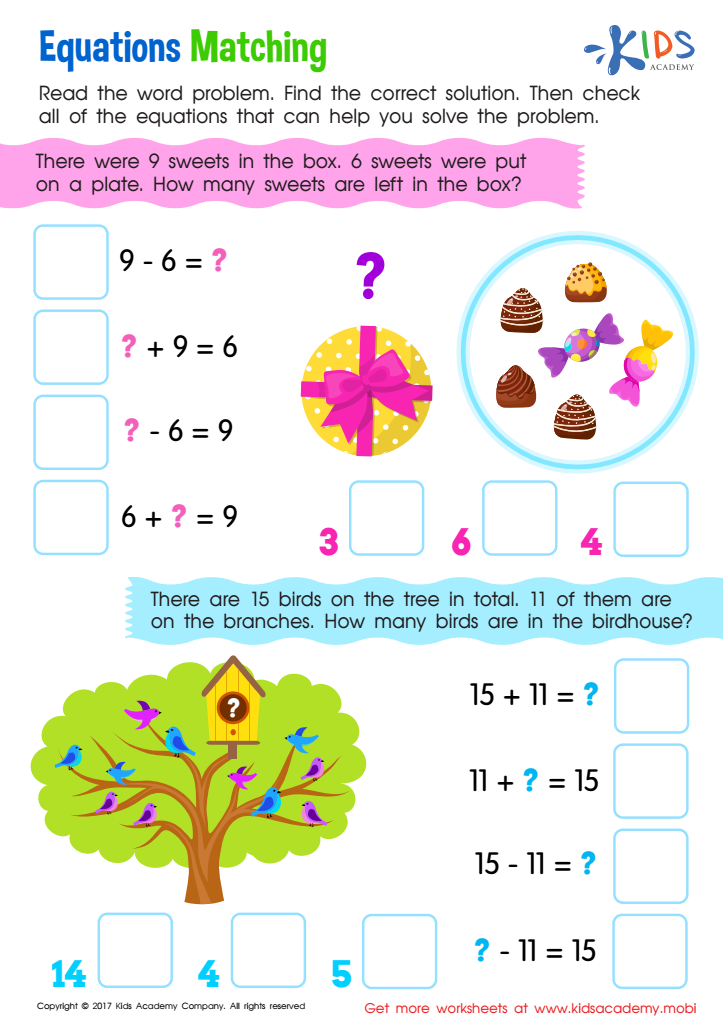
Equations Matching Word Problems Worksheet
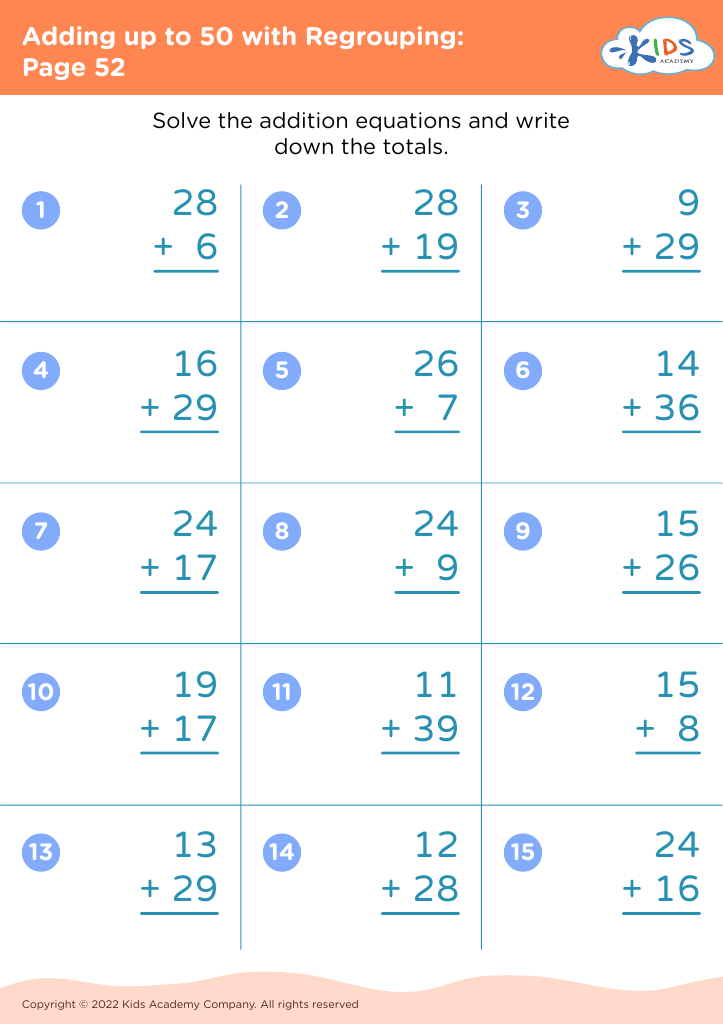
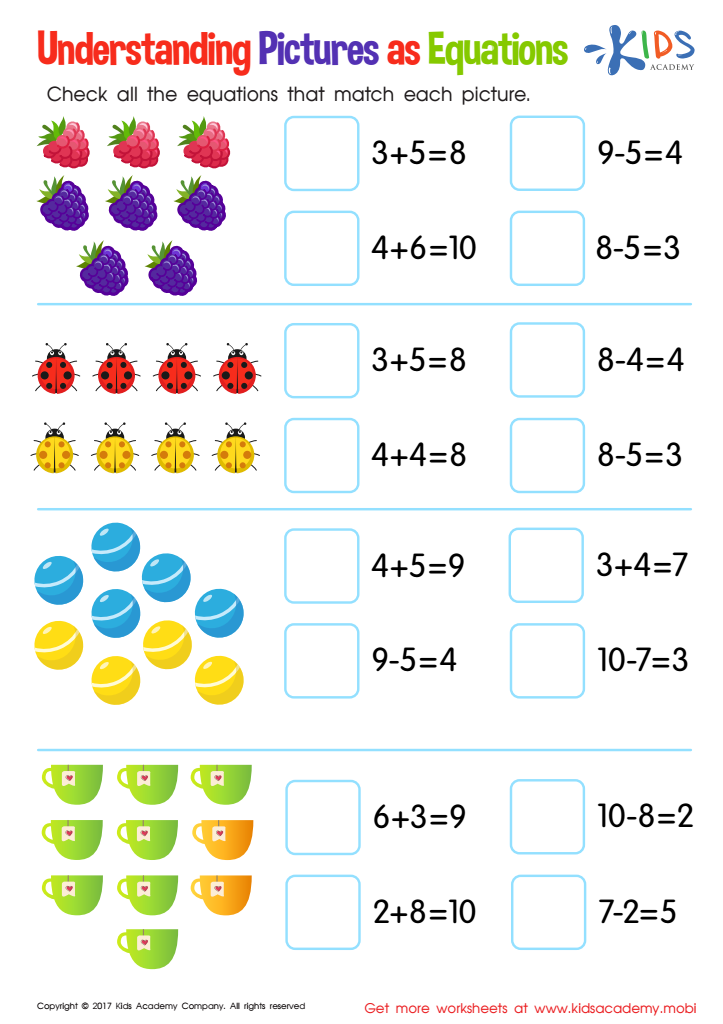
Understanding Pictures as Equations Worksheet
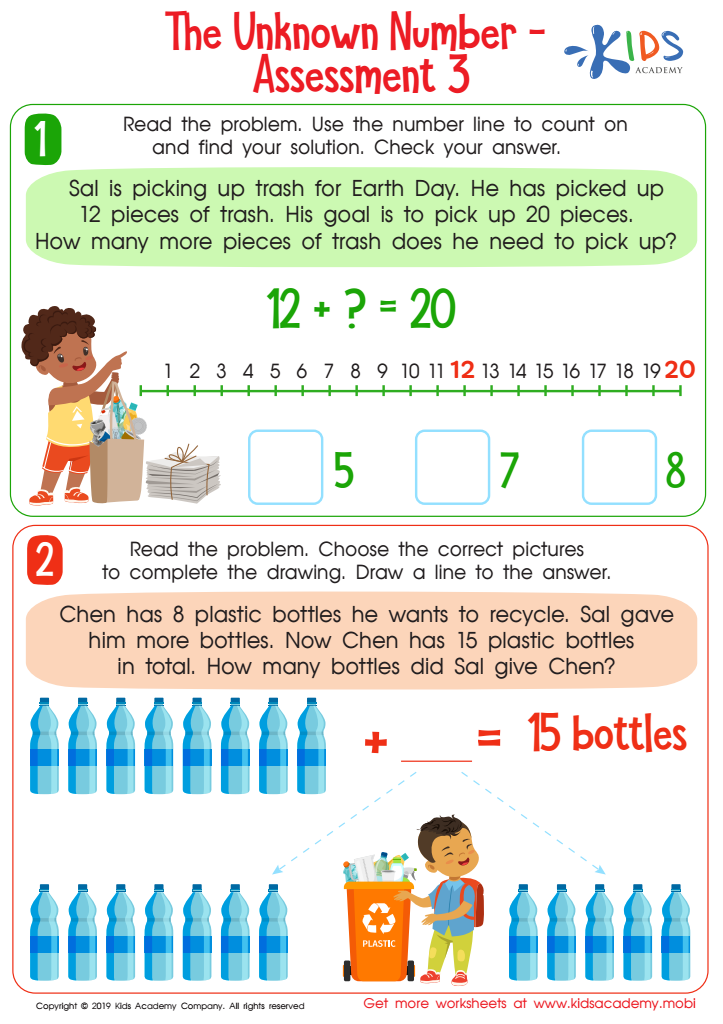
The Unknown Number - Assessment 3 Worksheet
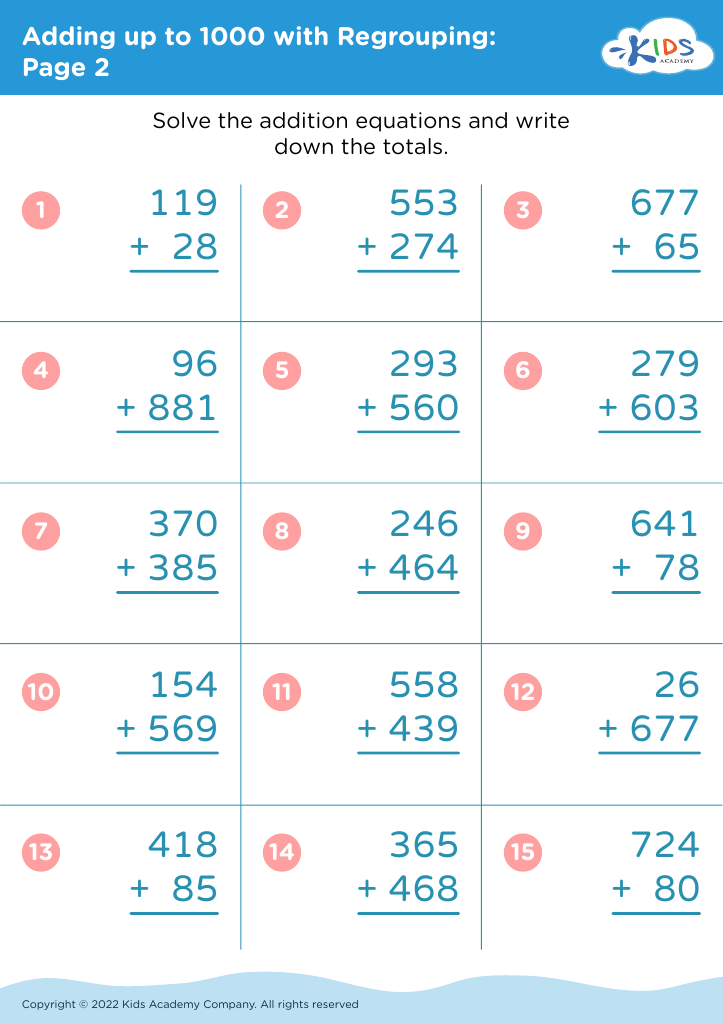
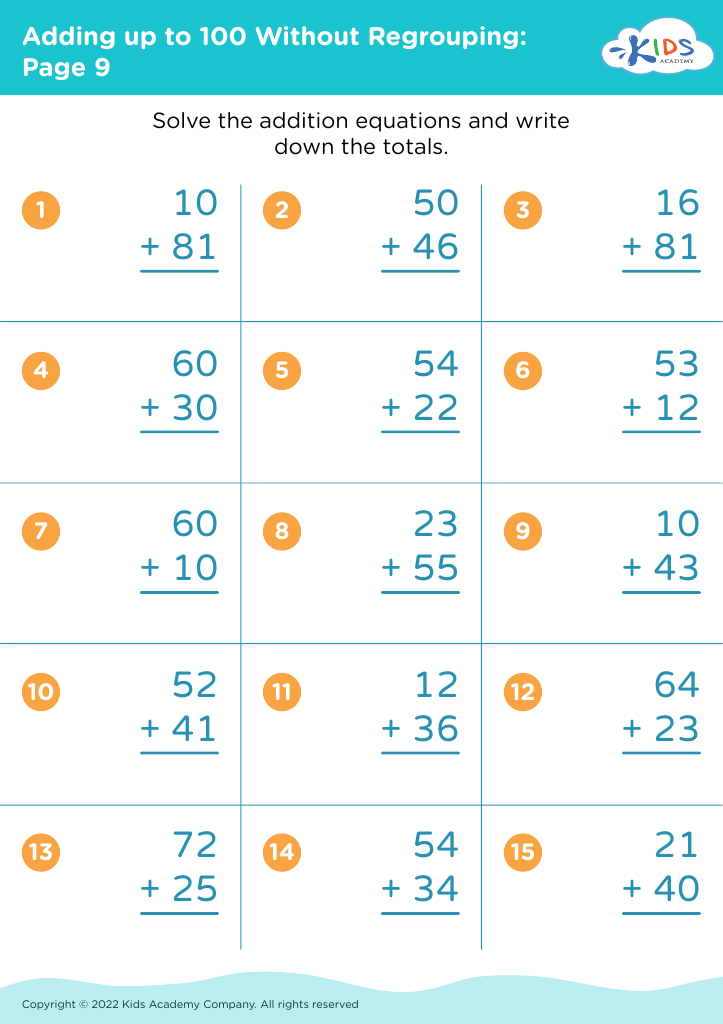








Understanding equations involving addition and subtraction at an early age is critical for children's cognitive and academic development. For children ages 4-8, basic math concepts lay the foundation for more complex problem-solving skills and logical thinking that they will use throughout their lives. When parents and teachers emphasize these skills, they are helping to build confidence and instill a sense of accomplishment in children.
Moreover, early math understanding is closely linked to later academic success, not just in mathematics, but across all subjects including science, reading, and social studies. When children grasp how to manipulate numbers through addition and subtraction, they develop analytical skills and learn to approach problems methodically. These early experiences with math concepts can demystify the subject and reduce math-related anxiety as they progress in their education.
Additionally, understanding how to deal with numbers improves daily life skills such as telling time, coping with money, and even following recipes. Parents and teachers should, therefore, provide numerous opportunities for young learners to practice these fundamental skills in a variety of activities, making learning engaging and relevant. This early engagement not only fosters a positive attitude towards mathematics but also prepares children for future academic challenges and everyday situations.








