Animal identification Addition Worksheets for Ages 4-8 - Page 2
27 filtered results
-
From - To
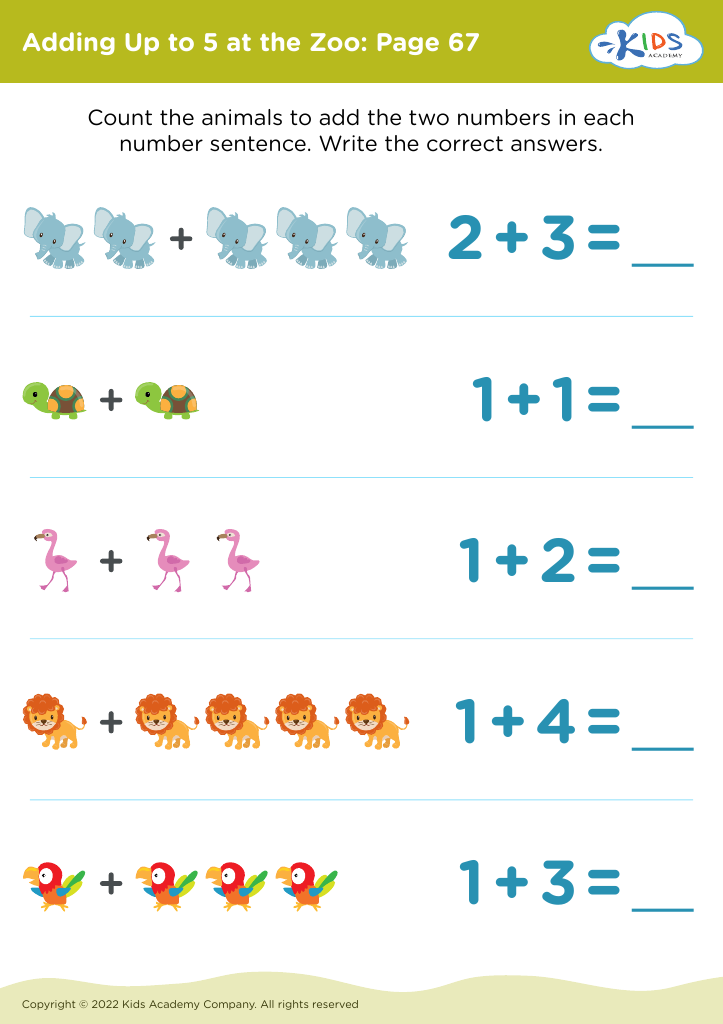
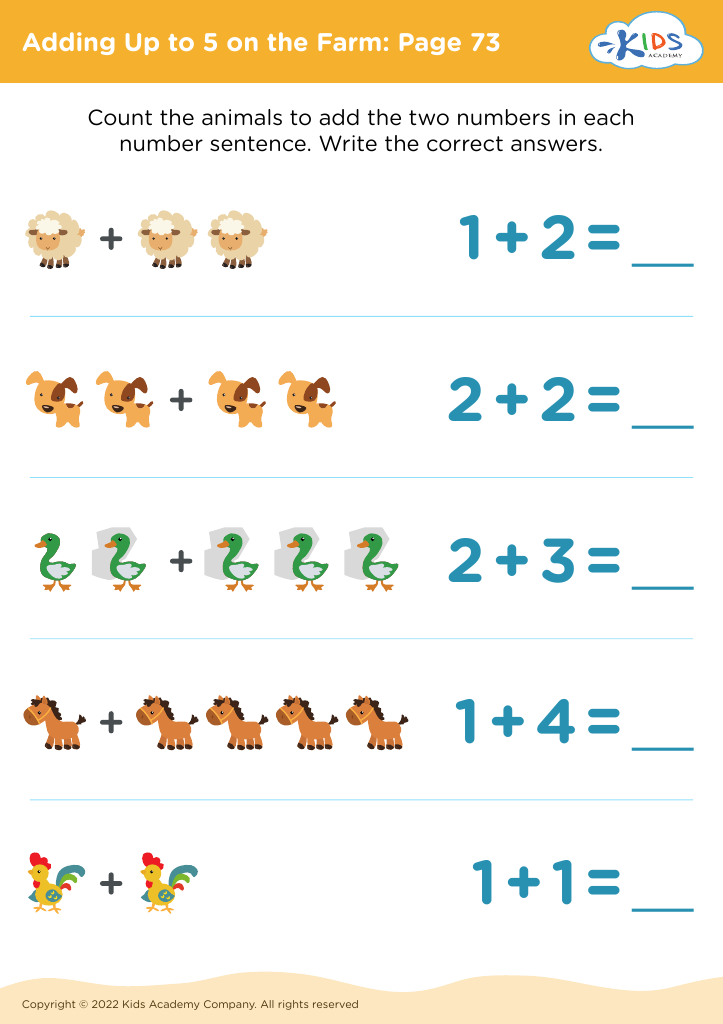
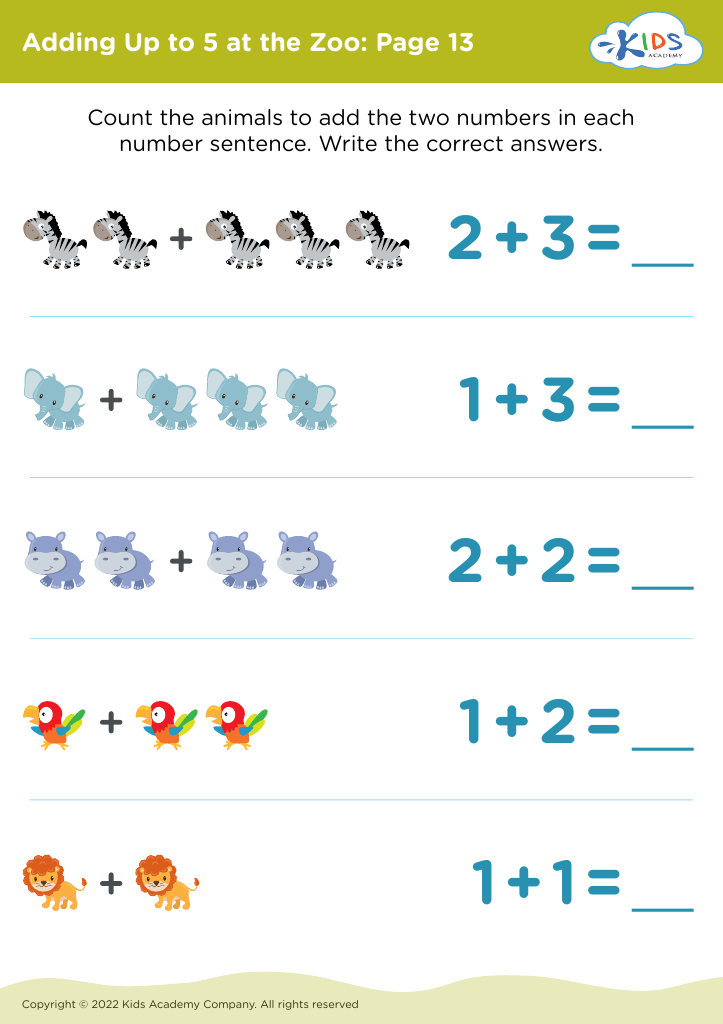








Parents and teachers should care about Animal Identification Addition for ages 4-8 because it serves as an engaging educational tool that merges foundational math skills with natural science learning. At this developmental stage, children are highly curious and perceptive, absorbing new information about the world around them with eagerness. Animal Identification Addition combines counting, sorting, and recognizing animals which not only sharpens their numerical proficiency but also broadens their knowledge of different species and habitats.
This dual focus harnesses multiple cognitive skills: number comprehension, memory, categorization, and language development. Through identifying and counting animals, children can see math as a useful tool in understanding their environment. This approach caters to varying learning styles; visual learners benefit from the images, kinesthetic learners from physical counting activities, and tactile learners from interactive materials.
Furthermore, animal-themed educational activities often capture children’s attention more readily than abstract symbols or mere digits. This increased engagement leads to better retention and enthusiasm for learning. Additionally, incorporating themes like animals can foster a sense of empathy and curiosity for living creatures, enriching social-emotional development.
Thus, Animal Identification Addition offers a holistic educational experience, intertwining essential academic skills with insightful knowledge of the natural world, making learning both informative and enjoyable for young children.








