Filters

16 filtered results

Clear all filters
Favorites
With answer key
Interactive

16 filtered results

Difficulty Level

Grade


Welcome to our collection of Basic Addition Worksheets for ages 4-8! Designed to enhance early math skills, these engaging worksheets help young learners grasp fundamental addition concepts through fun activities. With a variety of problems including simple sums, visual aids, and interactive exercises, children will build confidence as they practice addition in different contexts. Perfect for homeschooling or classroom use, our worksheets cater to different learning styles, ensuring every child can succeed. Discover the joy of learning with our colorful and accessible resources, and watch your little ones master basic addition while engaging their minds creatively!
Check out this FREE Trial Lesson on Addition for age 4-8!

Z

Favorites
With answer key
Interactive
  • 4-8
  • Basic Addition
  • Addition
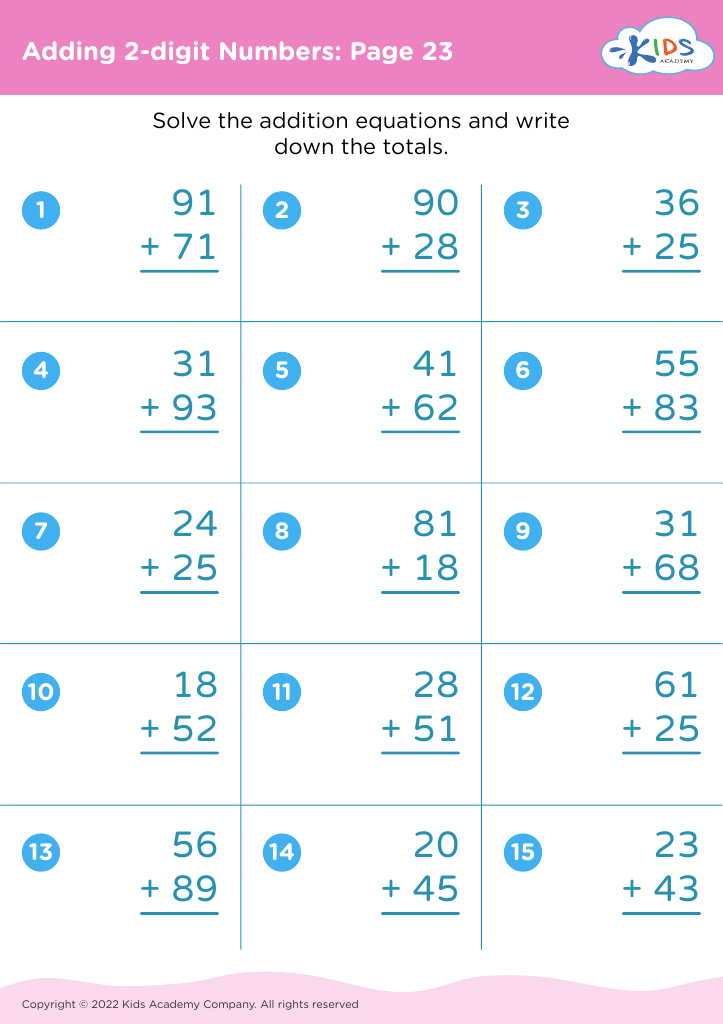
Adding 2-digit Numbers: Page 23

Adding 2-digit Numbers: Page 23

Adding 2-digit Numbers: Page 23
Worksheet
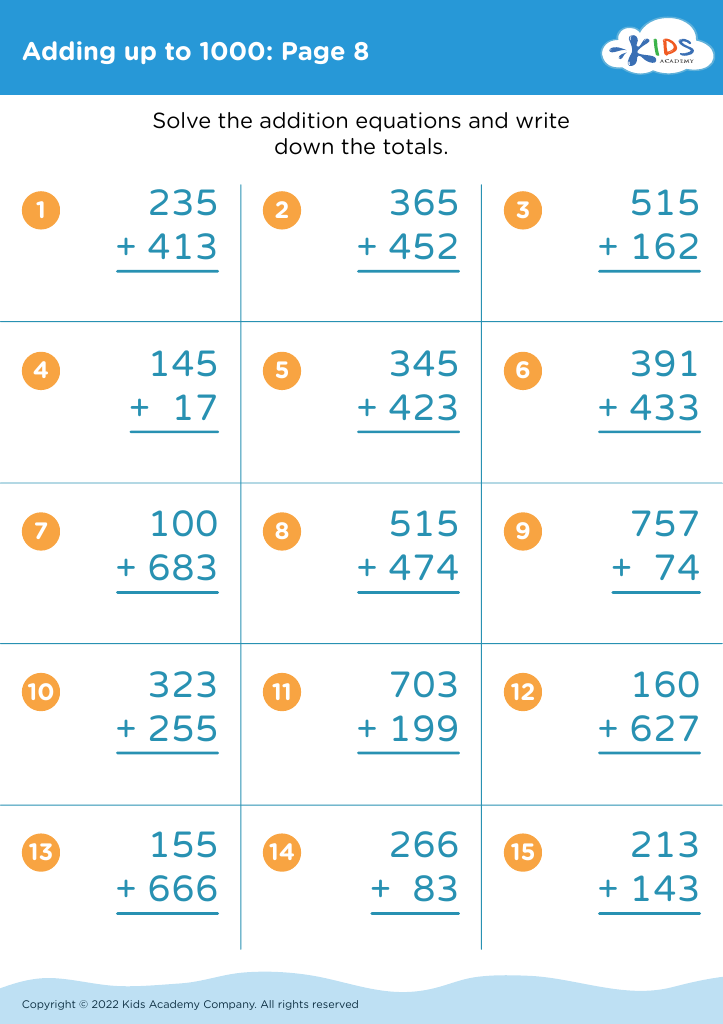
Adding up to 1000: Page 8

Adding up to 1000: Page 8

Adding up to 1000: Page 8
Worksheet
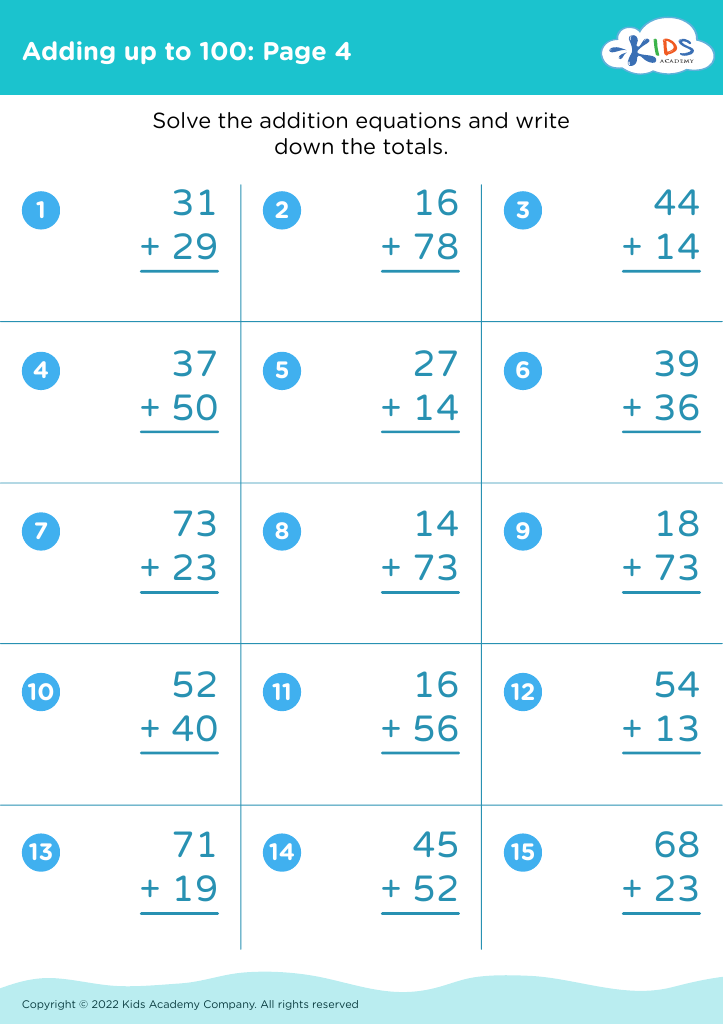
Adding up to 100: Page 4

Adding up to 100: Page 4

Adding up to 100: Page 4
Worksheet
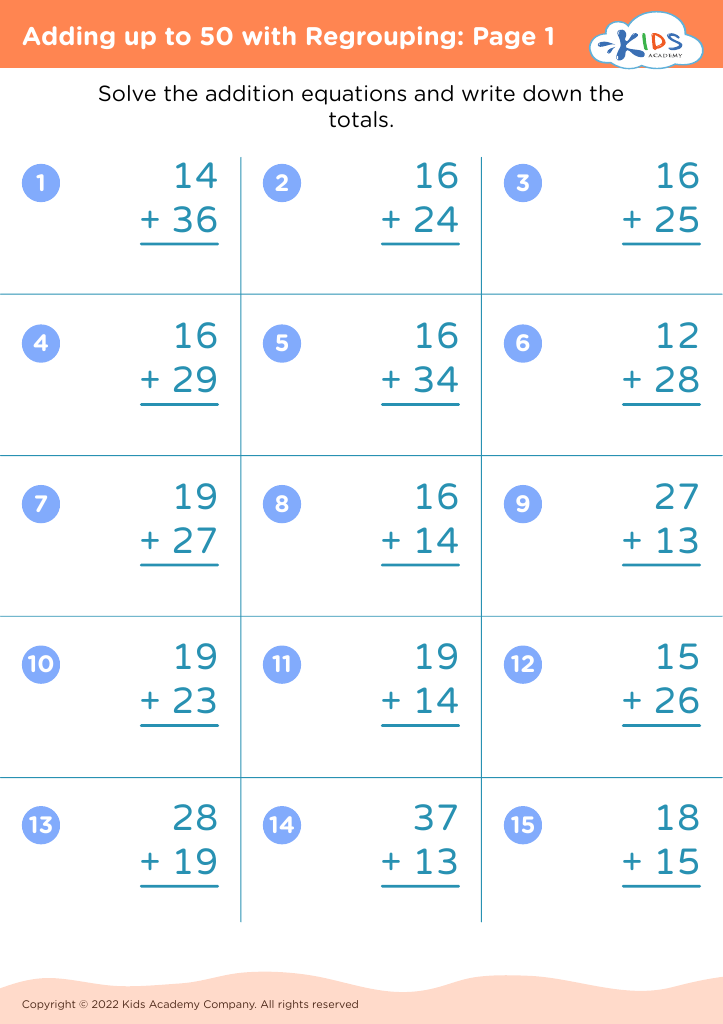
Adding up to 50 with Regrouping: Page 1
Worksheet
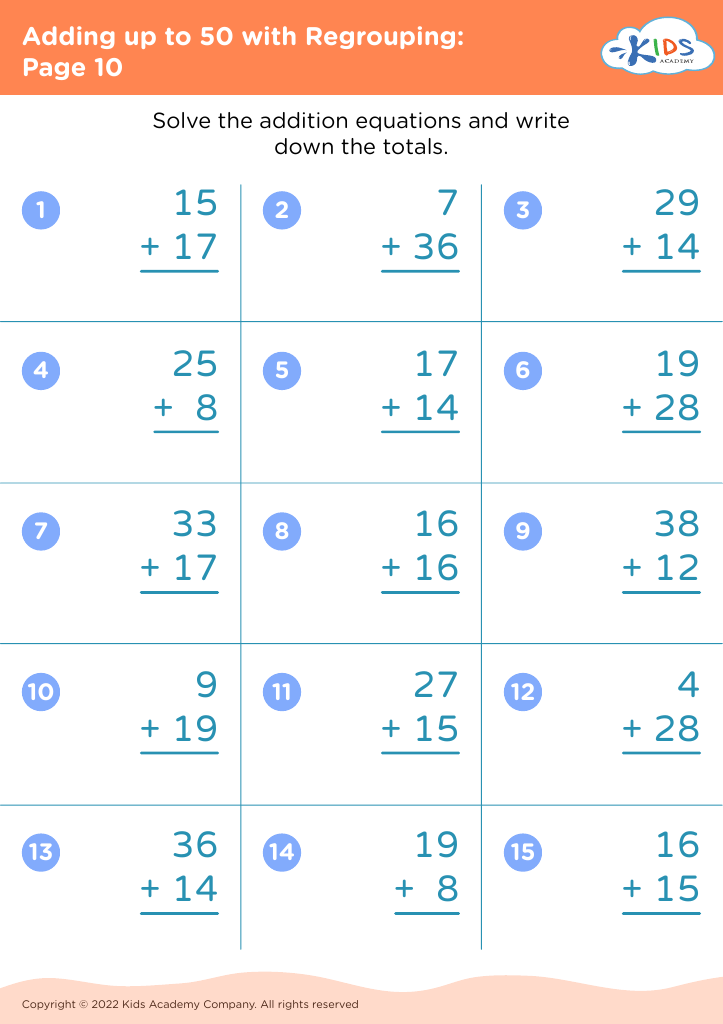
Adding up to 50 with Regrouping: Page 10
Worksheet
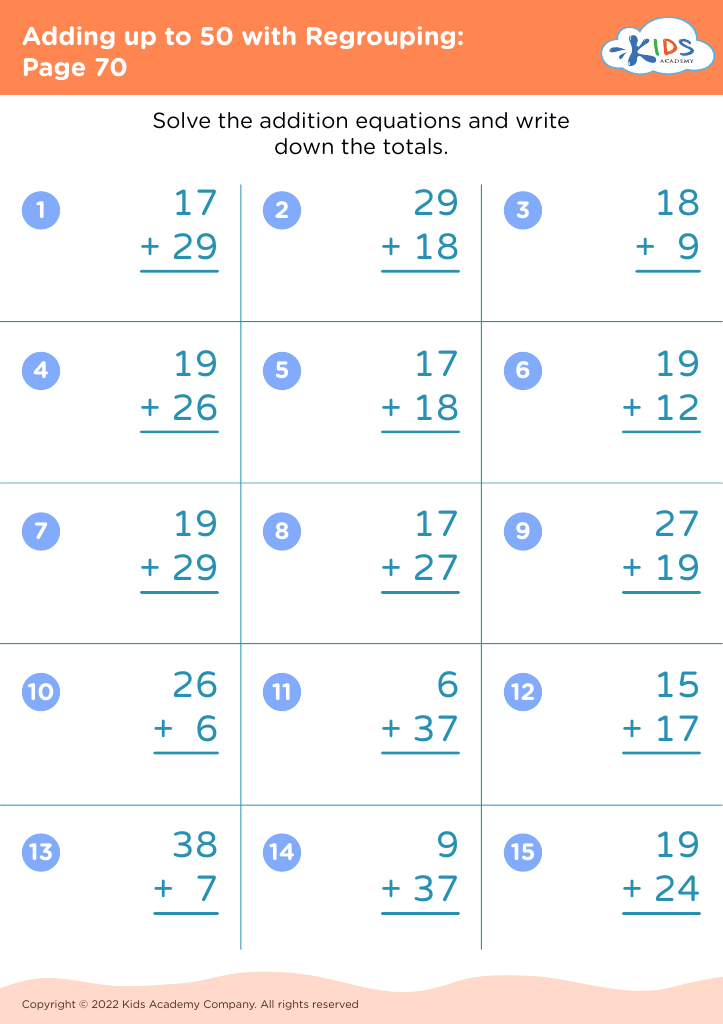
Adding up to 50 with Regrouping: Page 70
Worksheet
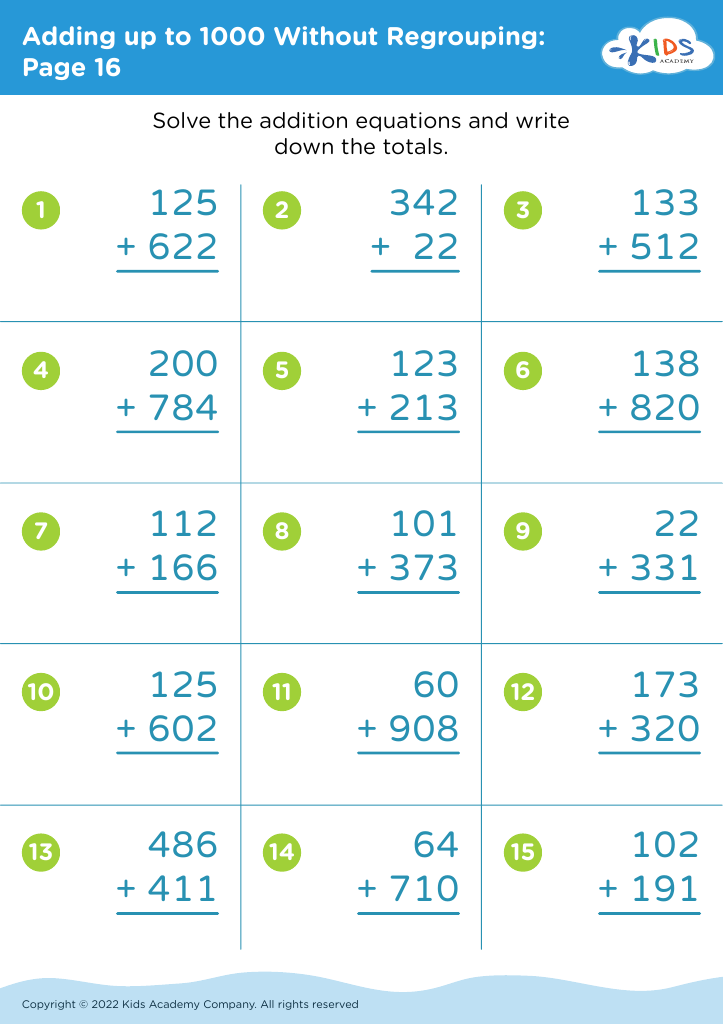
Adding up to 1000 Without Regrouping: Page 16
Worksheet
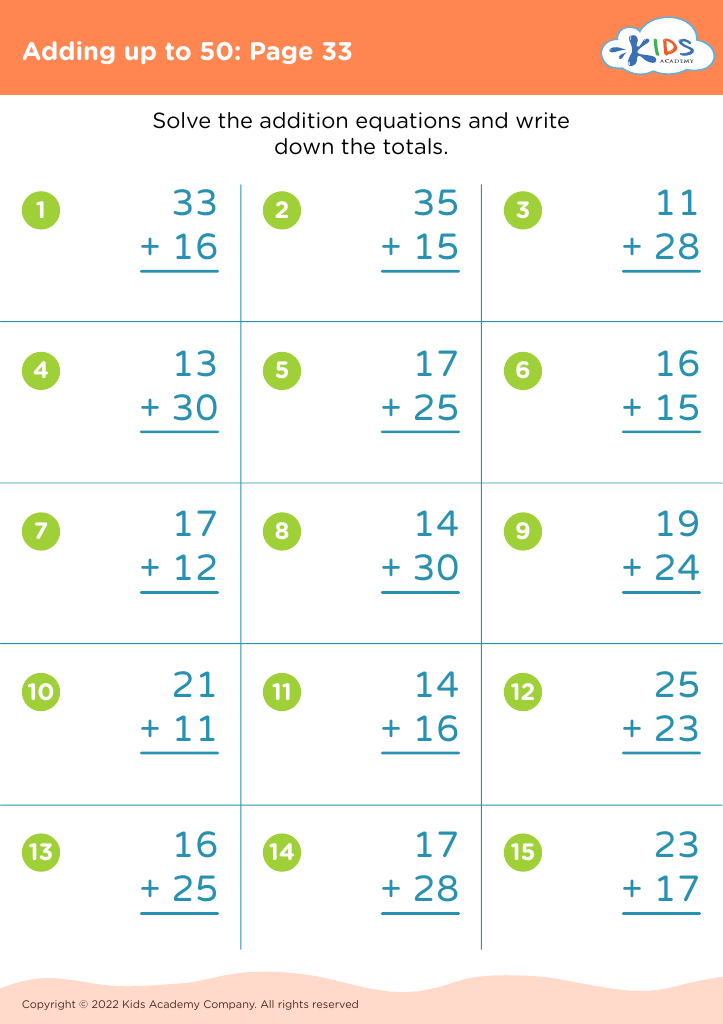
Adding up to 50: Page 33

Adding up to 50: Page 33

Adding up to 50: Page 33
Worksheet
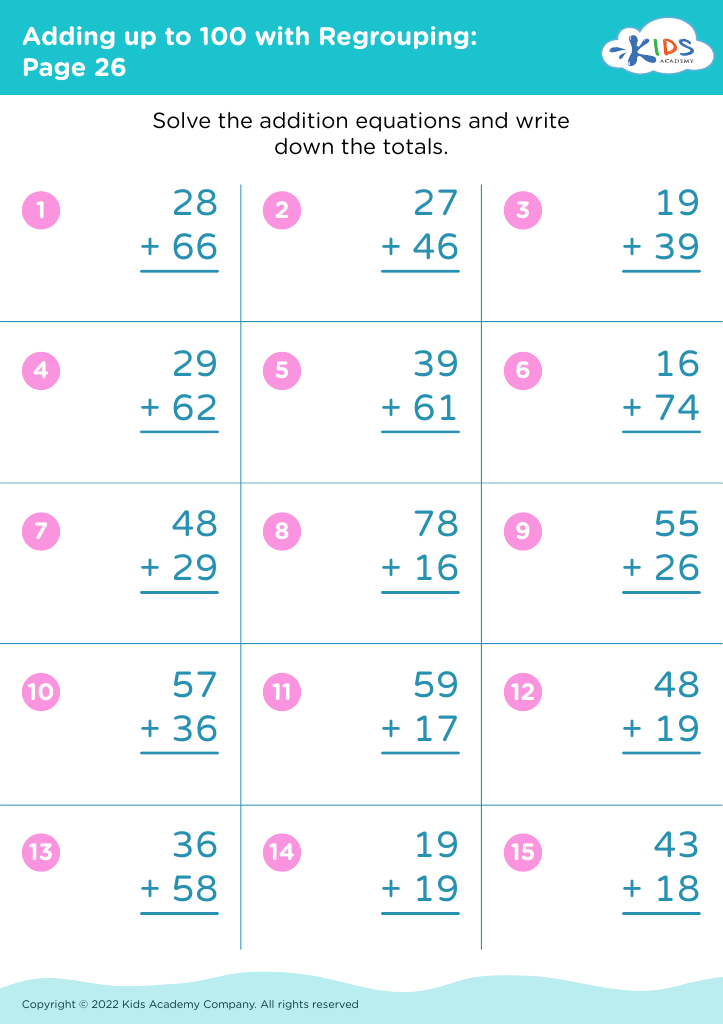
Adding up to 100 with Regrouping: Page 26
Worksheet
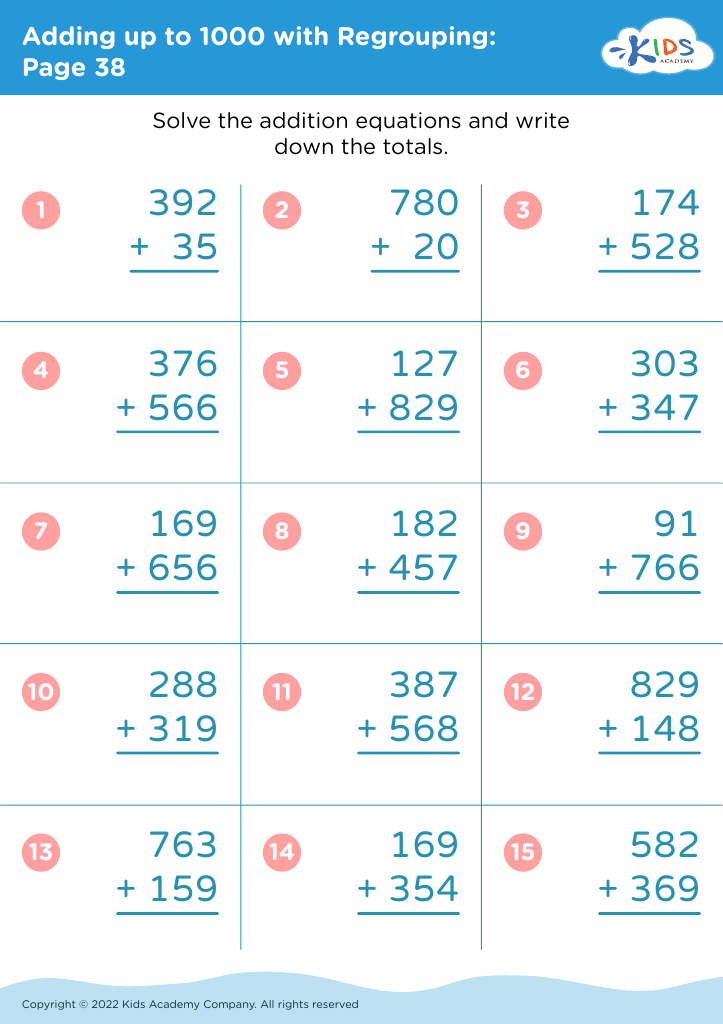
Adding up to 1000 with Regrouping: Page 38
Worksheet
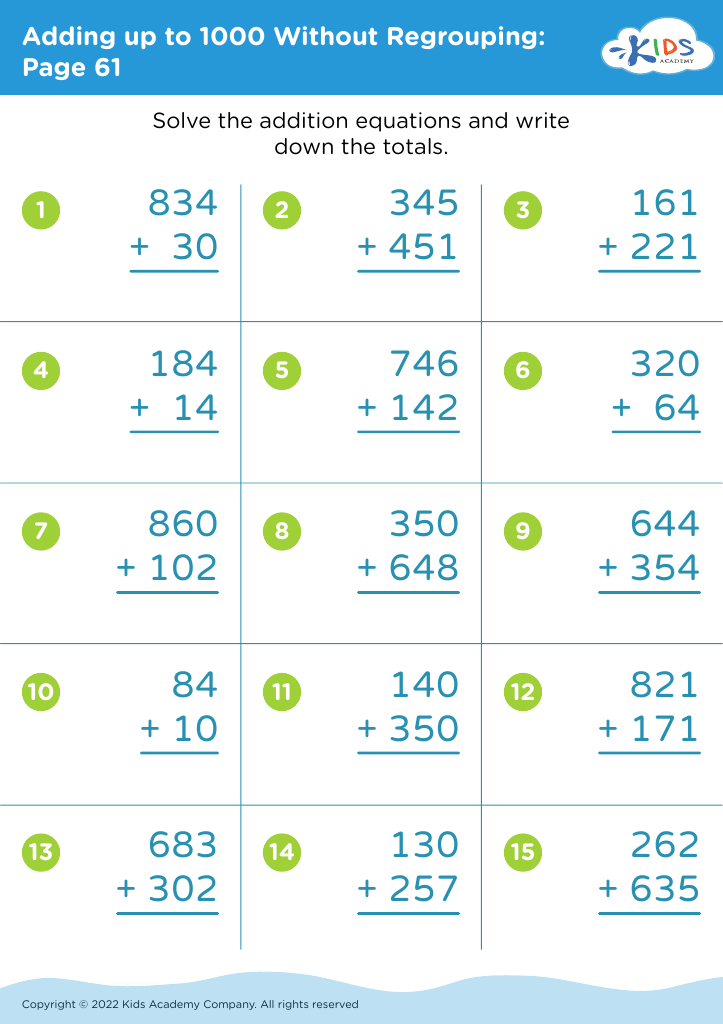
Adding up to 1000 Without Regrouping: Page 61
Worksheet
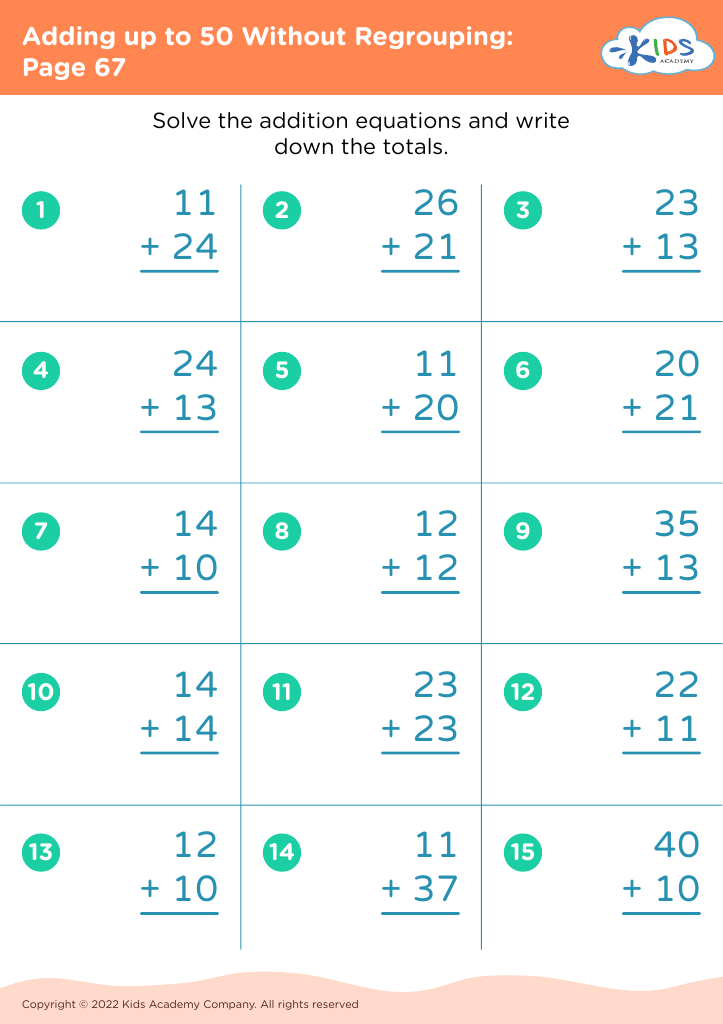
Adding up to 50 Without Regrouping: Page 67
Worksheet
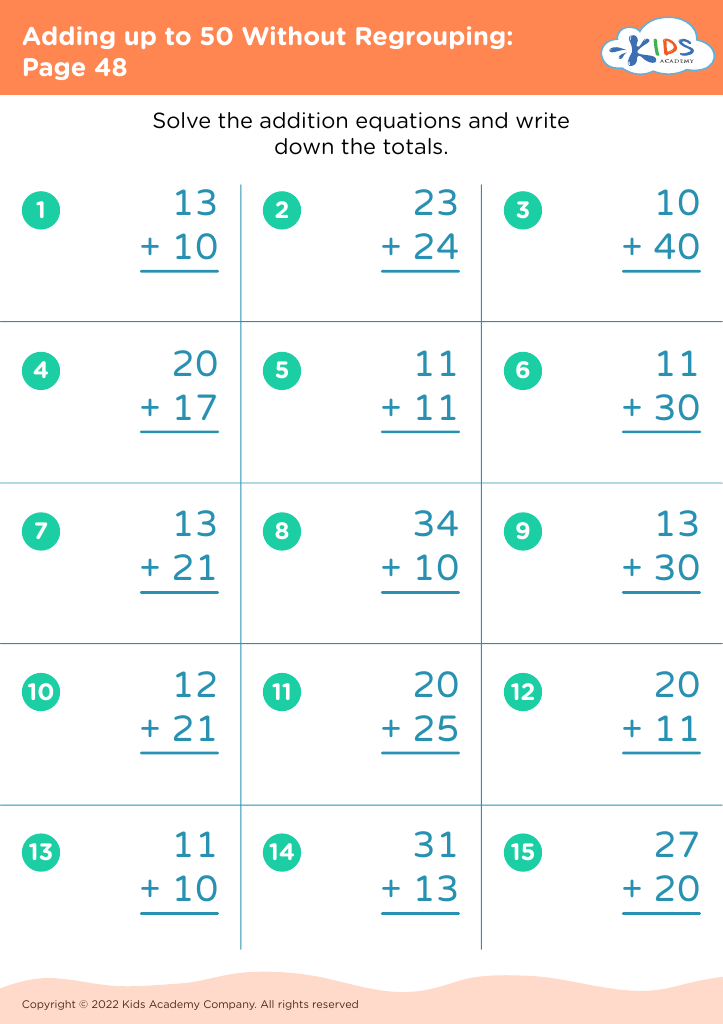
Adding up to 50 Without Regrouping: Page 48
Worksheet
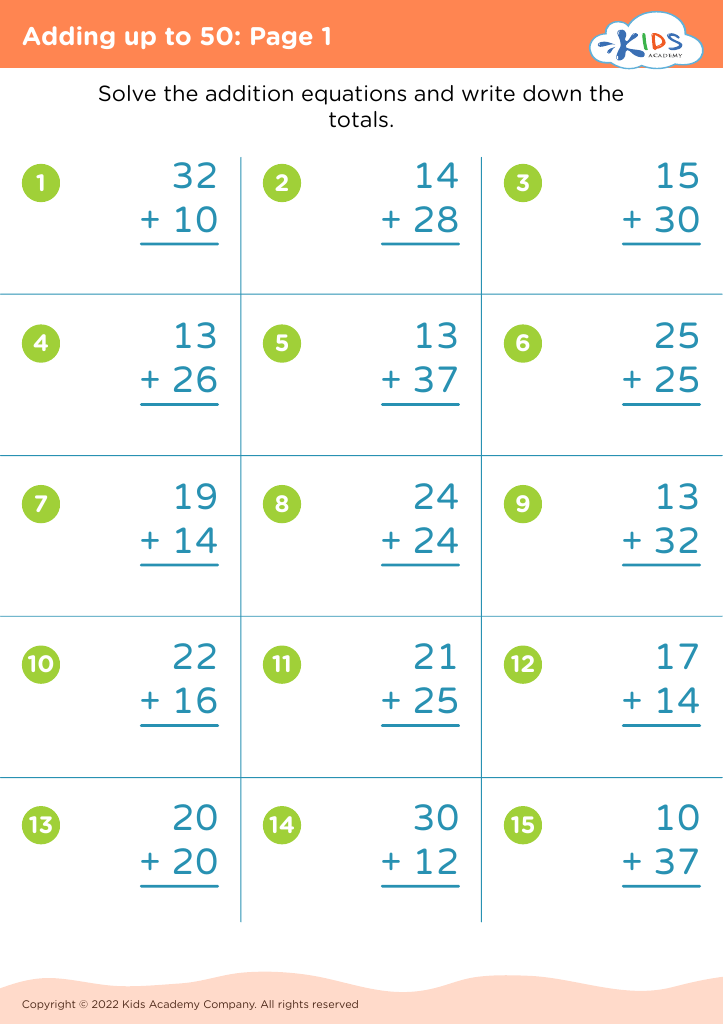
Adding up to 50: Page 1

Adding up to 50: Page 1

Adding up to 50: Page 1
Worksheet
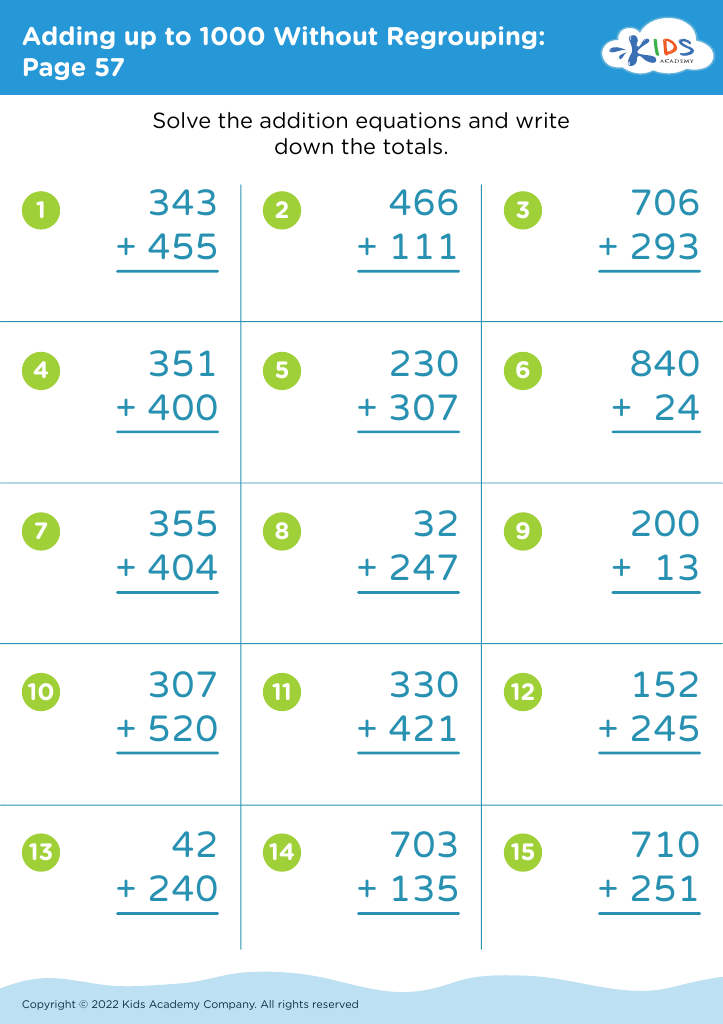
Adding up to 1000 Without Regrouping: Page 57
Worksheet
Adding up to 1000 Without Regrouping: Page 70
Worksheet


Basic addition is a fundamental skill that sets the foundation for all future mathematical learning. For children ages 4-8, mastering basic addition is crucial for several reasons. First, it fosters critical thinking and problem-solving skills that are essential in everyday life and academic settings. By understanding how to combine numbers, children learn to explore and analyze solutions.

Moreover, early experiences with addition boost a child's confidence in mathematics, reducing anxiety and fostering a positive attitude toward learning. This is vital as math skills are cumulative; struggles in early grades can lead to compounded challenges later on.

Additionally, teaching addition can enhance various cognitive abilities, such as memory and focus. Engaging activities make learning fun—using games, manipulatives, or real-life scenarios keeps children interested and motivated.

Parental and teacher involvement in this stage is also crucial. Supportive environments that encourage practice help solidify these skills. Parents and teachers should create math-friendly spaces, celebrate progress, and provide diverse resources to cater to different learning styles. By investing time in teaching basic addition, parents and teachers lay the groundwork for a lifetime of mathematical understanding, thereby empowering children to succeed in both their academic and daily endeavors.