Basic arithmetic comprehension Addition Worksheets for Ages 4-8
3 filtered results
-
From - To
Our Basic Arithmetic Comprehension Addition Worksheets for ages 4-8 provide young learners with the essential foundation in math through engaging and age-appropriate activities. Crafted by educational experts, these worksheets help children develop vital skills in addition. Through a variety of exercises, kids practice simple sums, enhancing their number sense and boosting their confidence. Perfect for both classroom and at-home learning, our worksheets make mastering addition fun and effective. Start your child's journey to math success today with our comprehensive collection designed to inspire a love for learning and arithmetic excellence.
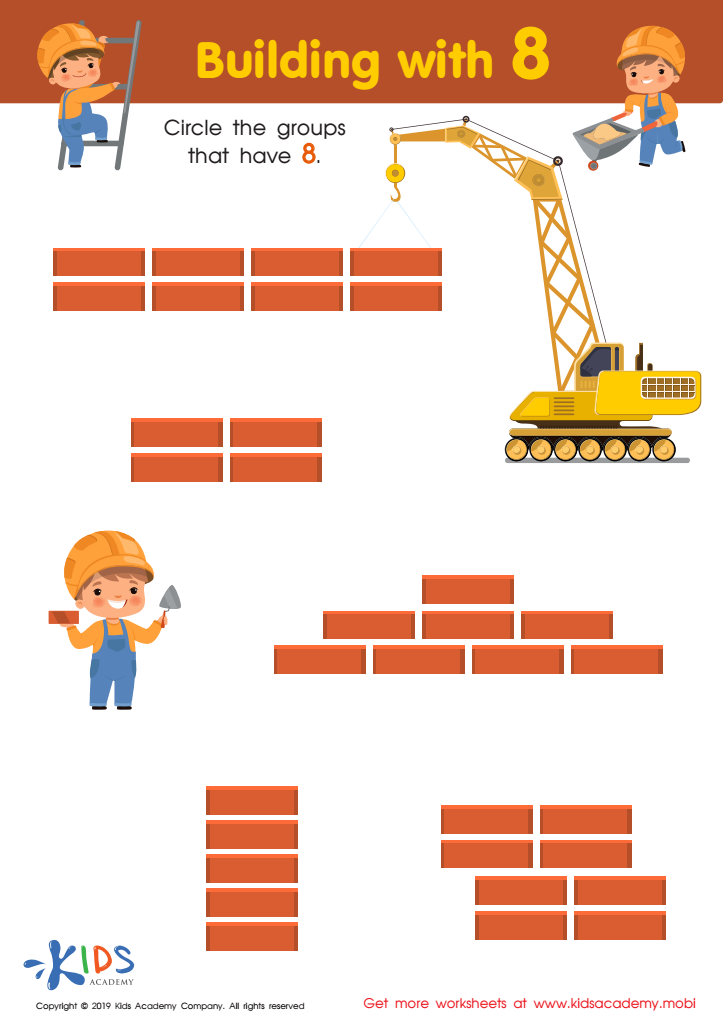
Building with 8 Worksheet
 Assign to My Students
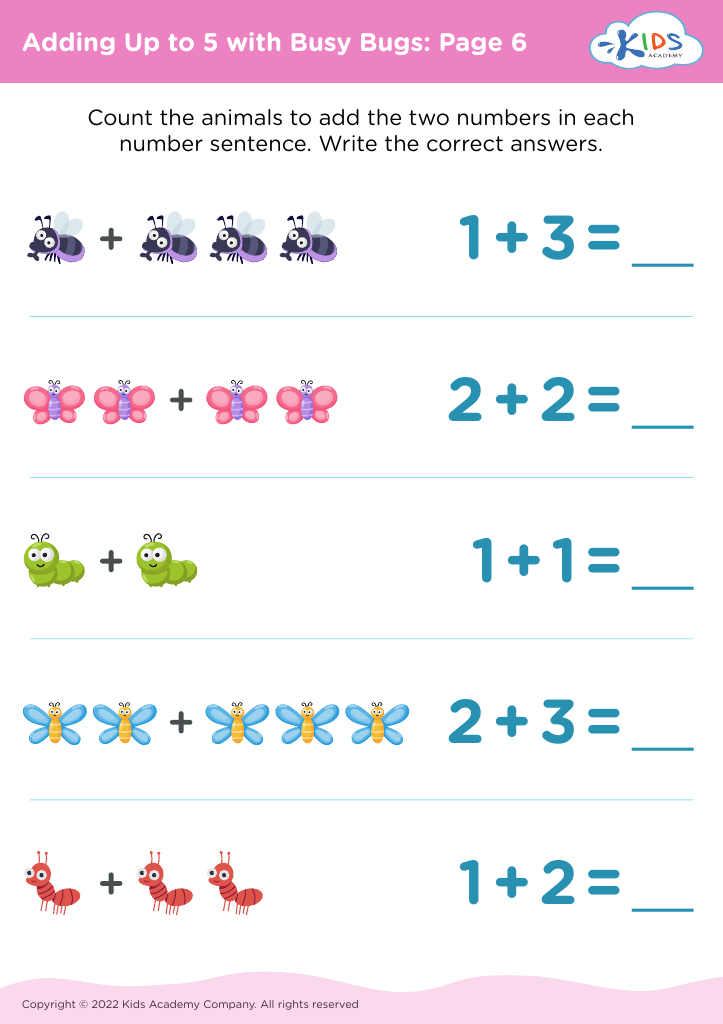
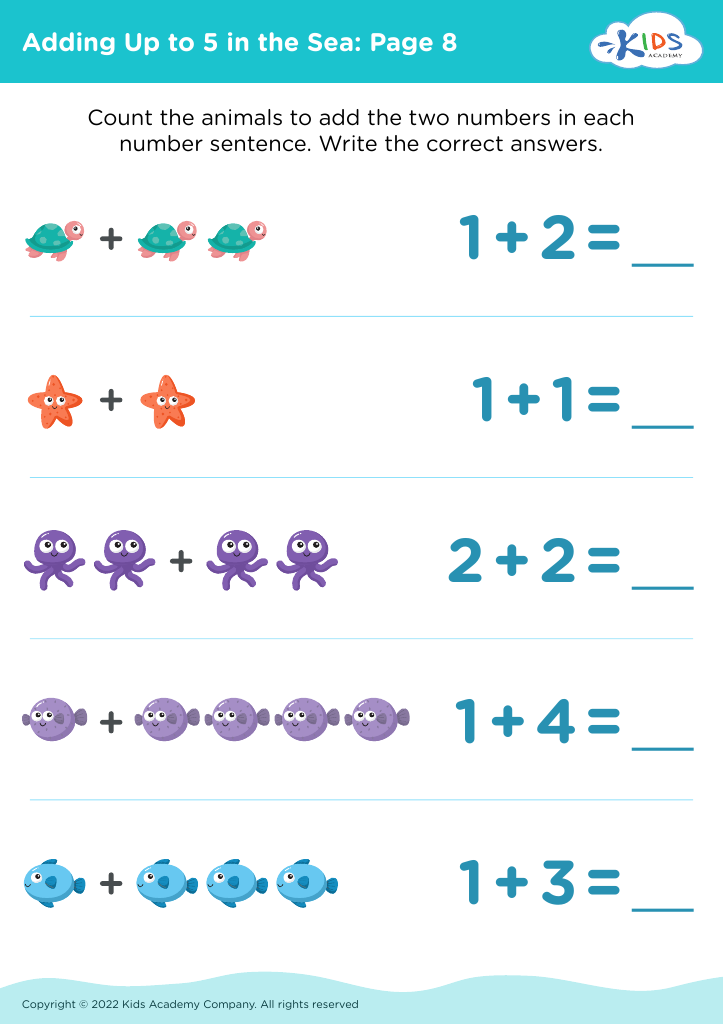








Basic arithmetic comprehension, especially addition, for children aged 4-8, is a vital foundation for their educational and cognitive development. Parents and teachers should emphasize it because this understanding is not only core to future academic success but also essential for everyday functional skills.
First, addition is the cornerstone of all other mathematical concepts. Mastering addition helps children grasp more complex operations like subtraction, multiplication, and division, creating a smooth mathematical learning trajectory. Without a strong base in addition, students might struggle with higher-level arithmetic, which could negatively impact their overall academic performance and confidence.
Furthermore, early grasp of addition enhances logical thinking and problem-solving skills. As children begin to understand the principles of combining numbers, they also learn to approach challenges methodically and with a structured mindset. This analytical skill is transferable beyond math, aiding in subjects like science, reading comprehension, and even in making logical decisions in real-life scenarios.
Moreover, basic arithmetic is frequently used in day-to-day activities. Whether it’s counting their toys, sharing snacks, or handling small sums of money, addition plays a crucial role. Proficiency in these skills fosters a sense of independence and self-reliance in young children.
In essence, supporting strong addition skills in early childhood equips children with essential cognitive tools and prepares them for future academic and real-world success, underlining the importance of parental and teacher involvement in this learning phase.








