Categorization skills Addition Worksheets for Ages 4-8
3 filtered results
-
From - To
Unlock your child's potential with our Categorization Skills Addition Worksheets, specially designed for ages 4-8! These engaging worksheets combine essential addition practice with critical categorization skills, helping young learners recognize, group, and organize numbers and objects. By blending math with sorting and classifying tasks, children will develop logical thinking while improving their addition abilities. Perfect for classroom activities or at-home learning, these worksheets are colorful, interactive, and tailored to various learning styles. Give your child a head start in math and cognitive skills! Explore our resources today and watch them thrive through fun and effective learning experiences!
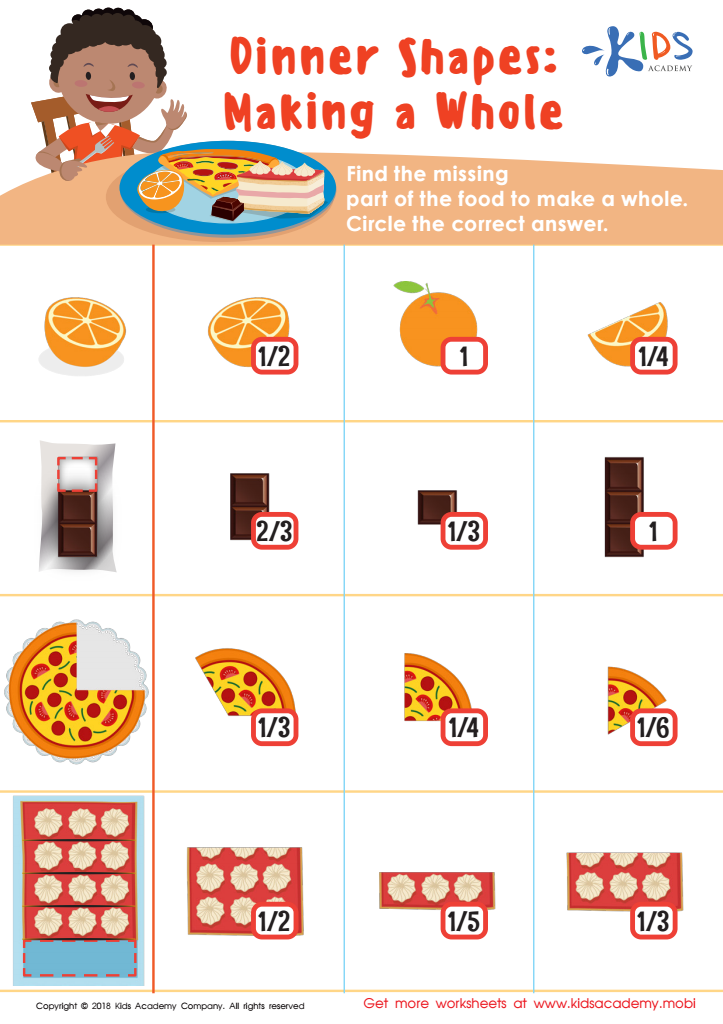
Dinner Shapes: Making a Whole Worksheet
 Assign to My Students
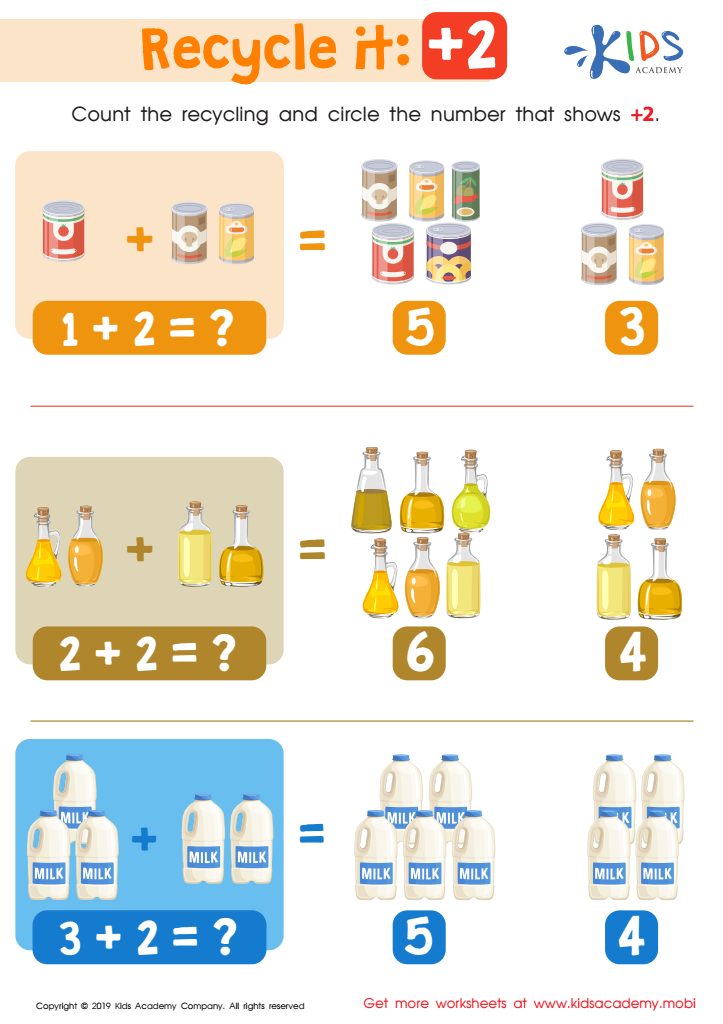
Recycle It: +2 Worksheet








Categorization skills are essential for children aged 4-8 as they form the foundation for critical thinking and problem-solving. At this developmental stage, children begin to make sense of the world, grouping objects, ideas, and experiences based on shared characteristics. Teaching categorization through addition activities helps them create connections between numbers and objects, enhancing their mathematical understanding and reasoning.
When parents and teachers prioritize these skills, they empower children to recognize patterns and relationships, which are crucial for later math concepts such as addition, subtraction, and more complex arithmetic operations. For example, if children can categorize fruits and vegetables and then group them by quantity, they naturally advance their addition skills. This not only improves their competence in math but also boosts confidence as they successfully complete tasks.
Additionally, strong categorization skills facilitate language development, as children learn to articulate their reasoning and the criteria for their groupings. Encouraging these skills early on prepares children for academic success, fosters collaboration in group settings, and enhances their social skills by promoting discussions about their thinking processes. Ultimately, nurturing categorization through addition lays a vital foundation for lifelong learning and cognitive development.








