Filters

227 filtered results

Clear all filters
Favorites
With answer key
Interactive

227 filtered results

Difficulty Level

Grade


Subject

    Check out this FREE Trial Lesson on Addition for age 4-8!

    Basic Facts Doubles & Turn Around Facts

    Favorites
    With answer key
    Interactive
    • 4-8
    • Counting skills
    • Addition
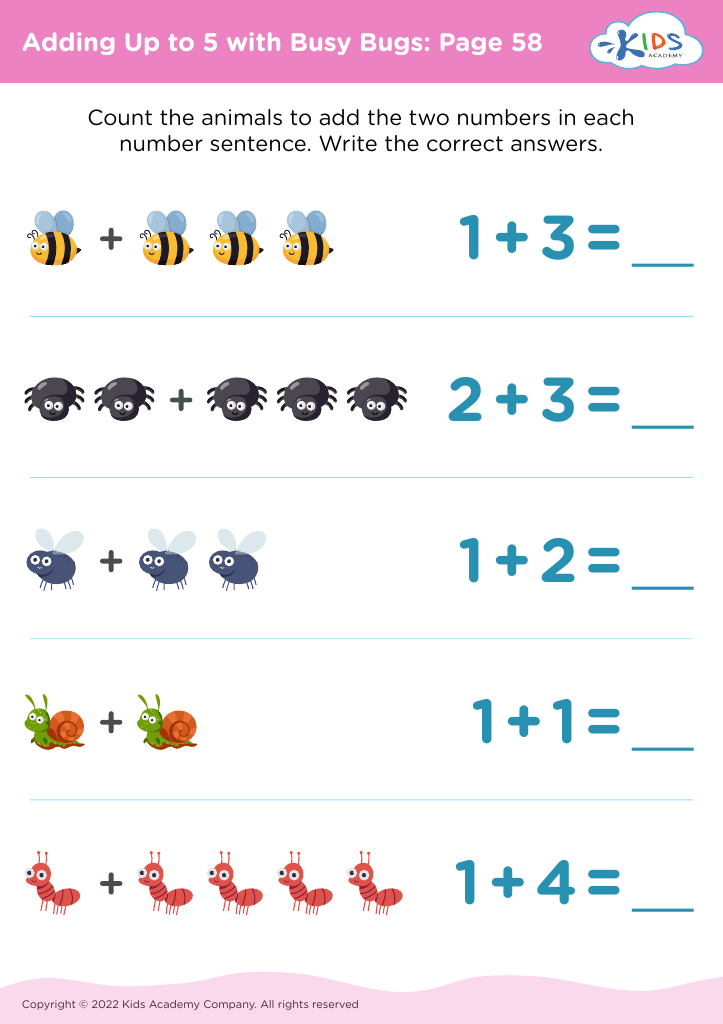
    Adding Up to 5 with Busy Bugs: Page 58
    Adding Up to 5 with Busy Bugs: Page 58
    Adding Up to 5 with Busy Bugs: Page 58
    Worksheet
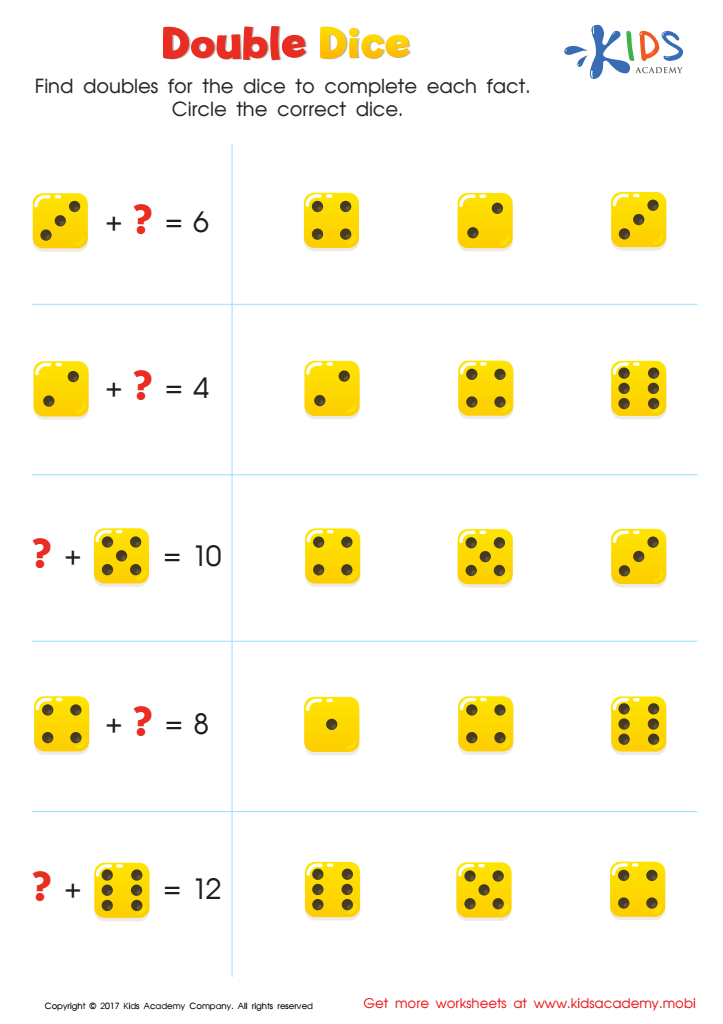
    Addition Facts: Double Dice Worksheet
    Addition Facts: Double Dice Worksheet

    Addition Facts: Double Dice Worksheet

    Are you looking for ways to make maths more engaging for kids? Maths can be a bore, but by teaching kids from an early age that it can be fun, they won't struggle with it. This worksheet is a great way to start: your child needs to identify the number on the left dice and find its double on the right. The sum of the two dice is also given.
    Addition Facts: Double Dice Worksheet
    Worksheet
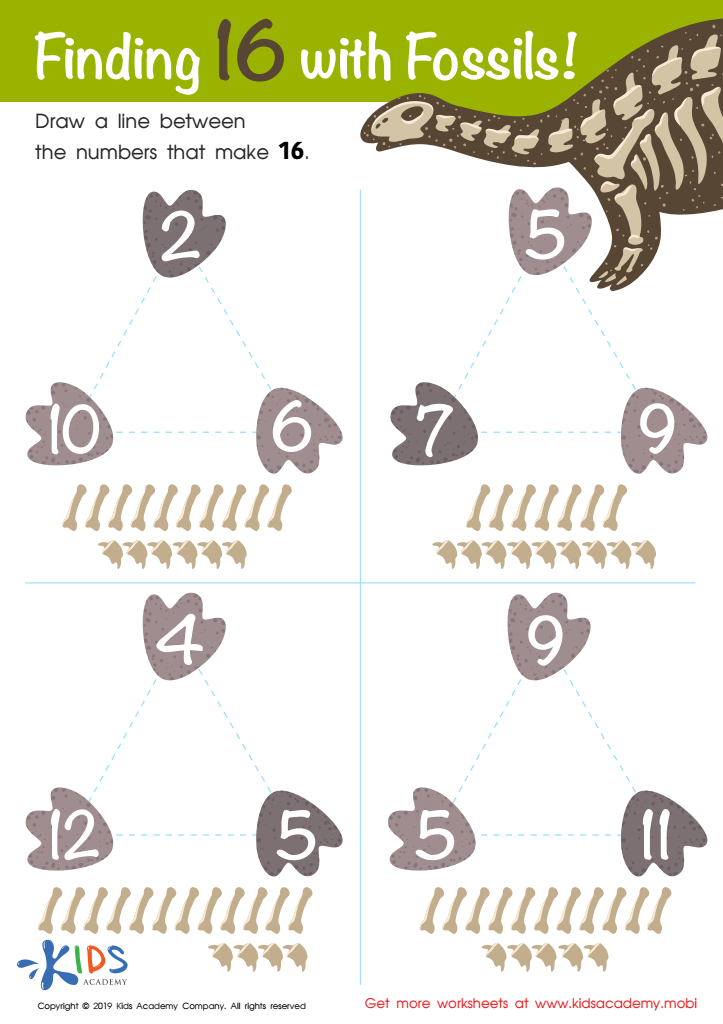
    Finding 16 With Fossils Worksheet
    Finding 16 With Fossils Worksheet
    Finding 16 With Fossils Worksheet
    Experts hunt for fossils, dig them up, and study them to learn more about past life forms - how they lived, what they looked like, and when they lived. Show kids the picture in this worksheet and point out the fossils. Help them count the bones and draw a line between the numbers that add up to 16 in each triangle.
    Finding 16 With Fossils Worksheet
    Worksheet
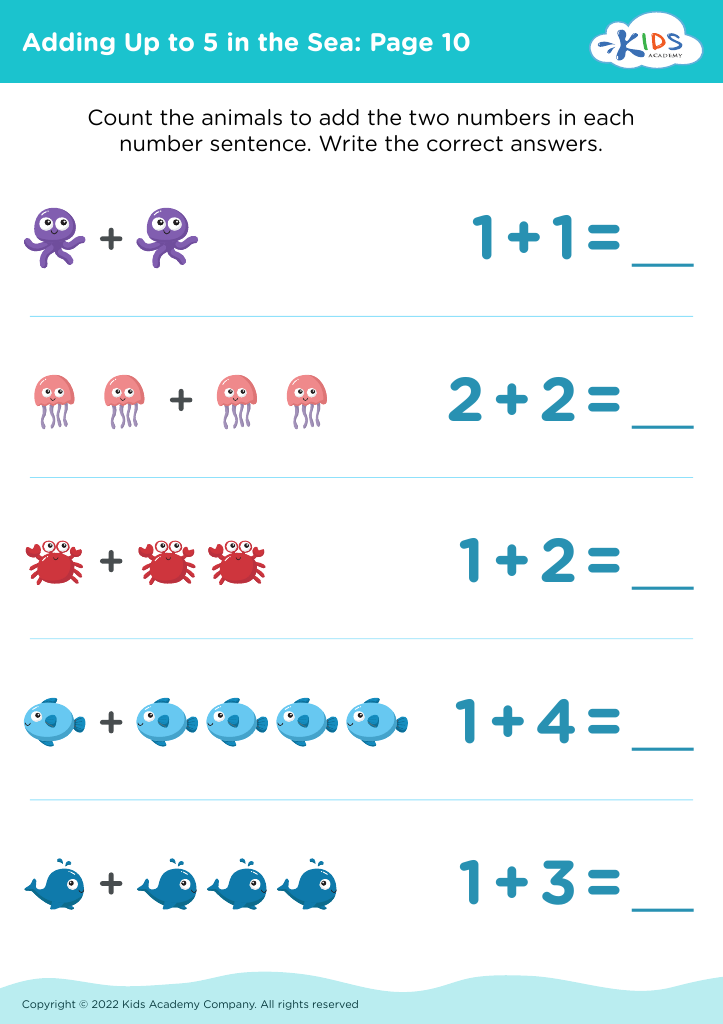
    Adding Up to 5 in the Sea: Page 10
    Adding Up to 5 in the Sea: Page 10
    Adding Up to 5 in the Sea: Page 10
    Worksheet
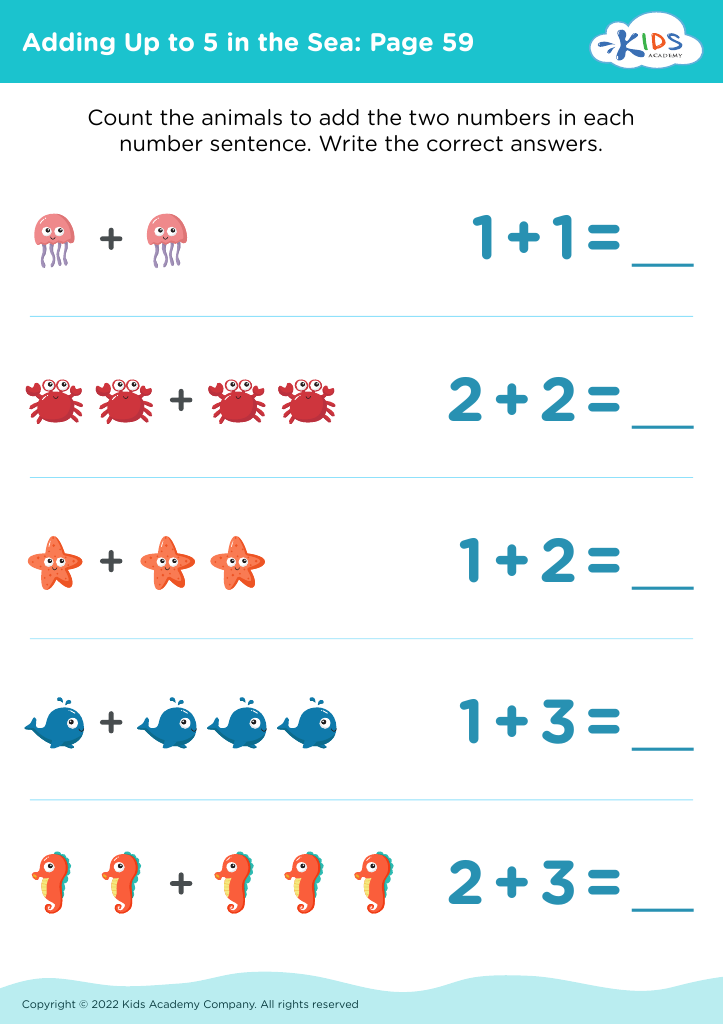
    Adding Up to 5 in the Sea: Page 59
    Adding Up to 5 in the Sea: Page 59
    Adding Up to 5 in the Sea: Page 59
    Worksheet
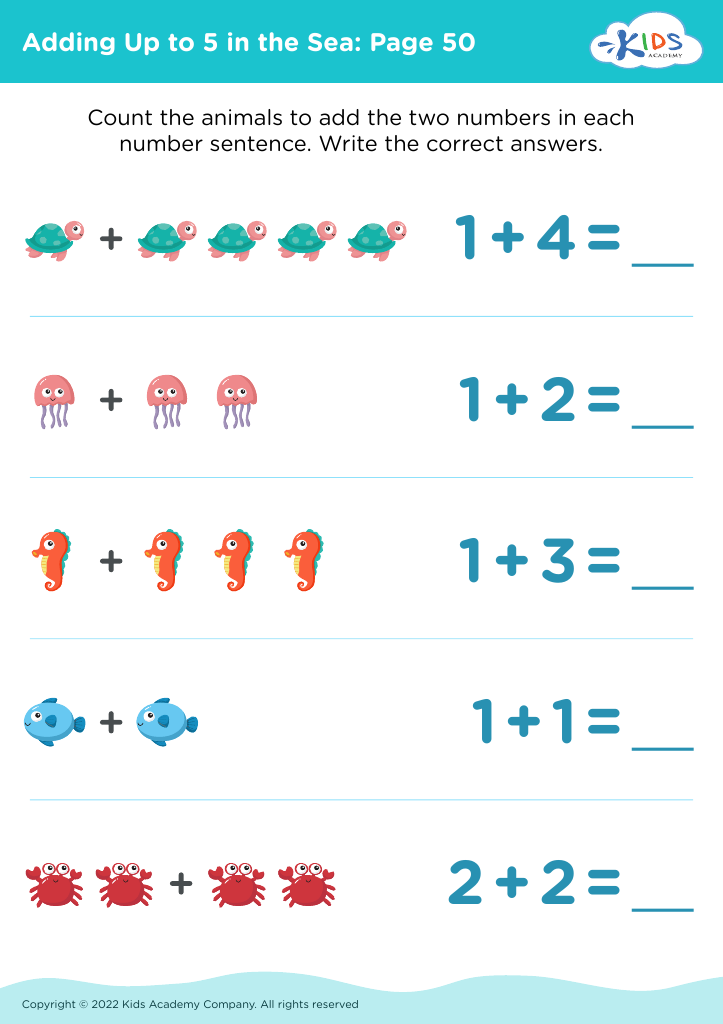
    Adding Up to 5 in the Sea: Page 50
    Adding Up to 5 in the Sea: Page 50
    Adding Up to 5 in the Sea: Page 50
    Worksheet
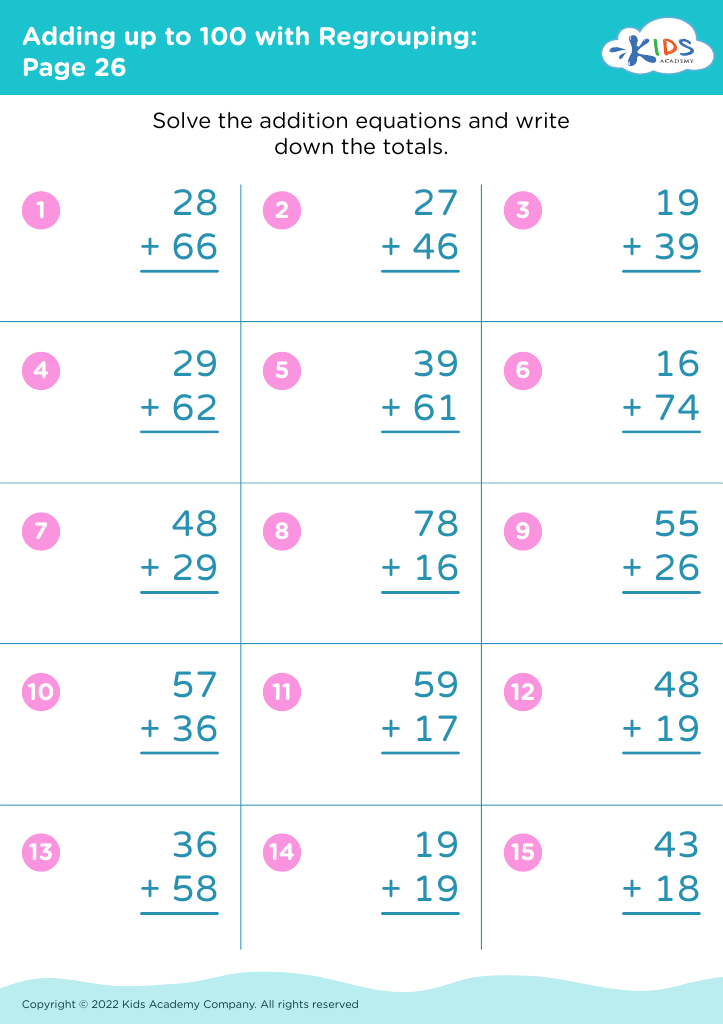
    Adding up to 100 with Regrouping: Page 26
    Adding up to 100 with Regrouping: Page 26
    Adding up to 100 with Regrouping: Page 26
    Worksheet
    Adding up to 1000: Page 24
    Adding up to 1000: Page 24

    Adding up to 1000: Page 24

    Adding up to 1000: Page 24
    Worksheet
    Adding Up to 5 on the Farm: Page 46
    Adding Up to 5 on the Farm: Page 46
    Adding Up to 5 on the Farm: Page 46
    Worksheet
    Adding Up to 5 at the Zoo: Page 66
    Adding Up to 5 at the Zoo: Page 66
    Adding Up to 5 at the Zoo: Page 66
    Worksheet
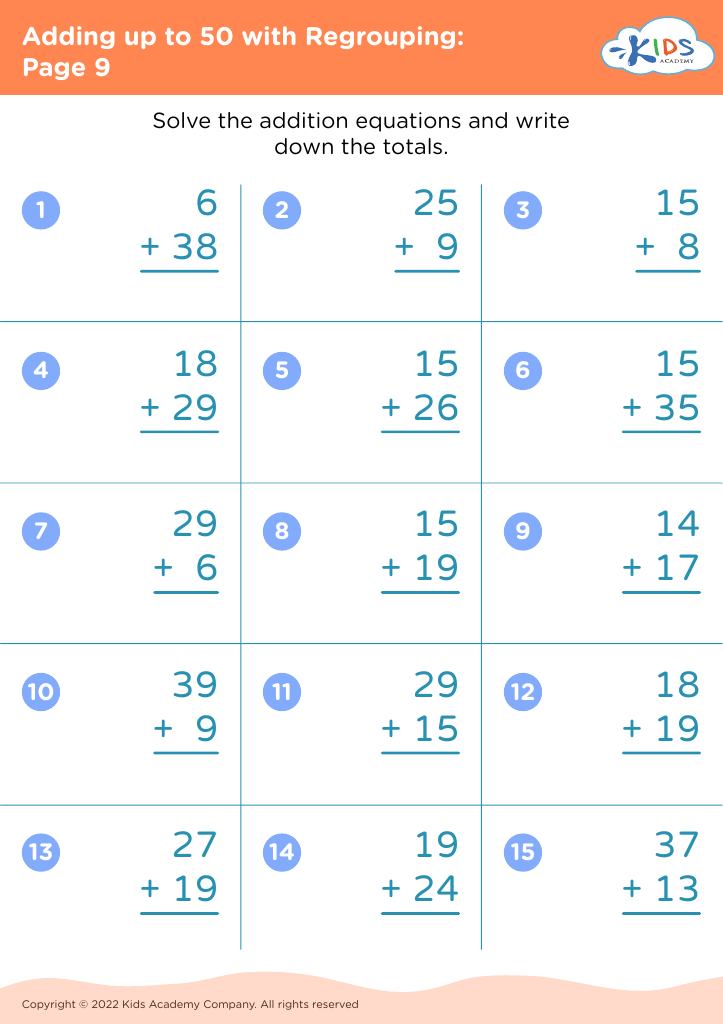
    Adding up to 50 with Regrouping: Page 9
    Adding up to 50 with Regrouping: Page 9
    Adding up to 50 with Regrouping: Page 9
    Worksheet
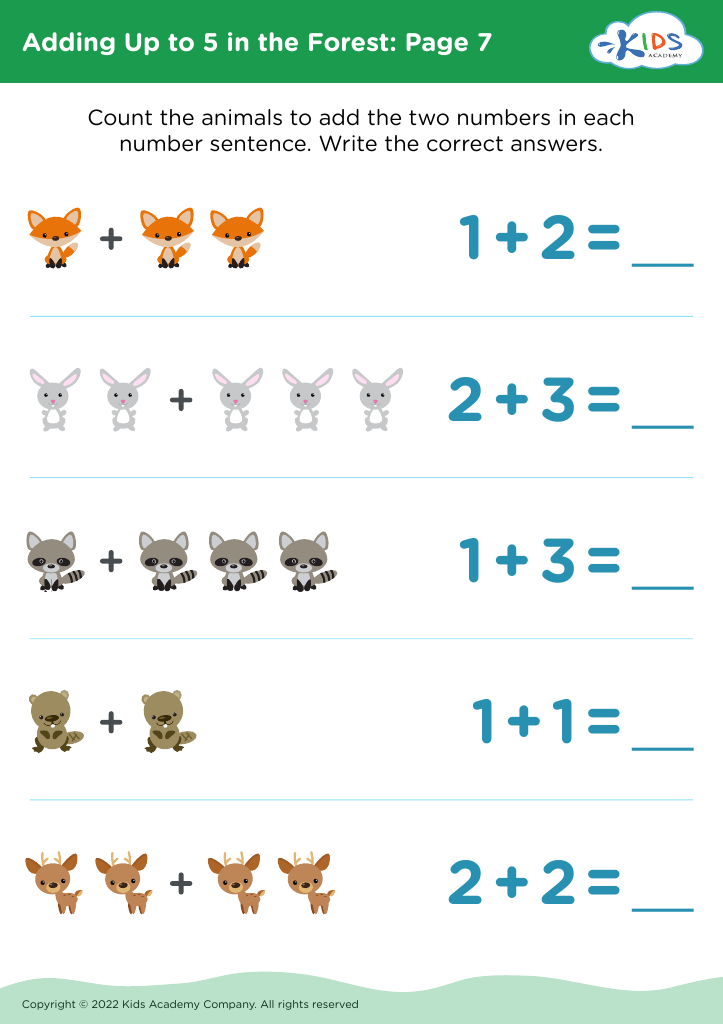
    Adding Up to 5 in the Forest: Page 7
    Adding Up to 5 in the Forest: Page 7
    Adding Up to 5 in the Forest: Page 7
    Worksheet
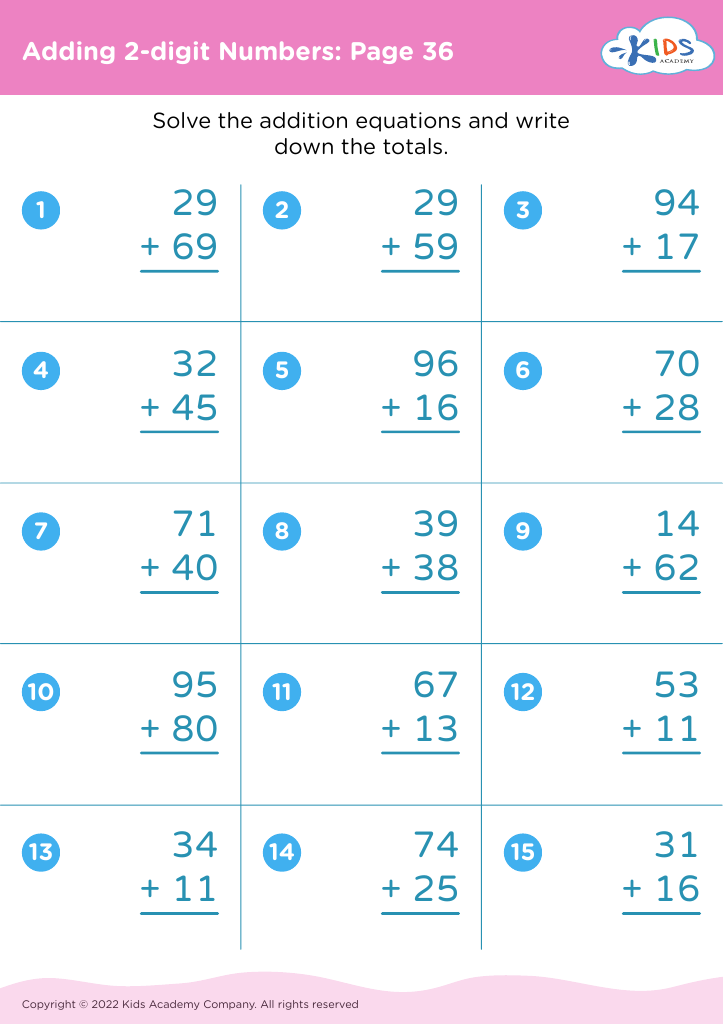
    Adding 2-digit Numbers: Page 36
    Adding 2-digit Numbers: Page 36

    Adding 2-digit Numbers: Page 36

    Adding 2-digit Numbers: Page 36
    Worksheet
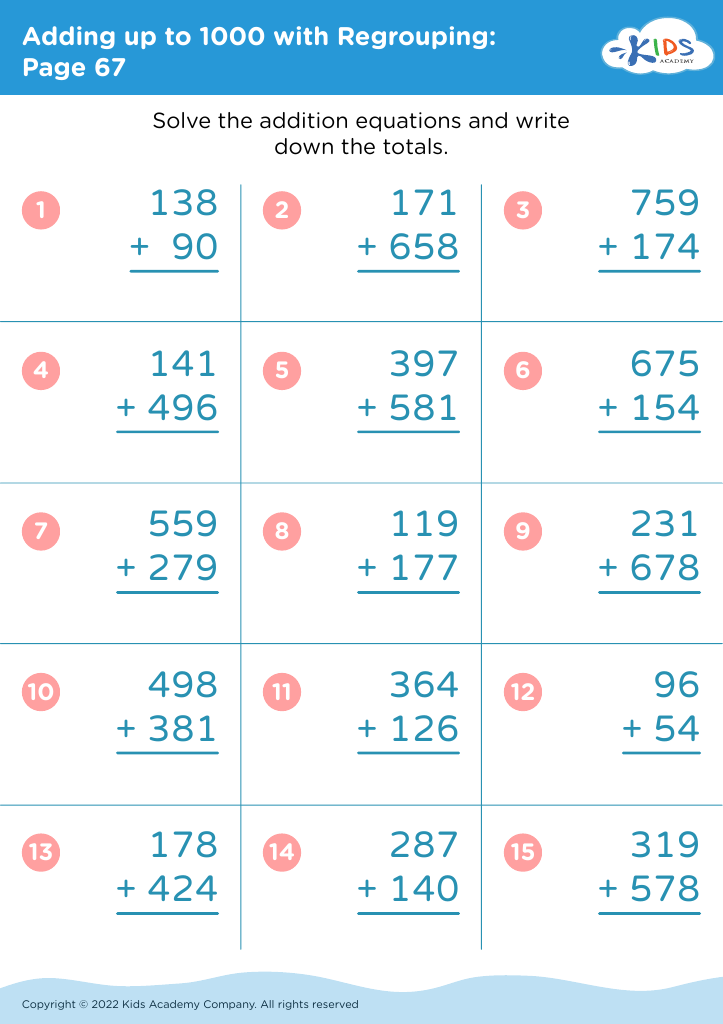
    Adding up to 1000 with Regrouping: Page 67
    Adding up to 1000 with Regrouping: Page 67
    Adding up to 1000 with Regrouping: Page 67
    Worksheet
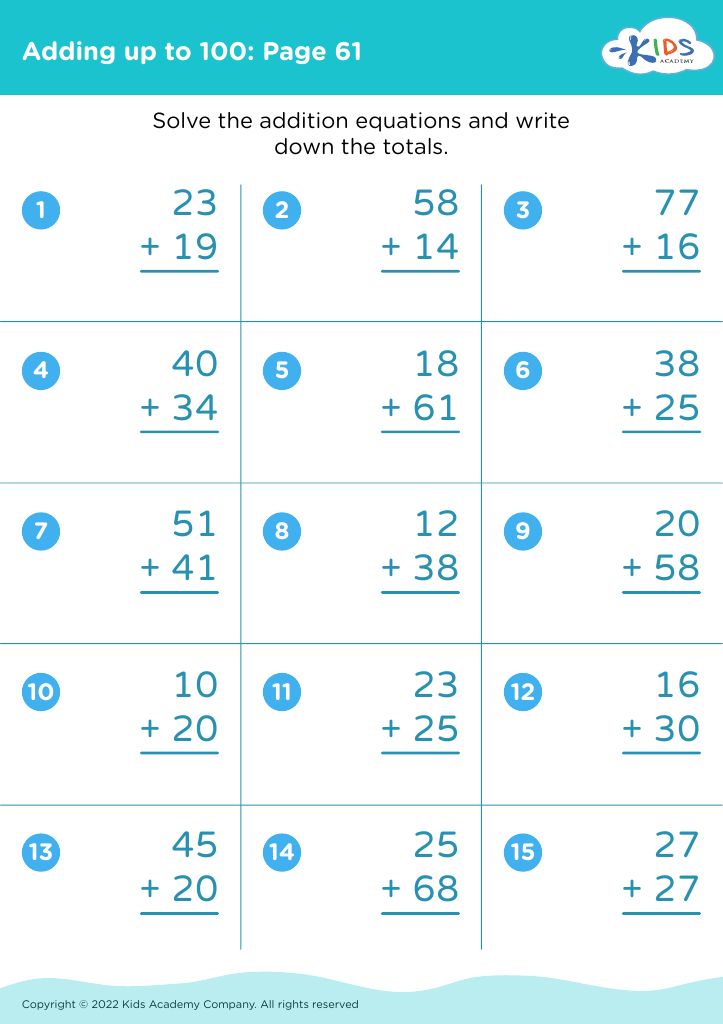
    Adding up to 100: Page 61
    Adding up to 100: Page 61

    Adding up to 100: Page 61

    Adding up to 100: Page 61
    Worksheet
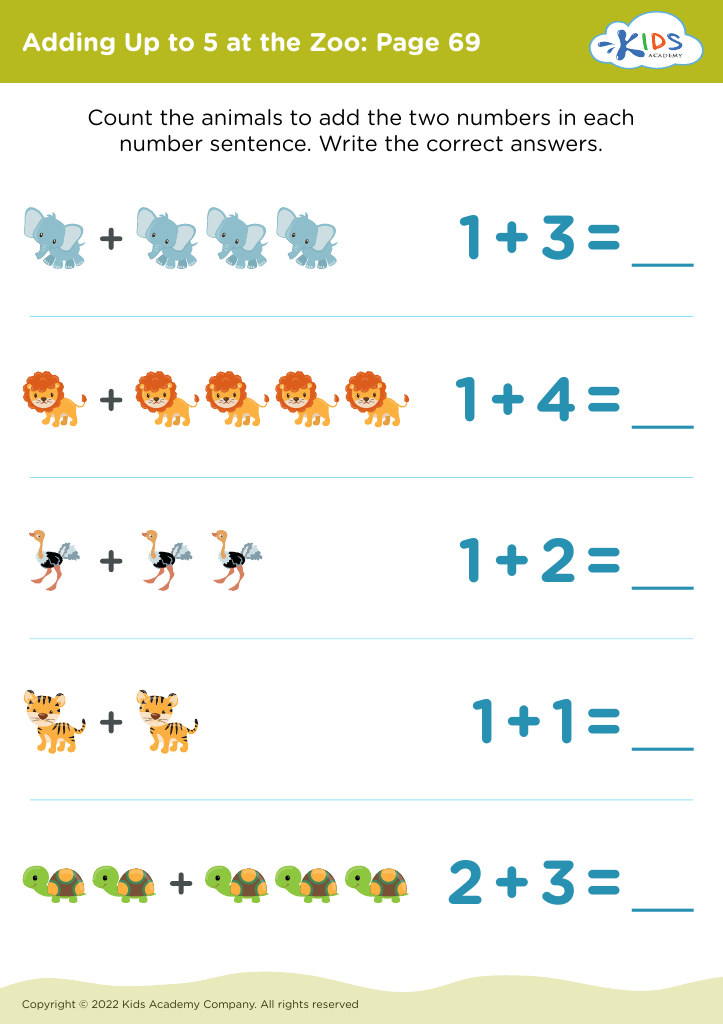
    Adding Up to 5 at the Zoo: Page 69
    Adding Up to 5 at the Zoo: Page 69
    Adding Up to 5 at the Zoo: Page 69
    Worksheet
    How Many More to Add Worksheet
    How Many More to Add Worksheet
    How Many More to Add Worksheet
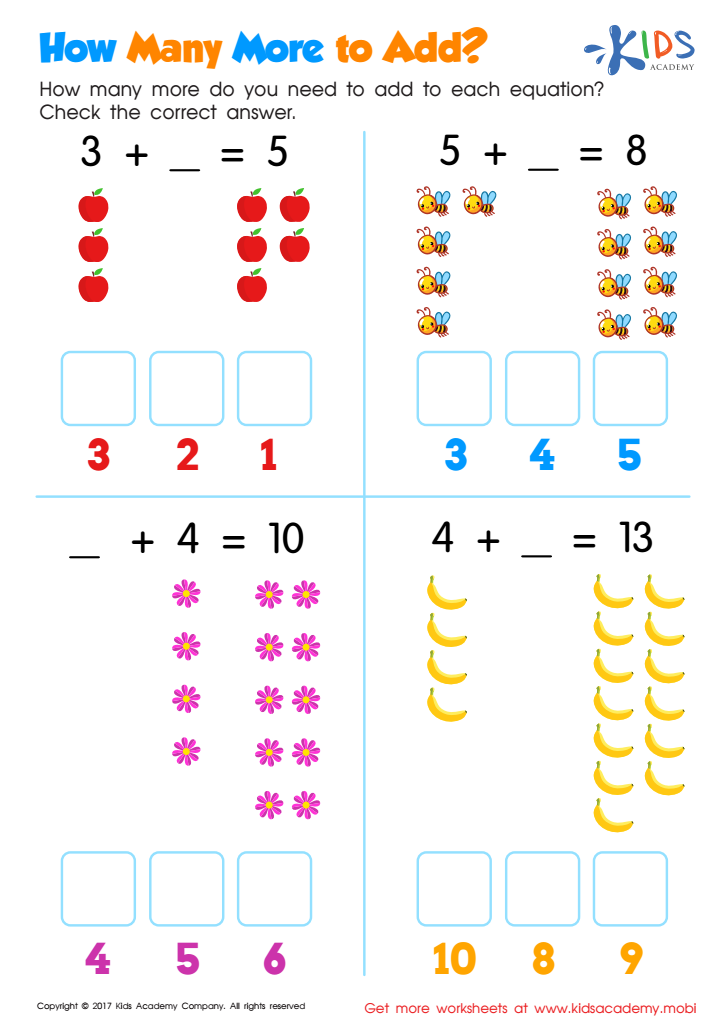
    Sharpen your child's math skills with this pdf worksheet. Help them figure out how many apples, bees, flowers and bananas are needed to reach the answer given. The possible answers are provided at the bottom of the boxes. Have some fun doing some addition and subtraction magic together and get those math skills sharpened!
    How Many More to Add Worksheet
    Worksheet
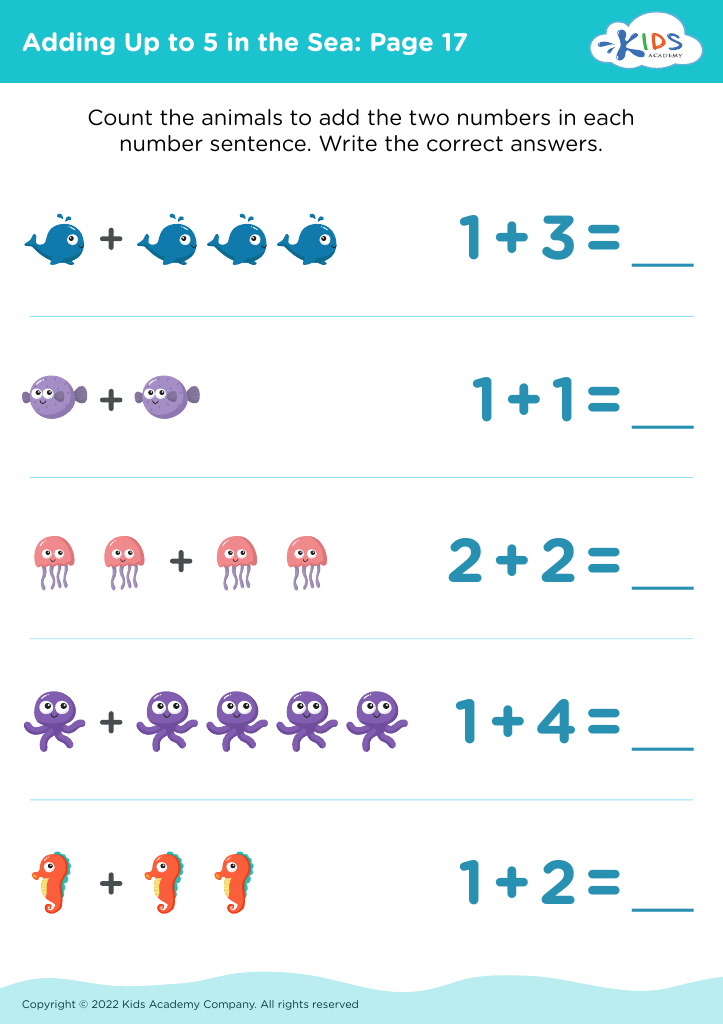
    Adding Up to 5 in the Sea: Page 17
    Adding Up to 5 in the Sea: Page 17
    Adding Up to 5 in the Sea: Page 17
    Worksheet
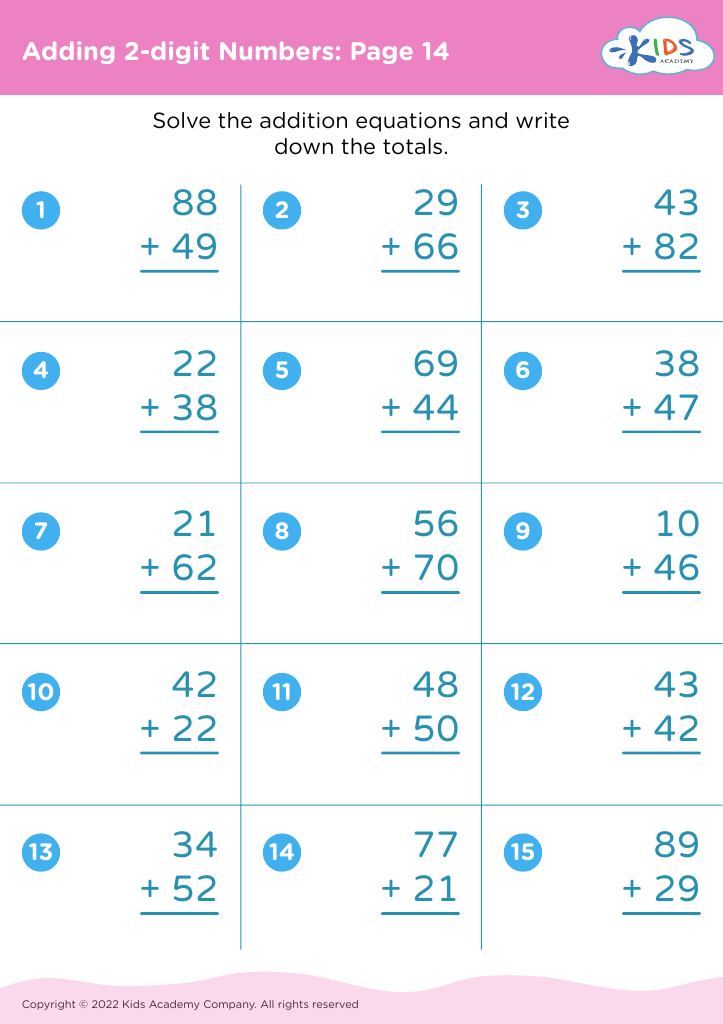
    Adding 2-digit Numbers: Page 14
    Adding 2-digit Numbers: Page 14

    Adding 2-digit Numbers: Page 14

    Adding 2-digit Numbers: Page 14
    Worksheet
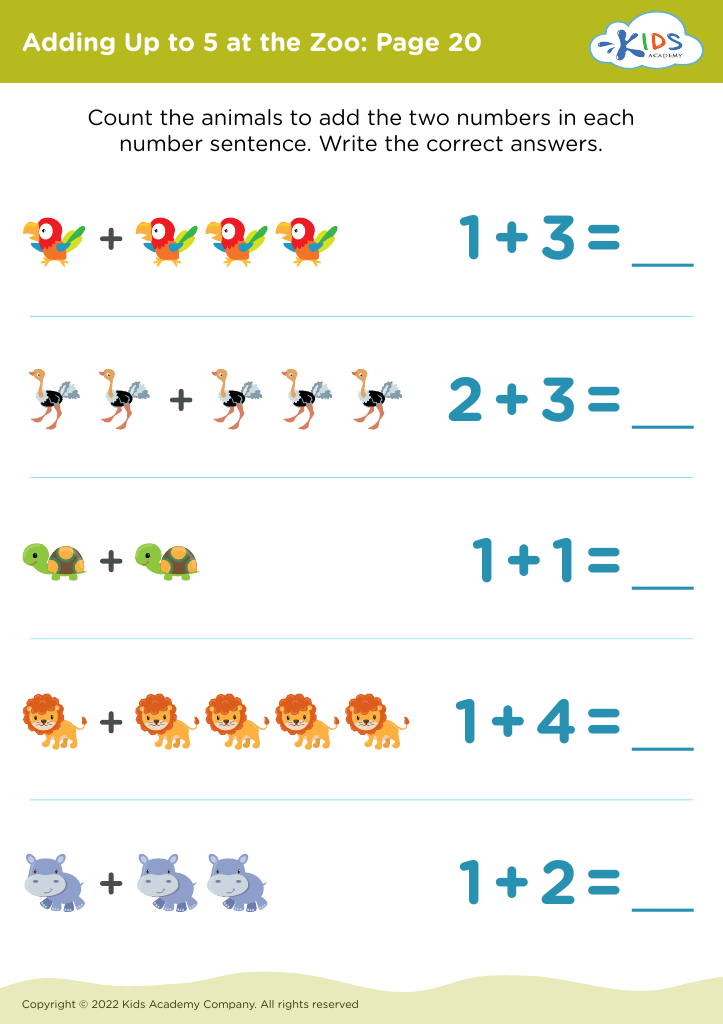
    Adding Up to 5 at the Zoo: Page 20
    Adding Up to 5 at the Zoo: Page 20
    Adding Up to 5 at the Zoo: Page 20
    Worksheet
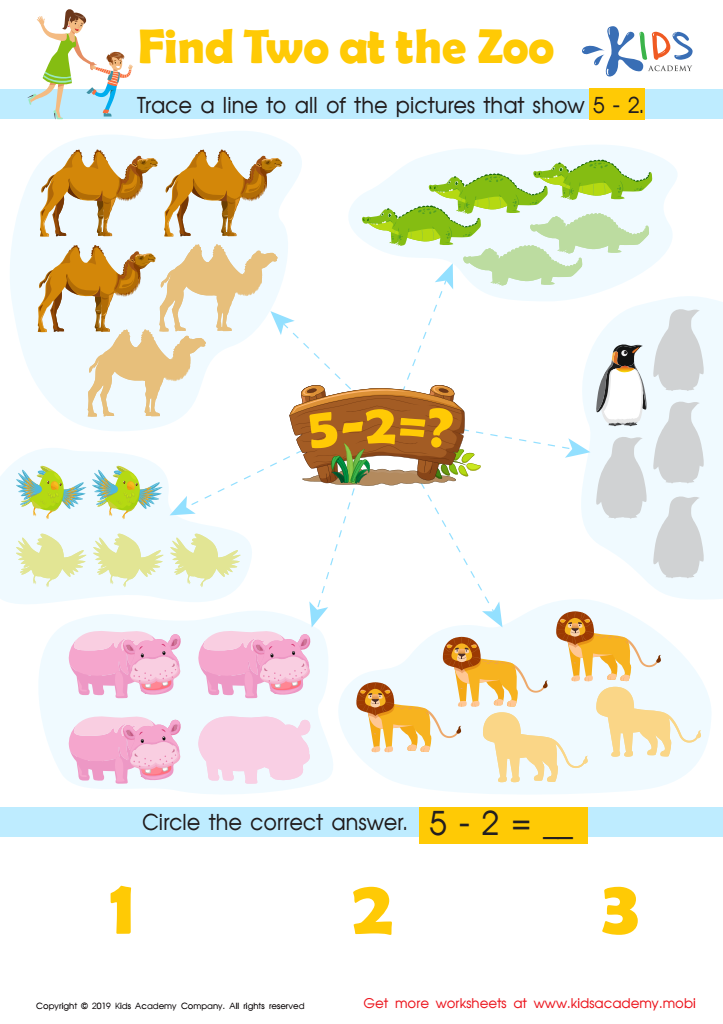
    Find Two at the Zoo Worksheet
    Find Two at the Zoo Worksheet
    Find Two at the Zoo Worksheet
    Help your kids overcome math fears and practice subtracting numbers with this traceable PDF. Ask them to identify the 6 groups of animals in the picture and count the animals in each group. Then, help them trace a line to all of the pictures that illustrate the equation 5-2.
    Find Two at the Zoo Worksheet

    Worksheet
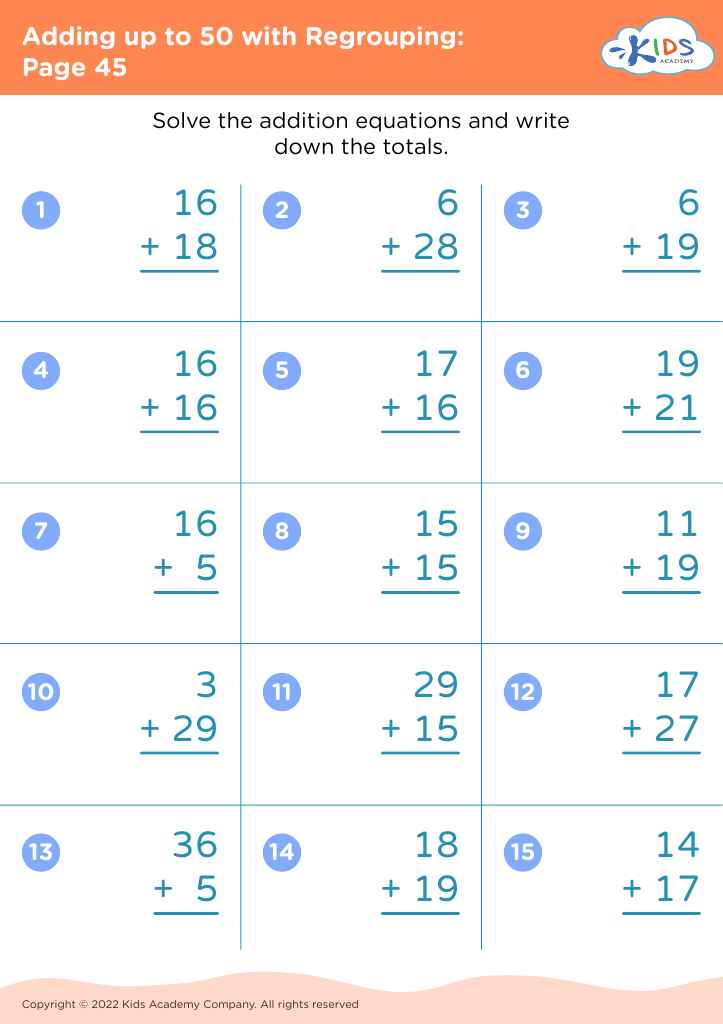
    Adding up to 50 with Regrouping: Page 45
    Adding up to 50 with Regrouping: Page 45
    Adding up to 50 with Regrouping: Page 45
    Worksheet
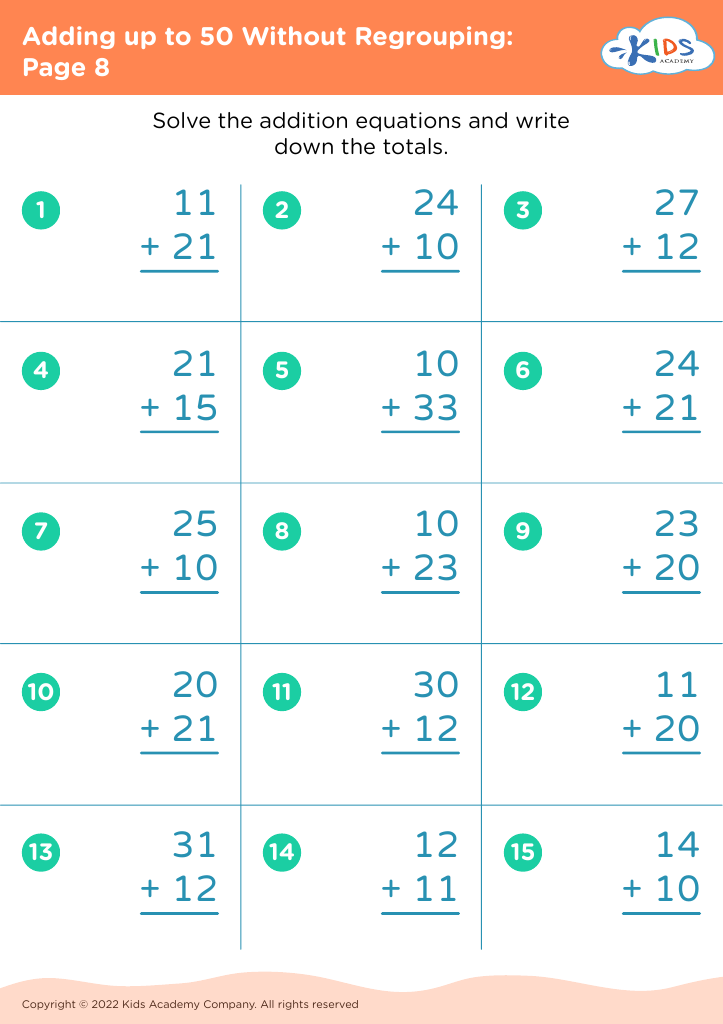
    Adding up to 50 Without Regrouping: Page 8
    Adding up to 50 Without Regrouping: Page 8
    Adding up to 50 Without Regrouping: Page 8
    Worksheet
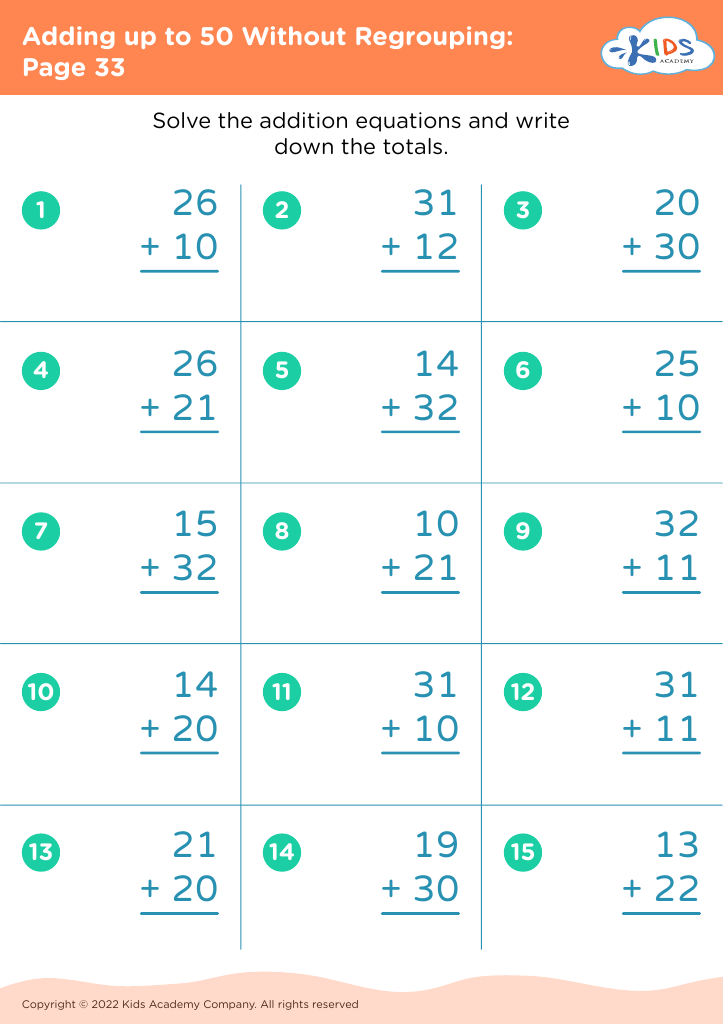
    Adding up to 50 Without Regrouping: Page 33
    Adding up to 50 Without Regrouping: Page 33
    Adding up to 50 Without Regrouping: Page 33
    Worksheet


    Counting skills and basic addition form the foundation of early mathematics, making it crucial for parents and teachers to prioritize these skills for children ages 4-8. Mastery of counting lays the groundwork for understanding numbers and is intertwined with everyday experiences—whether it’s counting toys, snacks, or steps. This practice not only boosts numerical competence but also enhances cognitive development by improving memory and problem-solving abilities.

    Additionally, foundational addition skills foster confidence in young learners. As children become comfortable with addition, they build a positive attitude towards mathematics, which can influence their future academic choices. Early exposure to these concepts aids in developing critical thinking, as children learn to combine, group, and compare quantities.

    Furthermore, neglecting these skills could lead to gaps in understanding that become significant challenges later on in education. By focusing on counting and addition, teachers and parents help children not only succeed in math but also in daily life situations where basic mathematics is required. Involvement from both parties ensures a consistent approach, creating a supportive learning environment that nurtures a child's curiosity and enthusiasm for numbers. Emphasizing these vital skills ultimately sets the stage for lifelong mathematical understanding and success.