Enhance critical thinking Addition Worksheets for Ages 4-8
4 filtered results
-
From - To
Unlock the power of critical thinking with our expertly designed Addition Worksheets for children ages 4-8! These engaging resources encourage young learners to not only enhance their basic addition skills but also develop essential problem-solving abilities. Each worksheet presents fun, creative, and challenging exercises that stimulate children’s imaginations and boost their confidence in math. Ideal for both classroom and home use, these worksheets are crafted to make learning enjoyable and interactive. Help your child master addition in a way that promotes critical thinking, ensuring they build a solid foundation for future learning. Start unleashing your child's potential today with our worksheets!
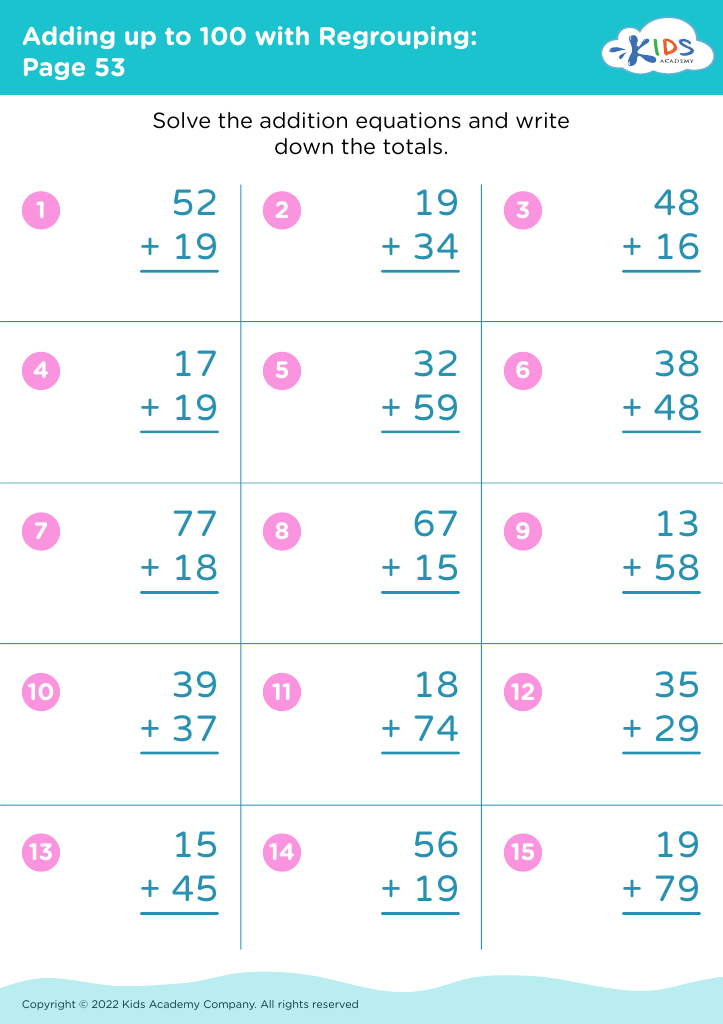
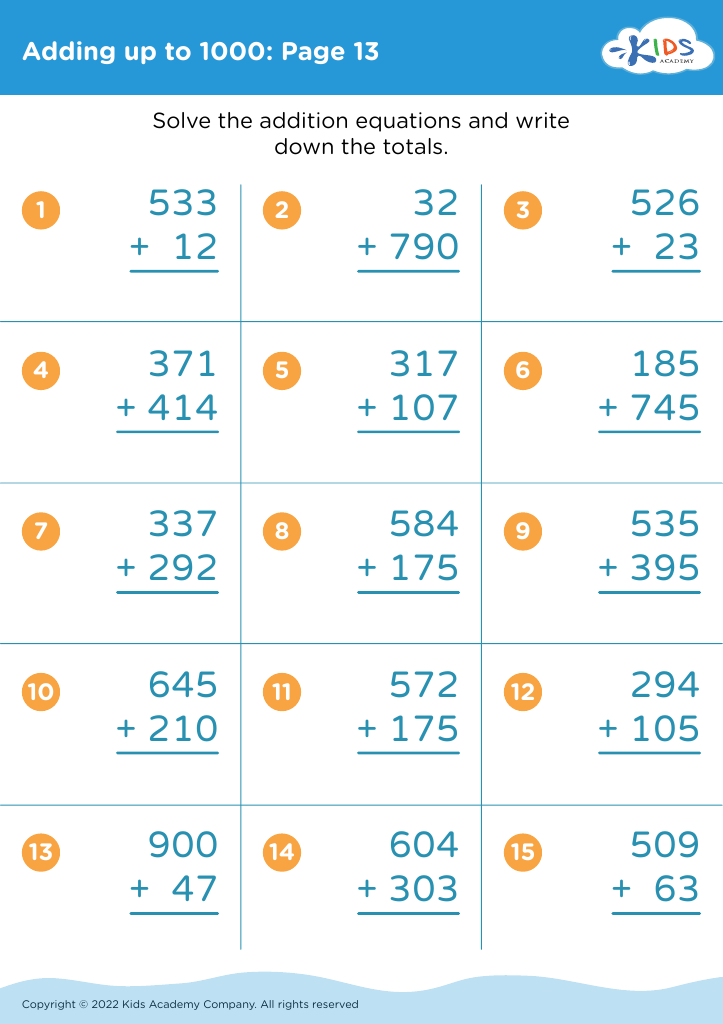
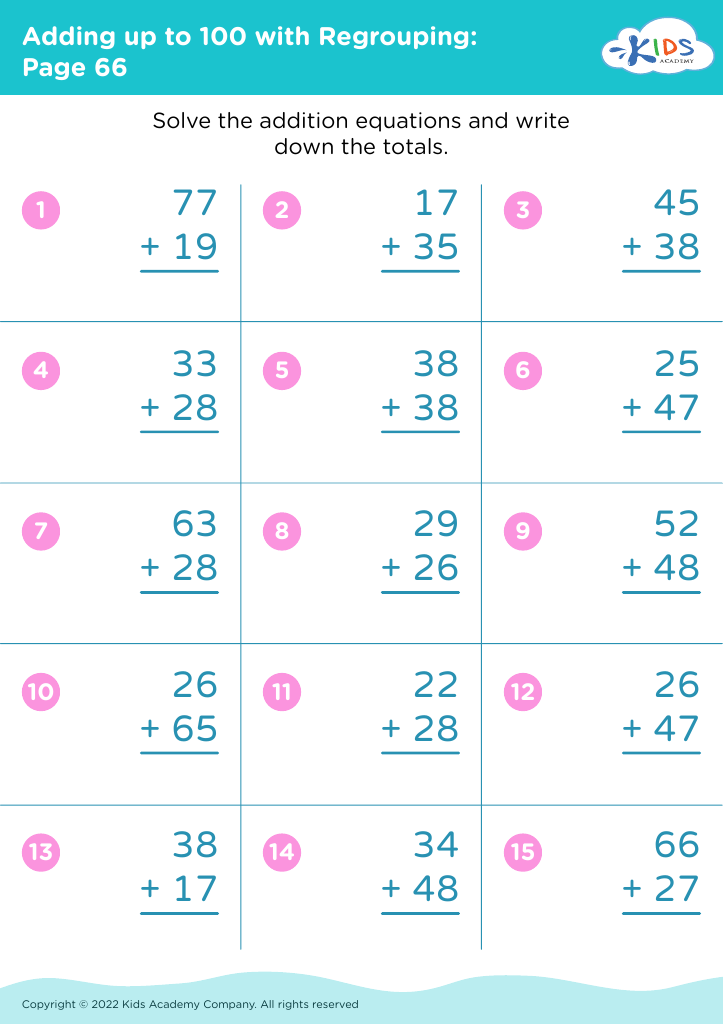
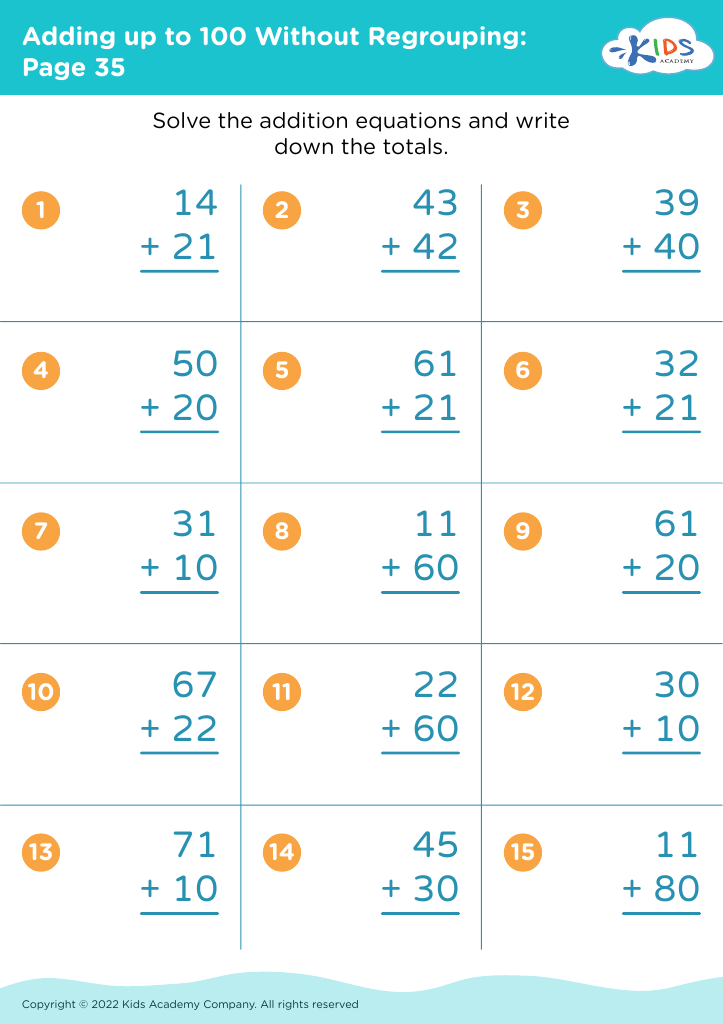



.jpg)




Enhancing critical thinking skills through math, specifically addition, is crucial for children ages 4-8 as it lays the foundation for problem-solving and analytical abilities needed in their academic and everyday lives. First, critical thinking encourages children to explore various strategies, helping them understand that there can be multiple ways to arrive at the same result. This versatility fosters a growth mindset, allowing children to be more resilient when facing challenges.
Furthermore, when children engage in critical thinking during addition, they learn to ask questions, analyze information, and make informed decisions. These skills are transferable across subjects, promoting a comprehensive understanding of not just math but literacy, science, and social studies.
Parents and teachers hold a vital role in this developmental stage. They can facilitate engaging activities—like math games and puzzles—that make the learning process enjoyable while nurturing creativity and innovation. By prioritizing critical thinking in early mathematics, caregivers empower children to become independent learners, which is essential for future academic success and life skills. Batch protocols may compromise their confidence and persistence, ultimately influencing their outlook on learning and enhancing their ability to navigate challenges effectively.








