Fine Motor Skills (coloring) Addition Worksheets for Ages 4-8
6 filtered results
-
From - To
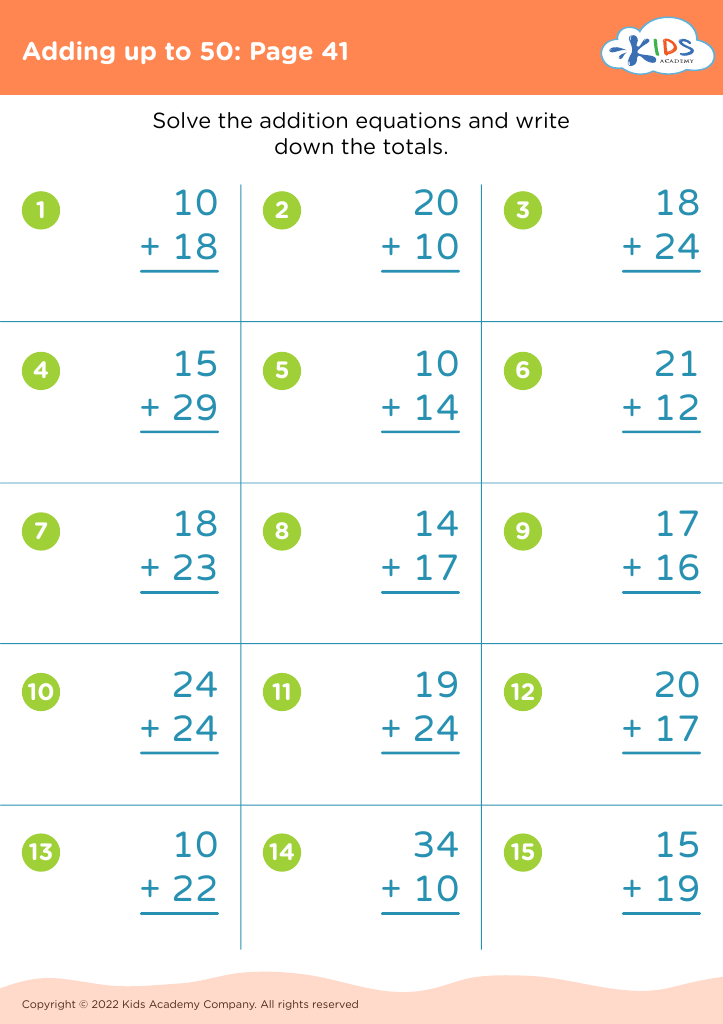
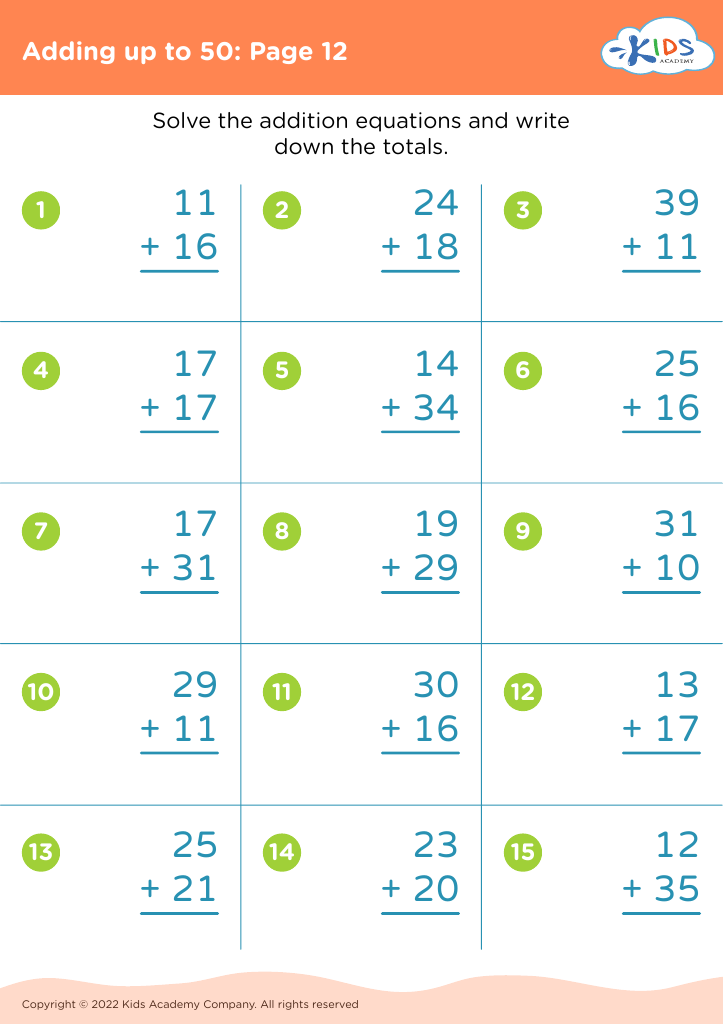
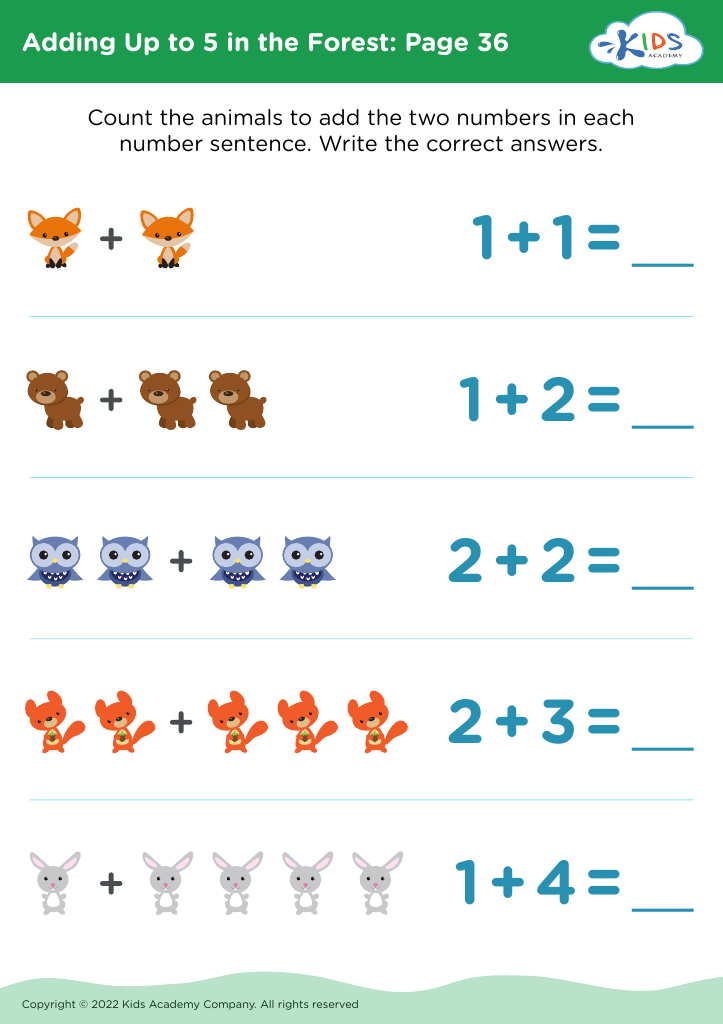
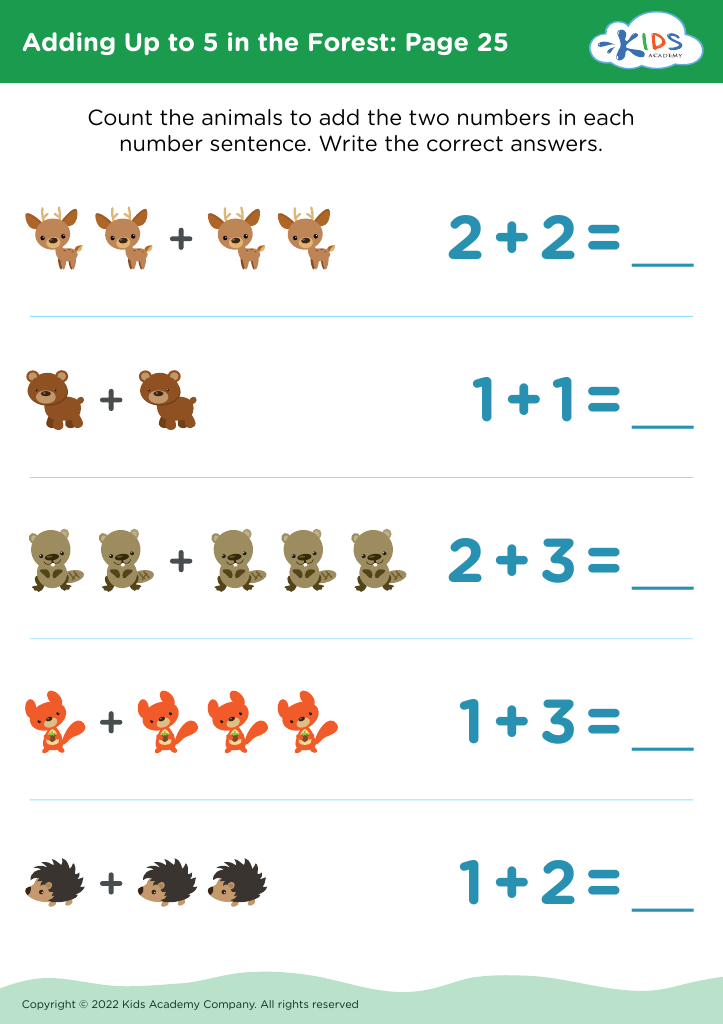
Enhance your child's fine motor skills while making learning fun with our Coloring Addition Worksheets for ages 4-8! Designed specifically for young learners, these engaging worksheets combine the joy of coloring with foundational math concepts. Children will practice addition by coloring sections of the worksheets according to the sums provided. This interactive approach not only reinforces math skills but also promotes hand-eye coordination and creativity. Perfect for both home and classroom use, our worksheets make learning exciting and enjoyable. Explore a variety of themed worksheets that cater to different interests, allowing your child to develop essential skills while having a great time!








Fine motor skills are essential for young children's overall development, and activities like coloring play a vital role in honing these skills. For children aged 4-8, engaging in coloring exercises helps them develop precise hand-eye coordination, dexterity, and control over their movements. These skills are crucial for tasks they will encounter later, such as writing, cutting with scissors, and tying shoelaces.
In addition to the physical benefits, coloring enhances cognitive development. As children choose colors, stay within lines, and create shapes, they learn about focus and intention. This encourages problem-solving and critical thinking—skills needed in various school subjects and real-life situations. Moreover, coloring also provides an opportunity for self-expression, allowing children to convey their emotions and ideas visually.
Teachers and parents should recognize that supporting fine motor skill development is not just about preparing children for specific tasks; it's a comprehensive approach to fostering an environment where creativity, confidence, and independence can flourish. By prioritizing activities like coloring, educators and caregivers can lay the groundwork for successful learning experiences, helping children build the skills necessary for future academic and life challenges.








