Improves number recognition Addition Worksheets for Ages 4-8
3 filtered results
-
From - To
Boost your child's number recognition skills with our engaging Addition Worksheets designed specifically for ages 4-8! These interactive worksheets provide a fun, educational experience, helping young learners familiarize themselves with numbers and develop essential early math skills. Each worksheet offers a variety of addition problems that encourage children to recognize numbers, understand quantities, and practice addition in an enjoyable way. Perfect for reinforcing classroom learning or as a helpful resource for homeschool settings, these worksheets make math exciting for kids. Download and print these high-quality resources today, and watch your little ones gain confidence in their math abilities!
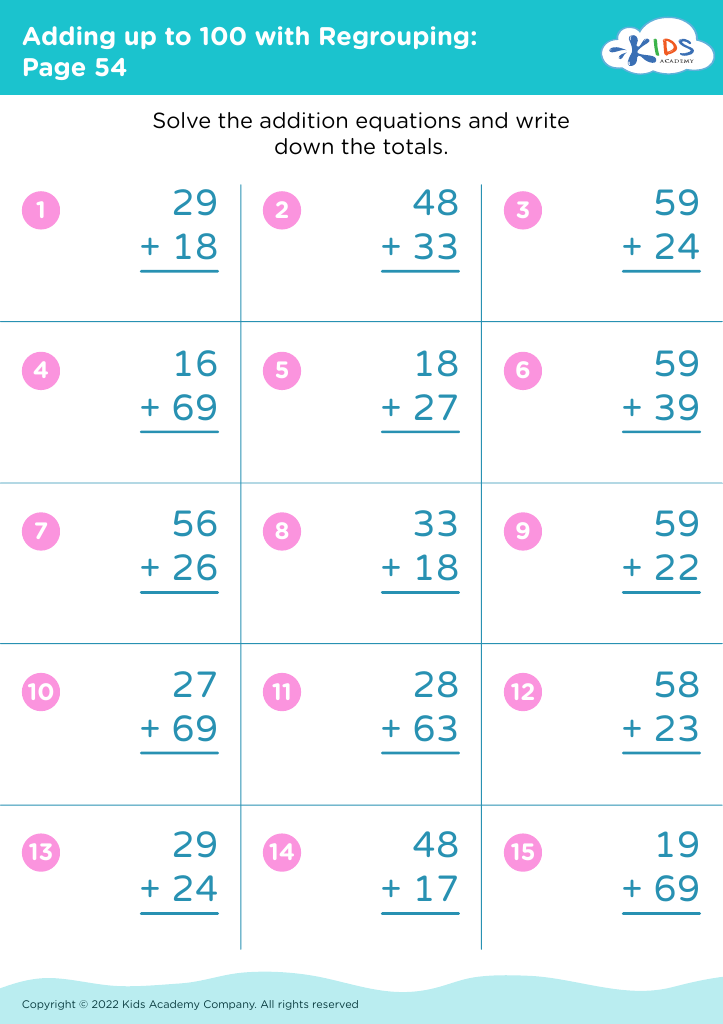
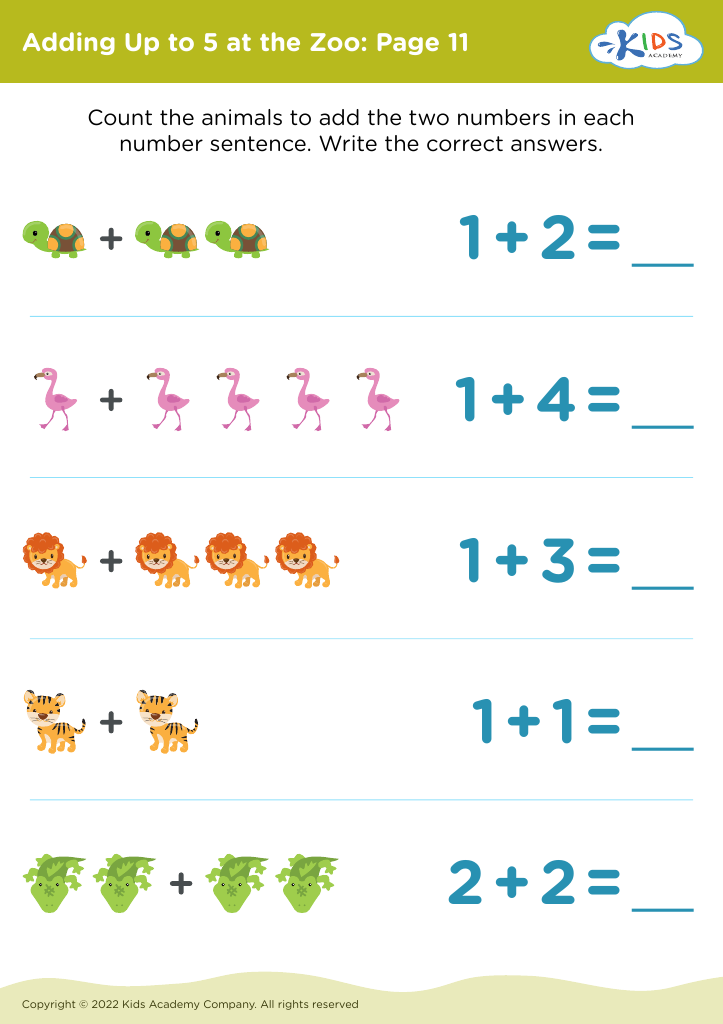
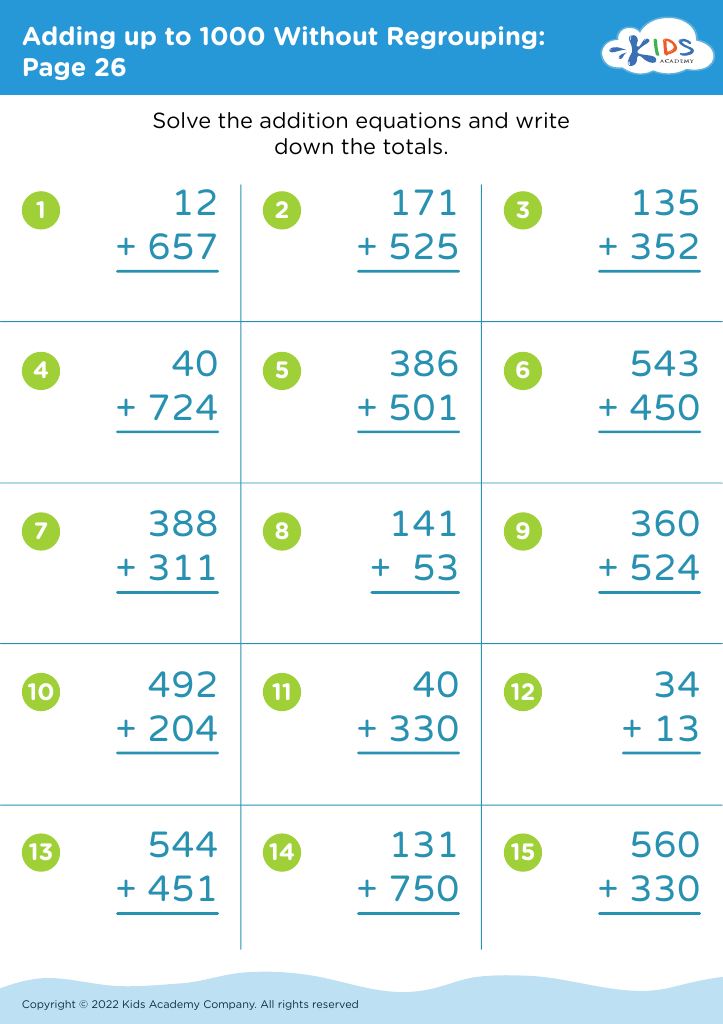








Improving number recognition and addition skills in children aged 4-8 is crucial for several reasons. Firstly, these foundational mathematics skills underpin nearly all future math learning. Children who develop strong number recognition early on are better prepared for more complex concepts in arithmetic, geometry, and beyond. Recognizing numbers helps them understand quantities, which is essential in daily life and problem-solving scenarios.
Additionally, mastering addition fosters confidence. When children grasp the basics of combining numbers, they gain the self-assurance necessary to tackle more challenging problems. As adults, confidence in math skills carries over into various aspects of life, from budgeting to critical thinking.
Moreover, these skills enhance cognitive development. Learning number recognition and addition nurtures analytical thinking and helps cultivate persistence, as students learn that practice leads to improvement. This is also an opportunity to engage parents in their children’s education, as they can provide support through fun activities, games, and discussions at home.
Ultimately, focusing on these early skills cultivates a love for mathematics, setting the stage for academic success and positive attitudes toward learning. Parents and teachers play a vital role in sparking this interest, making it essential for them to engage with and prioritize these developmental milestones.








