
Matching skills Addition Worksheets for Ages 4-8
3 filtered results
Difficulty Level
Grade
Age
-
From - To
Subject
Activity
Standards
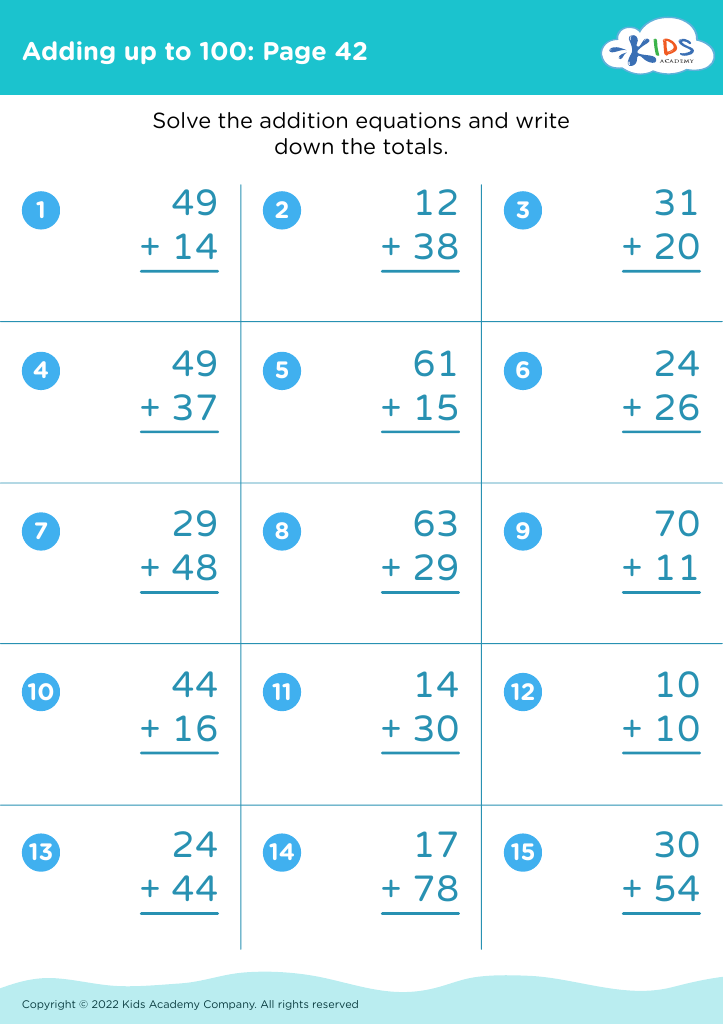
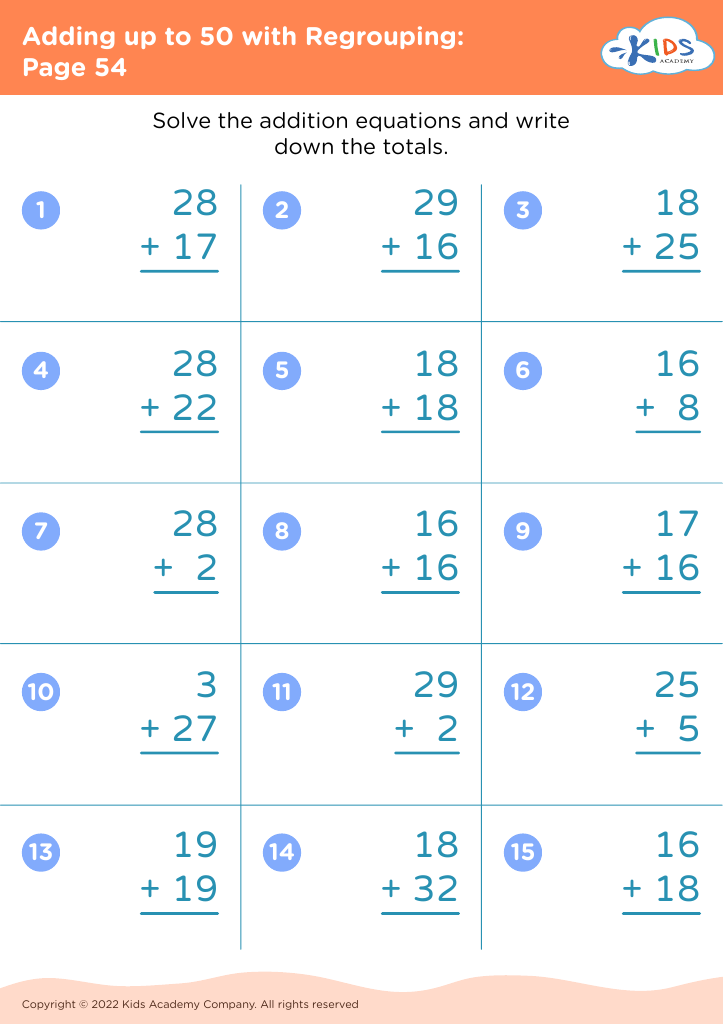
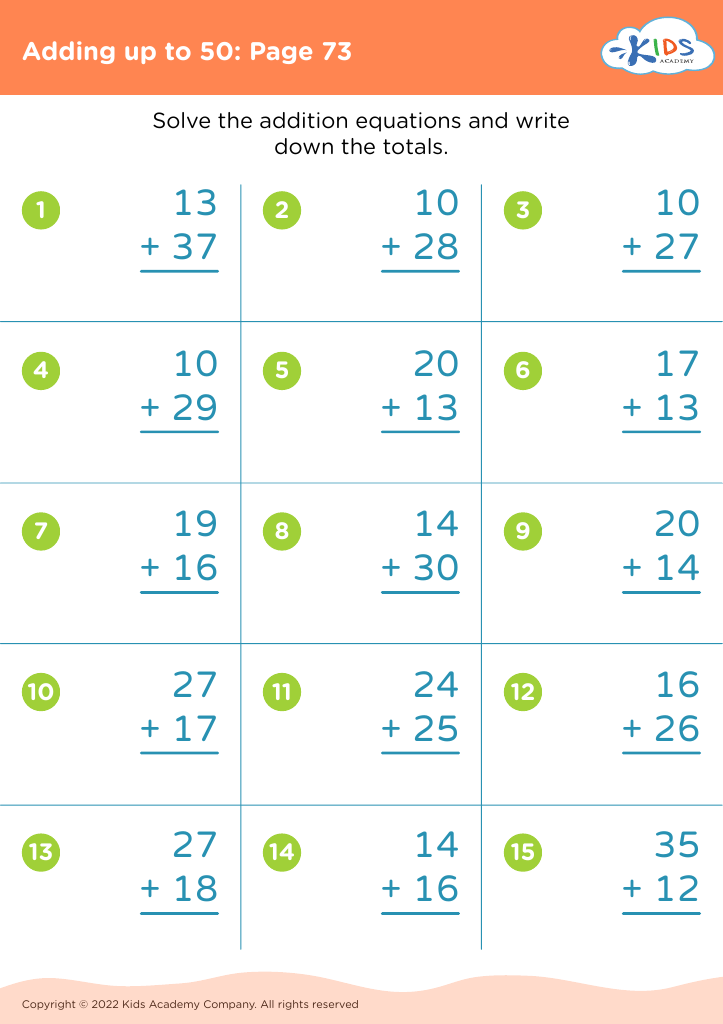
Enhance your child’s mathematical journey with our Matching Skills Addition Worksheets for ages 4-8. These engaging worksheets are designed to help young learners develop their addition skills while bolstering their ability to match elements accurately. Ideal for both classroom and home use, our worksheets feature colorful illustrations and age-appropriate problems that make learning fun and effective. Each activity encourages children to recognize patterns and relationships in addition, fostering critical thinking from an early age. Explore these worksheets today and watch your child's confidence and skills in mathematics flourish! Perfect for early-grade educators and parents alike!
Favorites
With answer key
Interactive
Join Kids Academy for Free
Who is primarily going to use this learning content?








Matching skills in addition for children aged 4-8 are crucial for early mathematical development. During this formative stage, children are laying the groundwork for their understanding of numbers and relationships. Engaging in activities that focus on matching and addition helps children recognize and pair quantities, fostering their ability to grasp basic arithmetic concepts.
When children practice matching skills with addition, they learn to identify and connect numbers to their corresponding values, making the learning process interactive and enjoyable. This engagement enhances cognitive abilities, improves memory, and builds confidence as they see their progress in solving problems. Moreover, familiarity with addition through matching promotes critical thinking, enabling kids to approach mathematical challenges more effectively.
Furthermore, incorporating matching skills and addition in early education strengthens the parent-teacher bond, as adults can engage with children in playful, educational activities. As children master these skills, it lays a solid foundation for more complex mathematics in later years, influencing their overall academic success.
Overall, prioritizing matching skills in addition is an essential element in fostering a child's mathematical understanding, critical thinking, and love for learning, which are invaluable in their educational journey.








