Numeracy skills Addition Worksheets for Ages 4-8
10 filtered results
-
From - To
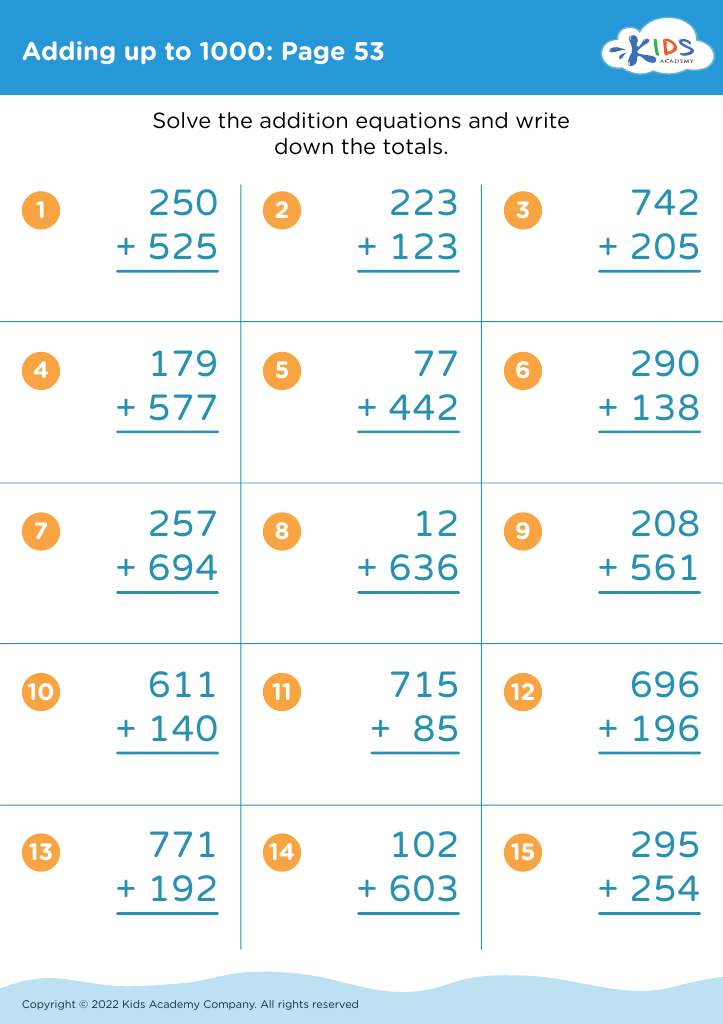
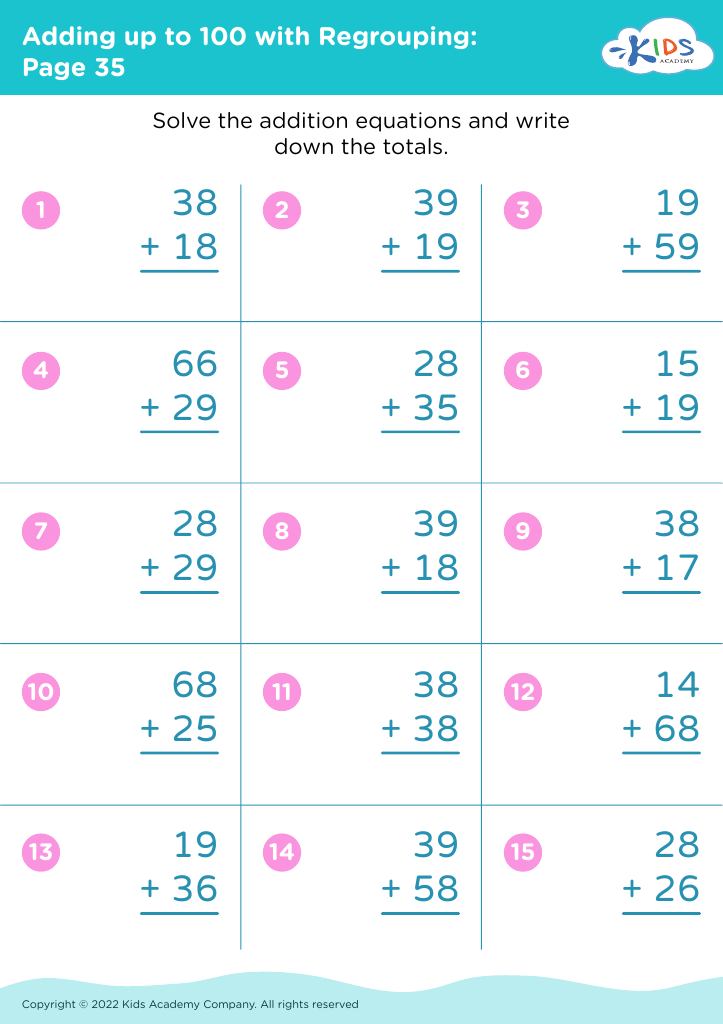
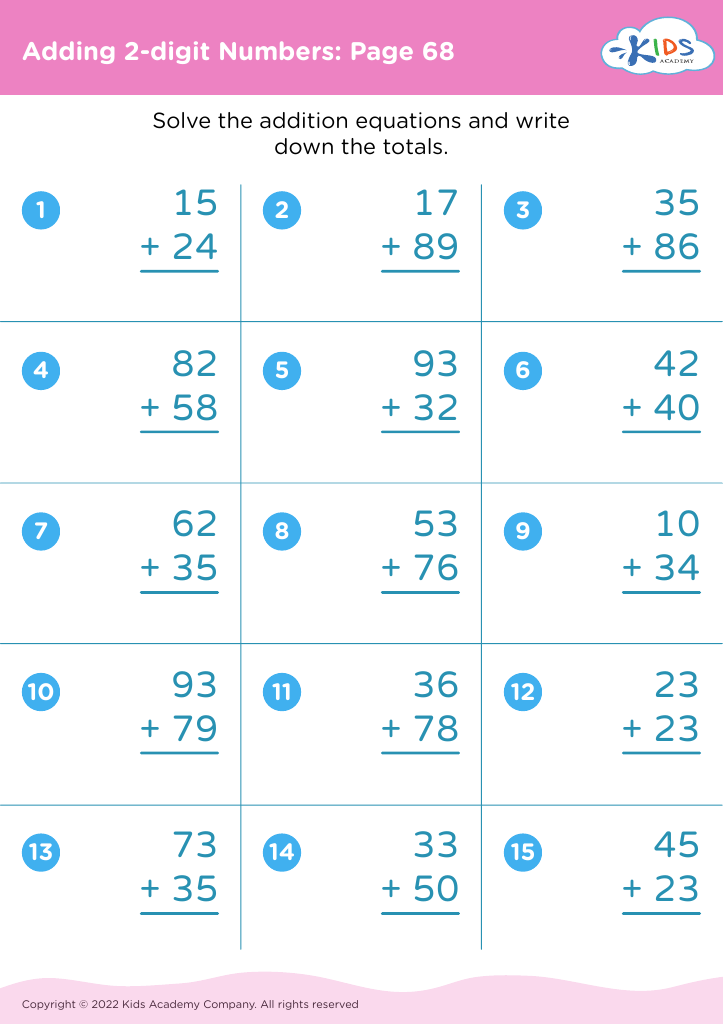
Explore our engaging Numeracy Skills Addition Worksheets designed specifically for children aged 4-8! These worksheets provide a fun and interactive way for young learners to develop their addition skills, catering to various learning styles. From colorful visuals to simple, step-by-step problems, kids will enjoy practicing addition through various formats like puzzles, number lines, and word problems. Our resources also support fine motor skills and problem-solving abilities, ensuring a comprehensive educational experience. Perfect for both classroom settings and home learning, these worksheets make mastering addition exciting and accessible. Start boosting your child's numeracy skills today with our thoughtfully crafted materials!
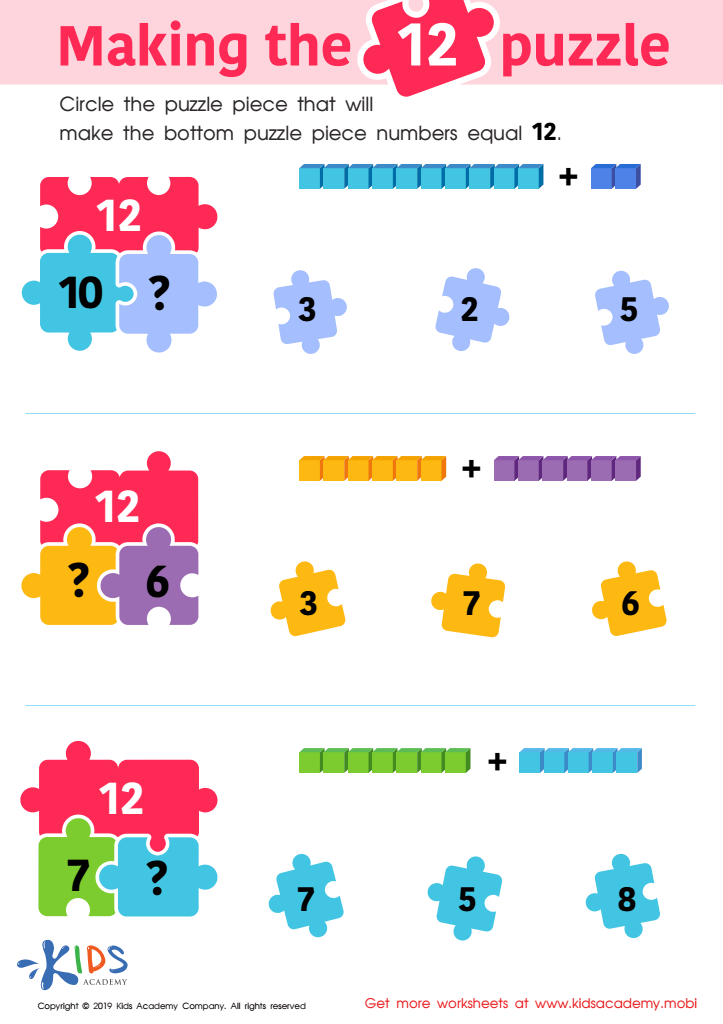
Making the 12 Puzzle Worksheet
 Assign to My Students
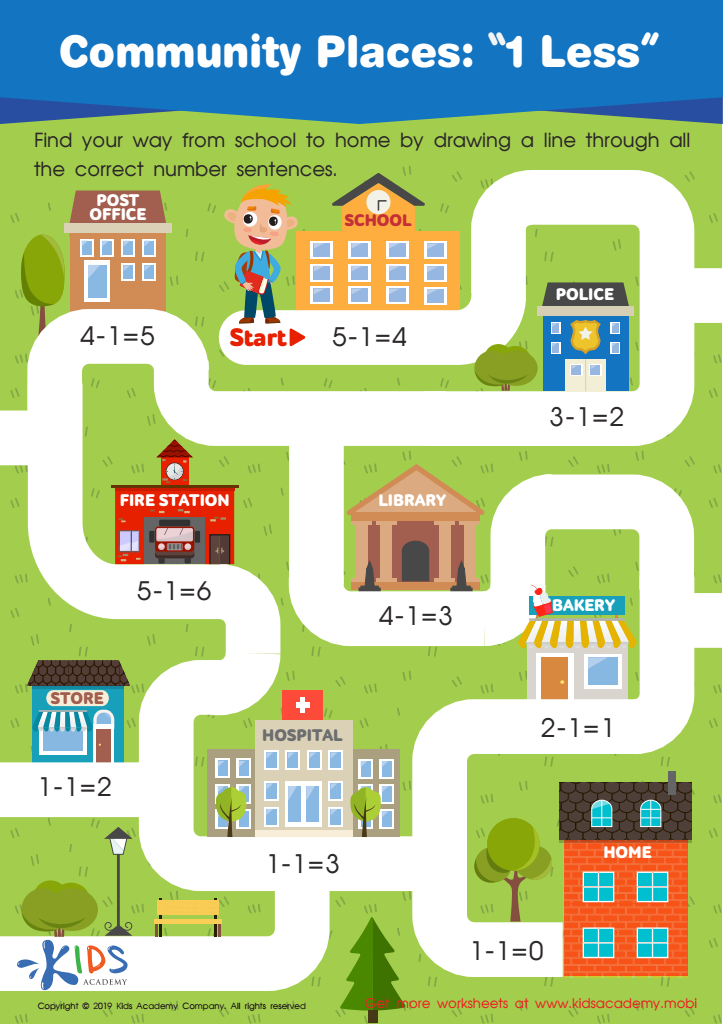
Community Places: 1 Less Worksheet
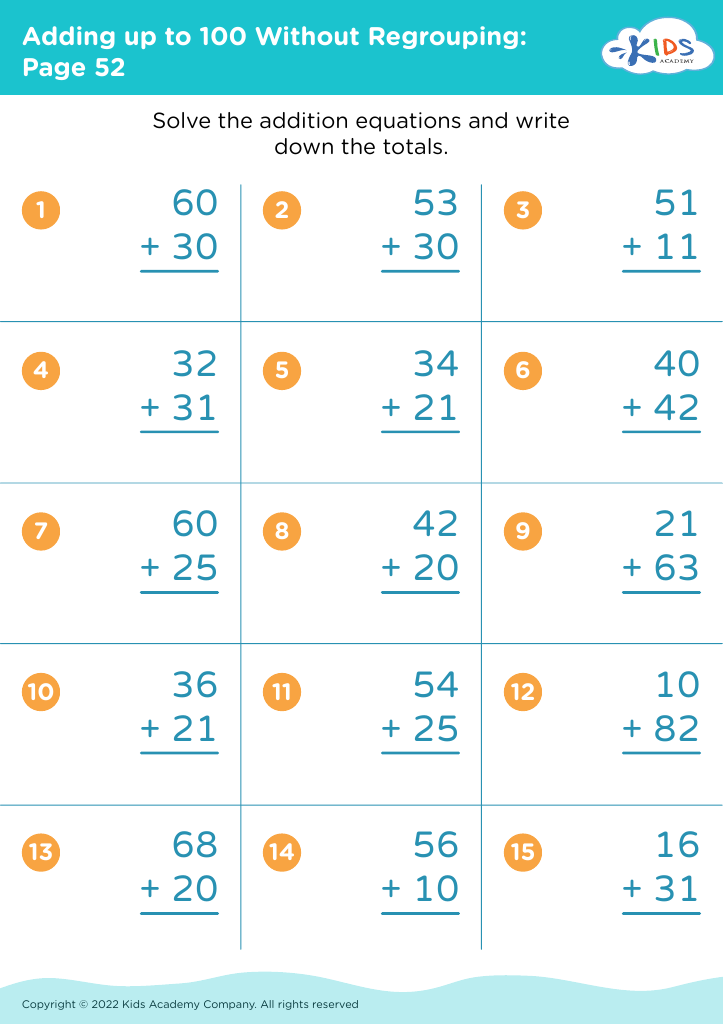








Numeracy skills, particularly in addition, are foundational building blocks for a child's mathematical understanding and overall cognitive development. For children aged 4-8, mastering addition isn't just about calculating numbers; it fosters critical thinking, problem-solving, and logical reasoning skills essential in everyday life. Parents and teachers should care about developing these skills because early numeracy is linked to later academic success in mathematics and other subjects.
Moreover, addition helps children understand concepts of quantity and relationships, paving the way for more complex mathematical operations such as subtraction, multiplication, and division. It builds confidence, as children gain the ability to tackle math problems independently. When addition is introduced through engaging activities—like games, visual aids, or real-life scenarios—children develop a positive attitude toward math, reducing anxiety about the subject in later years.
Additionally, developing numeracy skills early on plays a crucial role in narrowing achievement gaps, ensuring all children have the same opportunities for academic growth. In a world increasingly driven by data and technology, mathematical proficiency is critical for a child’s future, making it imperative that parents and teachers prioritize numeracy skill development in these formative years.








