Practice division Addition Worksheets for Ages 4-8
3 filtered results
-
From - To
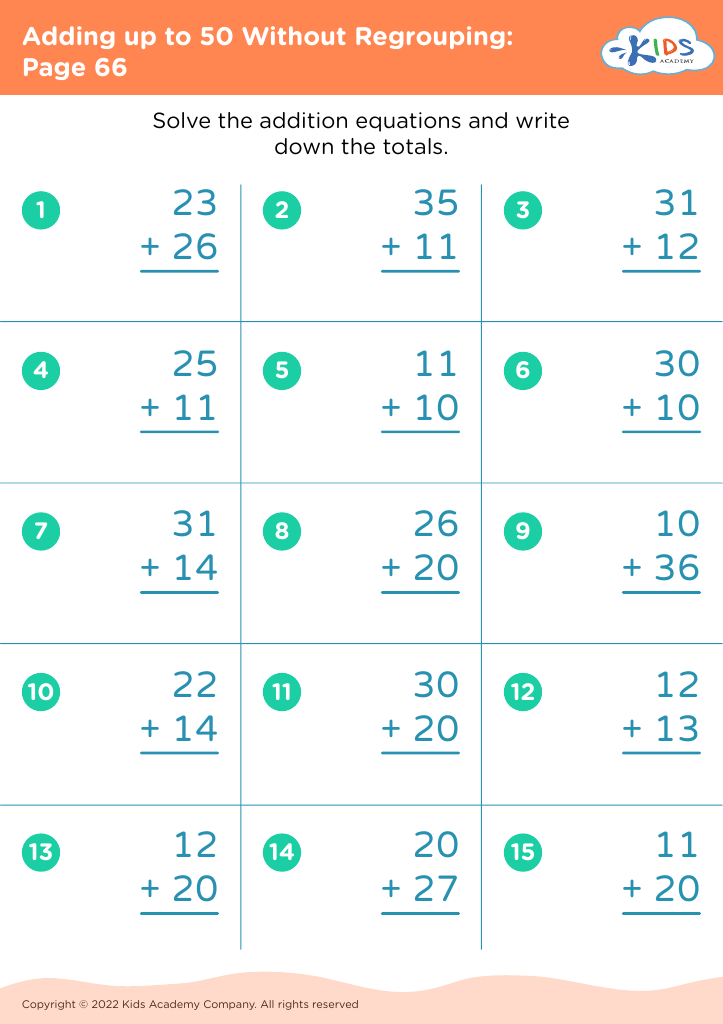
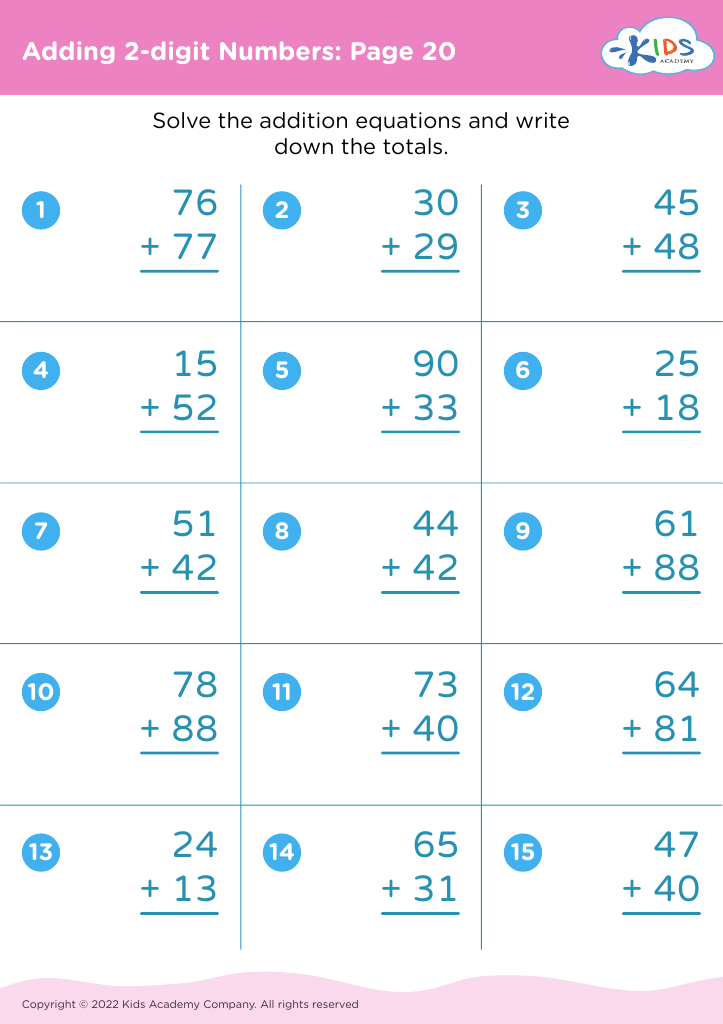
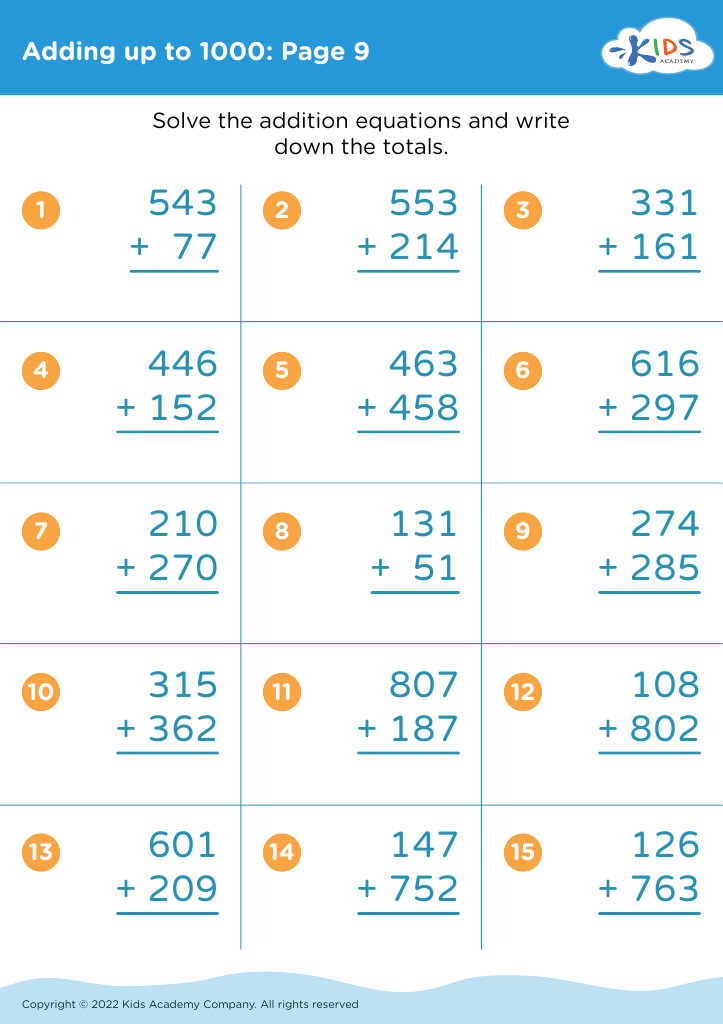
Discover the essential "Practice Division" Addition Worksheets designed for children ages 4-8. Our engaging and visually appealing worksheets are tailored to enhance young learners' addition skills in a fun, interactive manner. Each worksheet is created to build a solid mathematical foundation, helping children develop confidence and proficiency in performing addition problems. The exercises combine colorful graphics and creative activities to keep young minds interested and motivated. Perfect for both parents and educators, these worksheets provide a valuable resource for supporting early math education at home or in the classroom. Start your child's math journey today with our expertly crafted addition worksheets!



.jpg)




Practicing division and addition for children ages 4-8 is foundational to their overall mathematical development. At this stage, children are building the basic skills that will support more complex problem-solving in later years. Engaging with division helps develop an understanding of equal sharing and partitioning, which are critical concepts for mathematical reasoning and real-world applications, such as dividing snacks or toys fairly among friends.
Addition is similarly vital, as it lays the groundwork for all subsequent arithmetic. It introduces the principles of combining quantities, which is essential for financial literacy, measurement, and daily activities like grocery shopping or tracking time.
Furthermore, early practice of these skills enhances cognitive development. It improves focus, memory, and logical thinking. As children see their competence grow, they often gain confidence not just in math, but in their overall academic abilities.
Providing a playful, supportive environment for practicing these skills ensures children see math as enjoyable and approachable, which can foster a lifelong love for learning. Therefore, parents and teachers should prioritize division and addition practice to build a strong mathematical foundation, nurture essential cognitive skills, and promote confidence and positivity in young learners.








