Filters

21 filtered results

Clear all filters
Favorites
With answer key
Interactive

21 filtered results

Difficulty Level

Grade


Discover our "Recognizing Patterns Addition Worksheets" designed for children ages 4 to 8! These engaging worksheets help young learners master addition by recognizing patterns in numbers and visual aids. Using colorful illustrations and interactive activities, your child will develop essential math skills while enhancing critical thinking and problem-solving abilities. Our user-friendly format promotes self-paced learning, ensuring that concepts are grasped fully. Perfect for home or classroom use, these worksheets encourage creativity and fun in learning. Foster a love for math early on with our thoughtfully crafted resources that support skill development in an enjoyable way. Get started today and watch your child thrive!
Check out this FREE Trial Lesson on Addition for age 4-8!

Short and Long Vowel Sort

Favorites
With answer key
Interactive
  • 4-8
  • Recognizing Patterns
  • Addition
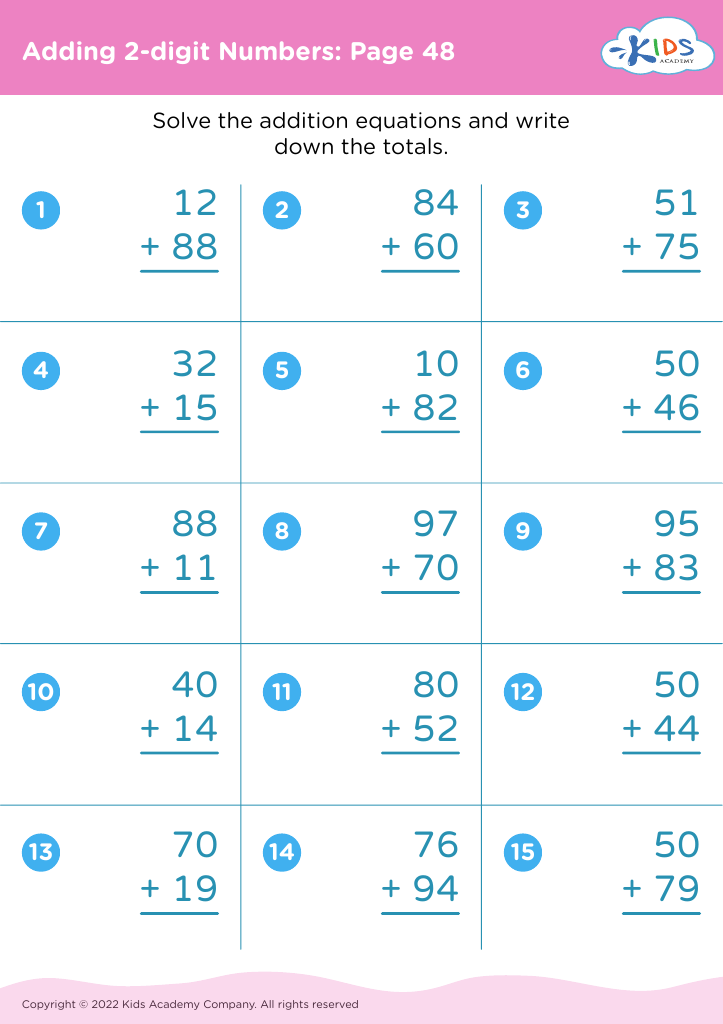
Adding 2-digit Numbers: Page 48

Adding 2-digit Numbers: Page 48

Adding 2-digit Numbers: Page 48
Worksheet
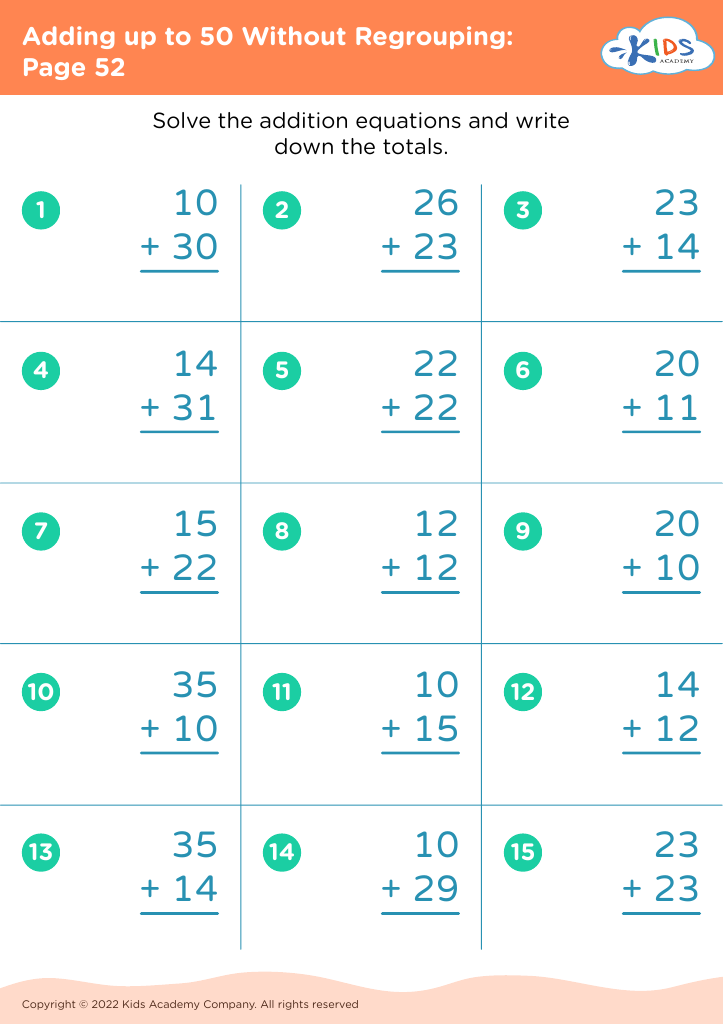
Adding up to 50 Without Regrouping: Page 52
Worksheet
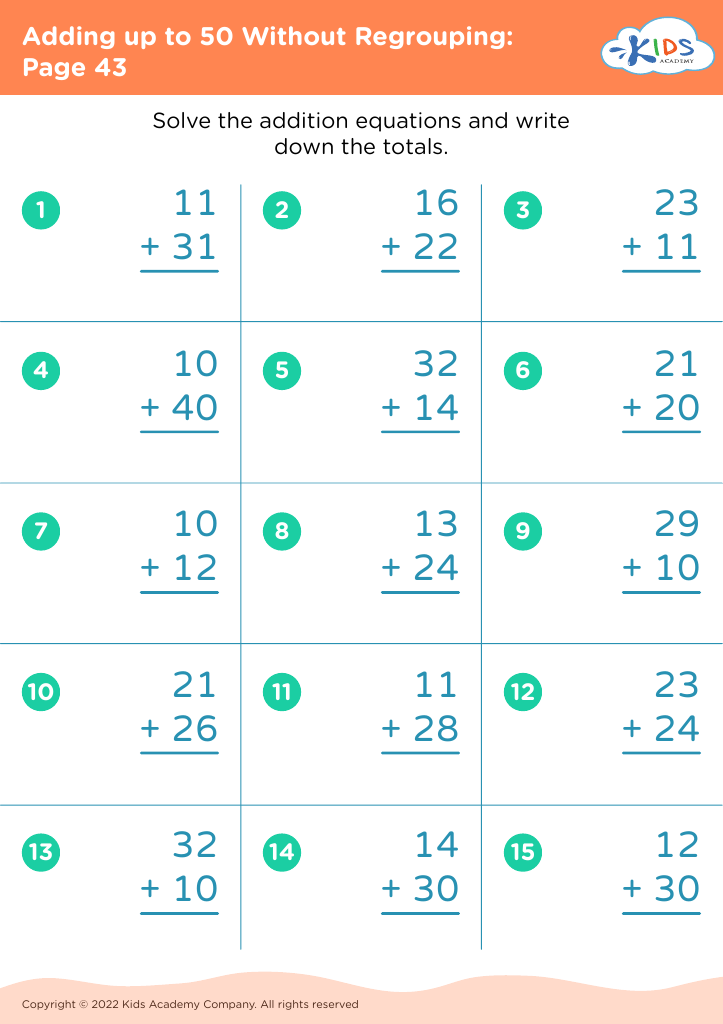
Adding up to 50 Without Regrouping: Page 43
Worksheet
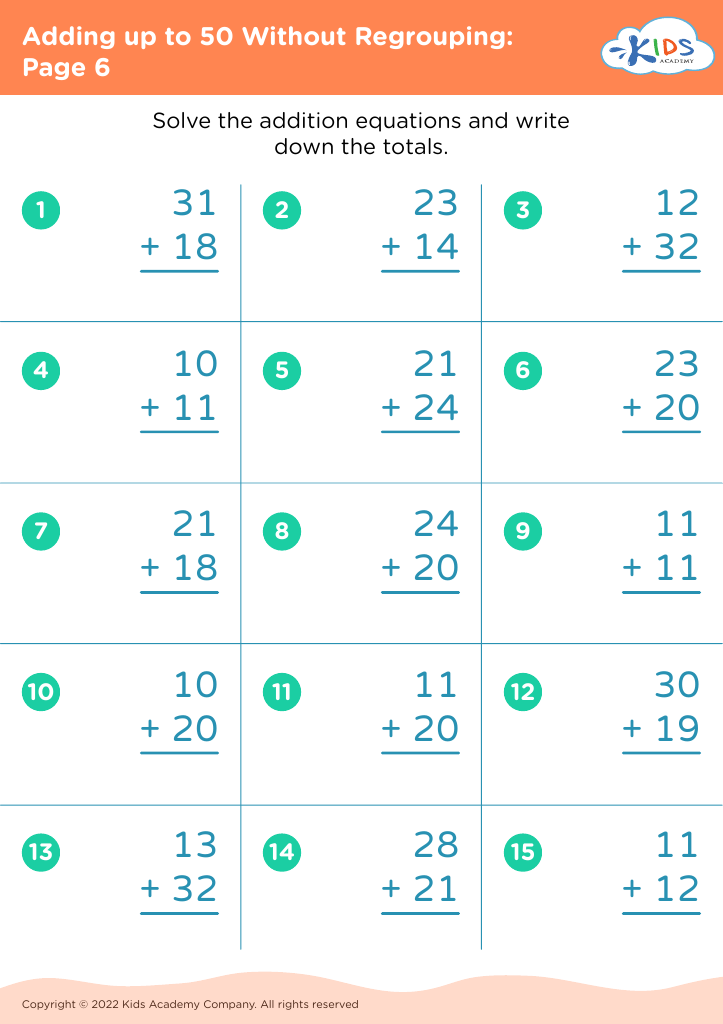
Adding up to 50 Without Regrouping: Page 6
Worksheet
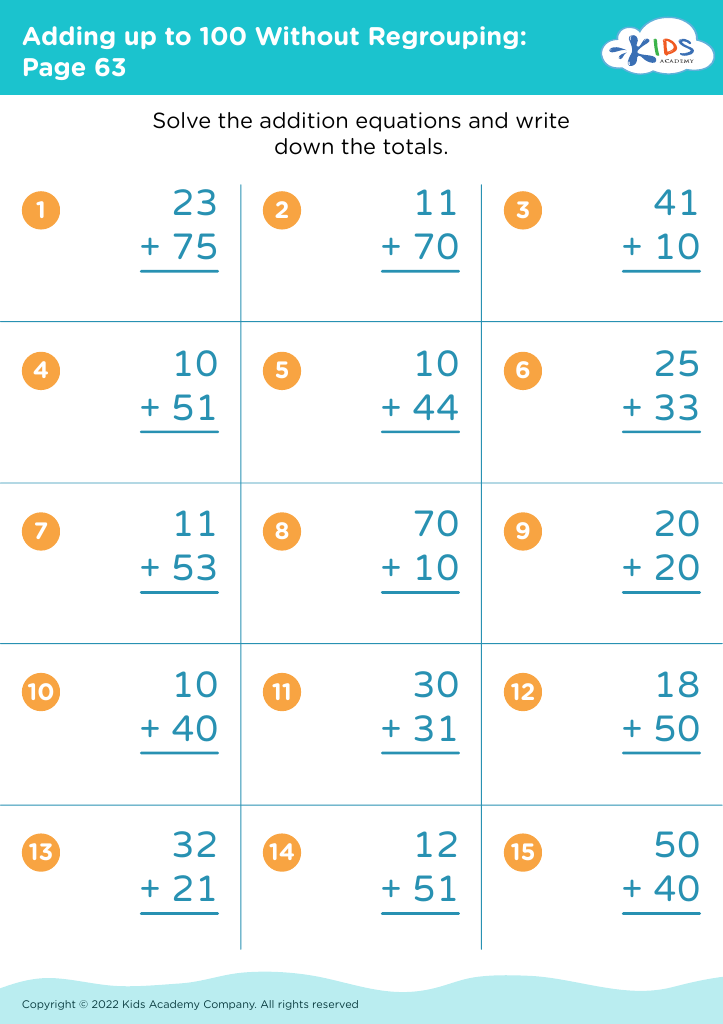
Adding up to 100 Without Regrouping: Page 63
Worksheet
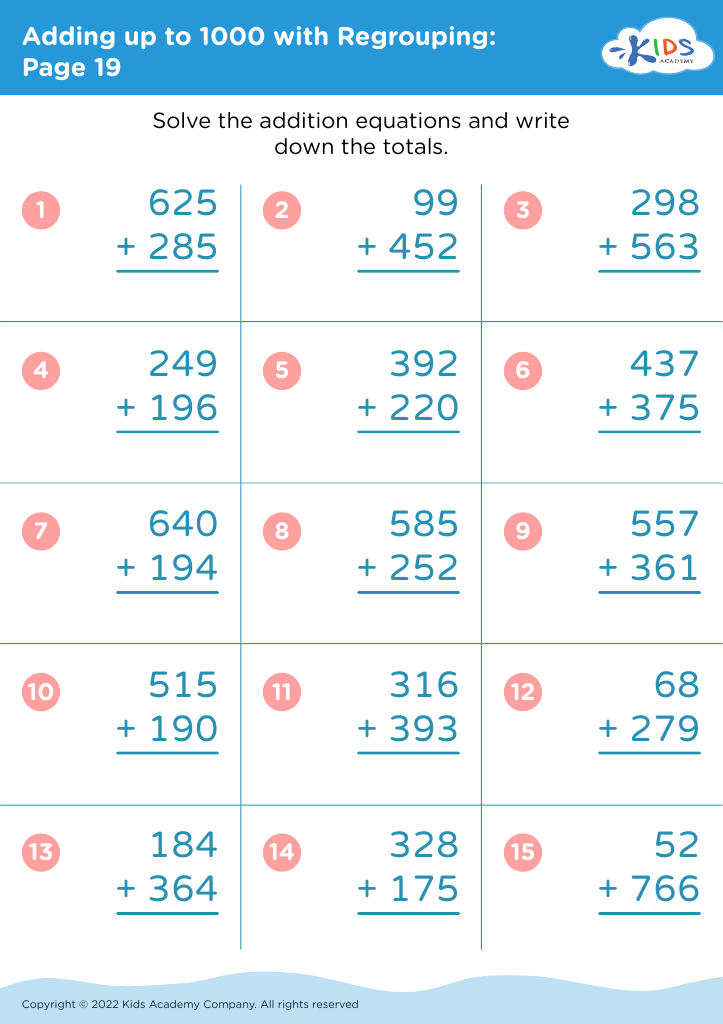
Adding up to 1000 with Regrouping: Page 19
Worksheet
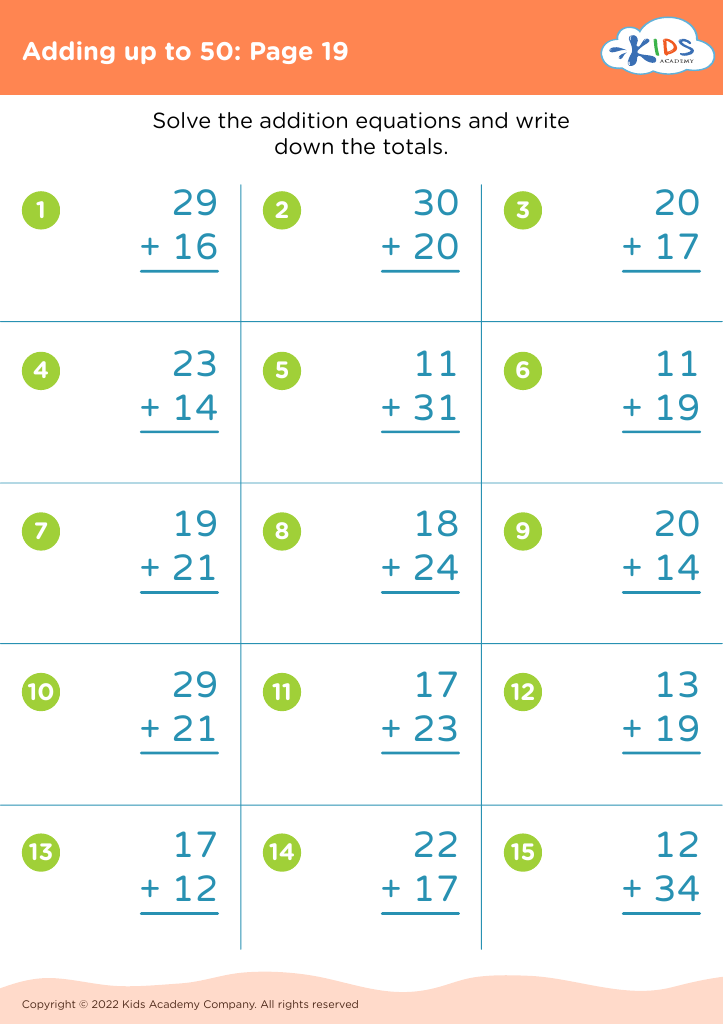
Adding up to 50: Page 19

Adding up to 50: Page 19

Adding up to 50: Page 19
Worksheet
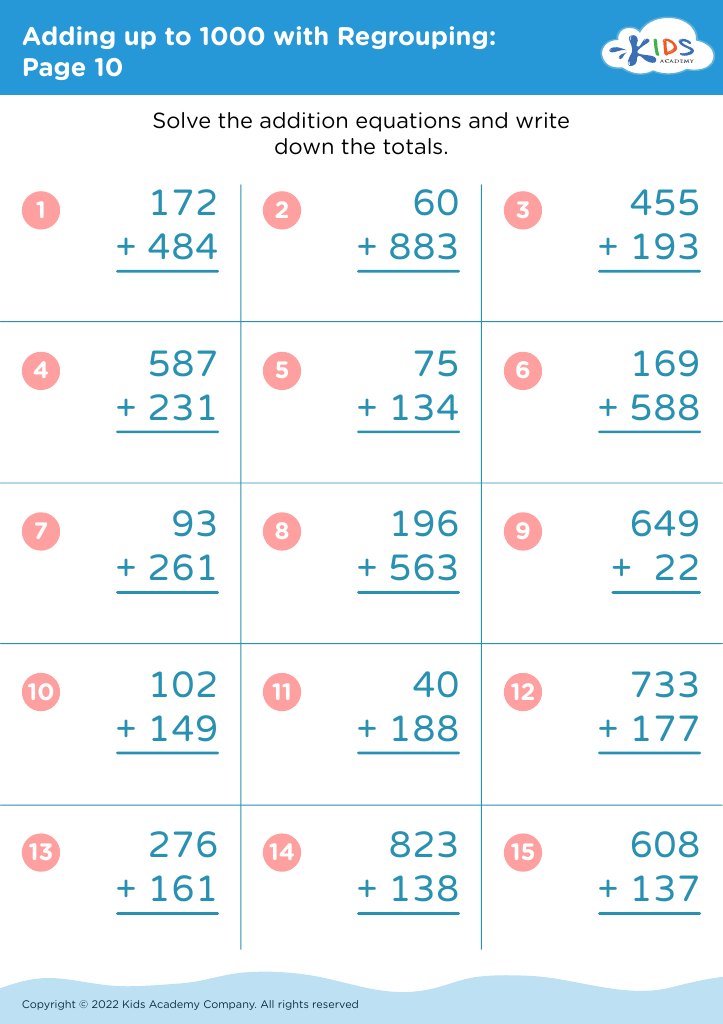
Adding up to 1000 with Regrouping: Page 10
Worksheet
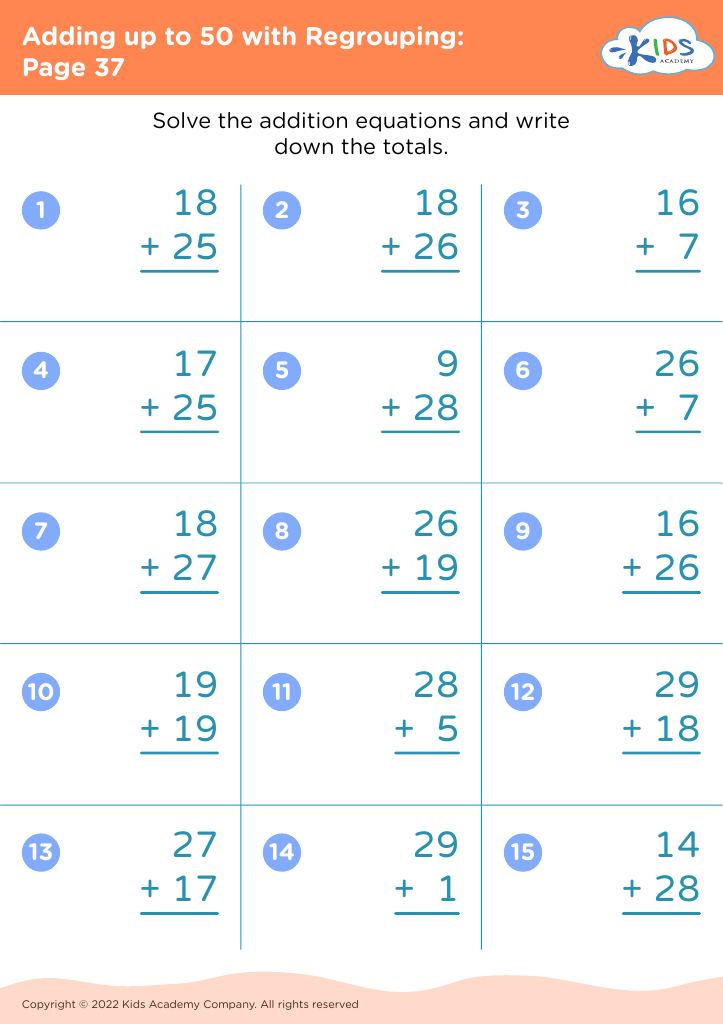
Adding up to 50 with Regrouping: Page 37
Worksheet
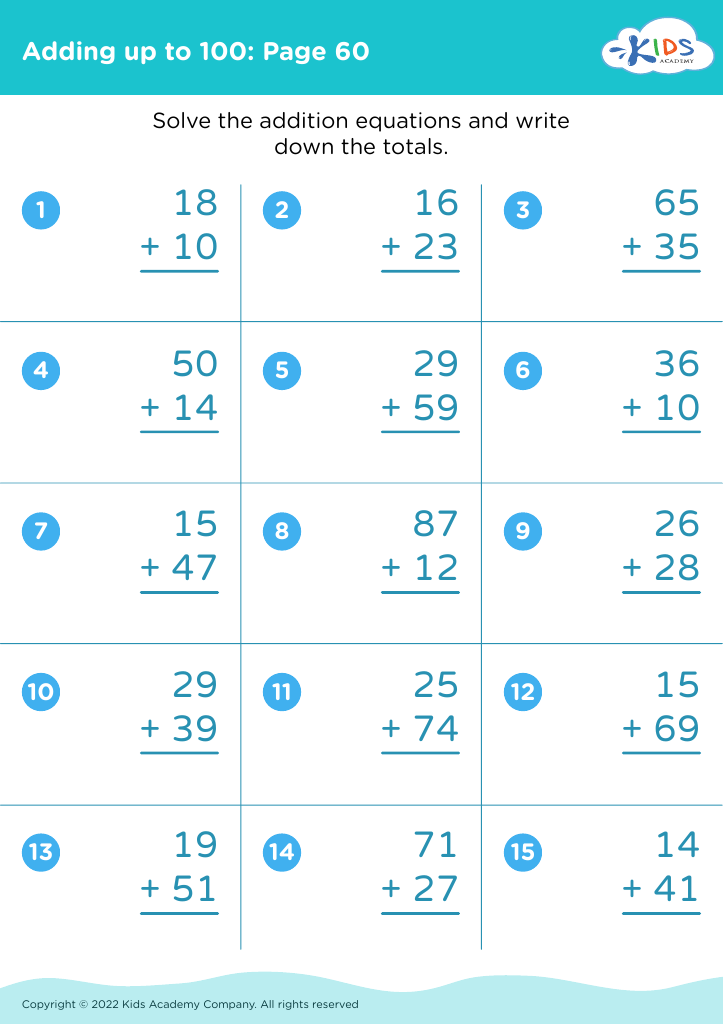
Adding up to 100: Page 60

Adding up to 100: Page 60

Adding up to 100: Page 60
Worksheet
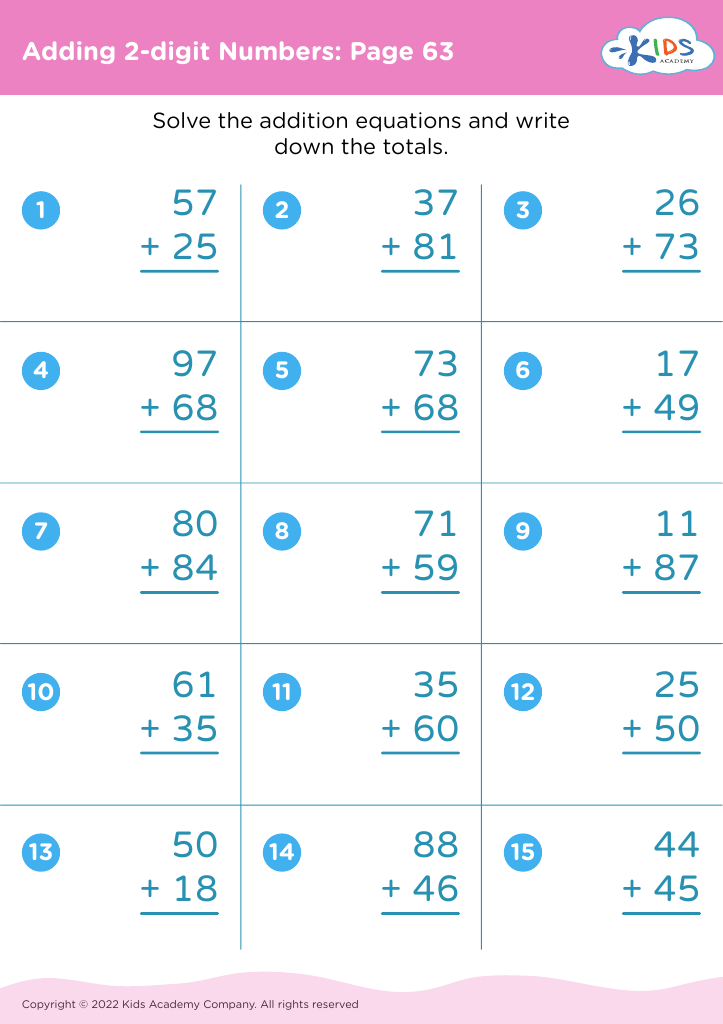
Adding 2-digit Numbers: Page 63

Adding 2-digit Numbers: Page 63

Adding 2-digit Numbers: Page 63
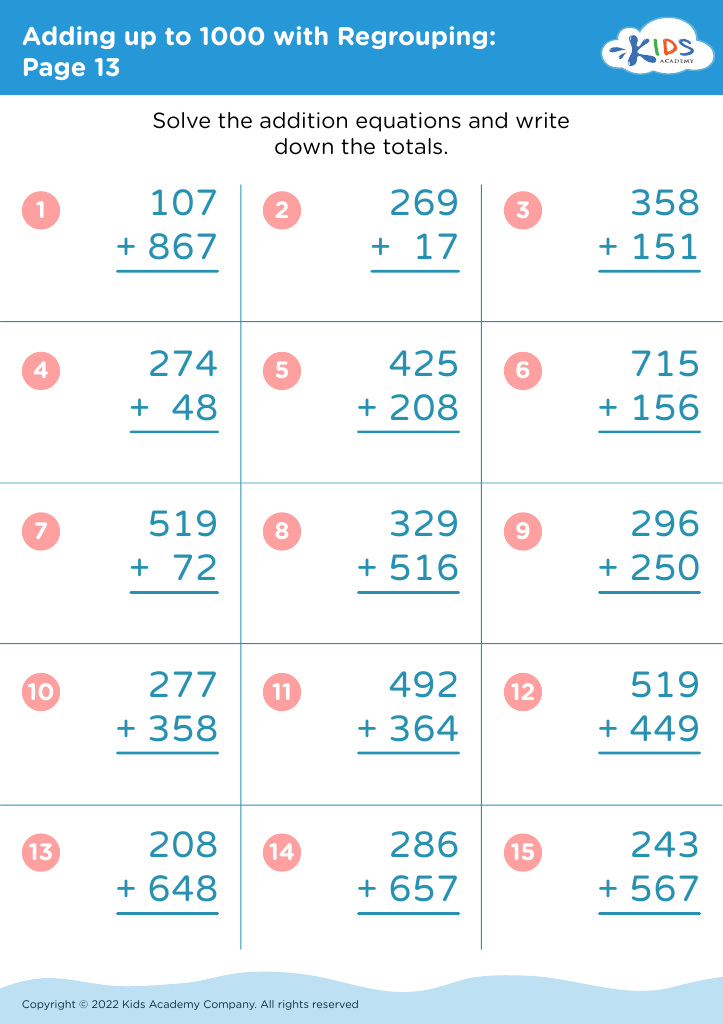
Worksheet
Adding up to 1000 with Regrouping: Page 13
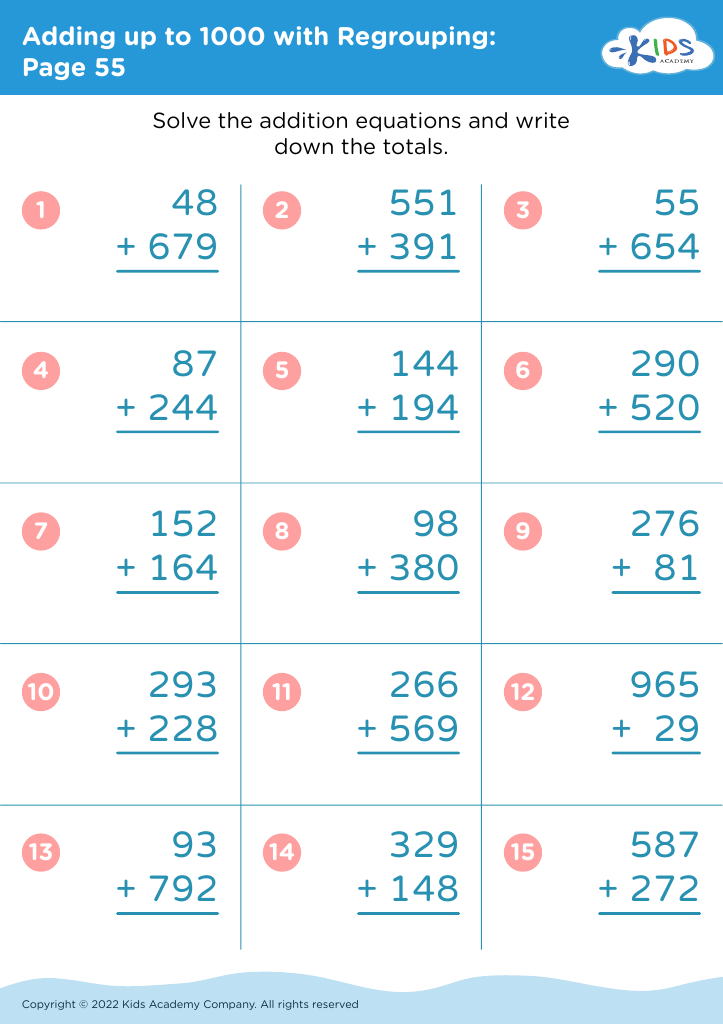
Worksheet
Adding up to 1000 with Regrouping: Page 55
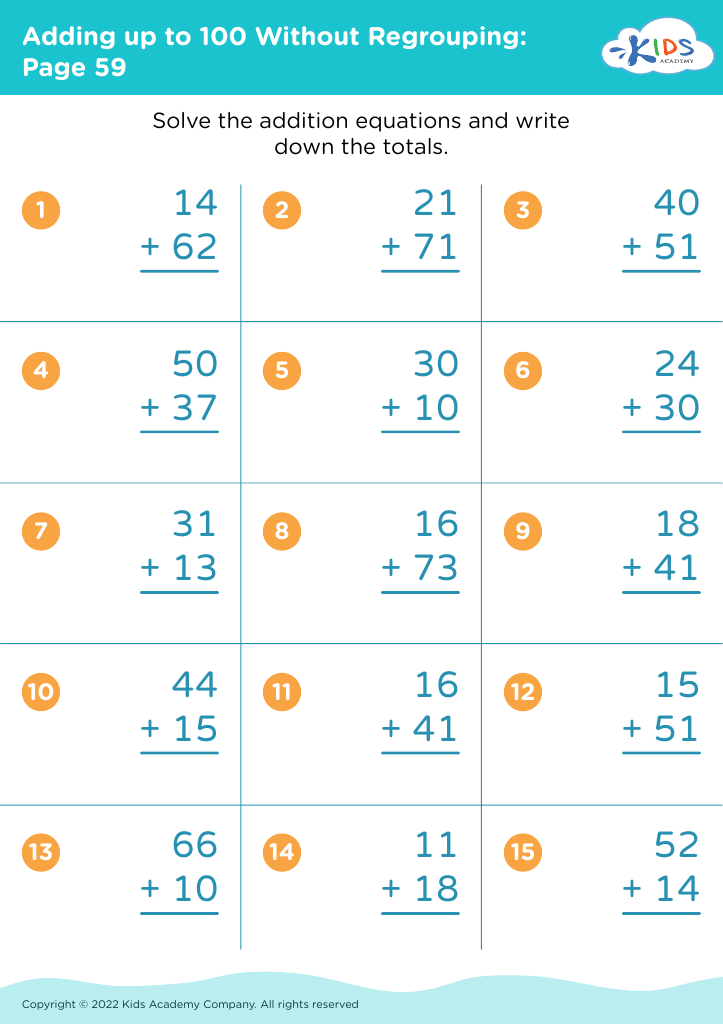
Worksheet
Adding up to 100 Without Regrouping: Page 59
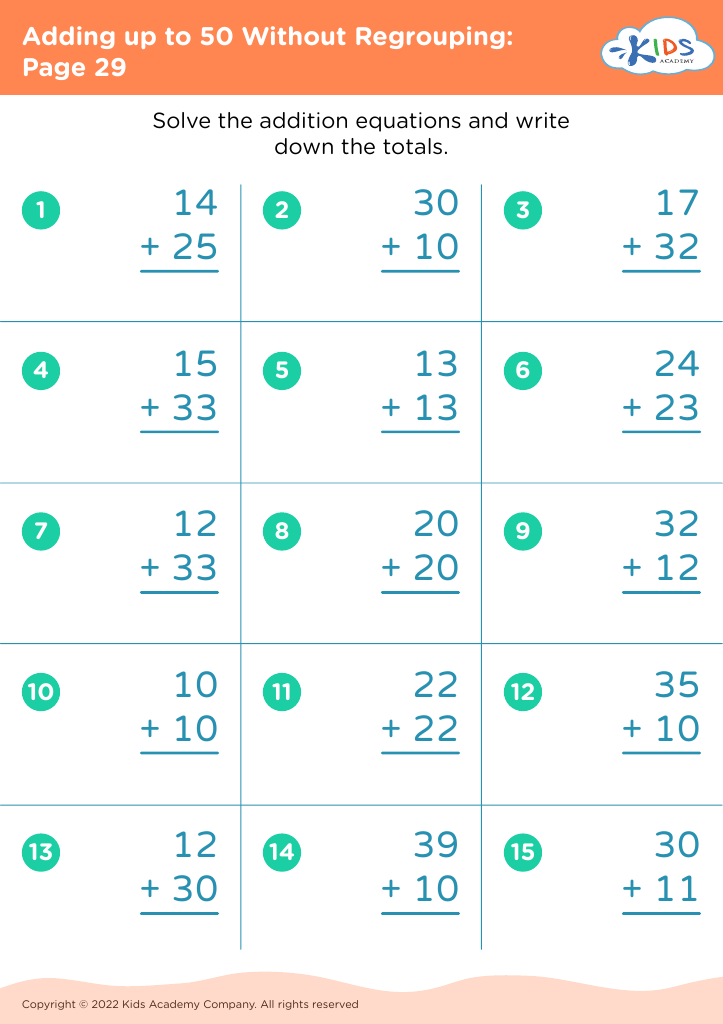
Worksheet
Adding up to 50 Without Regrouping: Page 29
Worksheet
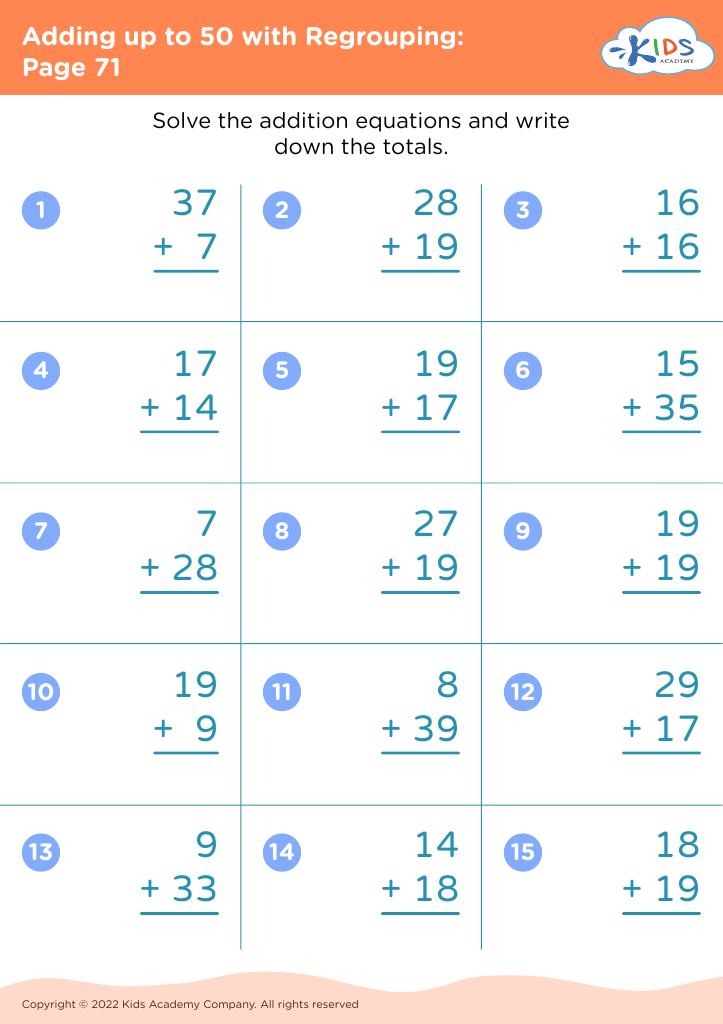
Adding up to 50 with Regrouping: Page 71
Worksheet
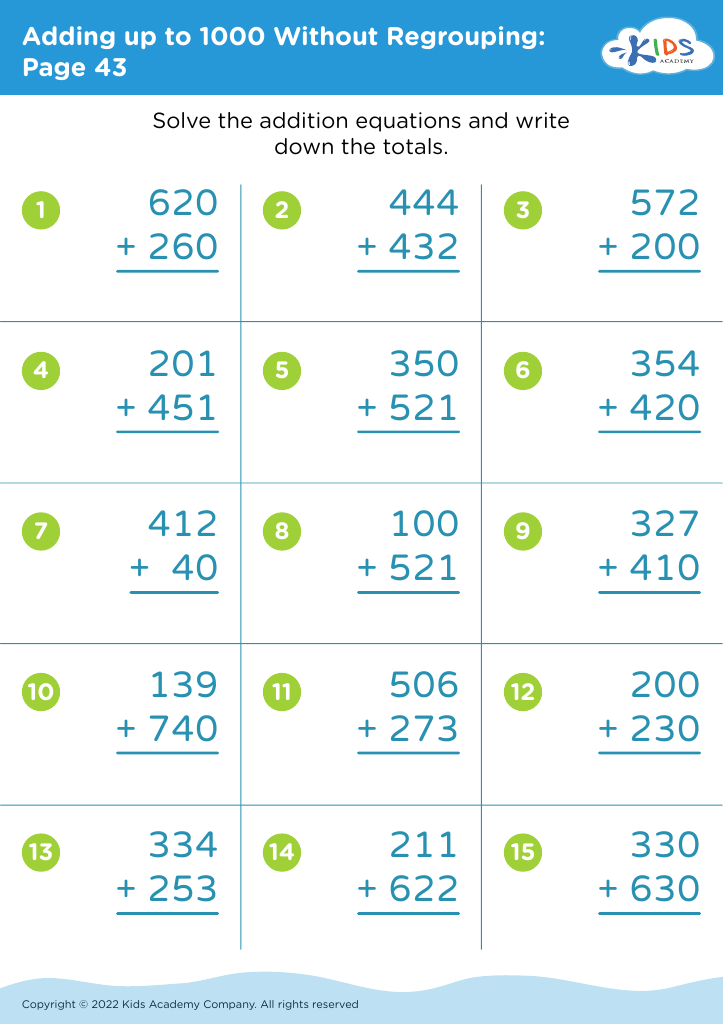
Adding up to 1000 Without Regrouping: Page 43
Worksheet
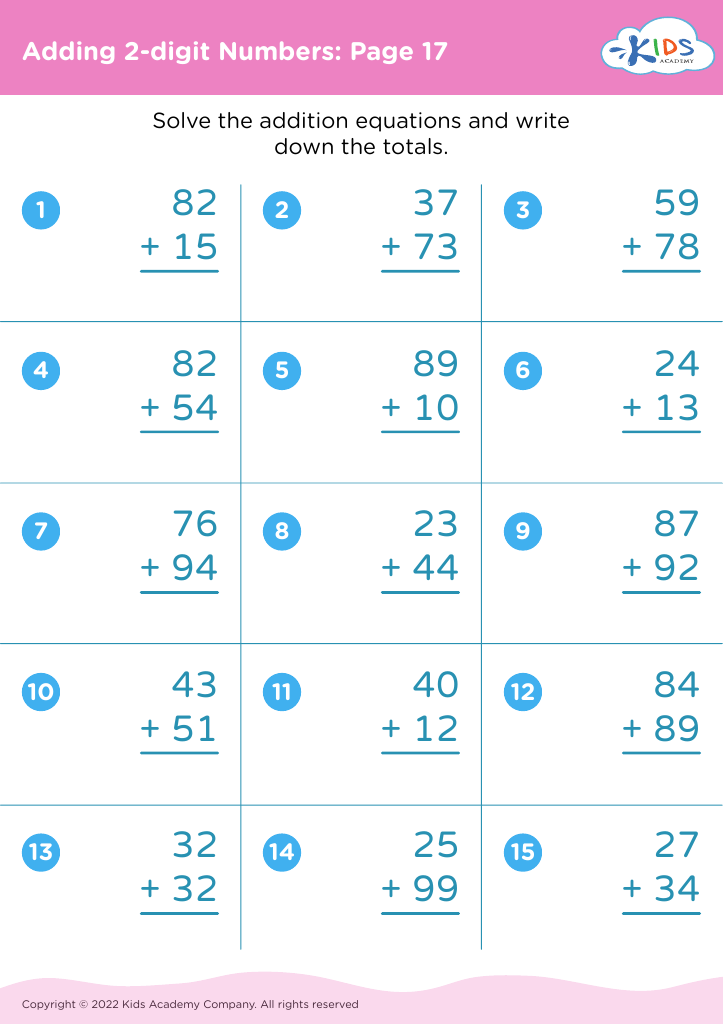
Adding 2-digit Numbers: Page 17

Adding 2-digit Numbers: Page 17

Adding 2-digit Numbers: Page 17
Worksheet
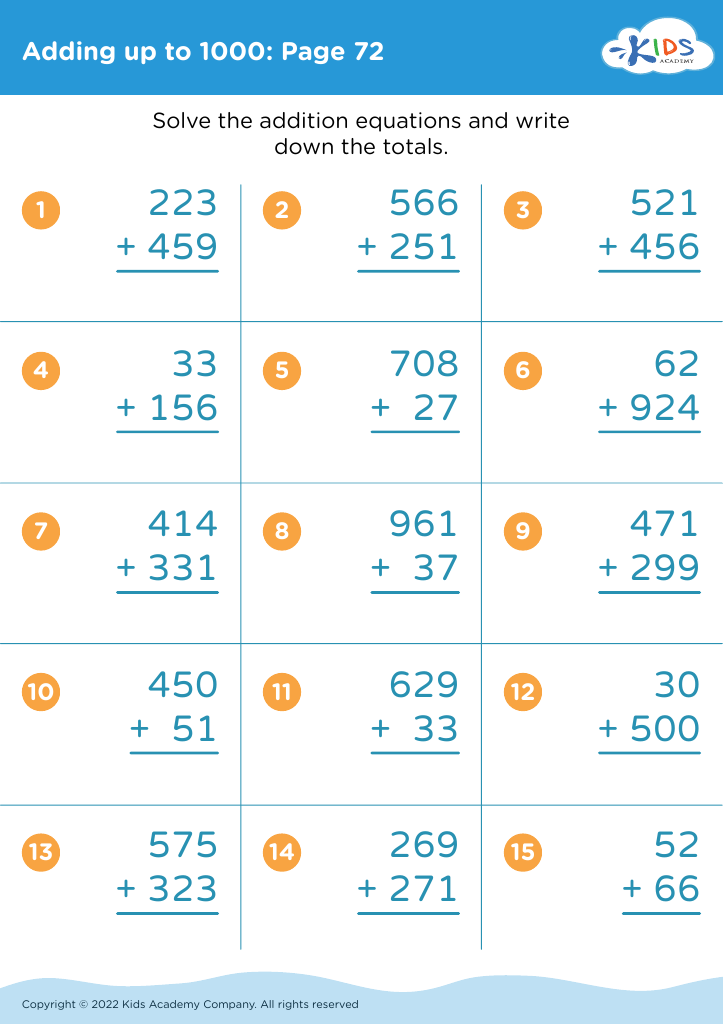
Adding up to 1000: Page 72

Adding up to 1000: Page 72

Adding up to 1000: Page 72
Worksheet
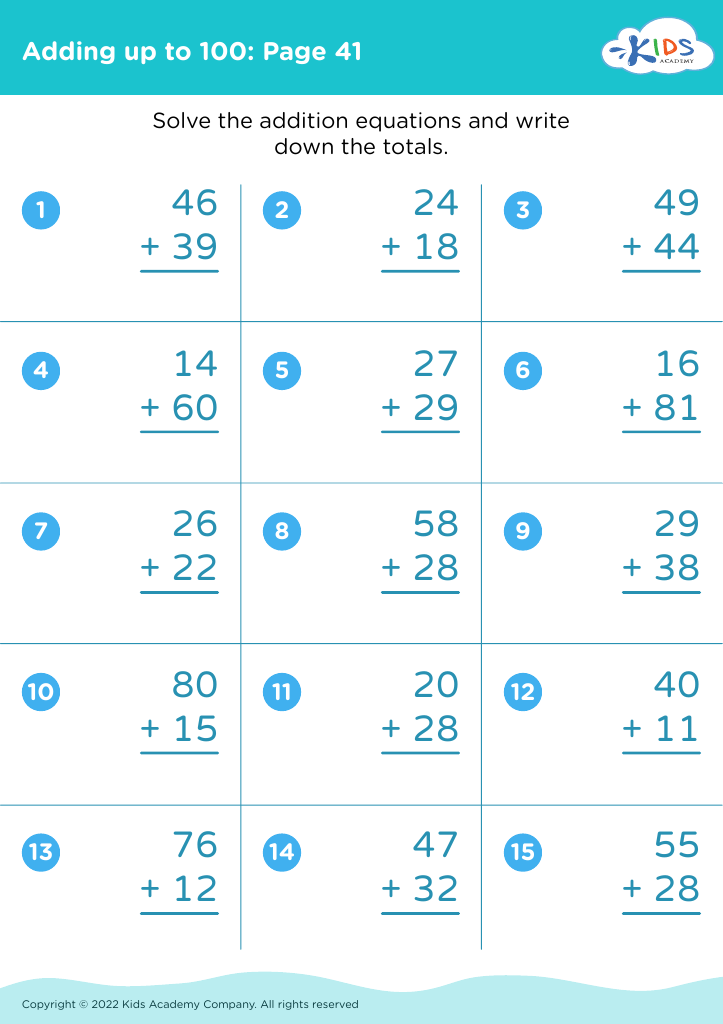
Adding up to 100: Page 41

Adding up to 100: Page 41

Adding up to 100: Page 41
Worksheet
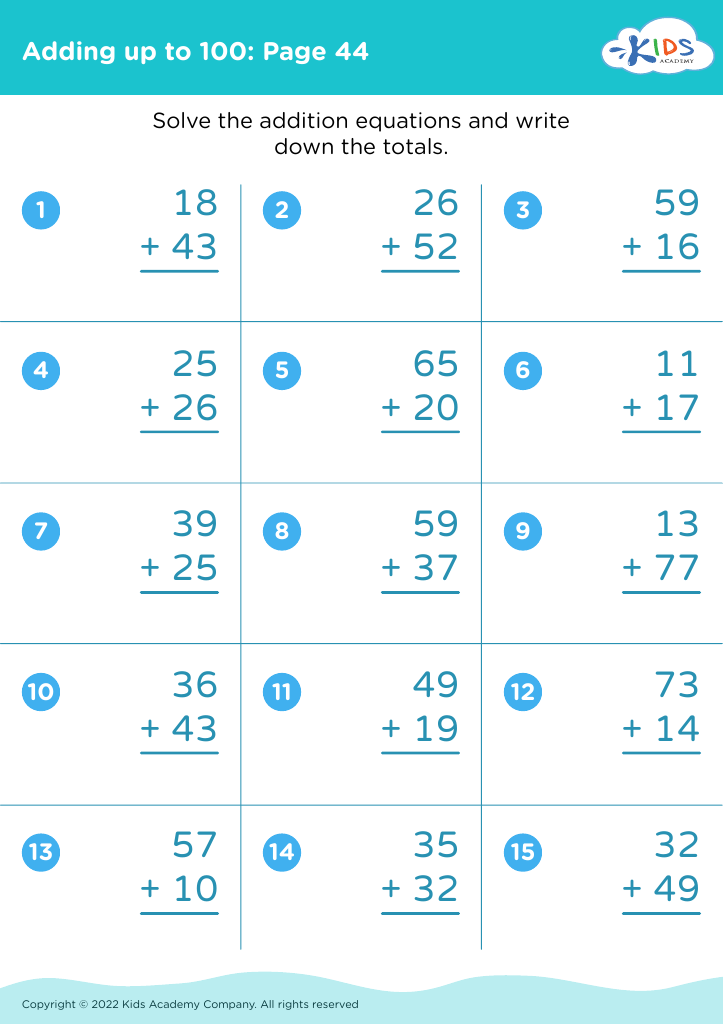
Adding up to 100: Page 44

Adding up to 100: Page 44

Adding up to 100: Page 44
Worksheet


Recognizing patterns is a foundational skill that significantly impacts children's mathematical understanding, particularly in addition. For ages 4-8, children are in a critical stage of cognitive development where they begin to grasp mathematical concepts. Teaching them to recognize patterns helps in enhancing their ability to predict outcomes, identify relationships, and solve problems efficiently.

When parents and teachers focus on pattern recognition within addition, they foster a deeper comprehension of numerical relationships. For instance, recognizing patterns such as "1, 2, 3" and "3, 4, 5" establishes an understanding of sequential counting. That understanding translates to improved fluency in addition, as children learn to view addition as a repeated process.

Moreover, pattern recognition supports critical thinking and creativity. It engages children in mathematical reasoning and encourages them to explore different strategies for problem-solving. This skill also enhances cognitive flexibility, allowing children to adapt their approaches as they encounter new challenges.

Ultimately, recognizing patterns equips young learners with foundational skills that will benefit them across all areas of mathematics. As parents and teachers nurture this skill, they not only bolster academic success but also instill a lifelong love for learning.