Sea creatures identification Addition Worksheets for Ages 4-8
3 filtered results
-
From - To
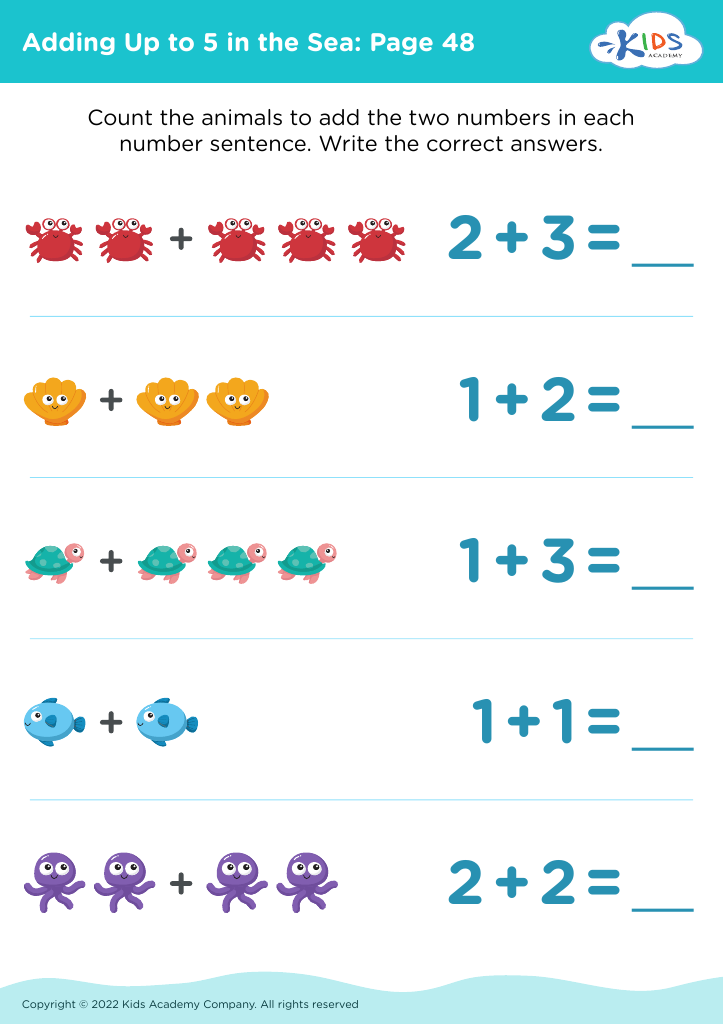
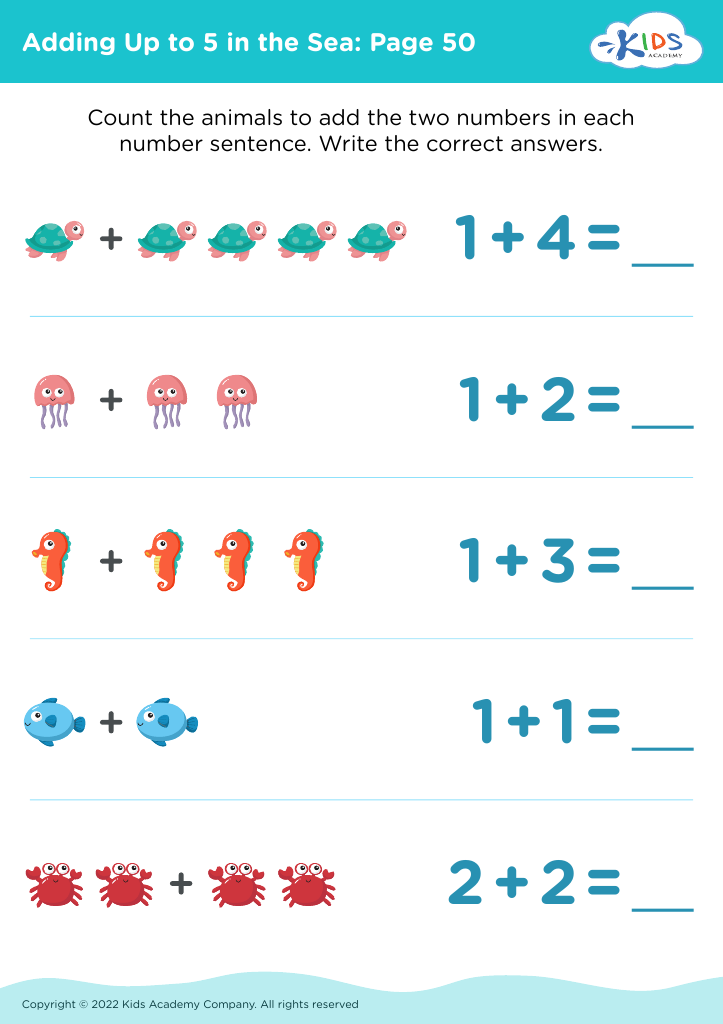
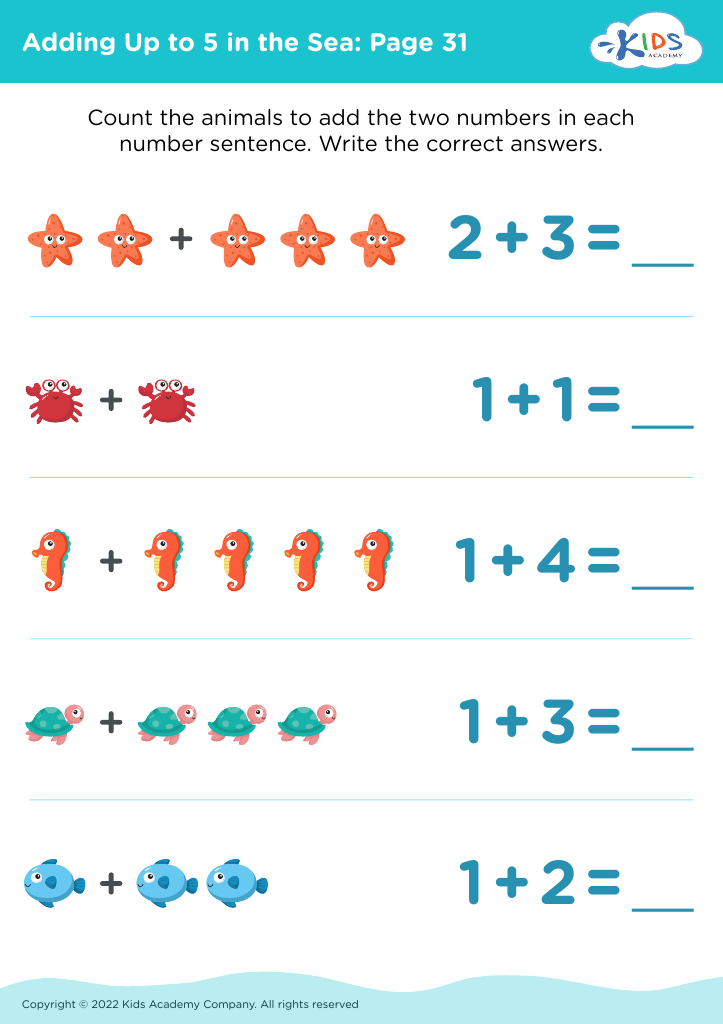
Explore the fascinating underwater world with our Sea Creatures Identification Addition Worksheets for Ages 4-8! Designed to engage young learners, these printable worksheets combine math skills with marine biology, making learning both fun and educational. Children will enhance their addition skills while discovering vibrant sea creatures, from playful dolphins to colorful fish. Each worksheet challenges kids to solve addition problems related to the various sea animals, promoting both mathematical proficiency and curiosity about ocean life. Perfect for classrooms or home learning, these worksheets make math an exciting adventure beneath the waves! Dive in and watch your child's skills flourish!







.jpg)
Parents and teachers should care about teaching sea creature identification to children aged 4-8 for several important reasons. Firstly, it fosters curiosity and a sense of wonder about the natural world, laying the groundwork for a lifelong interest in science and marine biology. Young learners are like sponges, absorbing information about vibrant marine life such as fish, sea turtles, and coral reefs, which helps to deepen their understanding of ecosystems and biodiversity.
Moreover, identifying sea creatures teaches critical observation skills and the value of detail. These skills can be applied beyond science, encouraging mindfulness in other areas of learning. Through identification activities—whether it’s through books, games, or hands-on experiences—children build vocabulary and enhance their language skills as they describe various ocean inhabitants.
Additionally, learning about sea creatures can instill a sense of environmental stewardship. As children understand the unique and often fragile characteristics of marine life, they are more likely to develop an appreciation for nature. This awareness fosters a sense of responsibility toward ocean conservation and motivates them to advocate for protective measures. Ultimately, teaching sea creature identification enriches children's education while nurturing a generation that cares for the planet.








