Filters

32 filtered results

Clear all filters
Favorites
With answer key
Interactive

32 filtered results

Difficulty Level

Grade


Shape Recognition Addition Worksheets for Ages 4-8 offer an engaging way for young learners to enhance their mathematical skills. These worksheets seamlessly integrate shape recognition with addition problems, making math practice both fun and educational. Designed specifically for kids ages 4-8, each worksheet features colorful shapes and interactive exercises. By combining basic addition with shape identification, these worksheets help improve concentration, reinforce number sense, and develop spatial awareness. Perfect for preschool to early elementary students, they're an excellent resource for parents and teachers aiming to foster a love of math through hands-on learning activities.
Check out this FREE Trial Lesson on Addition for age 4-8!

Match Objects that Fit Together

Favorites
With answer key
Interactive
  • 4-8
  • Shape Recognition
  • Addition
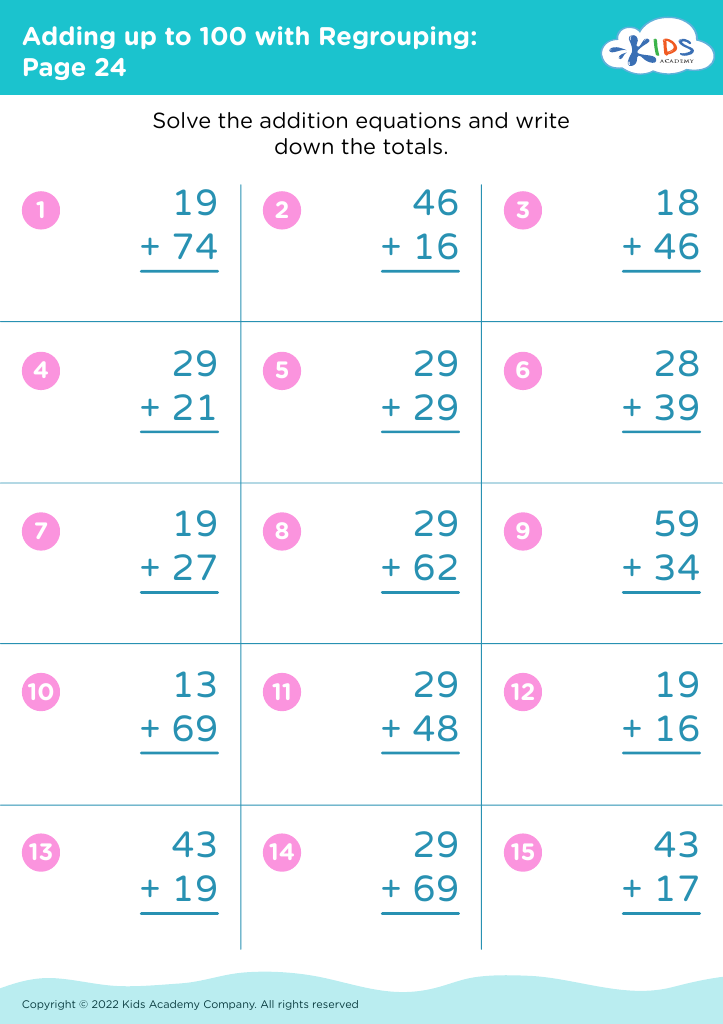
Adding up to 100 with Regrouping: Page 24
Worksheet
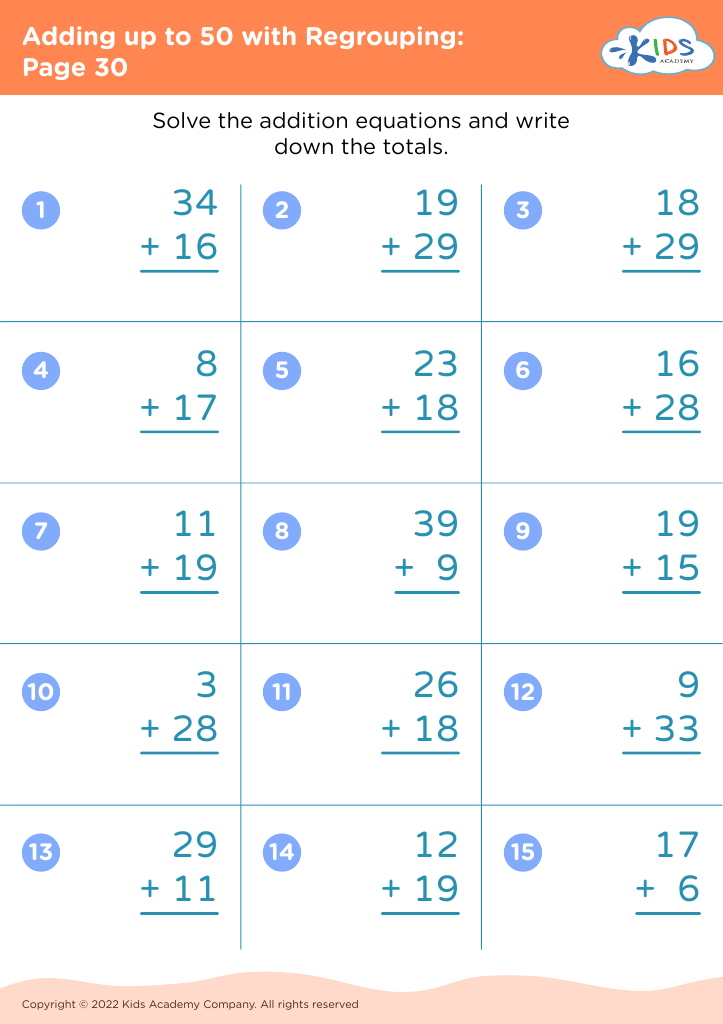
Adding up to 50 with Regrouping: Page 30
Worksheet
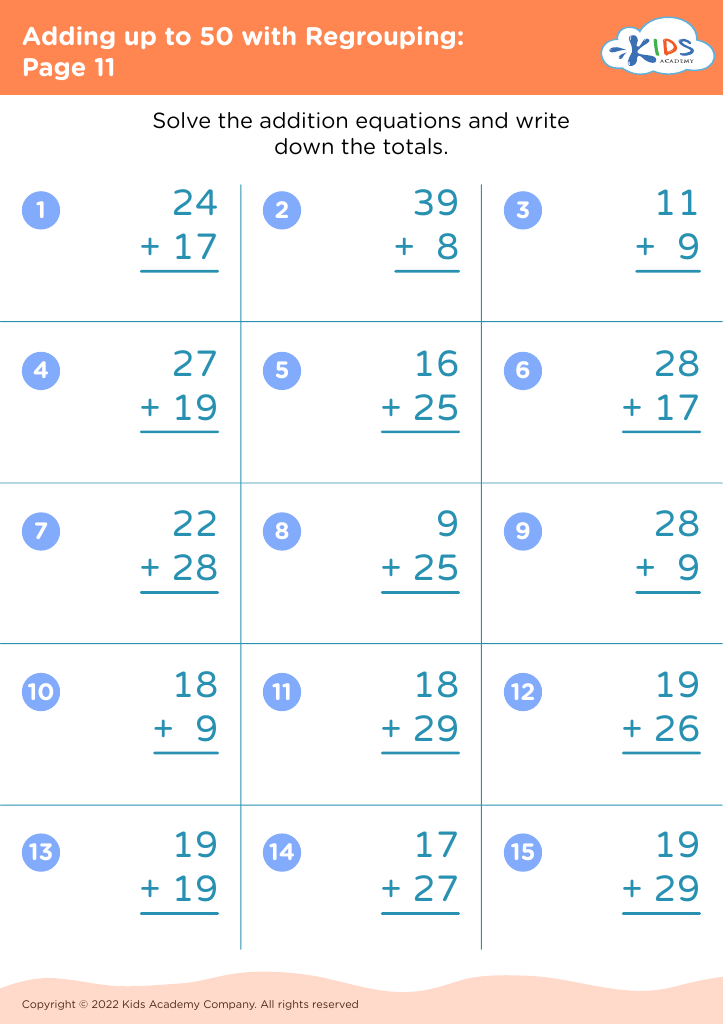
Adding up to 50 with Regrouping: Page 11
Worksheet
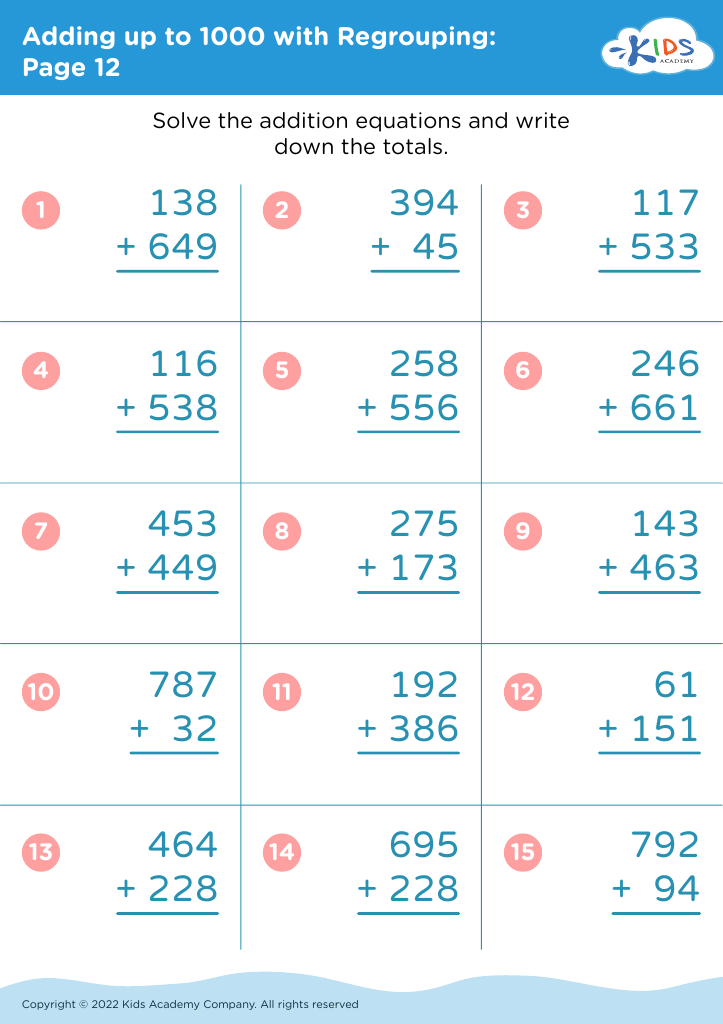
Adding up to 1000 with Regrouping: Page 12
Worksheet
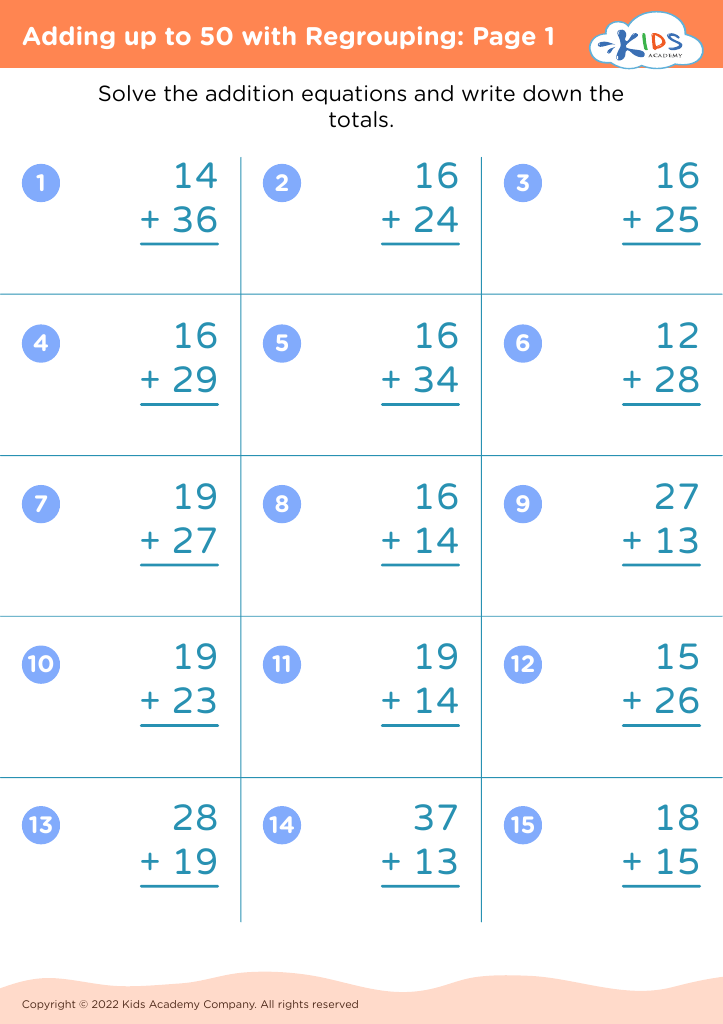
Adding up to 50 with Regrouping: Page 1
Worksheet
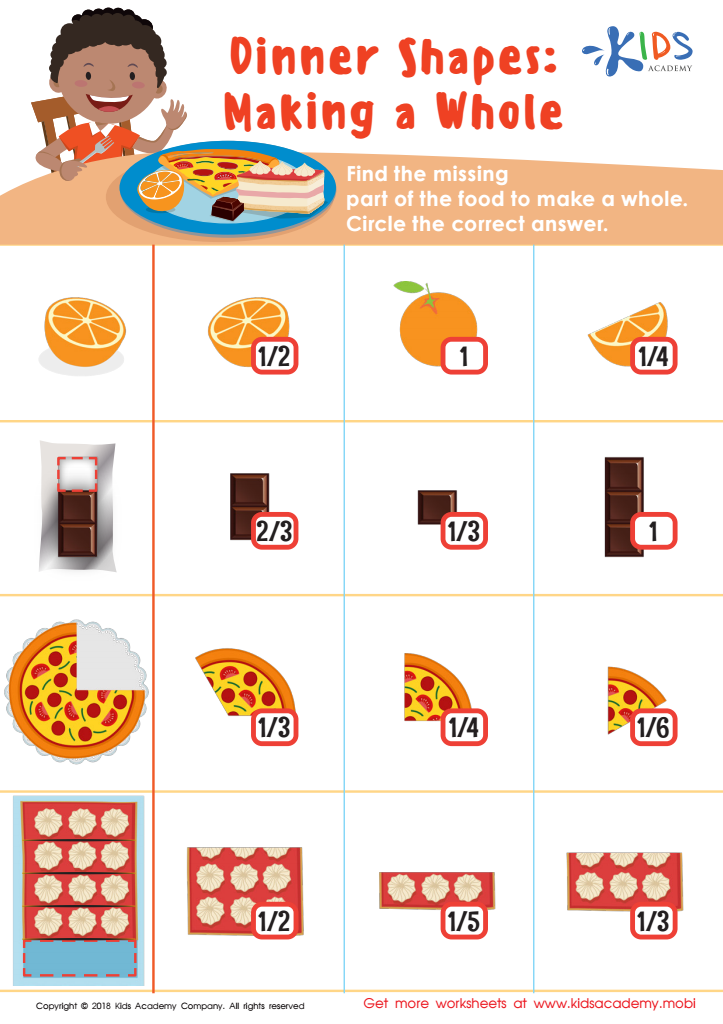
Dinner Shapes: Making a Whole Worksheet

Dinner Shapes: Making a Whole Worksheet

Using food and snacks to stimulate learning and interest in topics is a great strategy. Fractions can prove tricky, but this worksheet can help your child become an expert. Have them look for the missing parts of the food to make a whole, then circle the answer.
Dinner Shapes: Making a Whole Worksheet
Worksheet
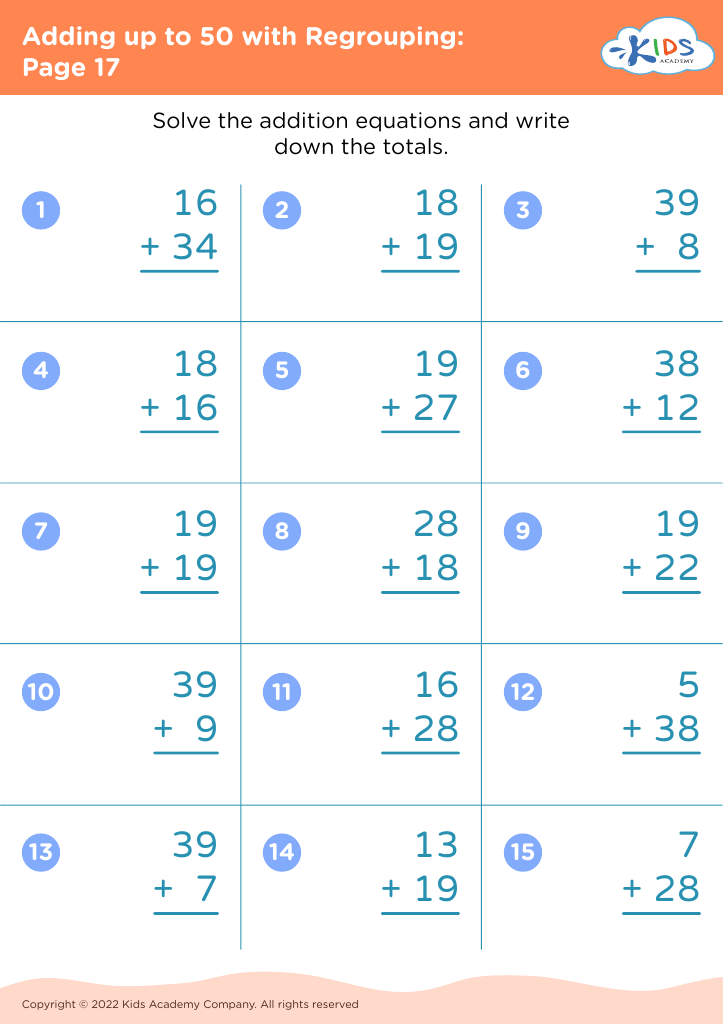
Adding up to 50 with Regrouping: Page 17
Worksheet
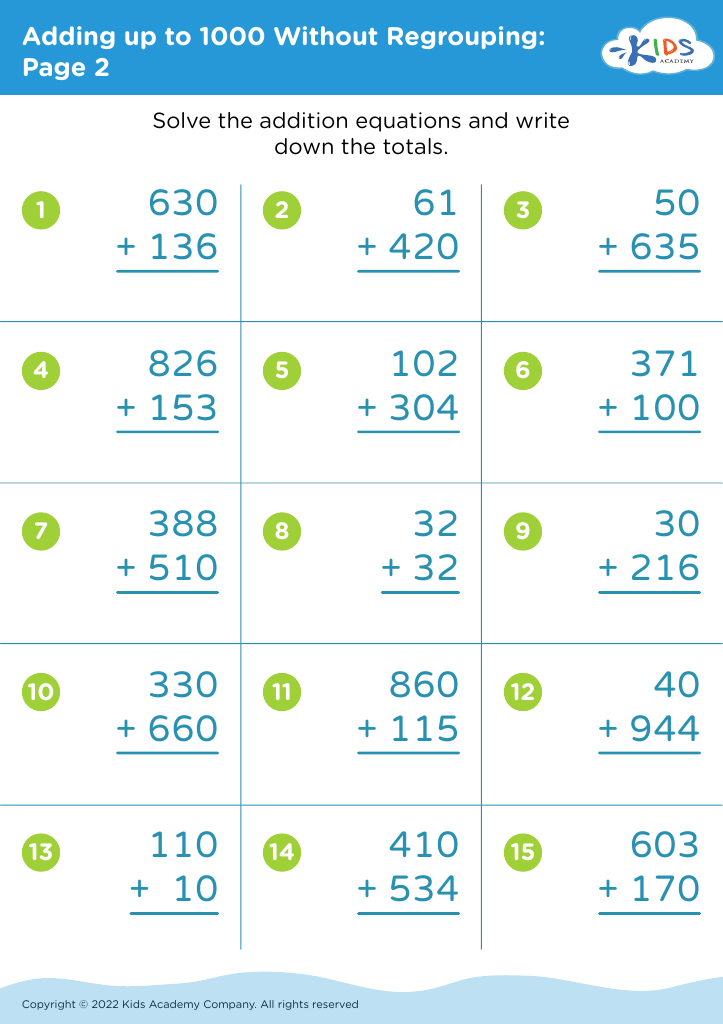
Adding up to 1000 Without Regrouping: Page 2
Worksheet
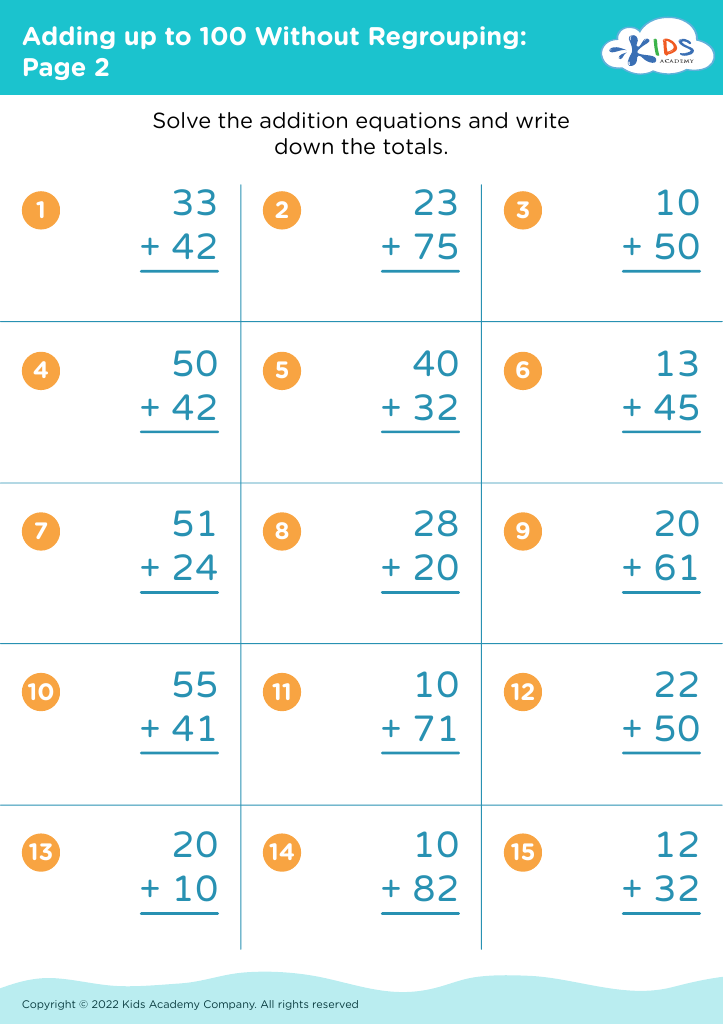
Adding up to 100 Without Regrouping: Page 2
Worksheet
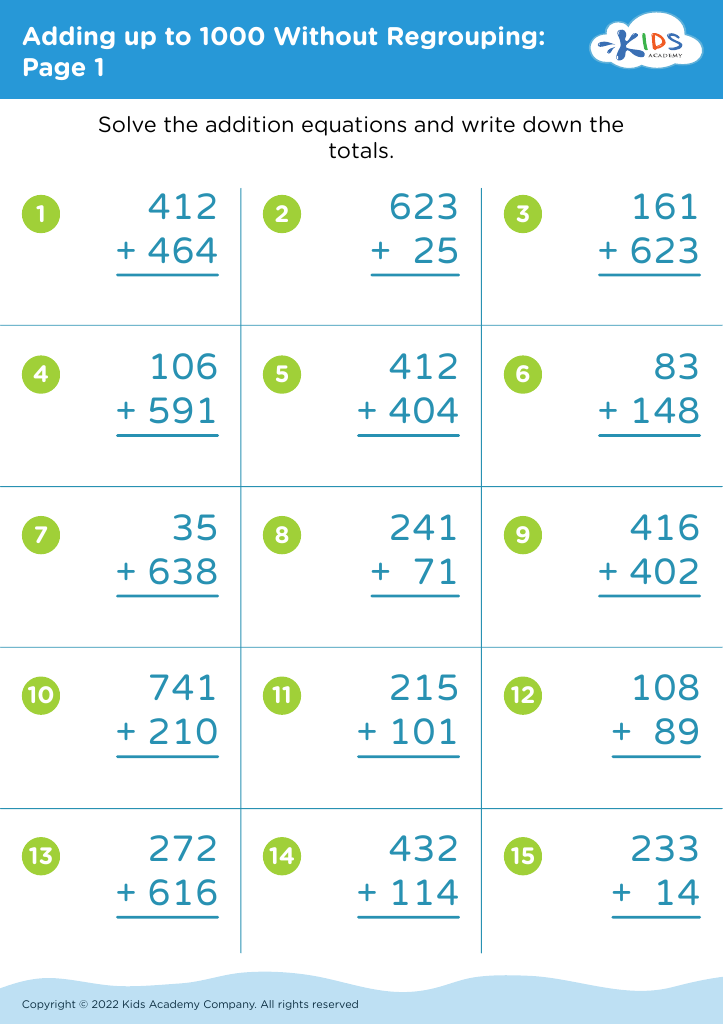
Adding up to 1000 Without Regrouping: Page 1
Worksheet
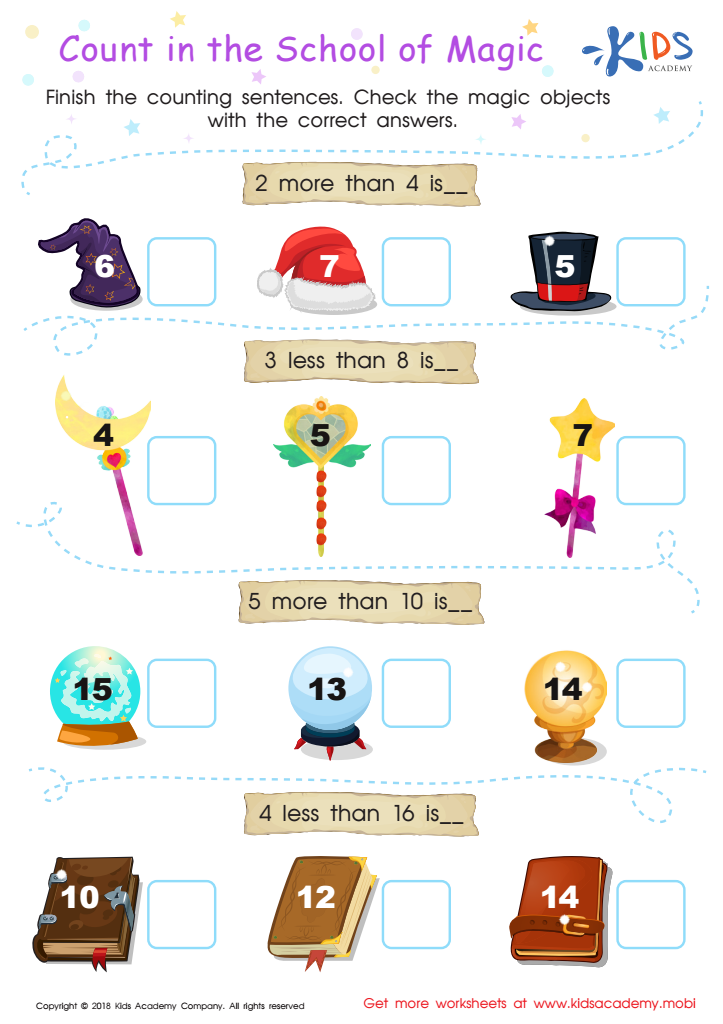
Count in the School of Magic Worksheet
Count in the School of Magic Worksheet
Your math learners can explore the School of Magic with this worksheet. They'll read equations with addition and subtraction numbers under 20, count back and forth to find the answer, then complete the counting sentences. Fun pictures and easy accuracy make it an enjoyable and successful learning experience.
Count in the School of Magic Worksheet
Worksheet
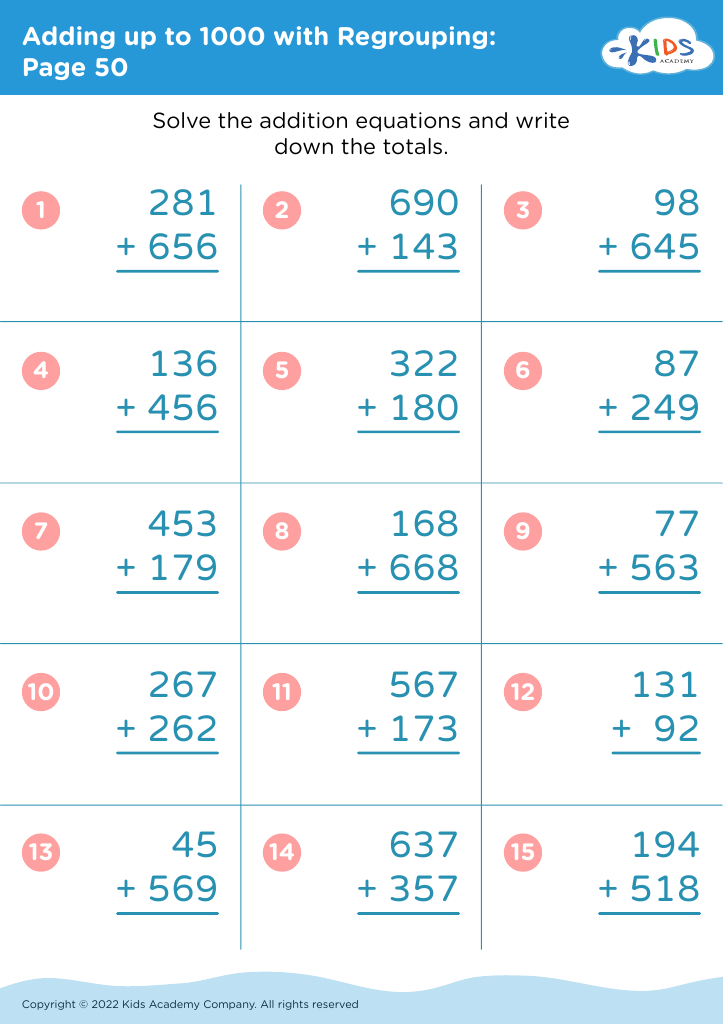
Adding up to 1000 with Regrouping: Page 50
Worksheet
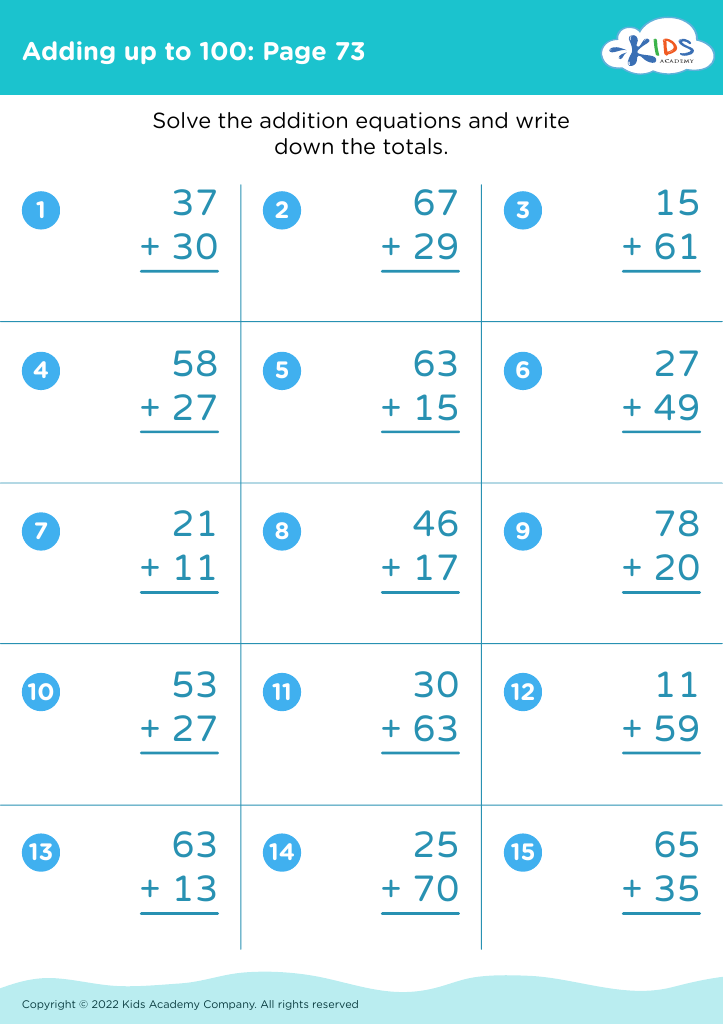
Adding up to 100: Page 73

Adding up to 100: Page 73

Adding up to 100: Page 73
Worksheet
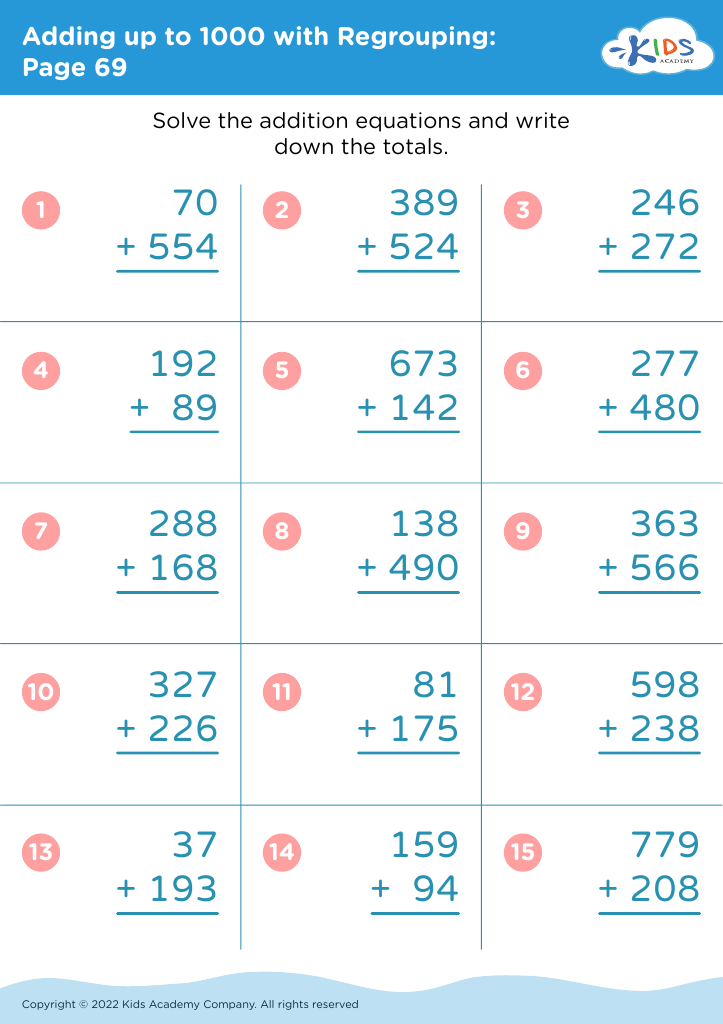
Adding up to 1000 with Regrouping: Page 69
Worksheet
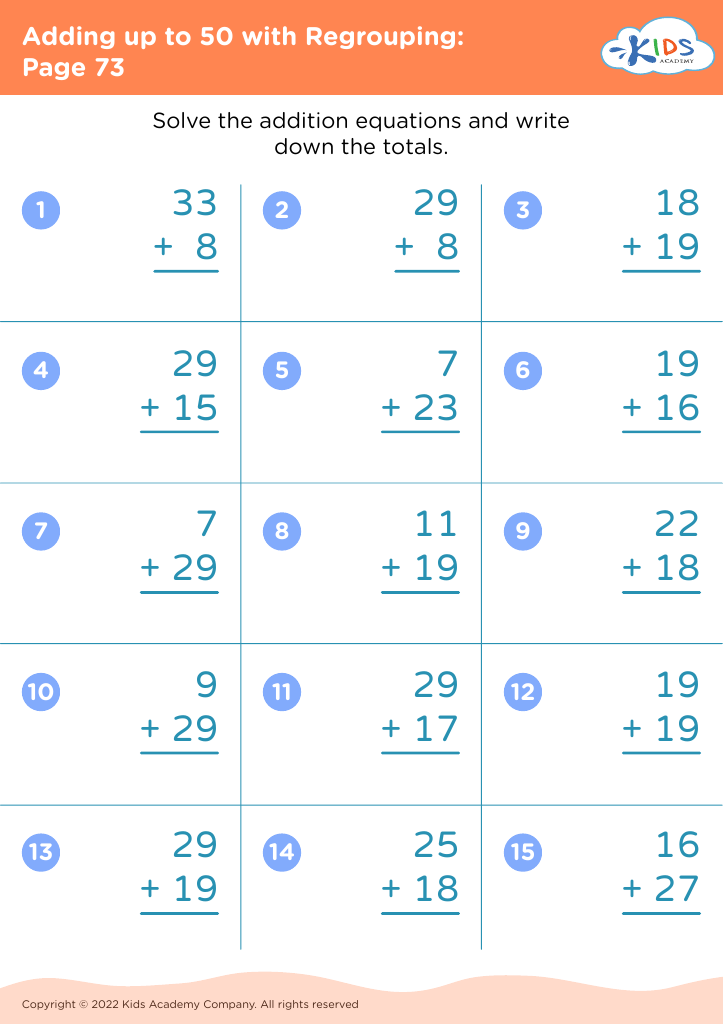
Adding up to 50 with Regrouping: Page 73
Worksheet
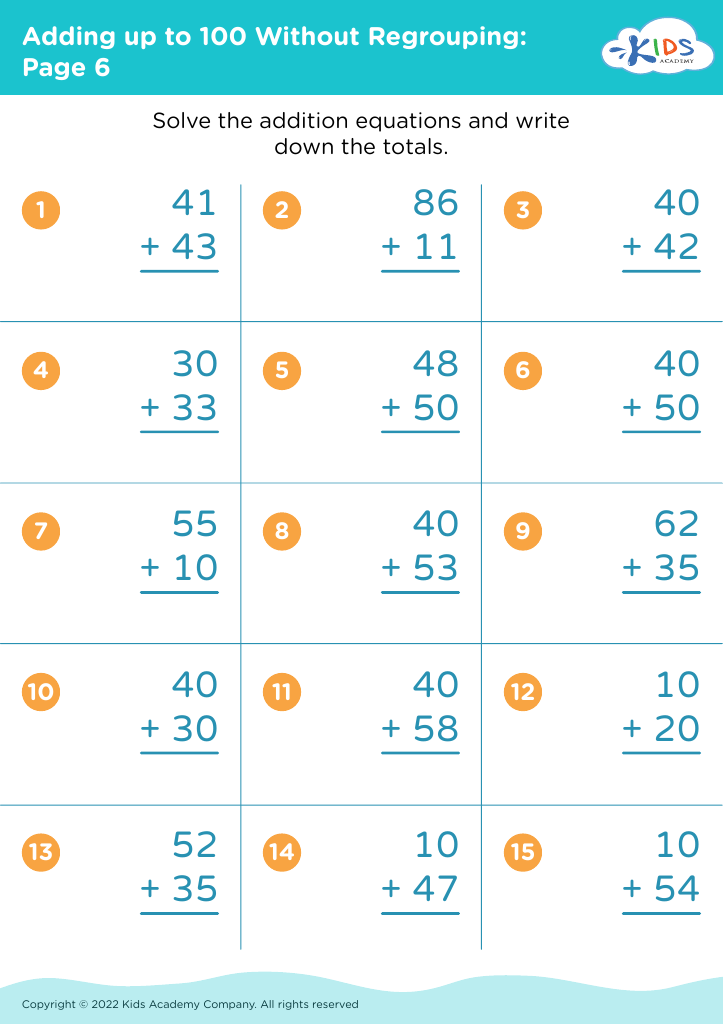
Adding up to 100 Without Regrouping: Page 6
Worksheet
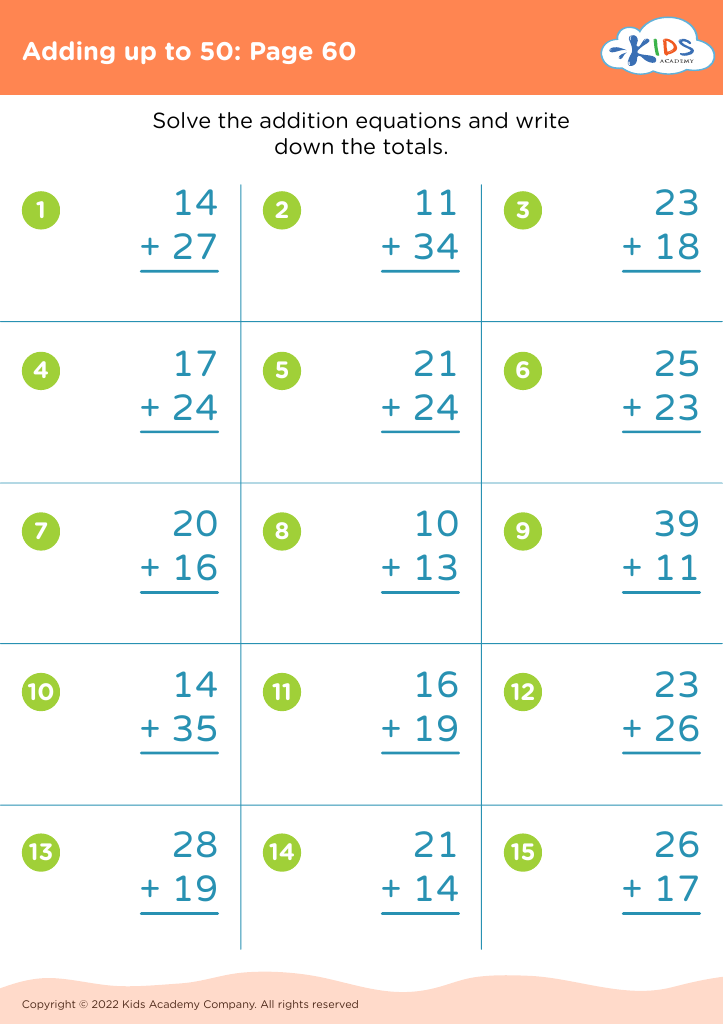
Adding up to 50: Page 60

Adding up to 50: Page 60

Adding up to 50: Page 60
Worksheet
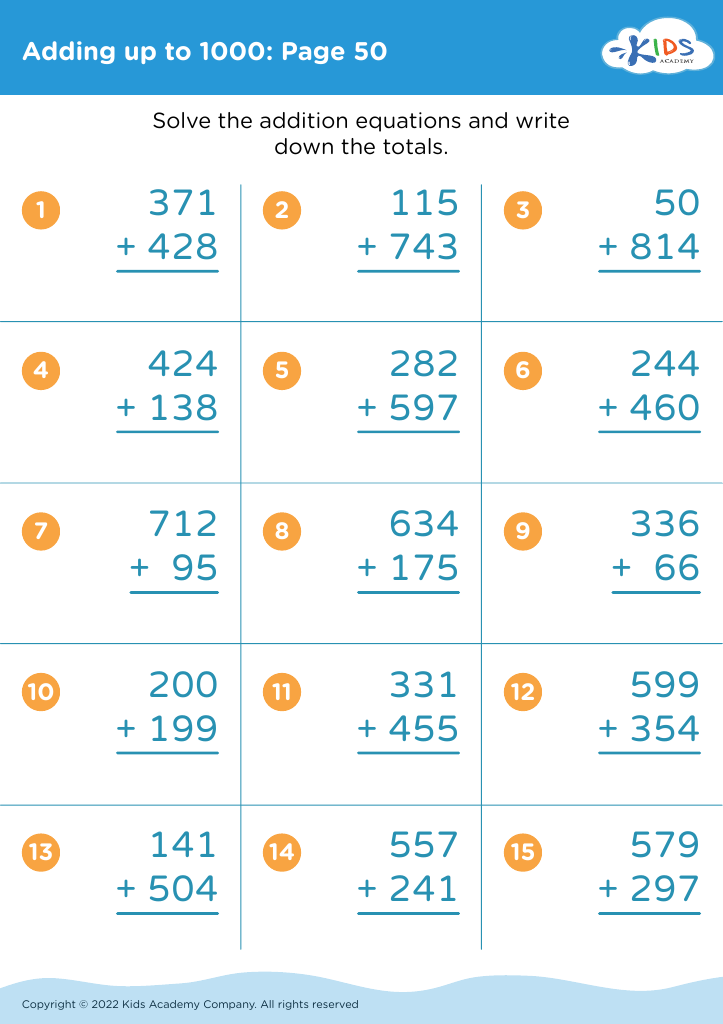
Adding up to 1000: Page 50

Adding up to 1000: Page 50

Adding up to 1000: Page 50
Worksheet
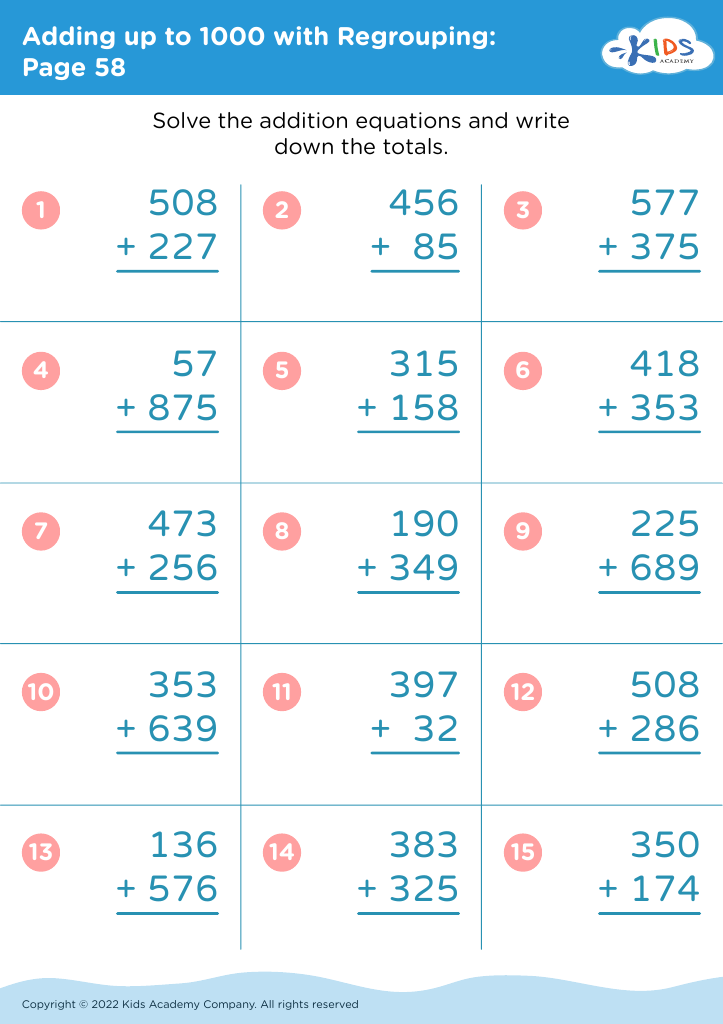
Adding up to 1000 with Regrouping: Page 58
Worksheet
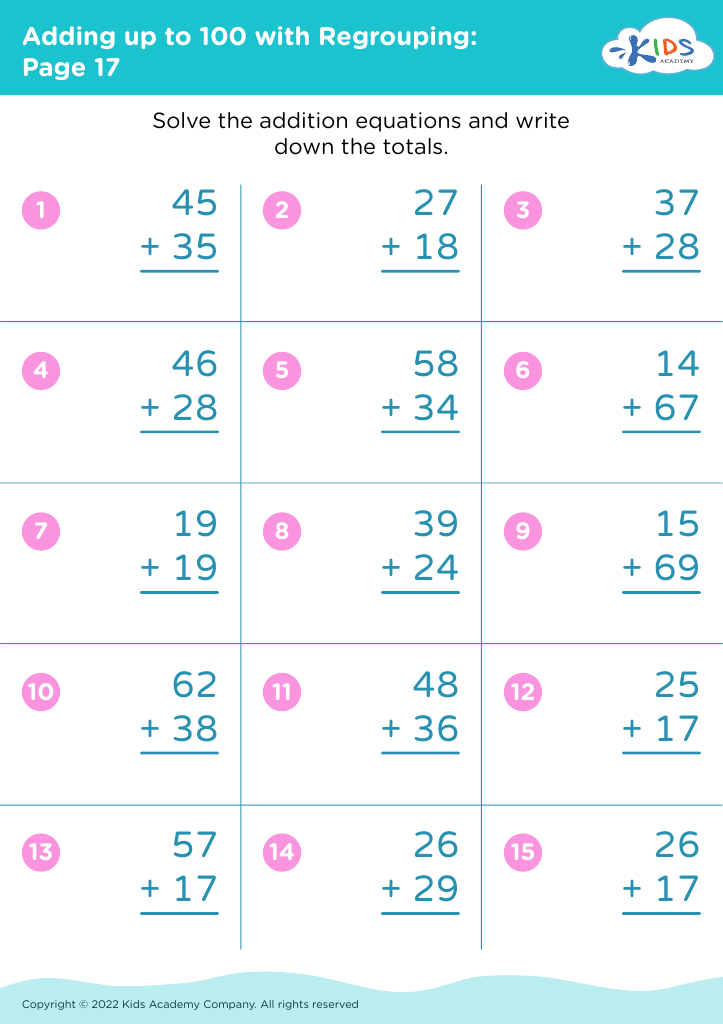
Adding up to 100 with Regrouping: Page 17
Worksheet
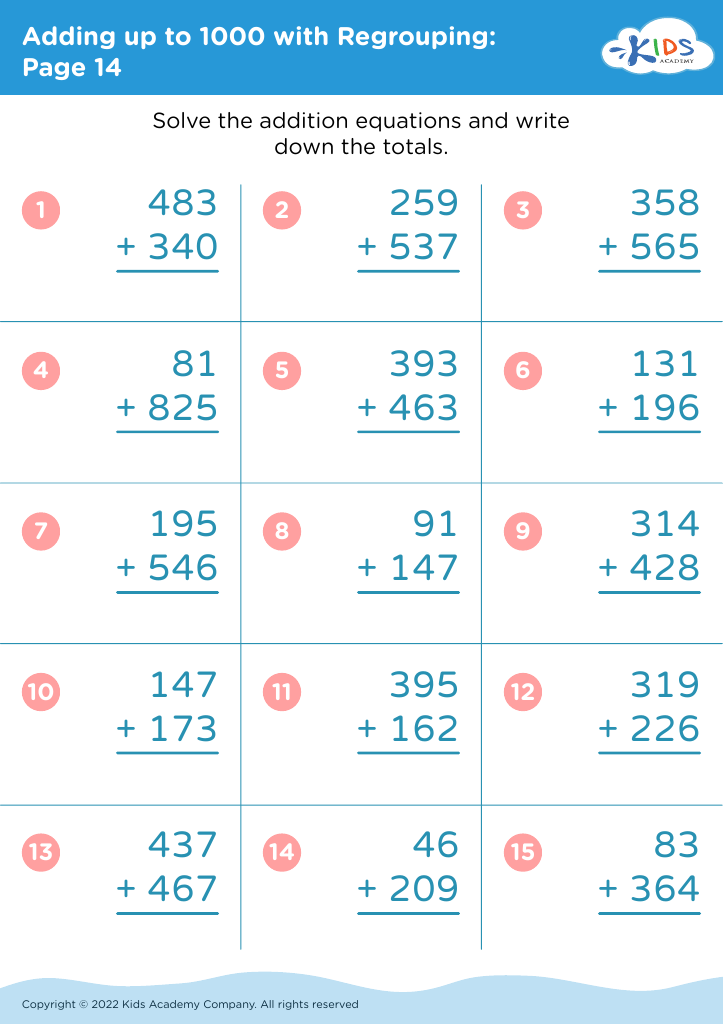
Adding up to 1000 with Regrouping: Page 14
Worksheet
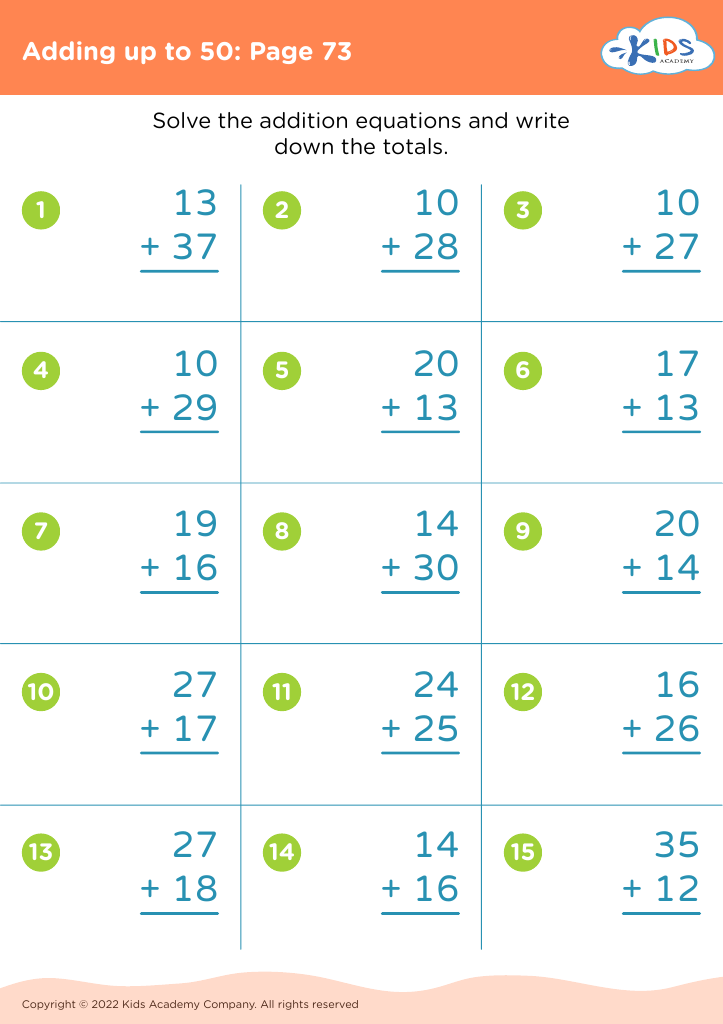
Adding up to 50: Page 73

Adding up to 50: Page 73

Adding up to 50: Page 73
Worksheet
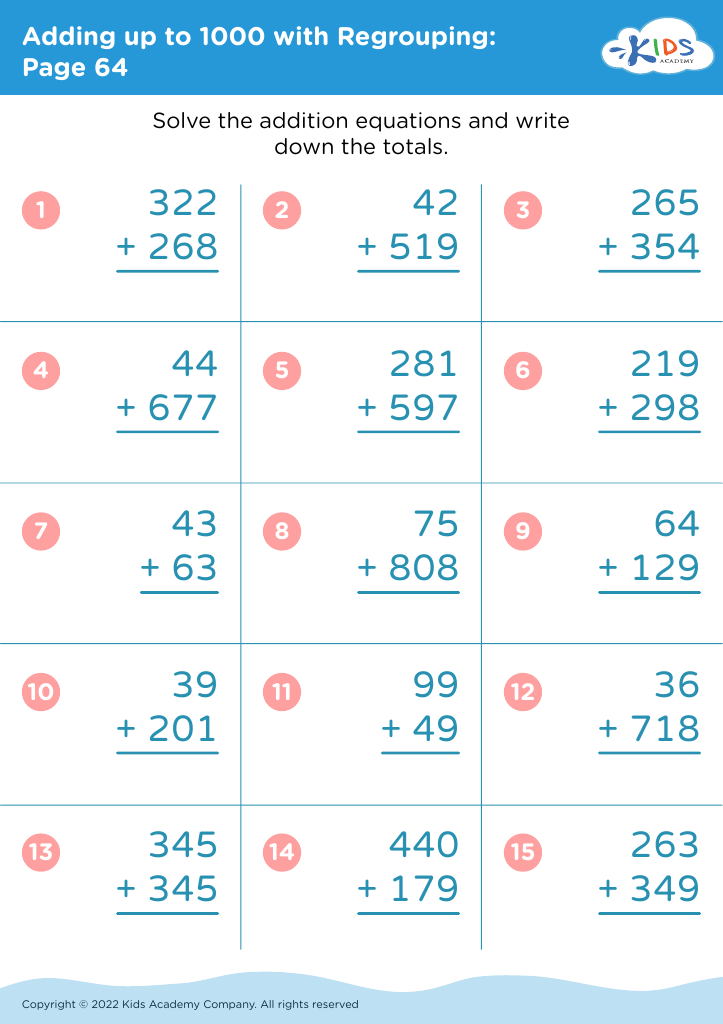
Adding up to 1000 with Regrouping: Page 64
Worksheet
Adding up to 50 Without Regrouping: Page 67
Worksheet


Shape recognition and addition are foundational skills that significantly influence a child's cognitive and academic development, making them crucial for ages 4-8. Understanding shapes helps children recognize and interpret the world around them. It enhances spatial awareness, which is essential for grasping more complex mathematical concepts later on, such as geometry and symmetry. Being able to distinguish between different shapes builds visual discrimination skills, aiding in reading and writing by differentiating letters and numbers.

Addition, on the other hand, introduces the concept of combining quantities, providing the groundwork for arithmetic. It fosters problem-solving abilities and logical thinking, skills important not just for math, but for everyday decision-making. When children practice addition early, they gain confidence in their numerical abilities, setting a positive trajectory for their future learning experiences.

Integrating shape recognition with addition makes learning engaging and interactive, combining visual and numerical intelligence. The tangible aspect of shapes adds a sensory dimension to math, which can make abstract concepts more relatable and easier to comprehend.

Parents and teachers should prioritize these skills to lay a strong foundation for both math proficiency and overall cognitive development, ensuring children are well-prepared for more advanced educational challenges. This blend of geometry and arithmetic ignites curiosity and a love for learning right from the start.