Shape Recognition Addition Worksheets for Ages 4-8 - Page 2
32 filtered results
-
From - To
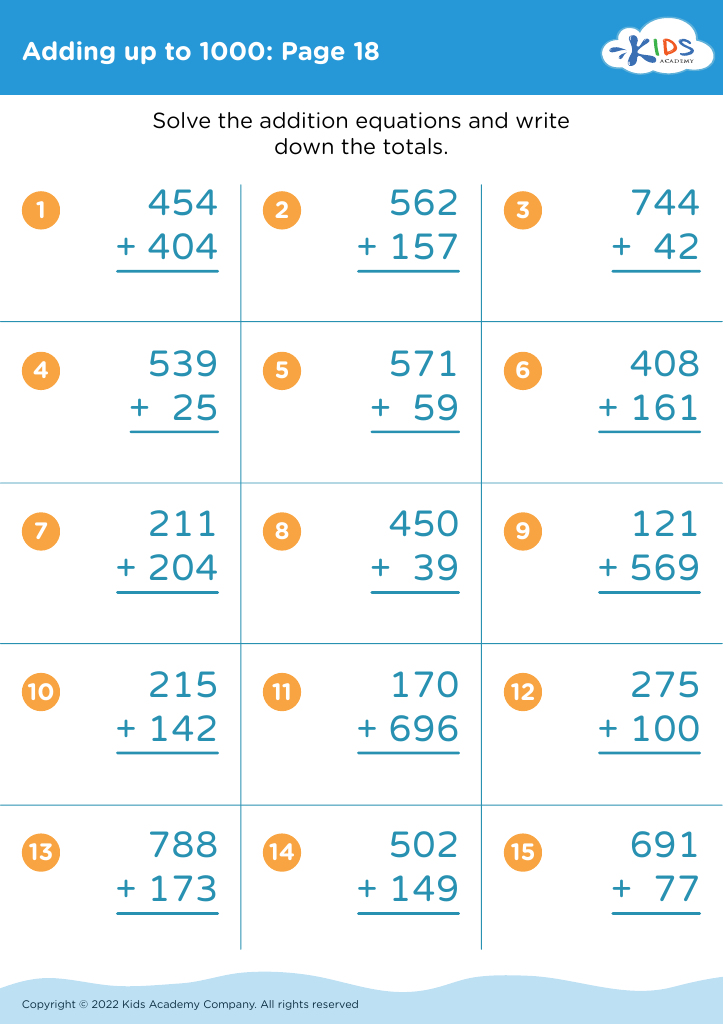
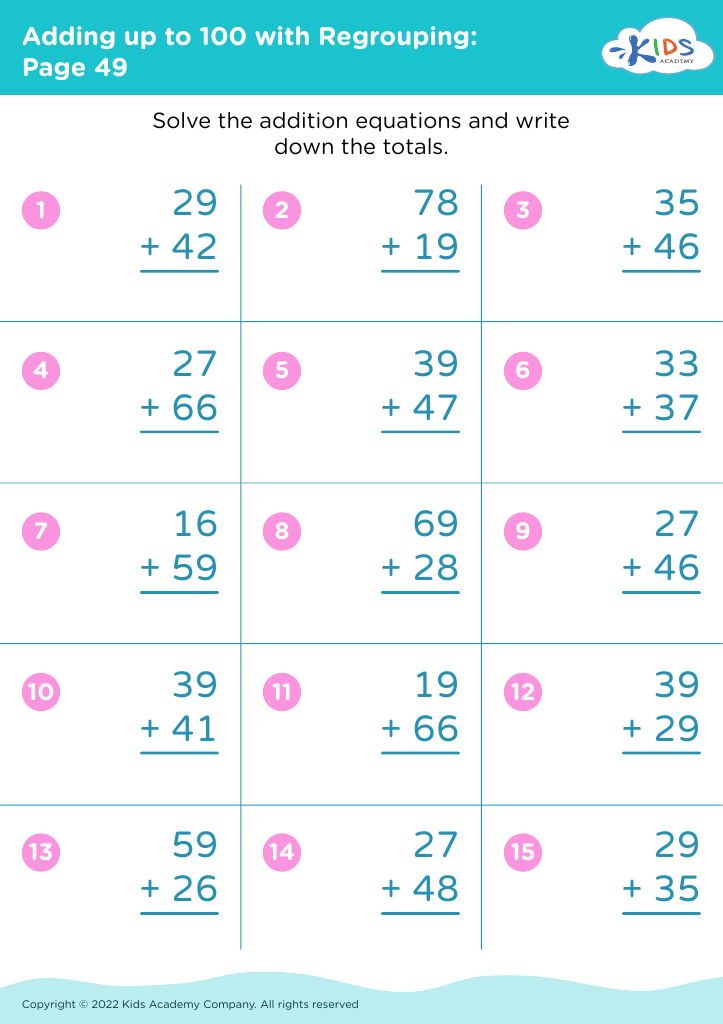
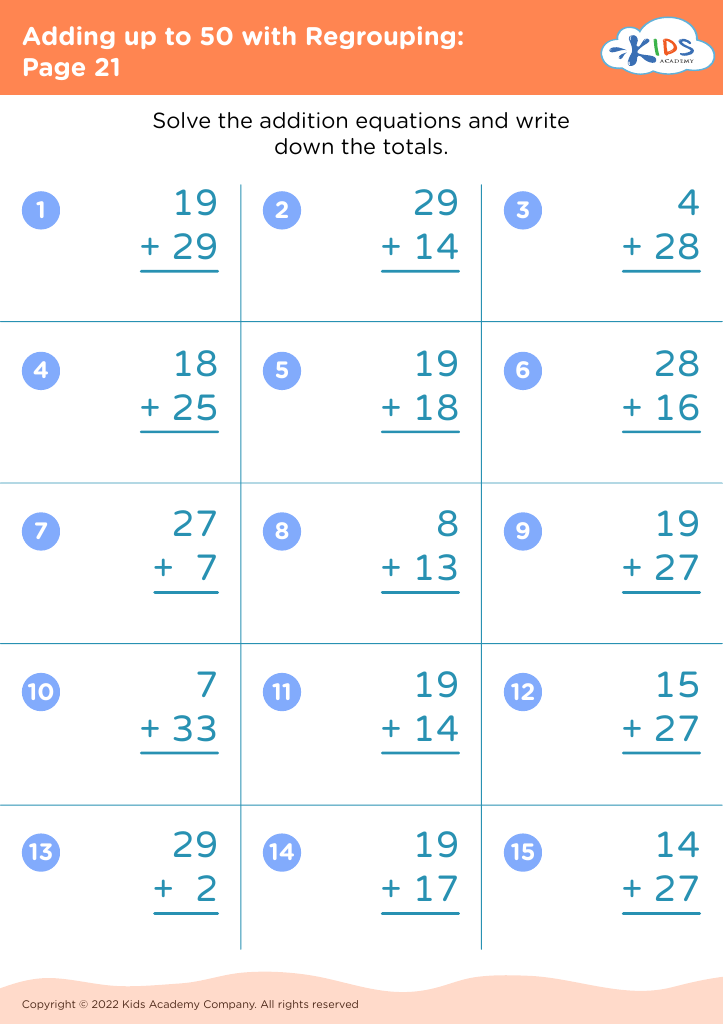
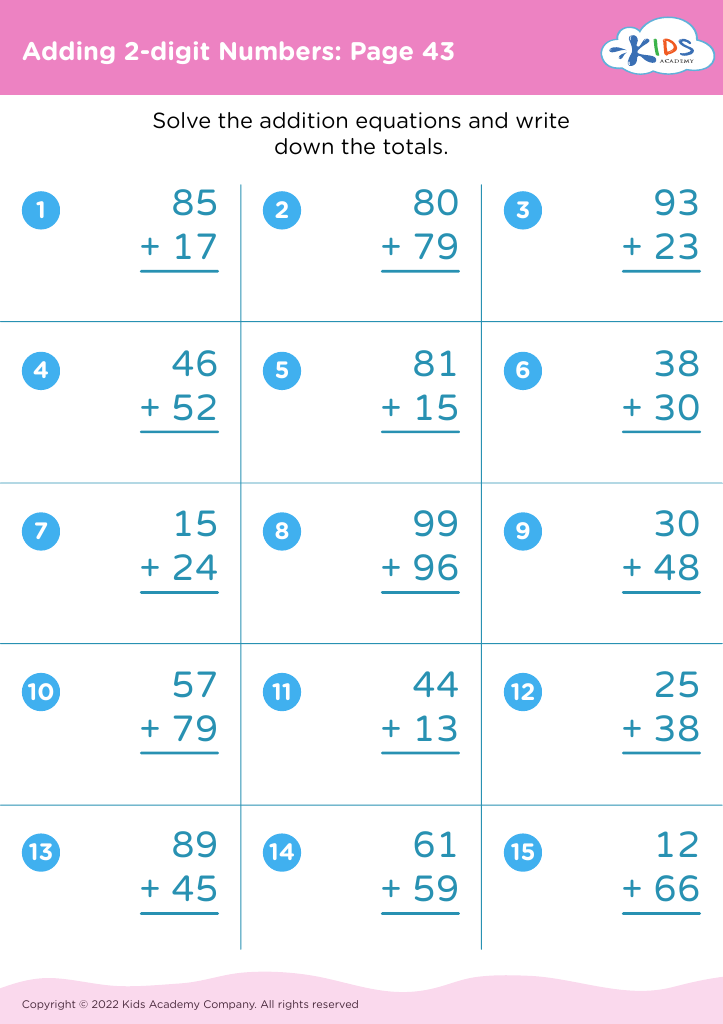
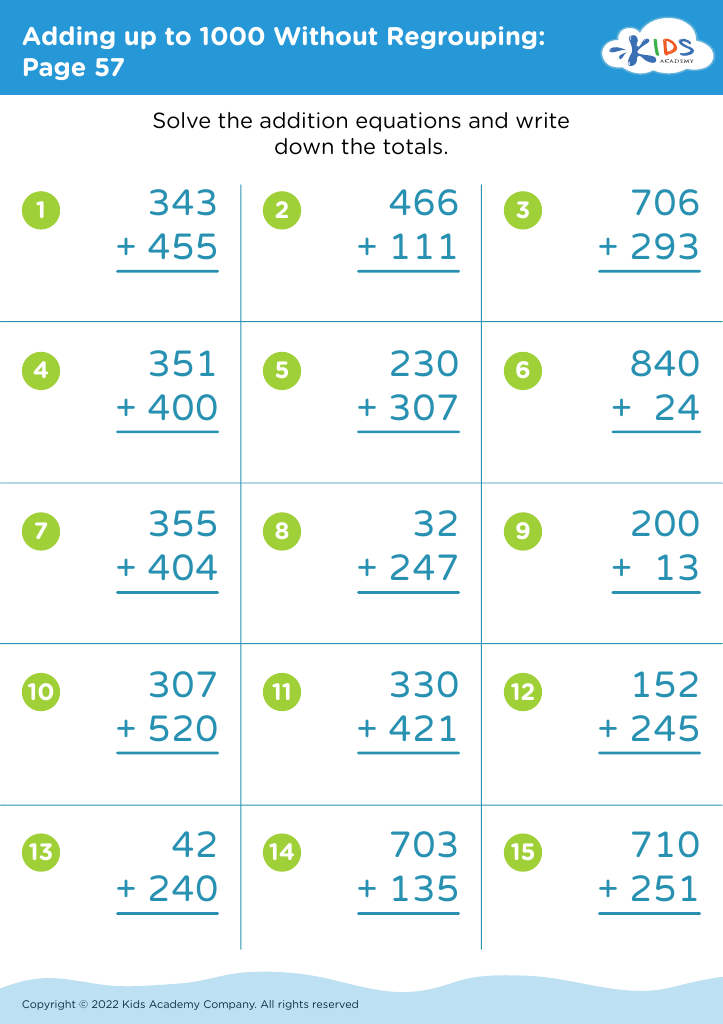
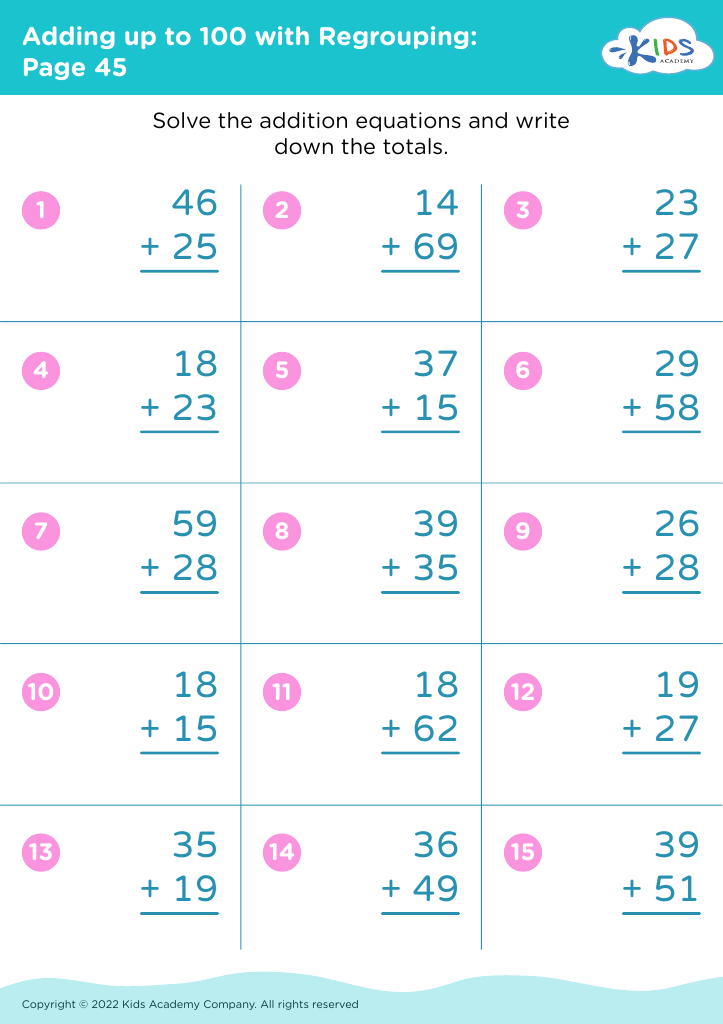
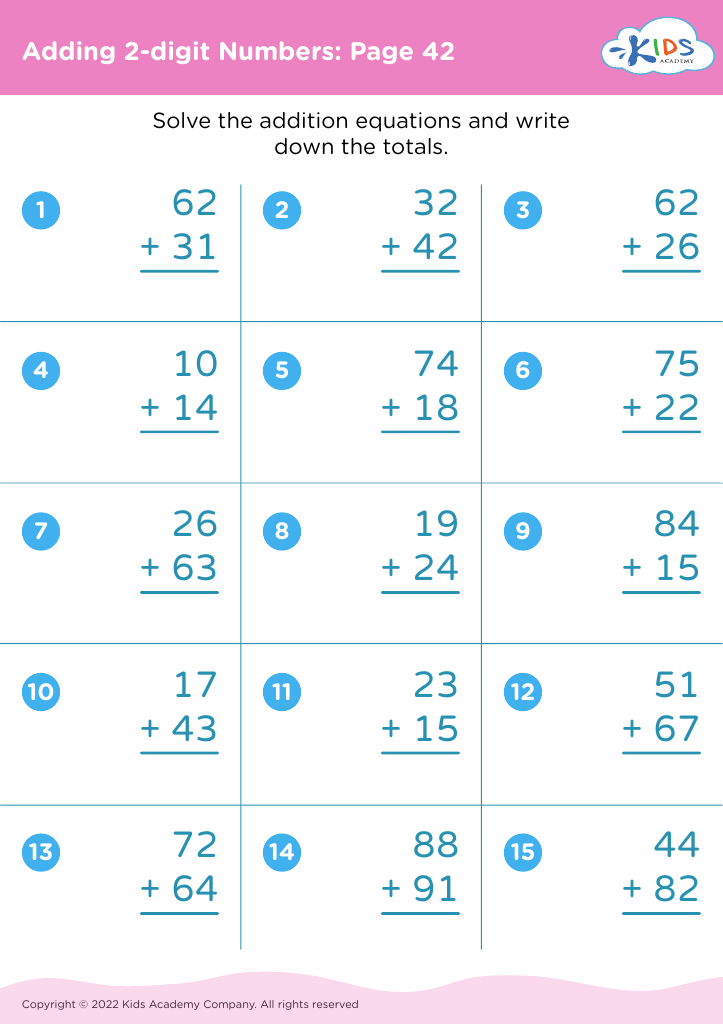
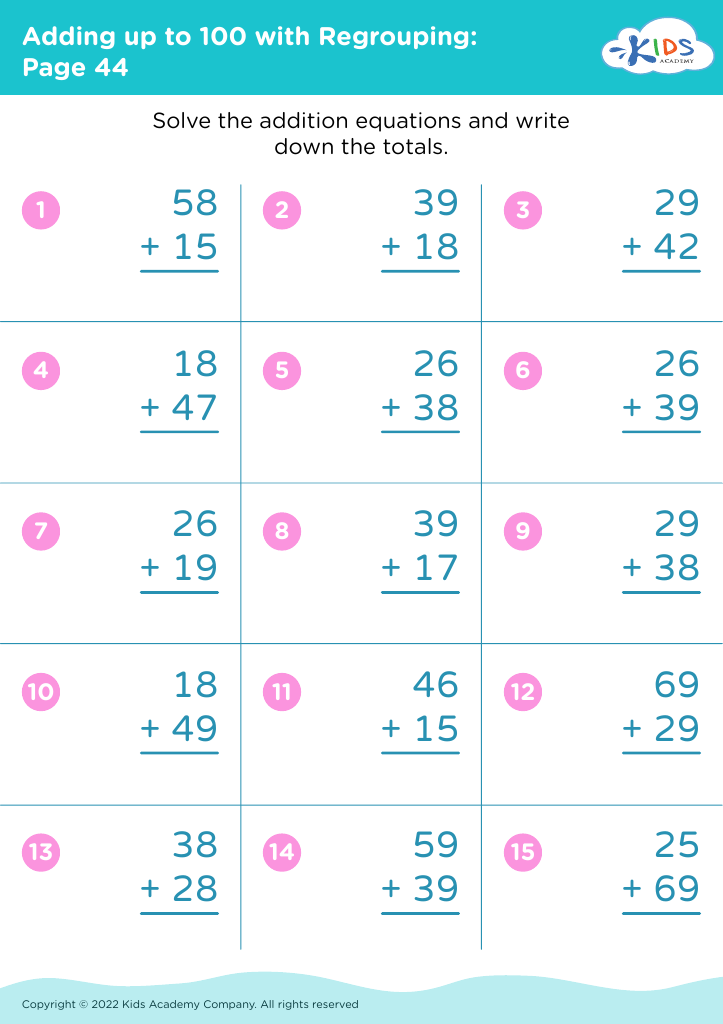








Shape recognition and addition are foundational skills that significantly influence a child's cognitive and academic development, making them crucial for ages 4-8. Understanding shapes helps children recognize and interpret the world around them. It enhances spatial awareness, which is essential for grasping more complex mathematical concepts later on, such as geometry and symmetry. Being able to distinguish between different shapes builds visual discrimination skills, aiding in reading and writing by differentiating letters and numbers.
Addition, on the other hand, introduces the concept of combining quantities, providing the groundwork for arithmetic. It fosters problem-solving abilities and logical thinking, skills important not just for math, but for everyday decision-making. When children practice addition early, they gain confidence in their numerical abilities, setting a positive trajectory for their future learning experiences.
Integrating shape recognition with addition makes learning engaging and interactive, combining visual and numerical intelligence. The tangible aspect of shapes adds a sensory dimension to math, which can make abstract concepts more relatable and easier to comprehend.
Parents and teachers should prioritize these skills to lay a strong foundation for both math proficiency and overall cognitive development, ensuring children are well-prepared for more advanced educational challenges. This blend of geometry and arithmetic ignites curiosity and a love for learning right from the start.








