
Spatial awareness Addition Worksheets for Ages 4-8
5 filtered results
Difficulty Level
Grade
Age
-
From - To
Subject
Activity
Standards
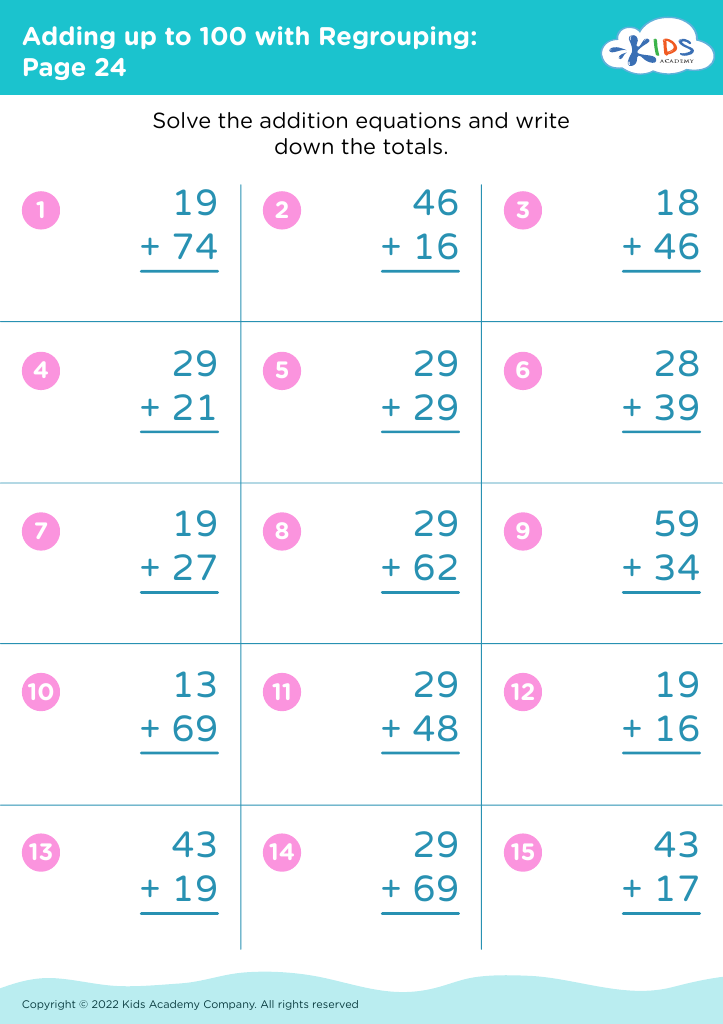
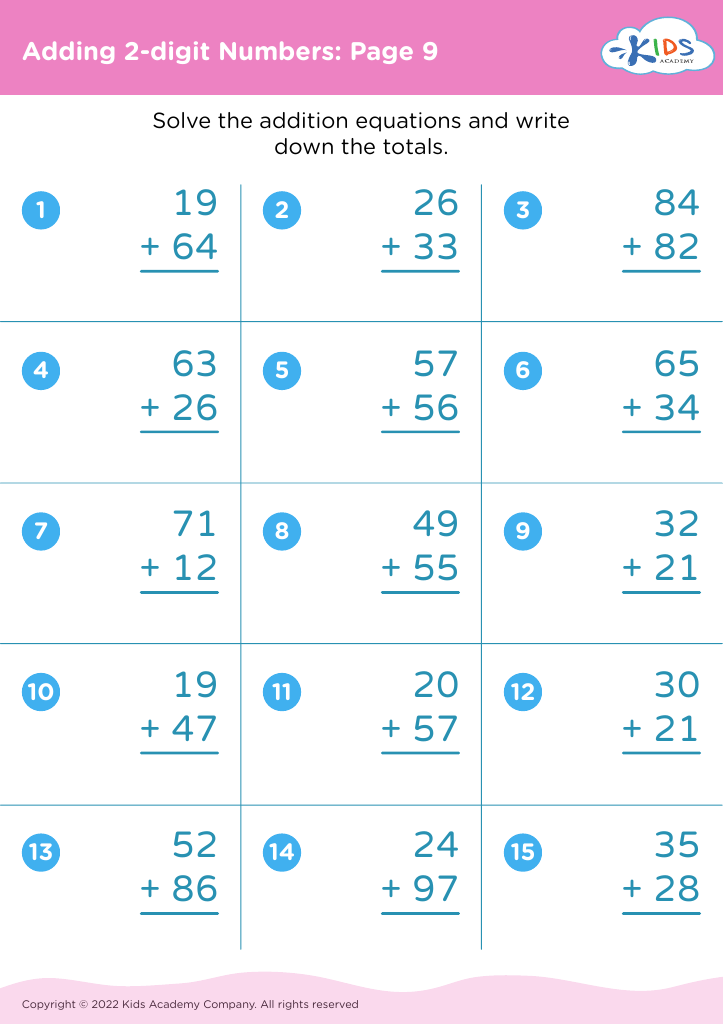
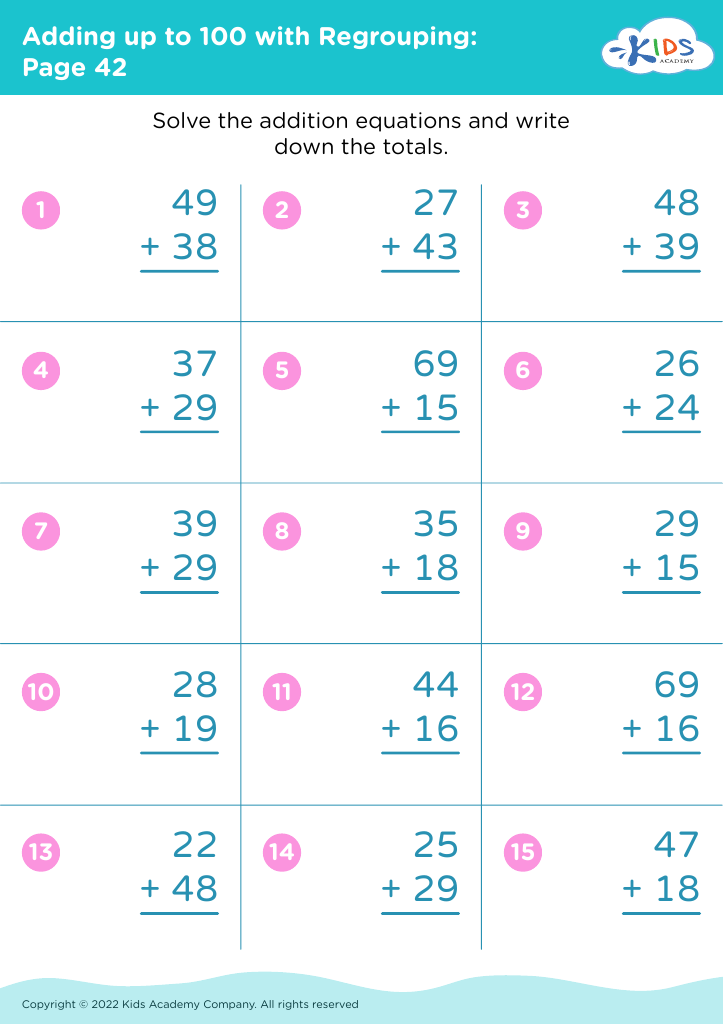
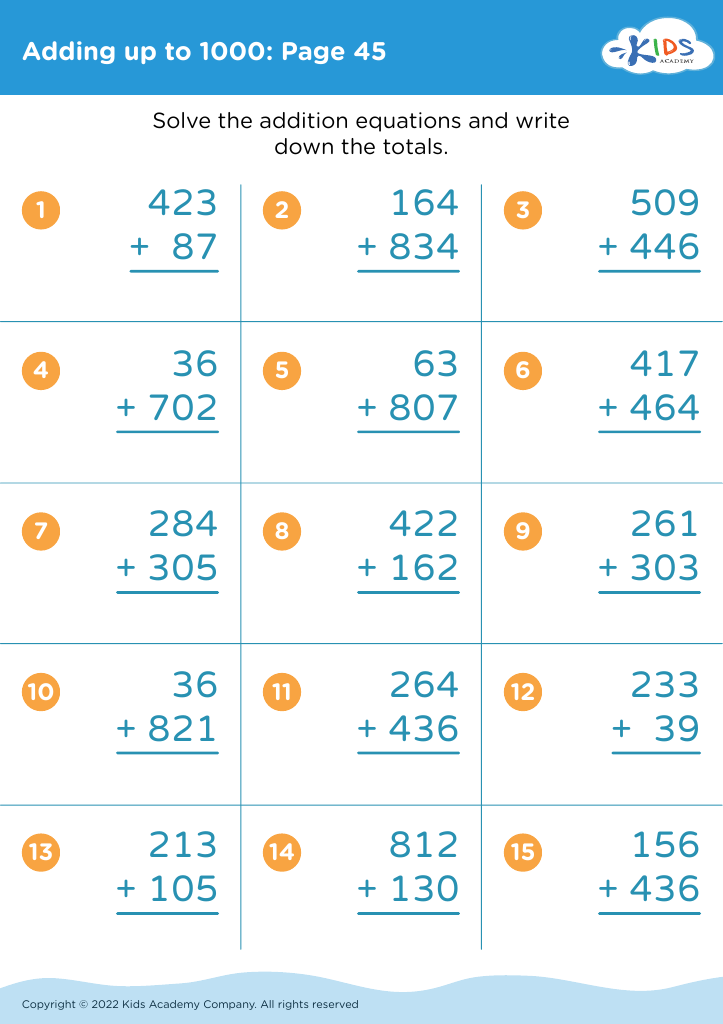
Enhance your child's mathematical journey with our Spatial Awareness Addition Worksheets, specifically designed for ages 4-8. These carefully crafted worksheets combine core addition skills with spatial awareness activities, helping young learners visualize and understand relationships between numbers and objects. Engaging exercises promote critical thinking, boost problem-solving abilities, and foster a deeper understanding of mathematical concepts. Ideal for both home and classroom use, our resources encourage hands-on learning through interactive visuals and stimulating challenges. Foster a solid foundation in math while boosting spatial reasoning – download these enriching worksheets today and watch your child's confidence in addition flourish!
Favorites
With answer key
Interactive
Join Kids Academy for Free
Who is primarily going to use this learning content?








Spatial awareness is a critical cognitive skill that greatly benefits children between the ages of 4-8. Understanding and developing spatial awareness helps children comprehend their environment and navigate it effectively. When parents and teachers emphasize spatial awareness, they lay the foundation for mathematical concepts, including addition.
For instance, children who grasp spatial relationships can visualize numbers on a number line, understand greater or lesser values, and tackle more complex arithmetic since addition often involves combining quantities. Better spatial awareness can boost problem-solving skills and enhance logical thinking, essential for their academic journey.
Moreover, fostering spatial skills through activities such as puzzles, building blocks, or even simple drawing exercises encourages cooperative play and improves fine motor skills. Engaging in these hands-on experiences not only builds brain connections but also motivates children to see math as an enjoyable challenge rather than a daunting subject.
In addition, strong spatial skills influence other areas such as reading comprehension and organization, ultimately supporting holistic development. By prioritizing spatial awareness and its connection to addition, parents and teachers equip young learners with vital tools that will serve them both in their educational pursuits and daily lives.








