Understanding addition Addition Worksheets for Ages 4-8
8 filtered results
-
From - To
Unlock the world of math for young learners with our "Understanding Addition" worksheets, designed specifically for children ages 4-8. These engaging resources help children grasp the fundamental concepts of addition through fun, interactive activities. From visual aids to hands-on exercises, your child will develop confidence in their math skills while enjoying the learning process. Our worksheets cater to various learning styles, ensuring every child can succeed at their own pace. Ideal for classroom settings or home practice, these materials foster a solid foundation in mathematics. Explore our range of worksheets today and make addition an exciting journey for your child!
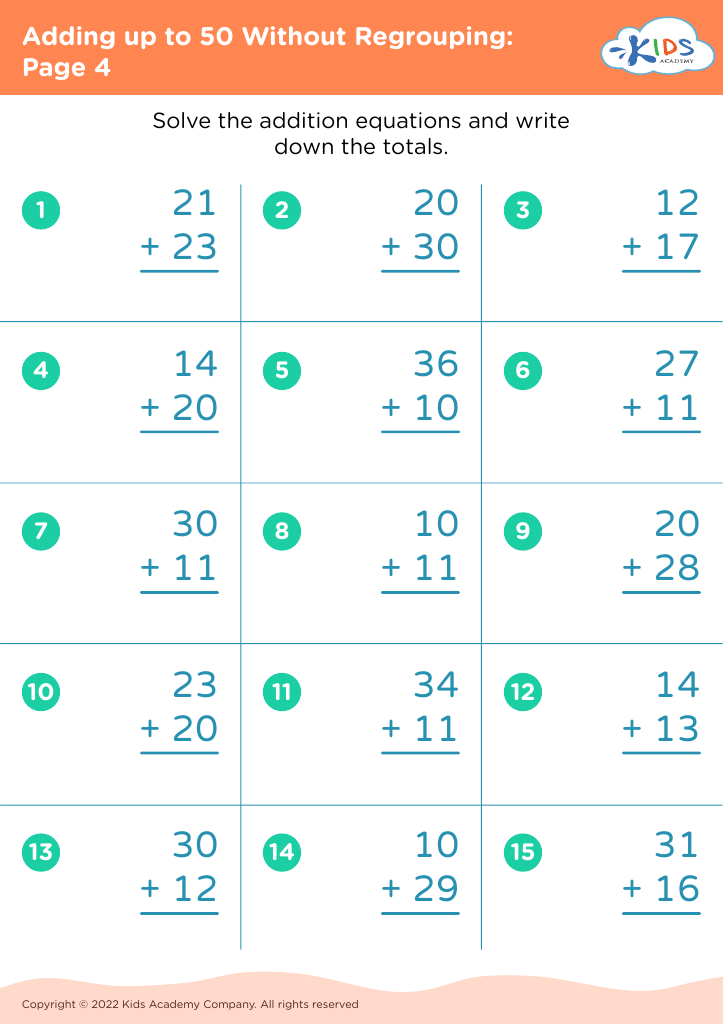
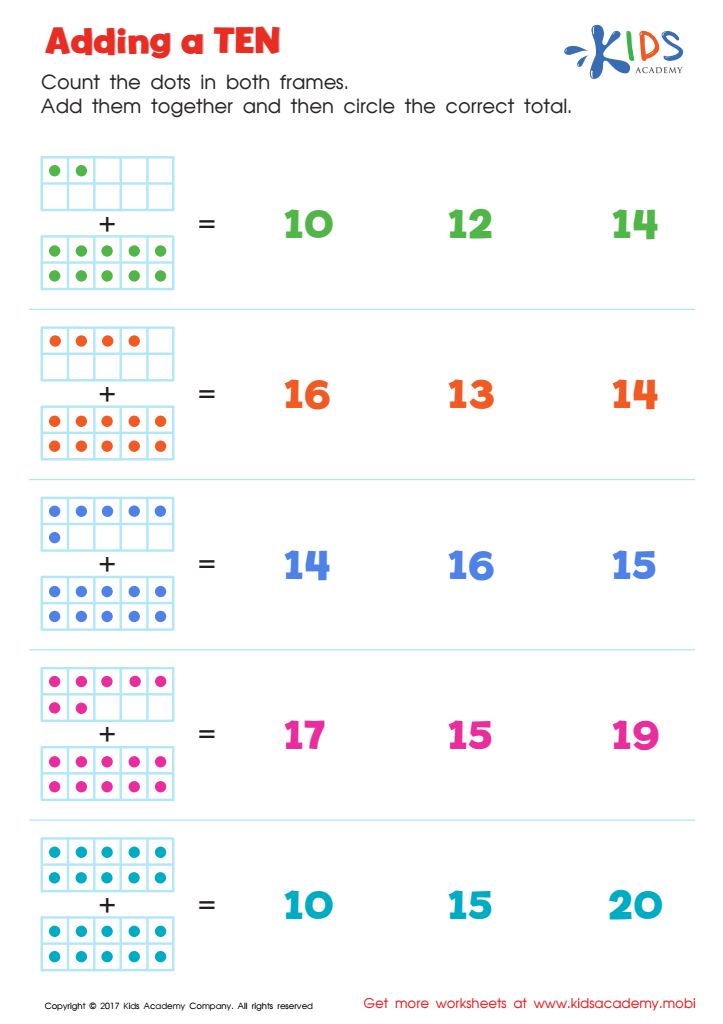
Adding a Ten Worksheet
 Assign to My Students
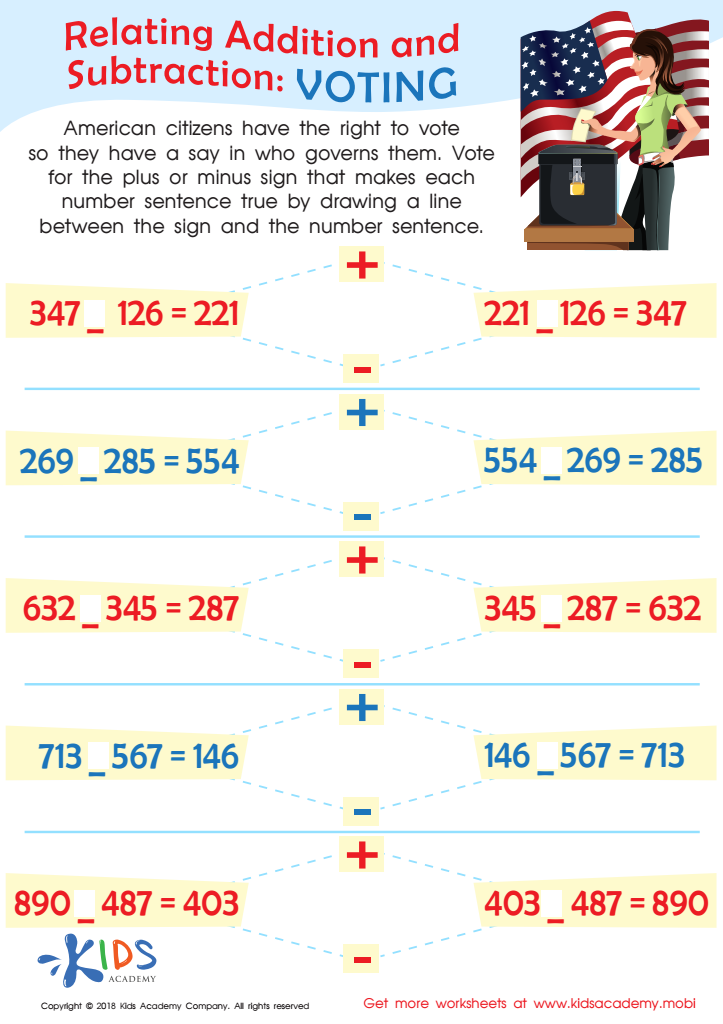
Voting Worksheet
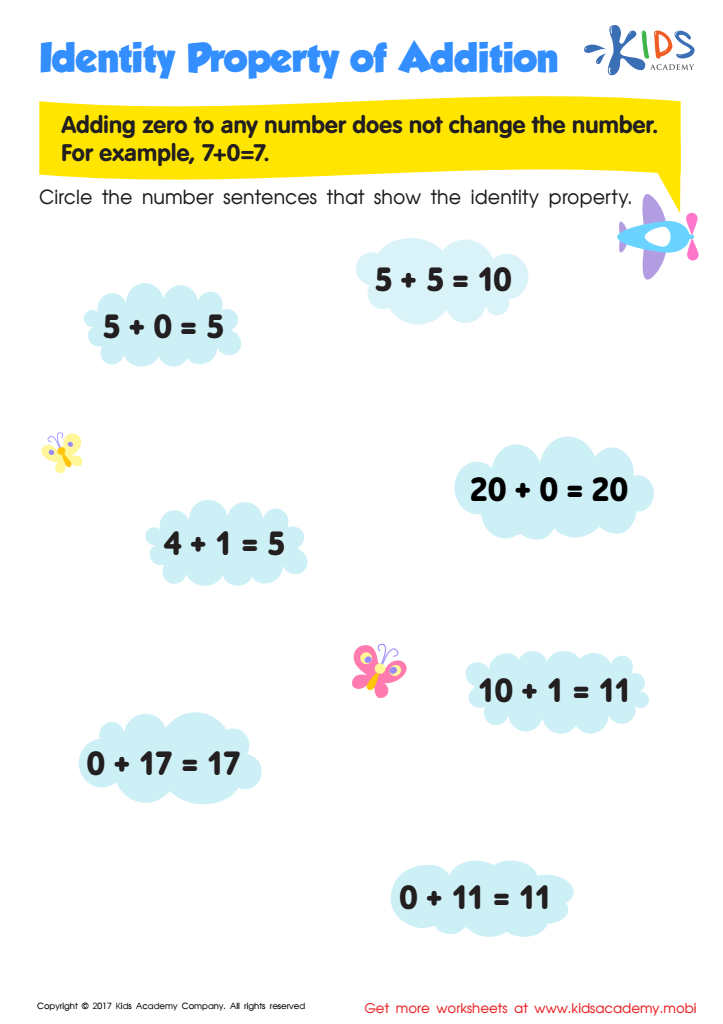
Identity Property of Addition Worksheet
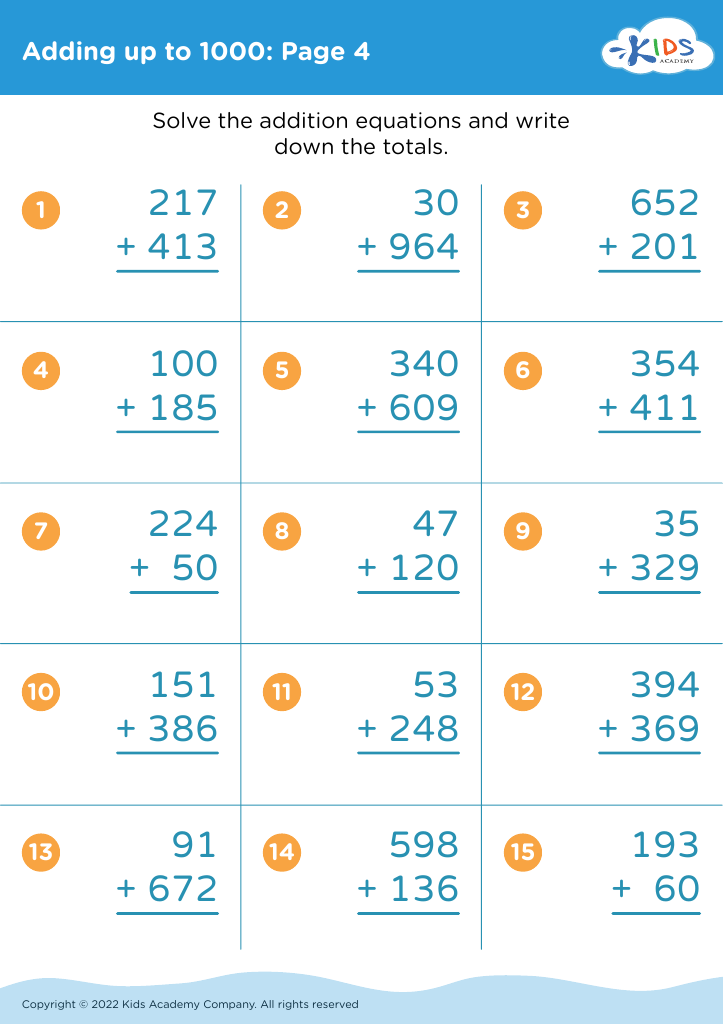
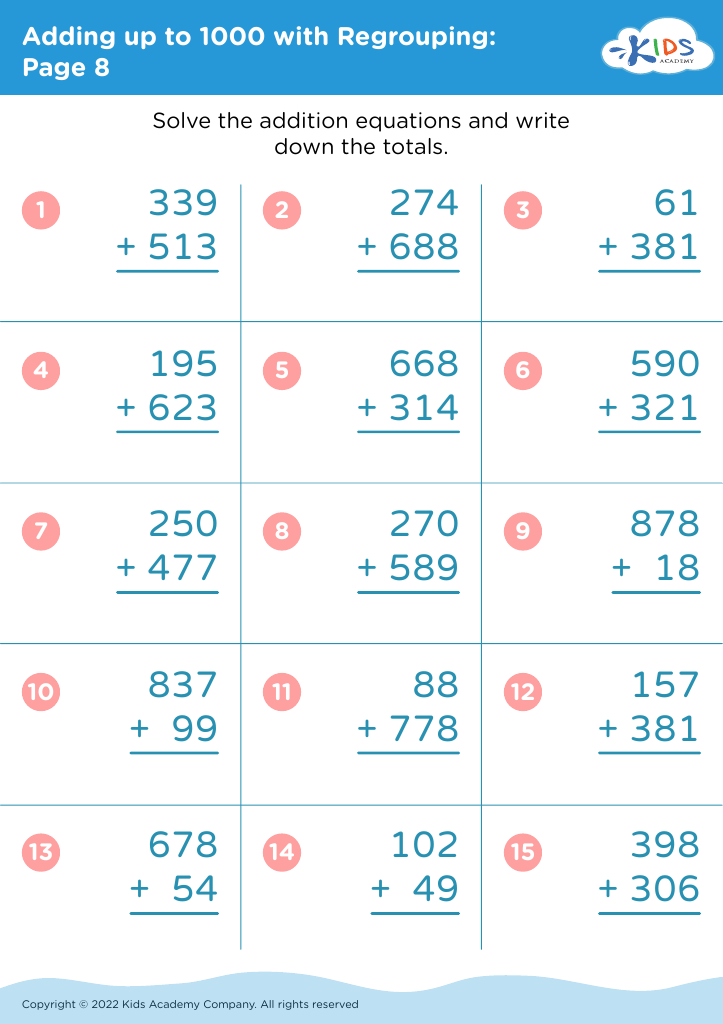
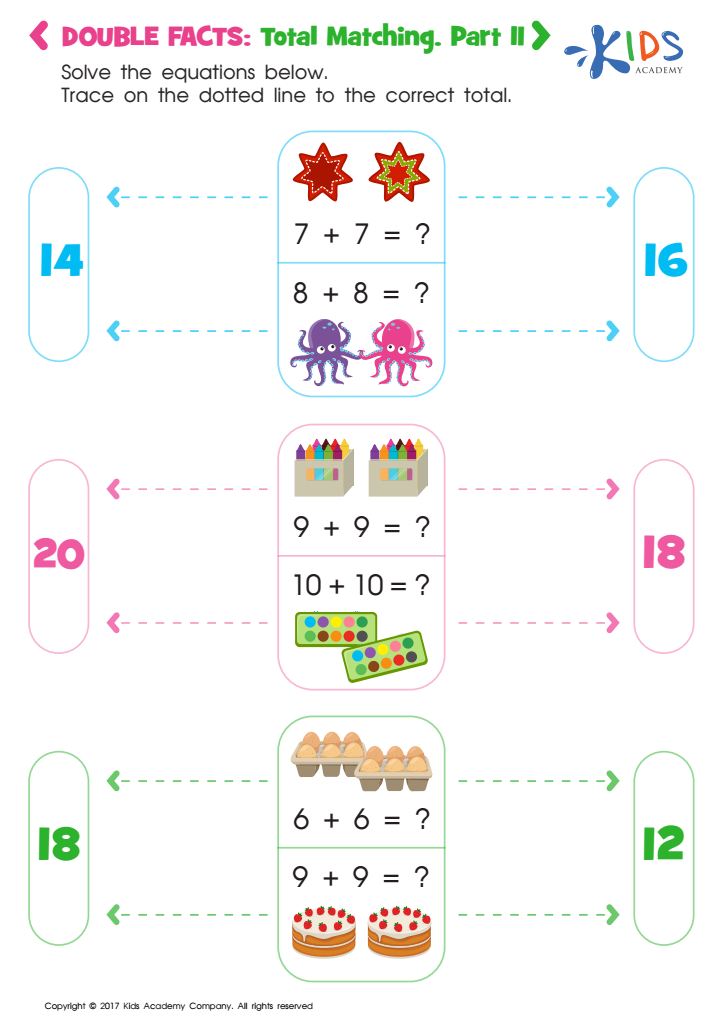
Double Facts: Total Matching 2 Worksheet
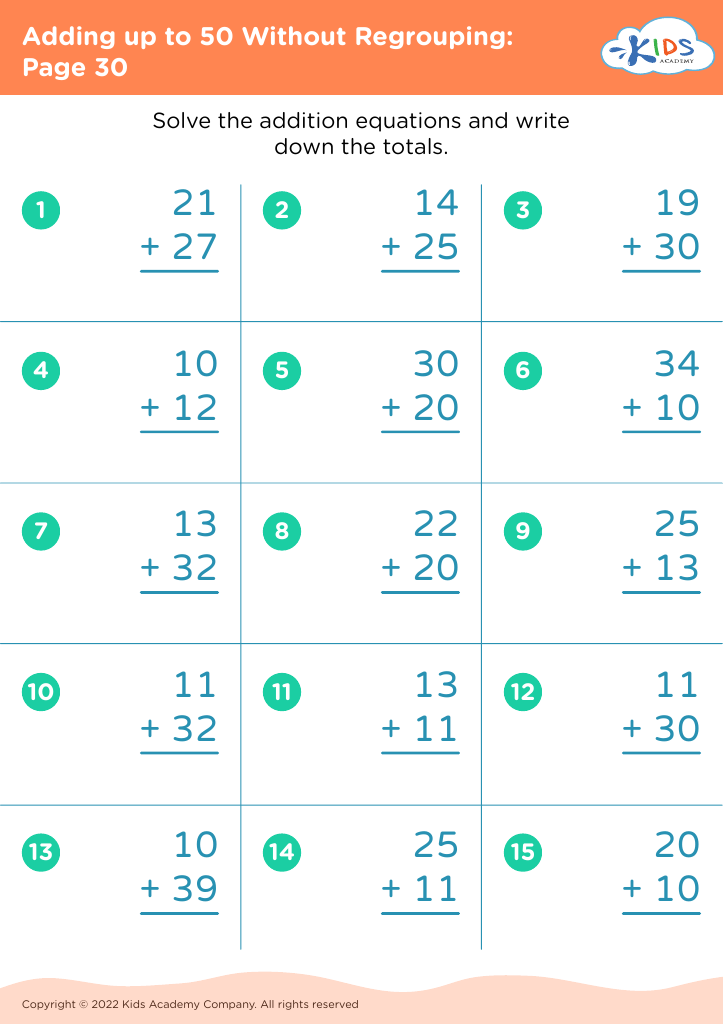








Understanding addition is a foundational skill that is crucial for children aged 4-8, and both parents and teachers play a vital role in fostering this understanding. Early mathematical concepts build the groundwork for future learning, and addition is one of the first operations children encounter. By grasping addition, children develop critical thinking skills, problem-solving abilities, and numerical fluency, which are essential not just in math, but in everyday life.
Children in this age group are naturally curious and eager to learn, making it an ideal time to introduce them to addition through engaging activities and playful experiences. When parents and teachers prioritize addition learning, they help children make connections between numbers and their real-world applications, enhancing their confidence and motivation in math. Moreover, understanding addition encourages cooperative learning. As kids work together on addition exercises, they develop social skills and communication—important aspects of their overall development.
Additionally, supporting early addition skills can prevent future math anxiety and struggles in more advanced mathematical concepts. By providing a strong foundation in addition, we empower children not just academically, but also instill a lifelong love for learning and exploration in mathematics.








