
Understanding equations Addition Worksheets for Ages 4-8
4 filtered results
Difficulty Level
Grade
Age
-
From - To
Subject
Activity
Standards
Welcome to our "Understanding Equations Addition Worksheets" designed specifically for children ages 4-8! These engaging and interactive worksheets aim to introduce young learners to the basics of addition equations in a fun and approachable way. With vibrant illustrations and age-appropriate problems, students will enhance their understanding of how to form and solve addition equations. Our resources promote critical thinking and problem-solving skills while reinforcing core mathematical concepts. Whether used at home or in the classroom, these worksheets provide a solid foundation in mathematics, setting the stage for future success. Explore our collection today and help your child become confident in their math abilities!
Favorites
With answer key
Interactive
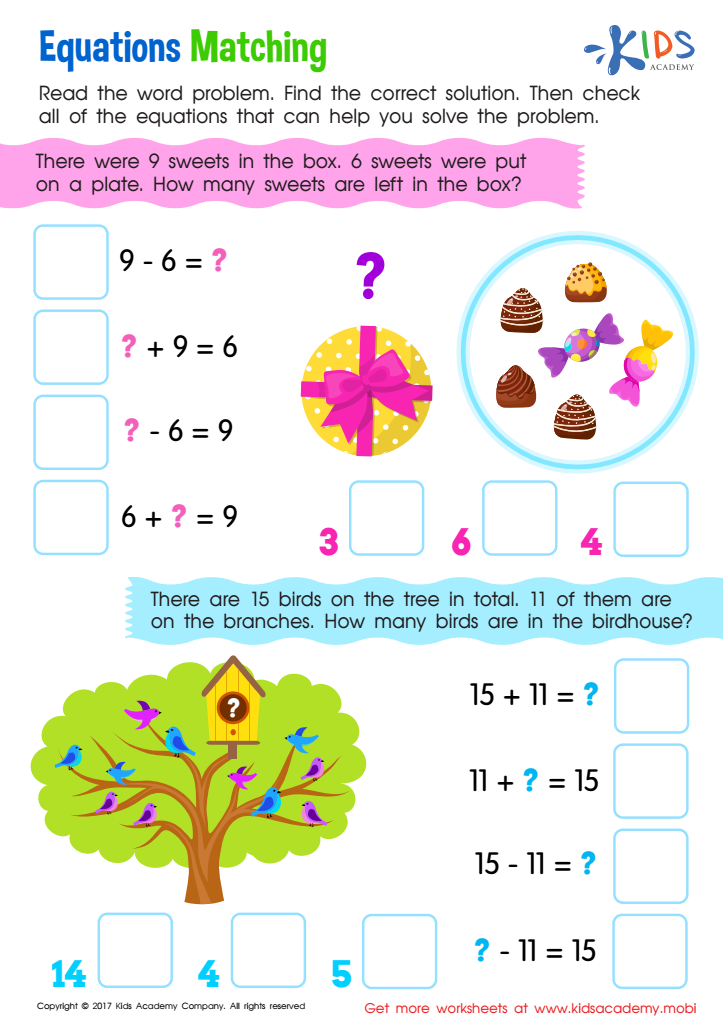
Equations Matching Word Problems Worksheet
Download this worksheet and give your young mathematician practice in solving equations using matching numbers and number family facts. They'll solve word problems, develop critical thinking and algebraic reasoning, and gain success with addition and subtraction.
 Assign to My Students
Equations Matching Word Problems Worksheet
Worksheet
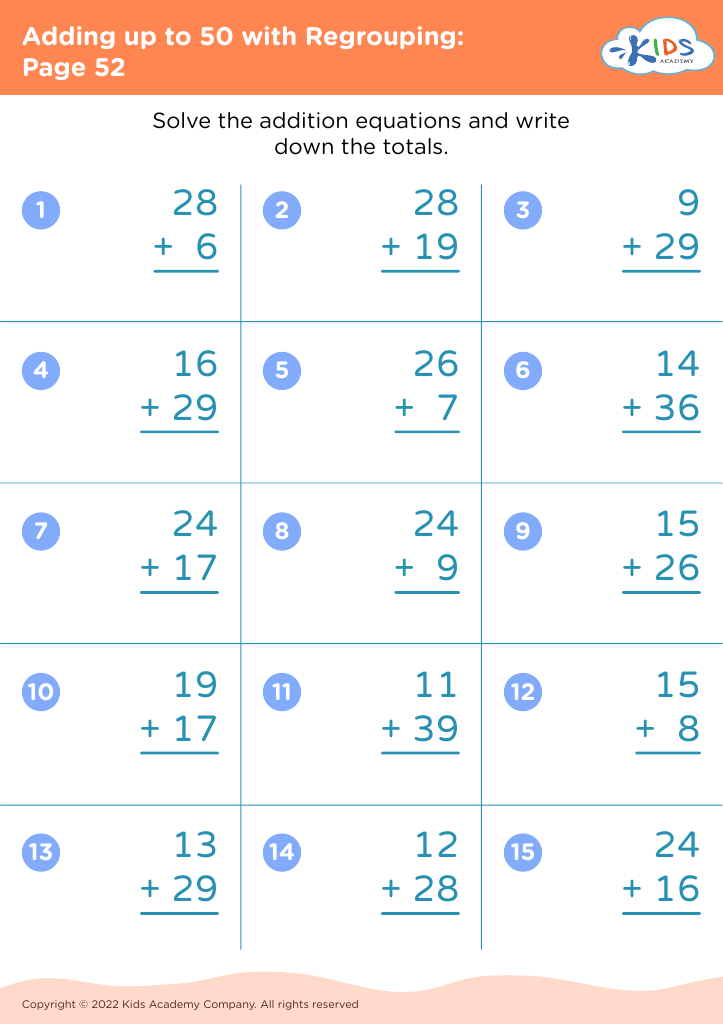
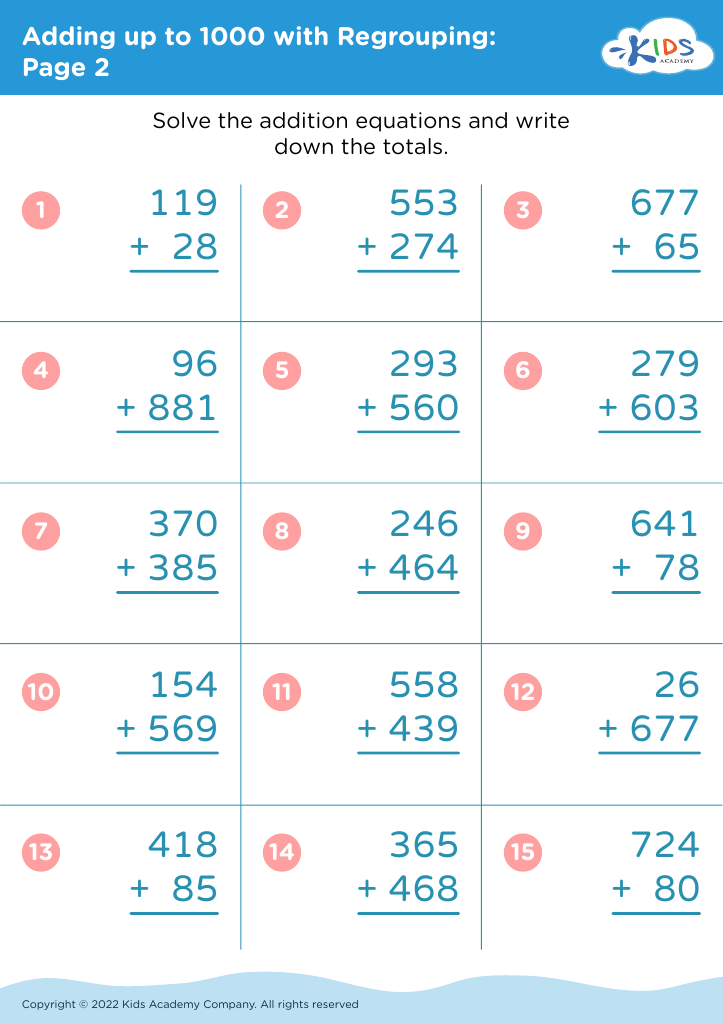
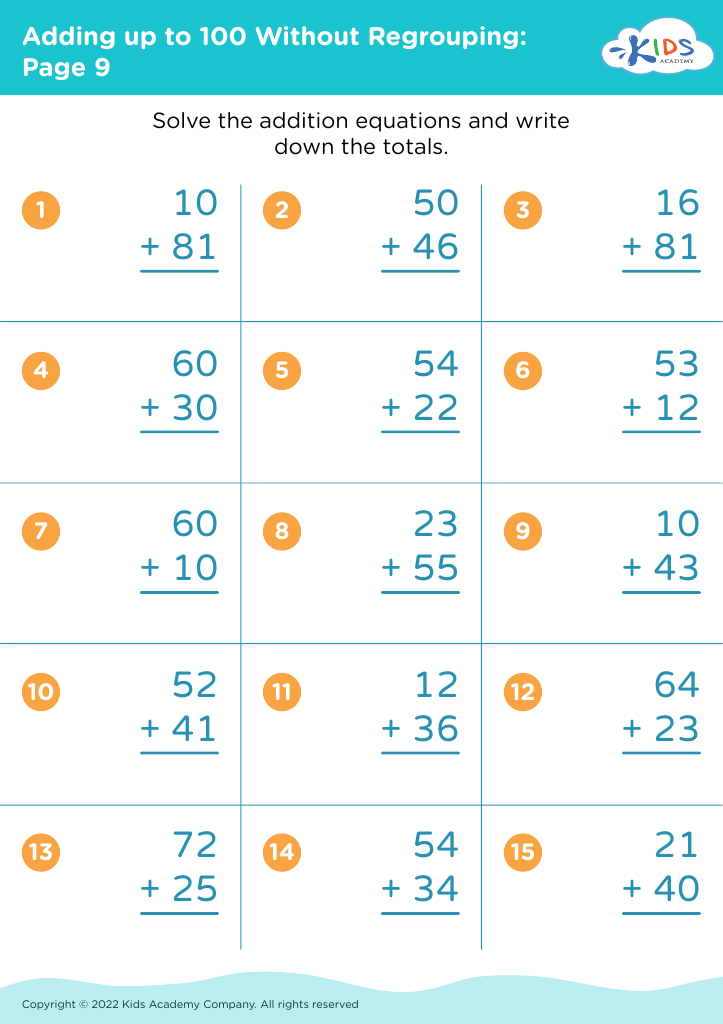
Join Kids Academy for Free
Who is primarily going to use this learning content?








Understanding equations, particularly addition, at ages 4-8 is essential for children's cognitive and academic development. During these formative years, children learn fundamental mathematical concepts that lay the groundwork for future learning. Mastering simple equations helps them grasp the idea of numbers and quantities, enhancing their ability to solve problems.
Encouraging children to understand addition equations fosters critical thinking skills. It not only aids them in performing calculations but also in recognizing patterns and relationships in numbers. This understanding promotes confidence as they tackle more complex problems in later years.
Moreover, formative math experiences support children's overall literacy and conceptual development. Learning through play, such as using visual aids and hands-on activities, makes addition engaging and relatable. When teachers and parents prioritize understanding equations, they create a positive learning environment that resonates at home and school.
Promoting mathematical literacy from an early age equips children with essential life skills, enabling them to make informed decisions. In an increasingly numerate world, an early foundation in problem-solving and critical thinking through addition equations prepares children for future educational challenges and everyday life. Thus, it's crucial for parents and teachers to emphasize this aspect of learning.








