Understanding instructions Addition Worksheets for Ages 4-8
3 filtered results
-
From - To
Understanding Instructions Addition Worksheets for Ages 4-8
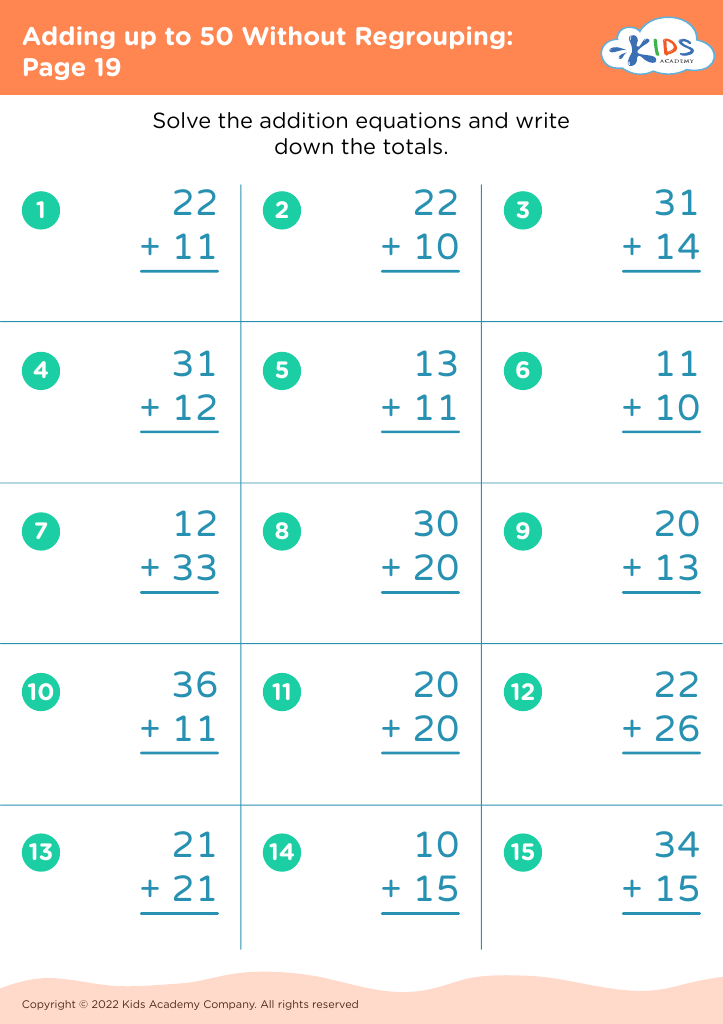
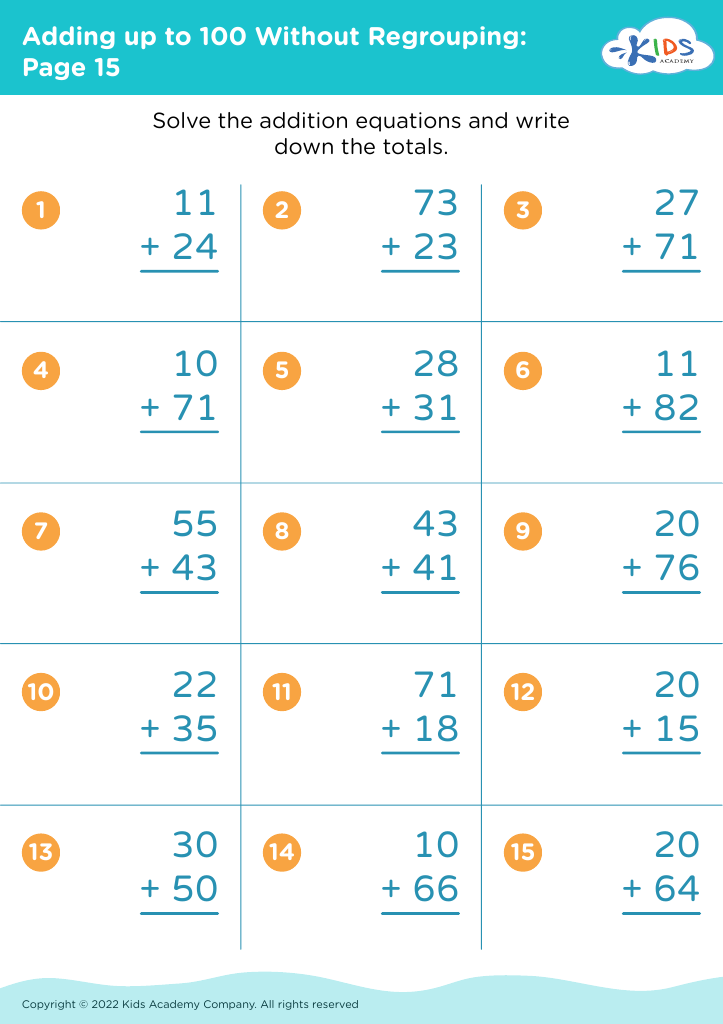
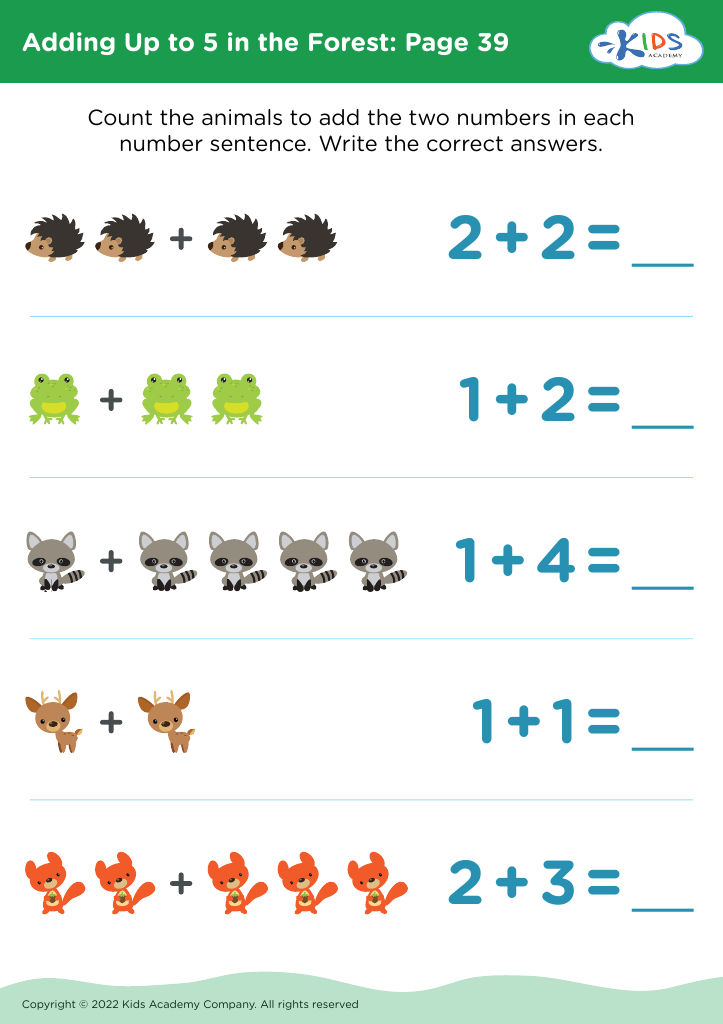
Our unique collection of Understanding Instructions Addition Worksheets for ages 4-8 sharpens both math and comprehension skills. Designed by expert educators, each worksheet encourages young learners to follow simple instructions to improve addition proficiency. Interactive and engaging, these resources cater to different learning styles, ensuring children grasp fundamental concepts while enjoying the process. Ideal for classroom and at-home practice, the worksheets are an effective tool in nurturing critical thinking, patience, and attention to detail in young minds. Support your child's mathematical journey with these fun and educational addition worksheets from Kids Academy!




.jpg)



Understanding addition instructions for children aged 4-8 is essential because it lays the foundation for their overall math competence and cognitive development. At this young age, children are in the critical period of developing their number sense, which is their ability to understand, relate, and connect numbers. Grasping the basic concept of addition not only helps them with math but also enhances problem-solving skills, logical thinking, and reasoning abilities.
For parents and teachers, helping children understand addition instructions fosters a positive learning environment and builds confidence. Breaking down instructions into simple, clear steps ensures that children can follow along, thereby reducing frustration and confusion. This clarity allows children to experience the joy of successfully solving math problems, which can foster a lifelong love for learning and reduce anxiety towards more complex math concepts they will encounter later.
Practicing addition also encourages perseverance and attention to detail. Activities and games designed around addition can make learning interactive and engaging, creating a strong, positive association with math. Therefore, understanding and teaching addition instructions thoughtfully and clearly is a crucial step towards raising competent, confident, and enthusiastic learners in both mathematics and other areas of life.








