Understanding numerical values Addition Worksheets for Ages 4-8
4 filtered results
-
From - To
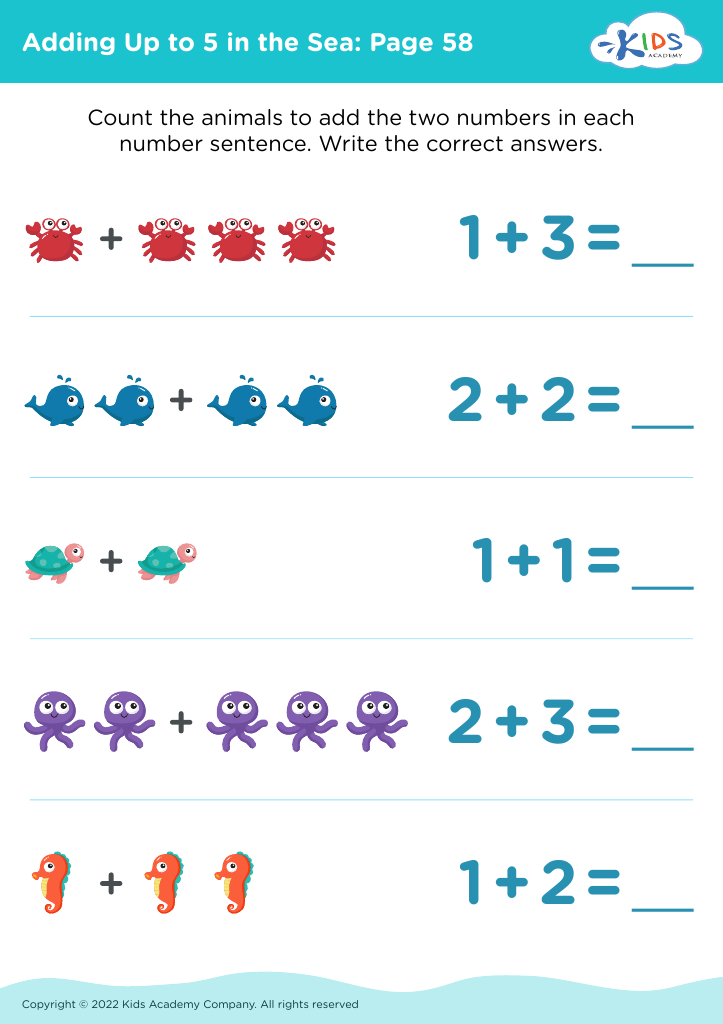
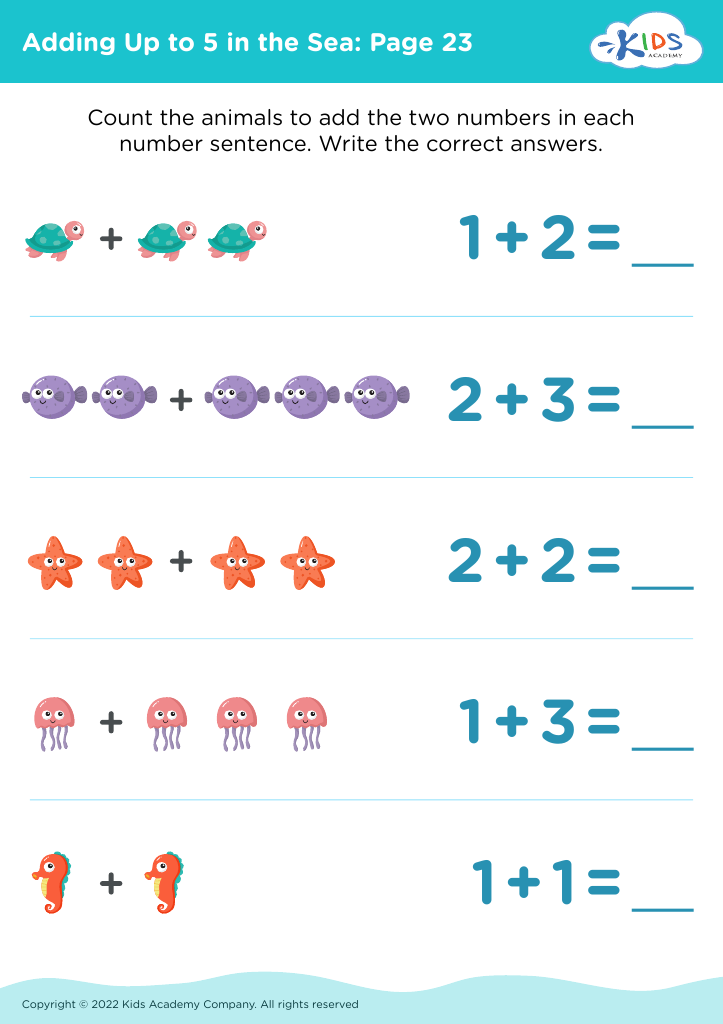
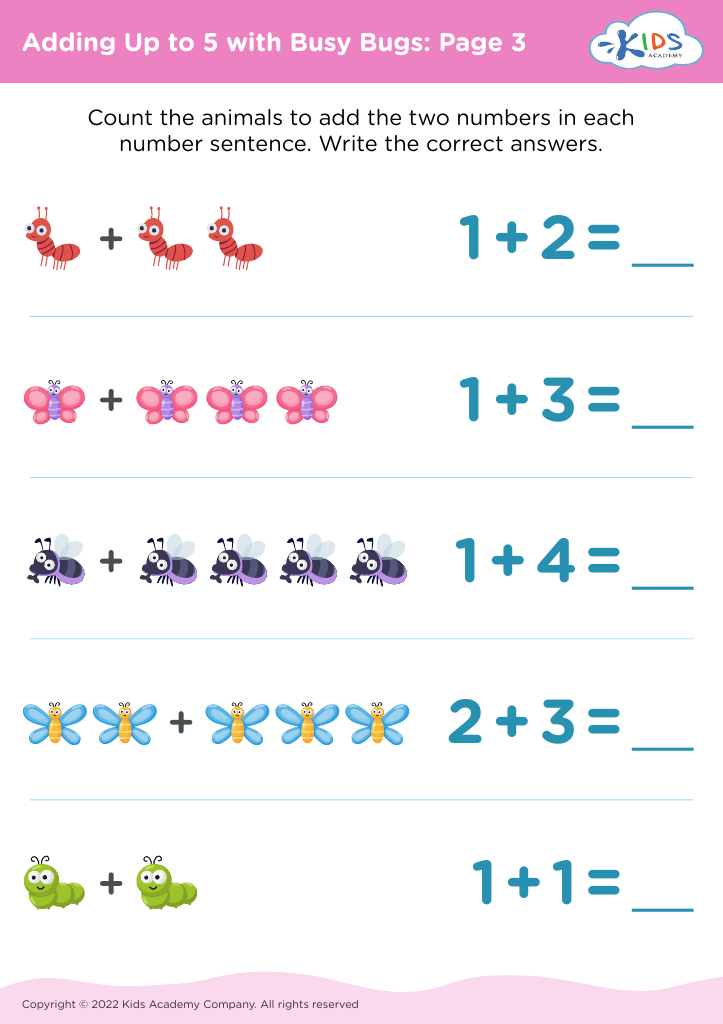
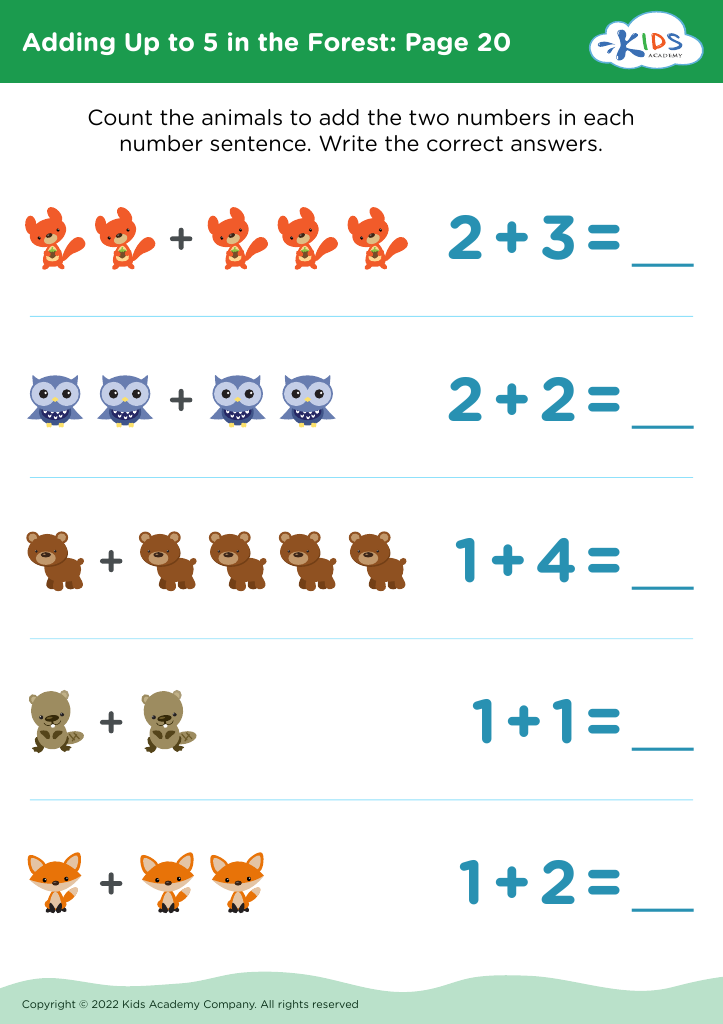
Enhance your child's math skills with our "Understanding Numerical Values Addition Worksheets" for ages 4-8. These engaging and educational worksheets are designed to help young learners grasp the concept of addition through fun and interactive activities. By introducing numerical values in an age-appropriate way, children can develop a strong foundation in math while fostering critical thinking and problem-solving skills. Each worksheet features colorful graphics and simple instructions to make learning enjoyable and effective. Start your child's journey to math mastery today with our expertly crafted addition worksheets, tailored to support and challenge young minds.








Understanding numerical values and mastering addition at an early age are foundational skills crucial for children's development both academically and in everyday life. For children aged 4-8, grasping these concepts helps build their number sense, a fundamental aspect of math comprehension that paves the way for more advanced mathematical learning. Early exposure to numerical values and addition allows children to recognize patterns, make connections, and understand relationships between numbers, which can enhance problem-solving skills and logical reasoning.
Parents and teachers should care about these skills because they are integral to performing daily tasks, such as counting objects, handling money, and telling time. Moreover, early math skills are strongly predictive of later academic success, not just in math but in other subjects as well, including reading. Young learners who are confident in their numerical and addition abilities often exhibit greater self-esteem and a more positive attitude toward learning overall.
Furthermore, engaging in hands-on activities that involve numbers and addition can enhance fine motor skills, foster creativity through games and puzzles, and encourage social interaction and teamwork. By placing emphasis on these foundational math skills, parents and teachers can support and nurture a child's enthusiasm for learning, ensuring they are well-prepared for future educational challenges.








