Understanding patterns Addition Worksheets for Ages 4-8 - Page 2
29 filtered results
-
From - To
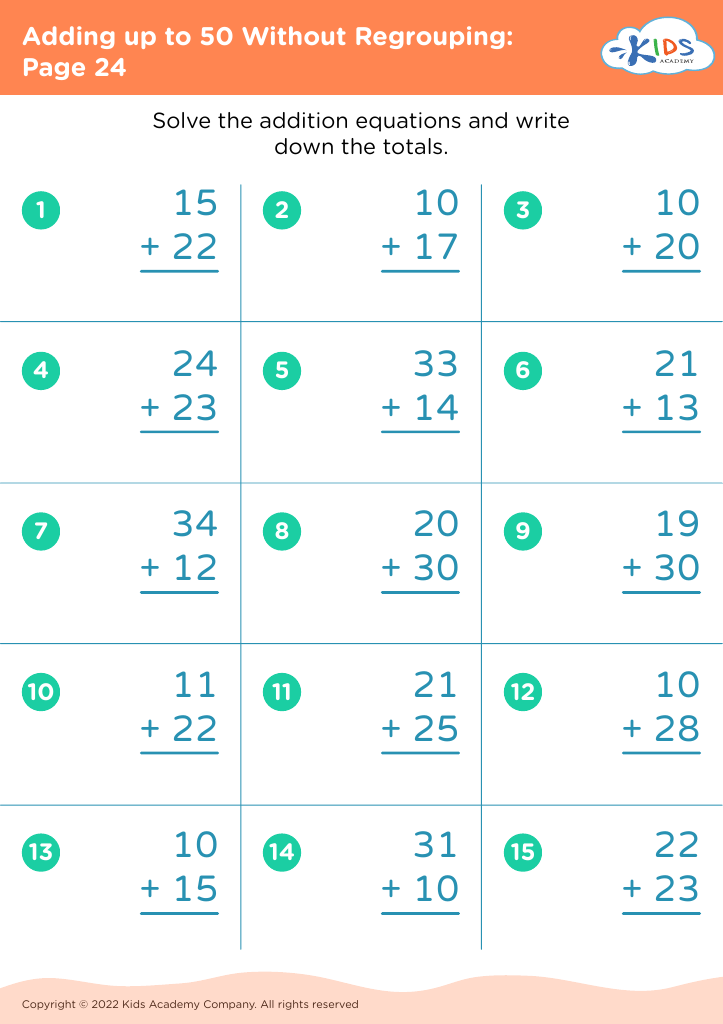
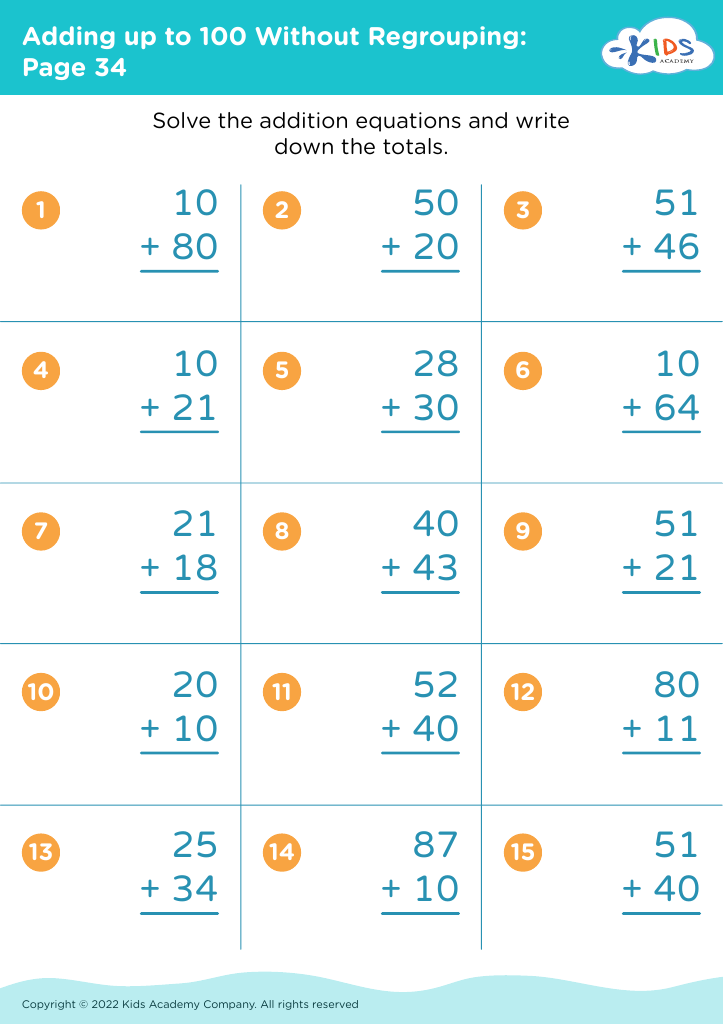
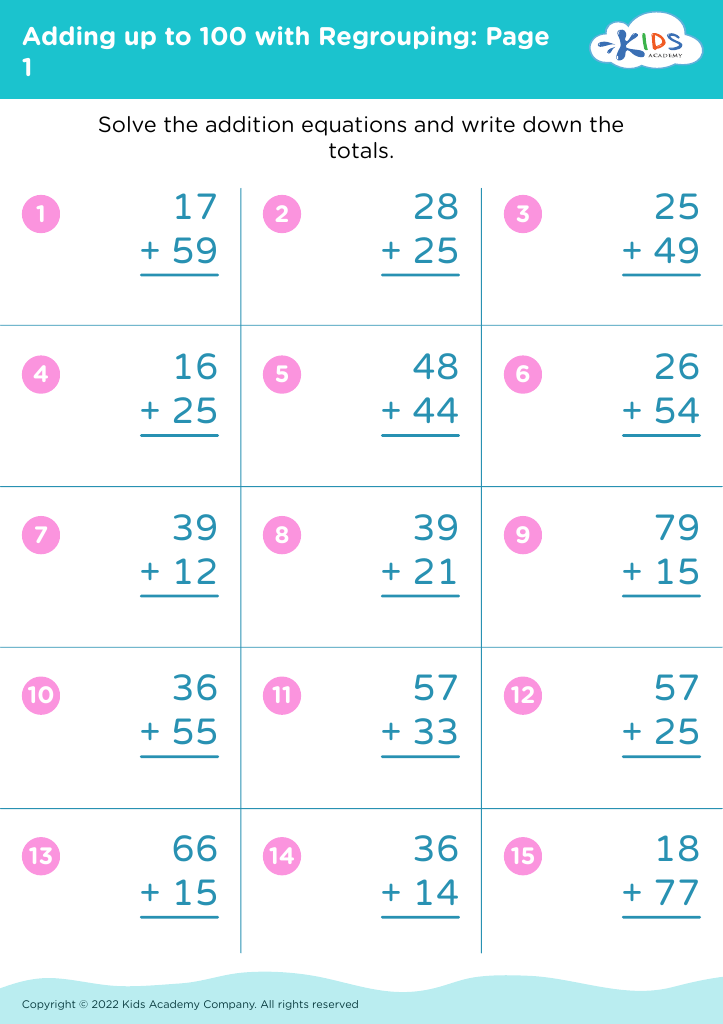
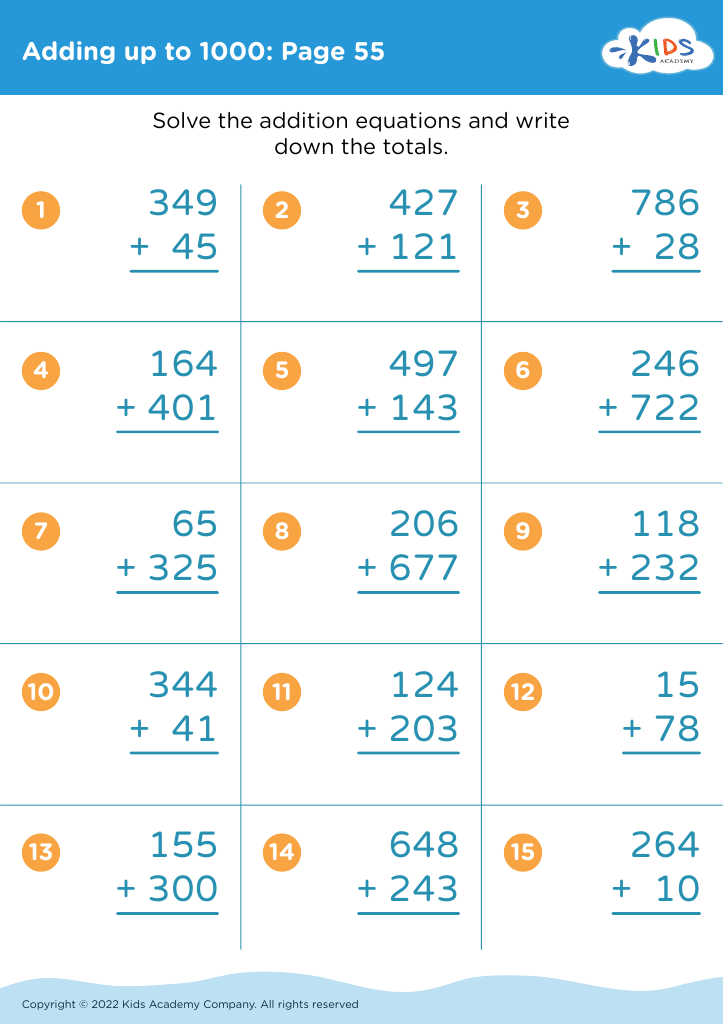
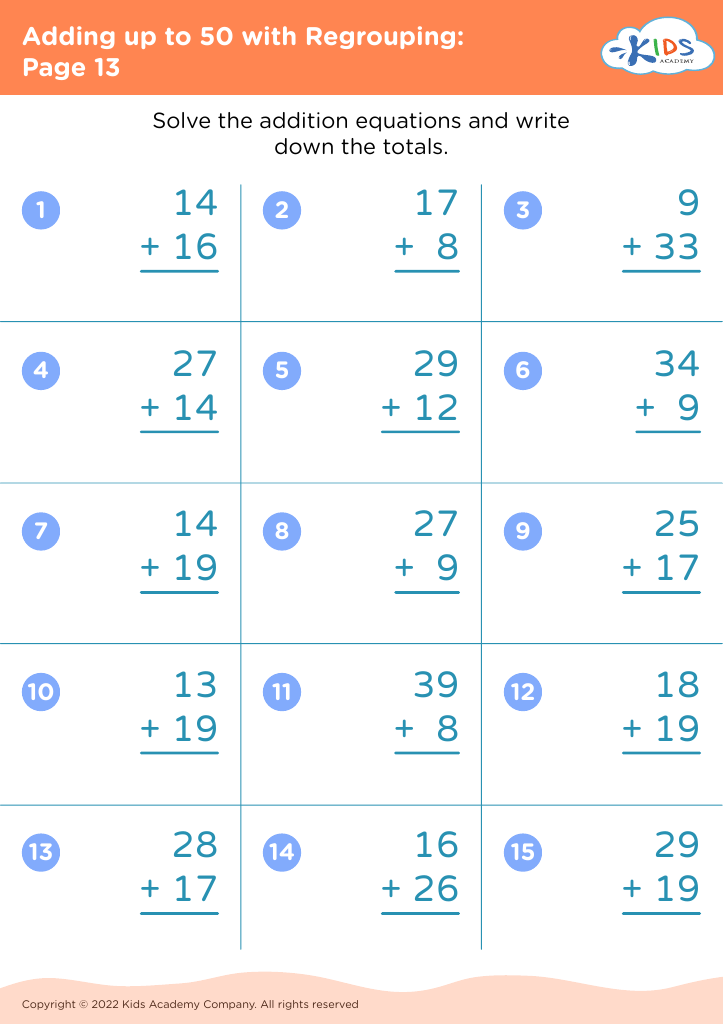








Understanding patterns in addition is crucial for children aged 4 to 8 because it lays the foundation for mathematical success. At this developmental stage, children are naturally curious and keen to recognize relationships in numbers, which makes it an ideal time to introduce them to the concept of patterns.
First, recognizing patterns enhances a child's ability to predict outcomes, an essential skill in both math and everyday life. For example, by observing patterns, children can predict the next number in a sequence, building their confidence in problem-solving.
Moreover, patterns reinforce the understanding of numerical relationships, paving the way for more complex operations as children progress. This comprehension is critical, as it aids in transition from concrete counting to more abstract thinking, which is paramount in future mathematical learning.
Finally, engaging children in pattern-based addition activities can make learning fun and interactive. It fosters critical thinking, enhances memory skills, and cultivates a love for math.
In summary, parents and teachers should prioritize understanding patterns in addition, as it enriches children's mathematical foundation, supports cognitive development, and embraces their innate curiosity about the world around them.








