Money recognition Coins Worksheets for Ages 4-8
5 filtered results
-
From - To
Welcome to our Money Recognition Coins Worksheets, specifically designed for children ages 4-8! Our engaging worksheets simplify the process of learning about coins, helping young learners recognize and understand the value of different denominations. Featuring fun illustrations and interactive activities, these printables make learning about money exciting and enjoyable. Your child will practice identifying coins, matching values, and solving basic money problems, enhancing their math skills in a meaningful way. Perfect for homeschooling or classroom settings, these resources lay the foundation for essential financial literacy. Start your child’s journey towards confident money management today with our easy-to-use worksheets!
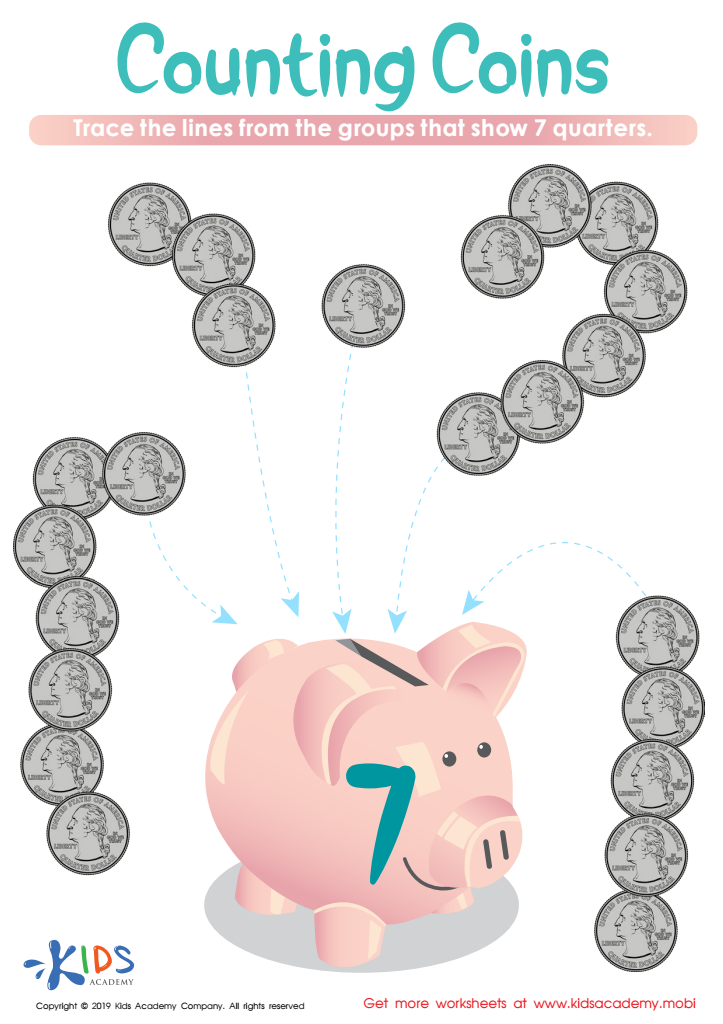
Counting Coins Worksheet
 Assign to My Students
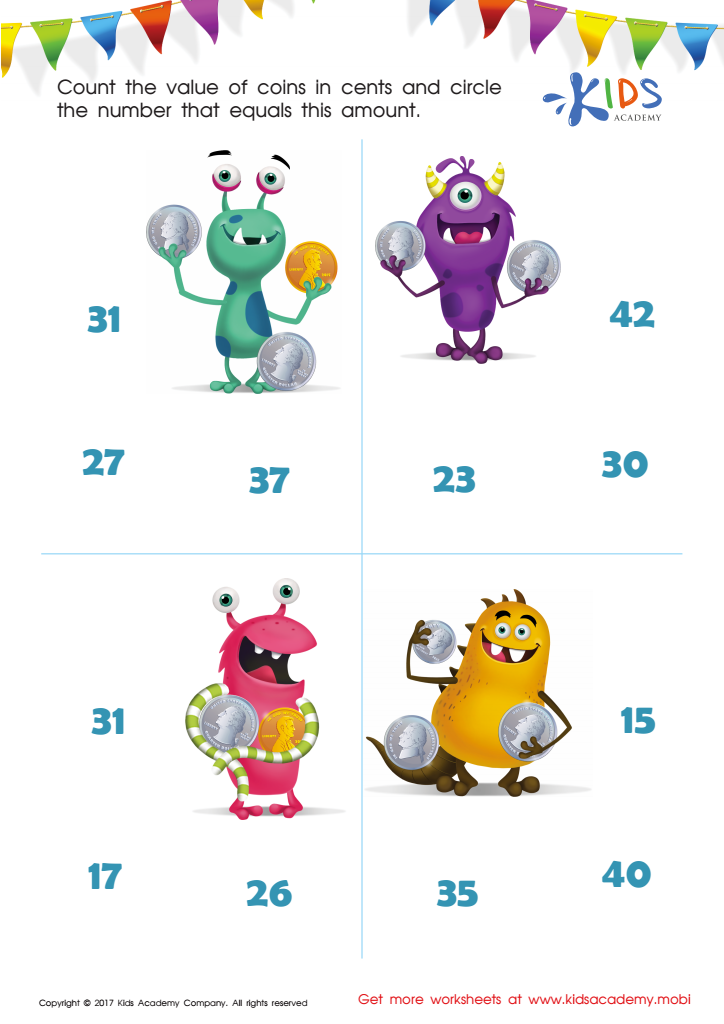
How Many Coins Money Worksheet
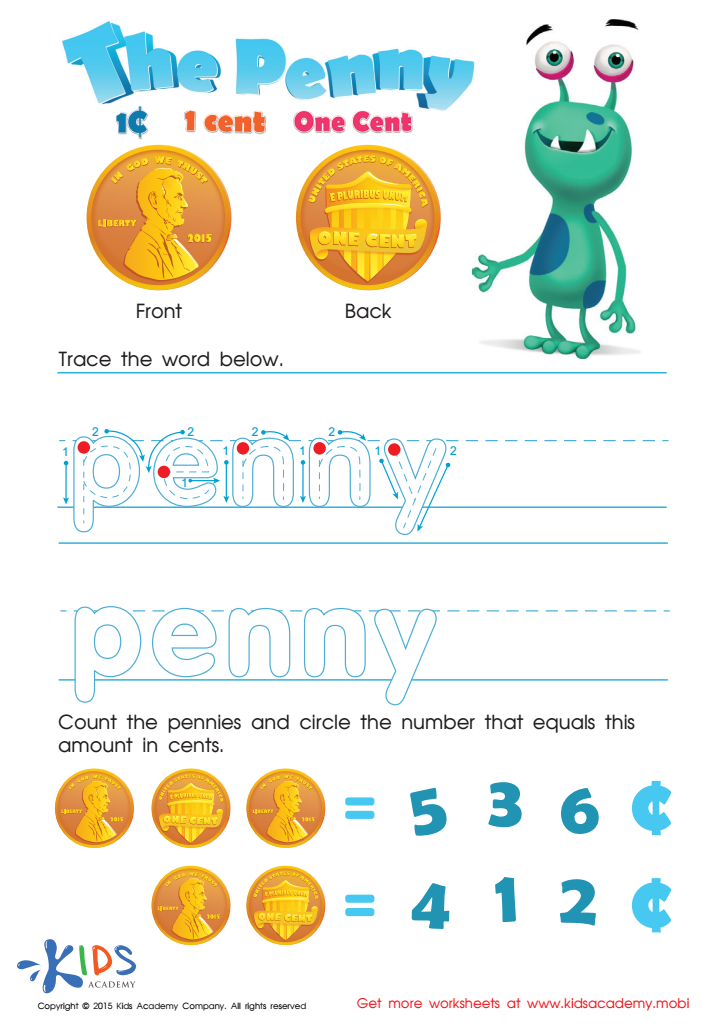
One Cent or the Penny Money Worksheet
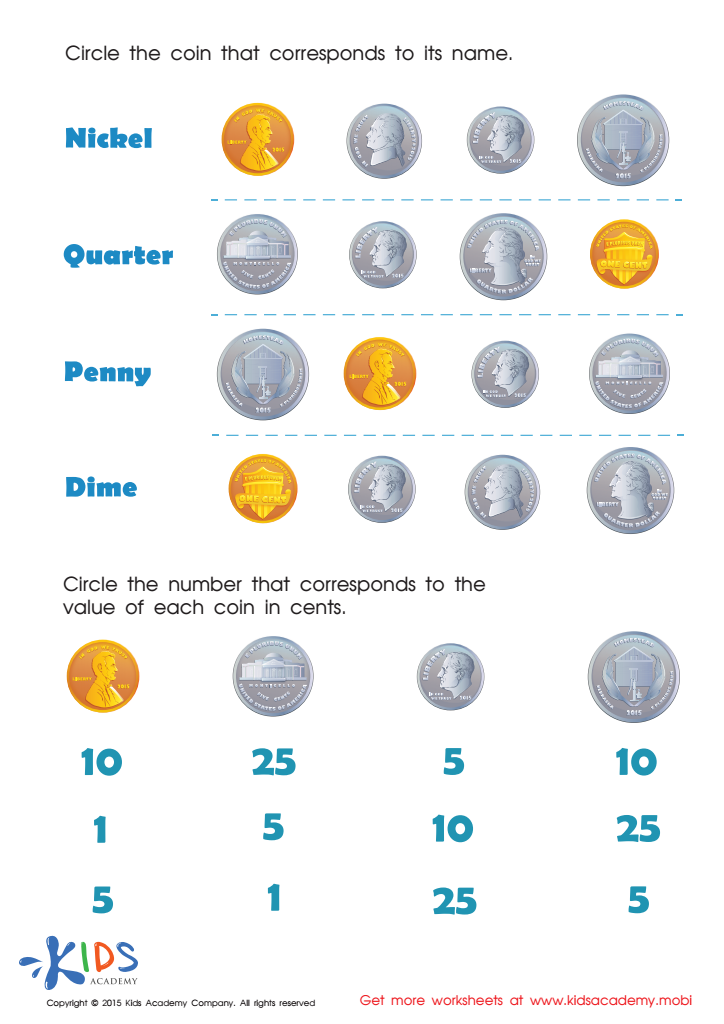
Coin Names and Values Money Worksheet
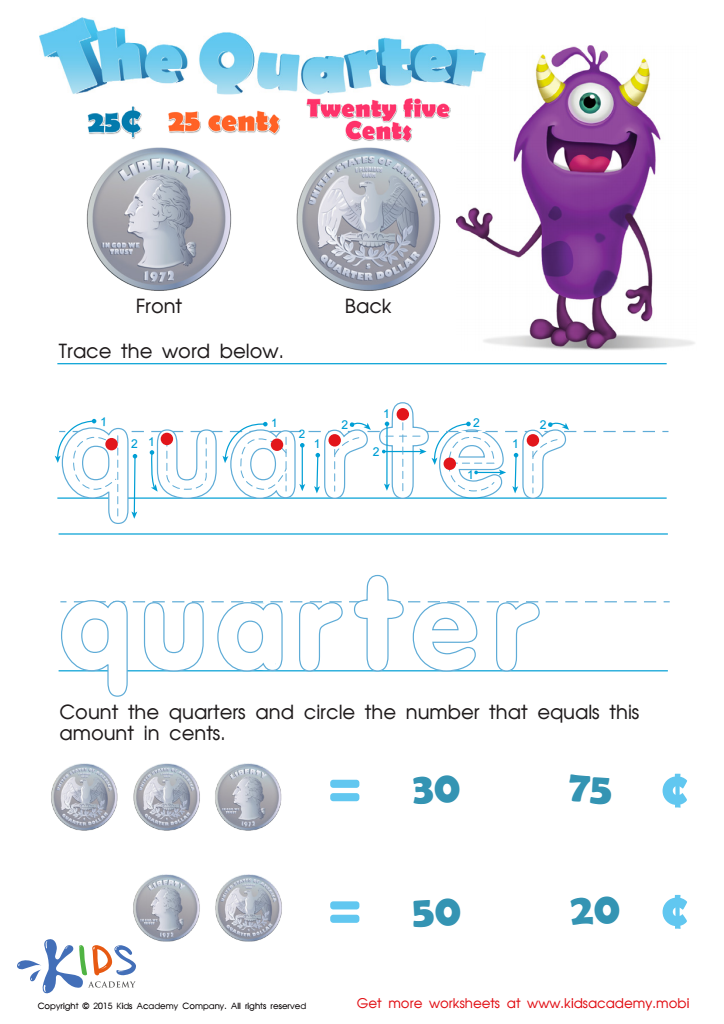
Twenty Five Cents or the Quarter Money Worksheet








Money recognition, particularly coins, is a crucial skill for children aged 4 to 8, laying the foundation for financial literacy. Understanding coins helps children grasp the concept of value and currency, which are fundamental aspects of everyday life. Teaching young learners to recognize different coins prepares them for real-world experiences, such as making purchases or managing allowances, fostering independence and confidence.
Moreover, early engagement with money can enhance other cognitive skills, including counting, sorting, and simple math. When children learn to identify coins, they also practice critical thinking as they make decisions about spending, saving, or sharing money. It can become an engaging activity, merging play and learning as parents and teachers incorporate money recognition into games, arts, and discussions.
Additionally, financial literacy is increasingly recognized as a vital skill. Starting early means kids are more likely to understand financial principles as they grow, setting them up for success and responsible financial behavior in the future. Therefore, both parents and teachers should prioritize money recognition, transforming it into a fun, educational experience that contributes to a child's overall development.








