Addition skills Money Worksheets for Ages 4-8
3 filtered results
-
From - To
Our Addition Skills Money Worksheets for ages 4-8 are designed to make learning math fun and engaging. These worksheets help young learners develop essential addition and money-handling skills through practical, real-world scenarios. Children will practice adding coins and bills, reinforcing their understanding of currency while improving their arithmetic abilities. Our age-appropriate and visually appealing worksheets offer a mix of activities that cater to various learning styles, ensuring that kids grasp the concept of addition while having fun. Trust Kids Academy to provide high-quality educational materials that set the foundation for financial literacy and mathematical proficiency.
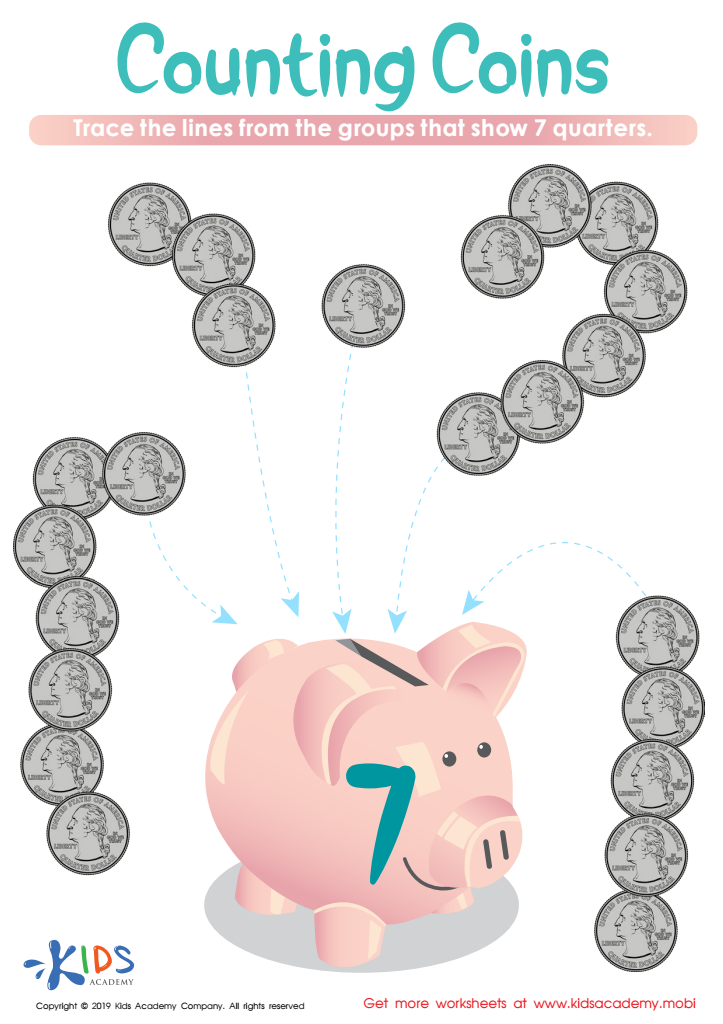
Counting Coins Worksheet
 Assign to My Students
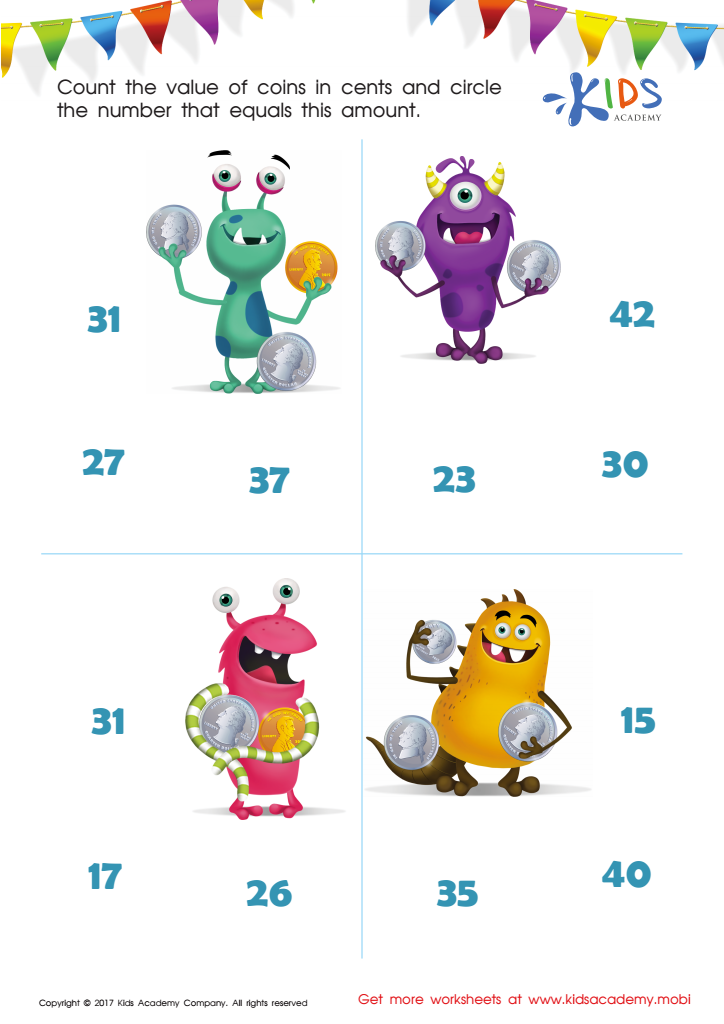
How Many Coins Money Worksheet
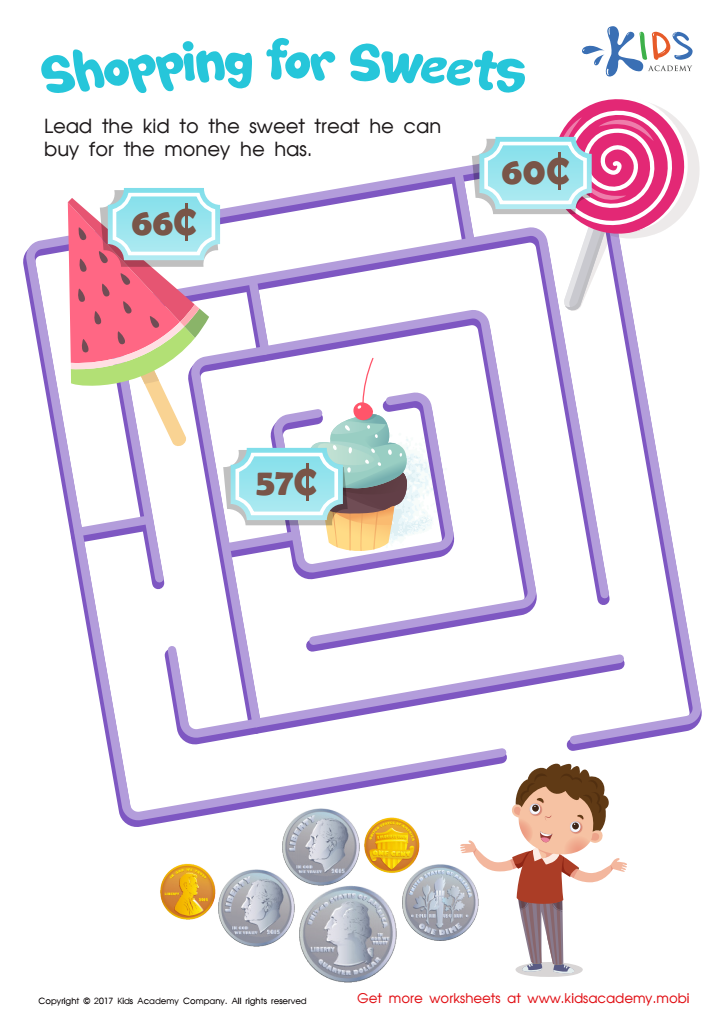
Shopping for Sweets Worksheet








Developing addition skills and understanding money at an early age is crucial for young children, aged 4-8. These foundational skills underpin numerous aspects of a child's future academic and everyday life success.
Firstly, addition is a fundamental part of math, which in turn is essential for problem-solving and logical thinking. By mastering addition early, children build confidence in their abilities to handle more complex math concepts down the line.
Secondly, understanding money introduces children to practical, real-world applications of math. It helps them grasp the value of different coins and bills, perform basic transactions, and understand the concept of saving and spending—all critical life skills.
Moreover, financial literacy can promote responsible future spending habits. By knowing how to add and manage money, children learn the importance of budgeting and making informed financial decisions. This foundational knowledge encourages prudence and planning from an early age.
Parents and teachers also benefit, as they equip children with essential skills that ease academic teaching and foster independence. Early competence in addition and money not only supports school readiness but also contributes to a child's subsequent personal responsibility and financial well-being.
Ultimately, fostering these skills prepares children for a lifetime of smart financial decisions and analytical thinking, making them an invaluable part of early childhood education.








