Categorization skills Geometry Worksheets for Ages 4-8
6 filtered results
-
From - To
Unlock the potential of young minds with our "Categorization Skills Geometry Worksheets" designed for ages 4-8. These engaging and educational worksheets help children master fundamental geometry concepts by categorizing shapes, recognizing patterns, and sorting objects. They'll enhance critical thinking, boost problem-solving abilities, and cultivate an early interest in mathematics. Our printable resources offer a mix of fun activities and challenges to support diverse learning styles, ensuring kids stay motivated and eager to explore. Perfect for both classroom and home use, these worksheets lay a strong foundation for future geometric understanding and academic success. Explore now for endless learning fun!
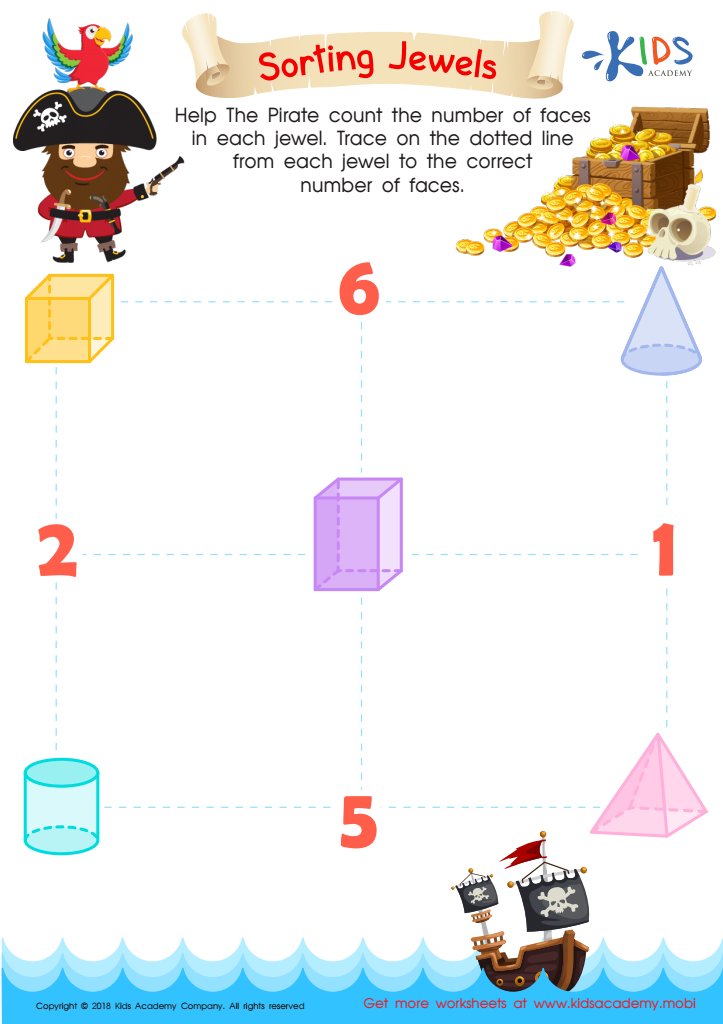
Sorting Jewels Worksheet
 Assign to My Students











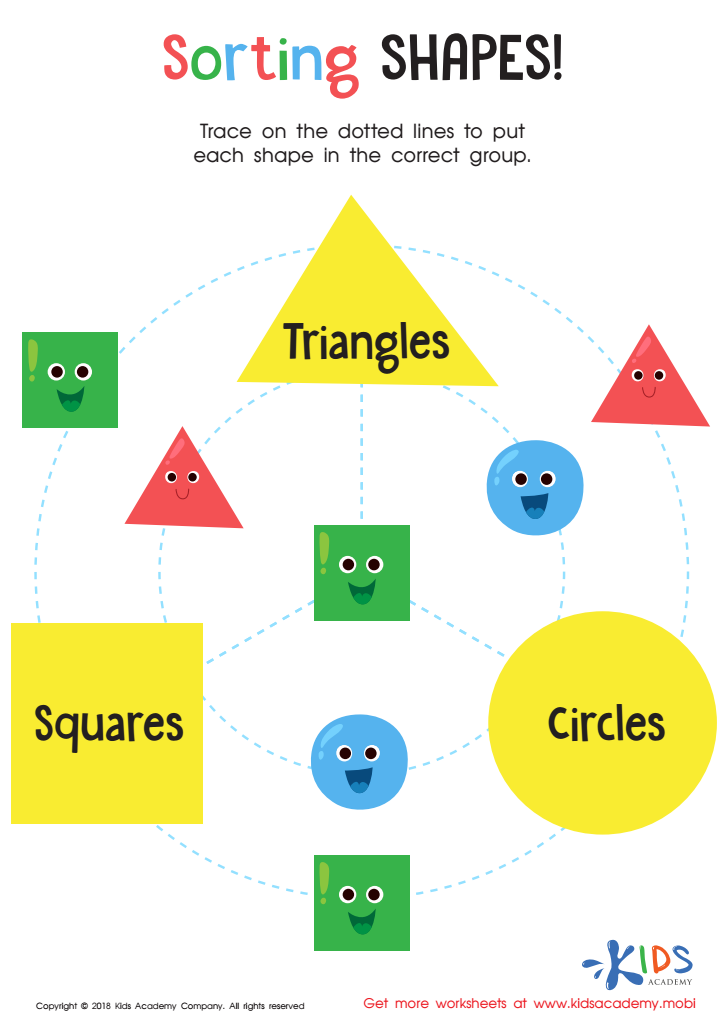
Sorting Shapes - Part 3 Worksheet
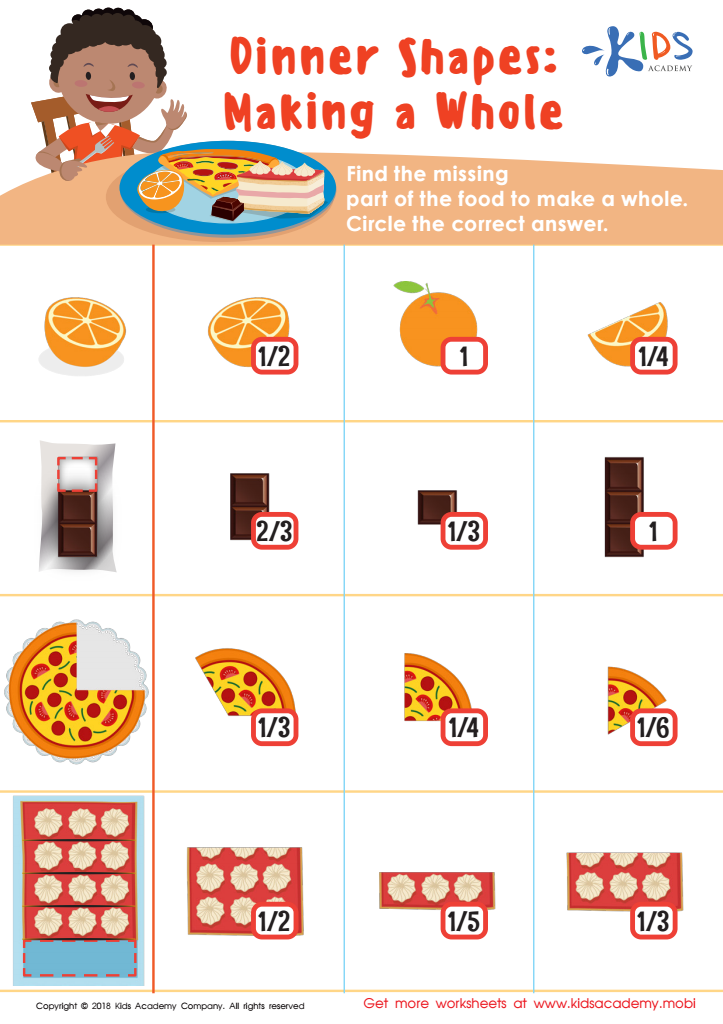
Dinner Shapes: Making a Whole Worksheet
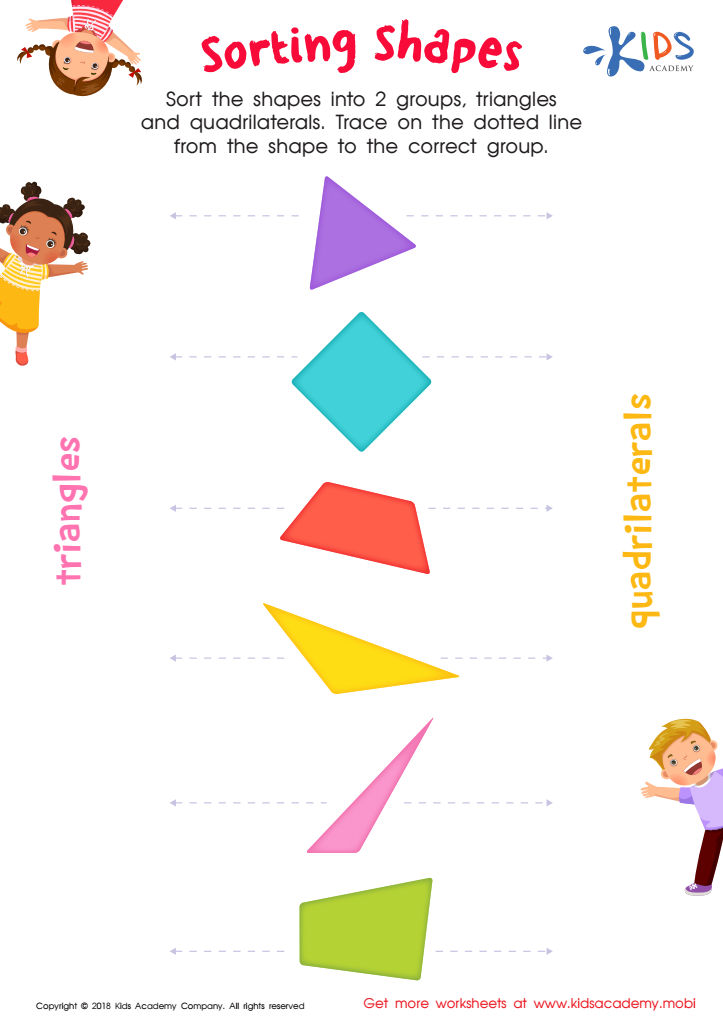
Sorting Shapes Worksheet
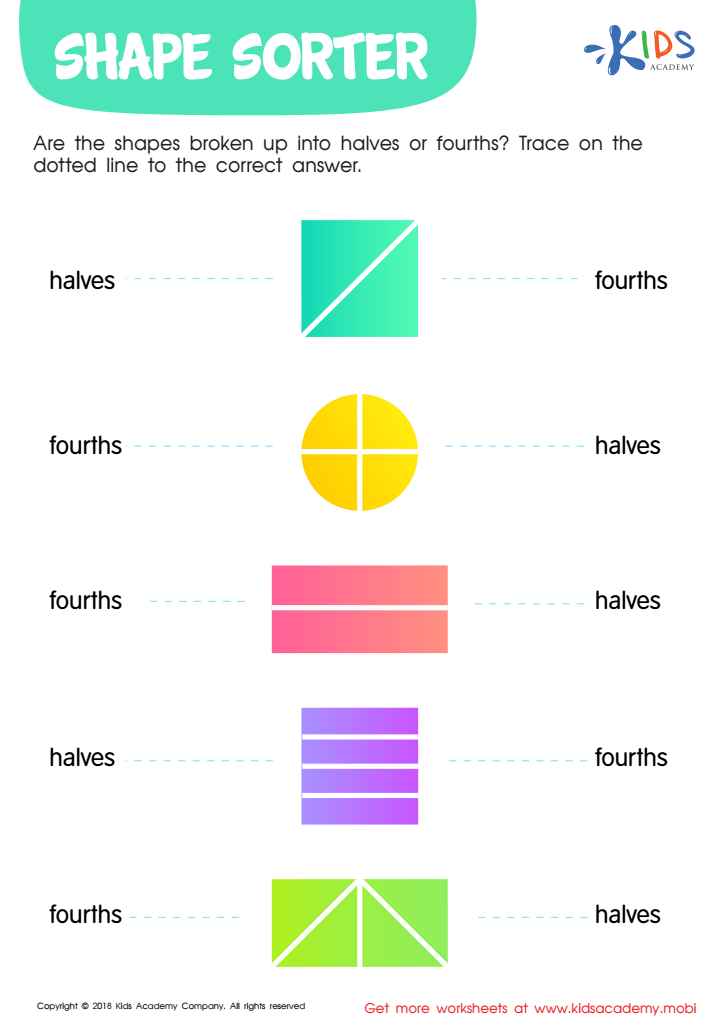
Shape Sorter Worksheet
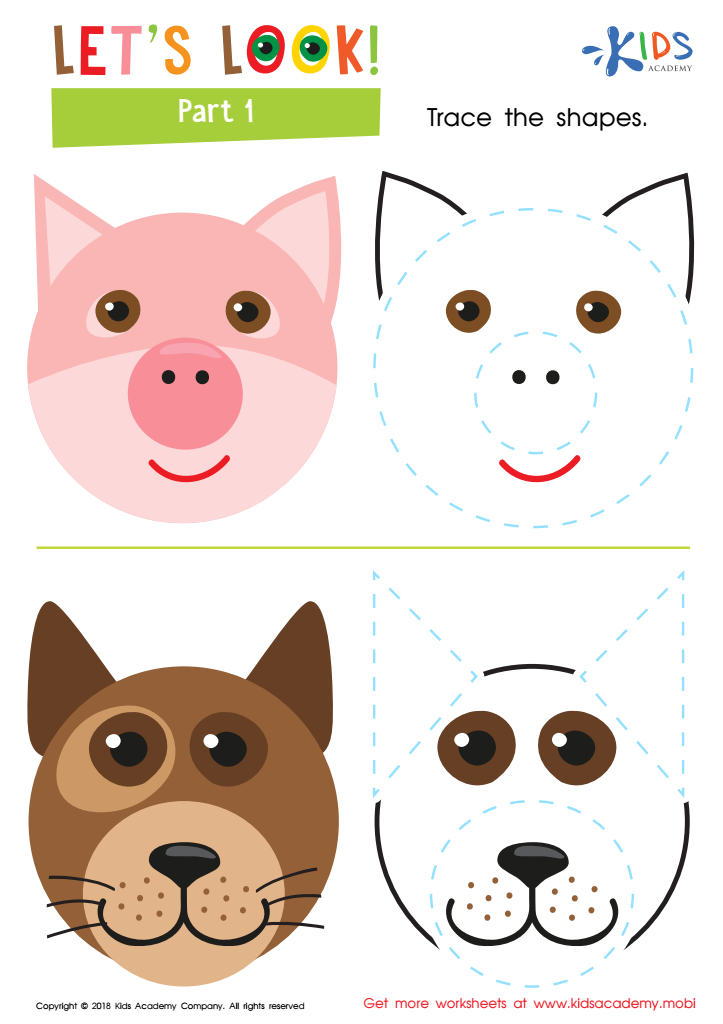
Let's Look! Part 1 Worksheet








Parents and teachers should prioritize developing categorization skills in geometry for children aged 4-8 because these skills form the foundation for more advanced mathematical reasoning and problem-solving abilities. At this critical stage of cognitive development, youngsters are naturally curious and their brains are highly adaptable, making it an ideal period to introduce basic geometric concepts.
Categorization skills in geometry involve recognizing, sorting, and grouping shapes based on their attributes, such as the number of sides, angles, and other geometric properties. This helps children to develop critical thinking skills and an analytical mindset, as they learn to observe, compare, and differentiate between various shapes.
Furthermore, strong categorization skills are essential for understanding more complex mathematical concepts later on, such as symmetry, fractions, and spatial awareness. Encouraging these skills early on also supports broader educational objectives, such as language development, since children learn specific terminology related to shapes and their properties.
Incorporating fun, hands-on activities to teach these concepts can foster a love for learning and build confidence in young students. Consequently, focusing on categorization skills in geometry not only aids in their immediate educational growth but also paves the way for future academic success across multiple disciplines. This holistic approach enhances both cognitive and socio-emotional development, ensuring balanced and well-rounded progress.








