Color differentiation Geometry Worksheets for Ages 4-8
3 filtered results
-
From - To
Discover the vibrant world of shapes and colors with our Color Differentiation Geometry Worksheets designed for children ages 4-8! These engaging and interactive worksheets not only foster an understanding of basic geometric concepts but also enhance color recognition skills. Each activity is crafted to captivate young learners, making the learning process enjoyable and effective. With a variety of fun exercises, children will explore different shapes while developing critical thinking and fine motor skills. Perfect for home or classroom use, these worksheets provide a seamless blend of color differentiation and geometry, setting the foundation for future learning in math and beyond!
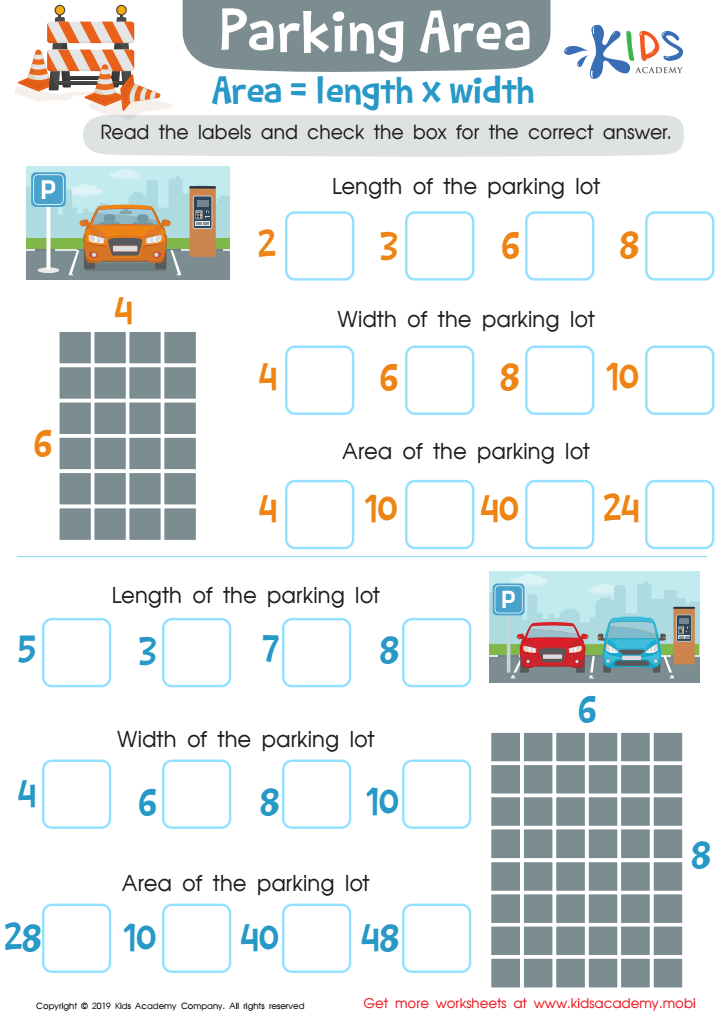
Parking Area Worksheet
 Assign to My Students











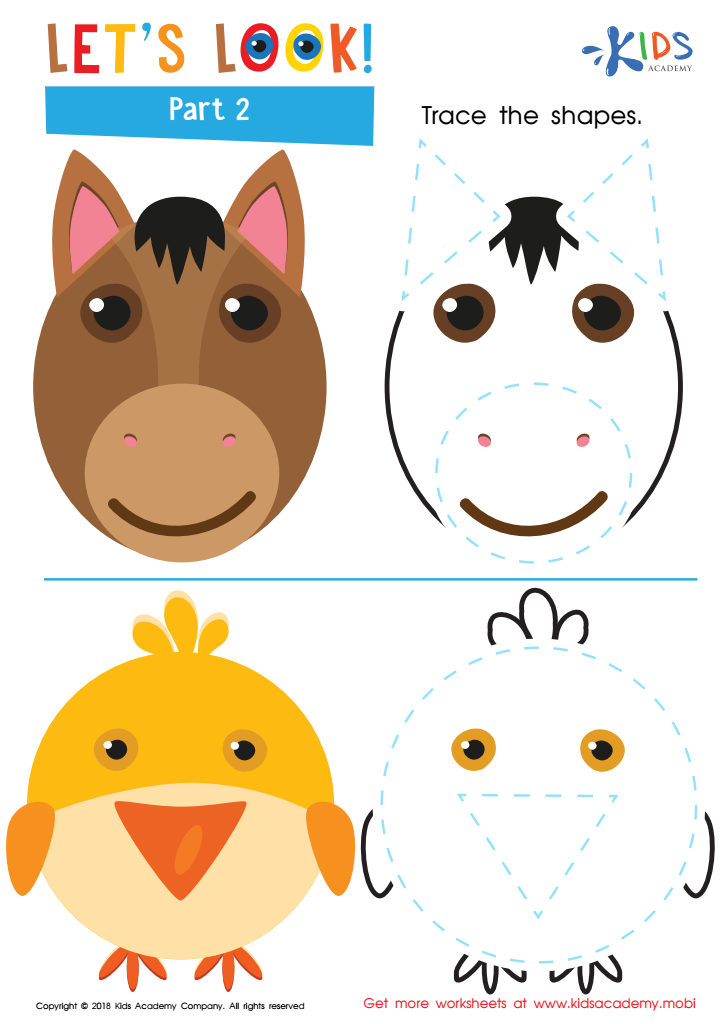
Let's Look! Part 2 Worksheet
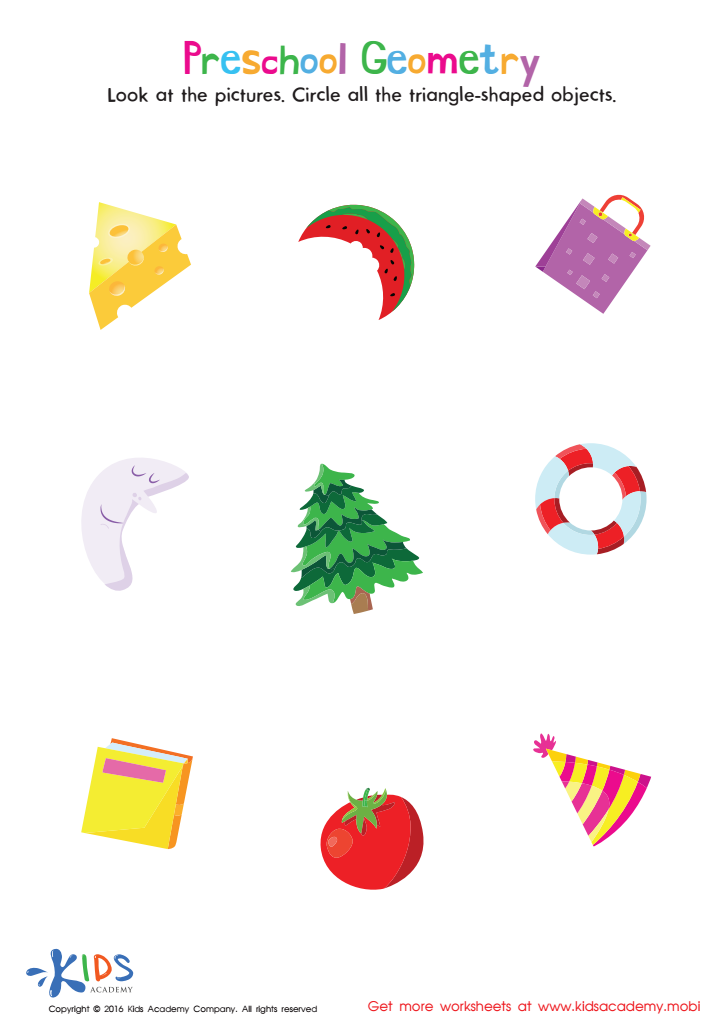








Color differentiation in geometry is vital for children aged 4-8 as it enhances their cognitive development and spatial awareness. At this young age, students are naturally drawn to colors, which can be effectively used to teach geometrical shapes and concepts. Using different colors helps children distinguish between shapes such as squares, circles, and triangles, promoting better recognition and memory retention.
Moreover, color differentiation stimulates sensory development. It allows children to engage both visually and cognitively, making learning more enjoyable and effective. When parents and teachers integrate color as a learning tool, they can create an enriched educational experience that encourages exploration and creativity.
Understanding shape and color relationships lays the foundation for more complex mathematical concepts. Teaching these early skills prepares children for future learning and problem-solving, contributing to a solid math literacy. Furthermore, recognizing and categorizing shapes based on color helps foster critical thinking and classification skills.
In a classroom or at home, opportunities to incorporate colored geometric activities—like sorting shapes or creating art with colored paper—make learning interactive. Engaging with geometry through color is instrumental in building confident learners who view mathematics as a fun and accessible subject.








