
Color recognition Geometry Worksheets for Ages 4-8
5 filtered results
Difficulty Level
Grade
Age
-
From - To
Subject
Activity
Standards
Introducing our vibrant Color Recognition Geometry Worksheets for ages 4-8, designed to make learning fun and engaging! These printable worksheets feature colorful shapes and geometric patterns that help young learners identify and distinguish different colors while also exploring basic geometric concepts. Ideal for preschool and early elementary students, our activities enhance fine motor skills, attention to detail, and cognitive development. Through interactive exercises and creative tasks, children will delight in discovering the world of colors and shapes. Spark your child's interest in math and art today with these expertly crafted educational resources from Kids Academy!
Favorites
With answer key
Interactive
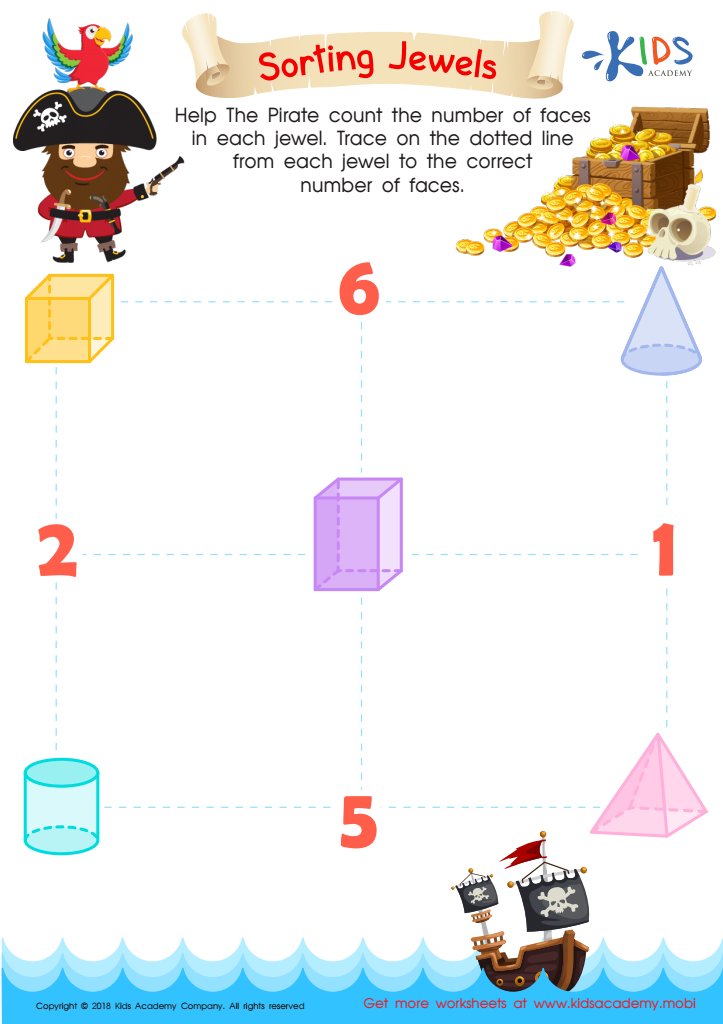
Sorting Jewels Worksheet
Help your kids explore their pirate fantasies with this tracing sheet. Ask them to count the number of faces in each jewel and then trace the dotted line to the correct number. How many faces does a rectangle have? What about a triangle and a cone? This fun worksheet is a great way to teach your kids the basics of identifying the number of faces on shapes.
Sorting Jewels Worksheet
Worksheet











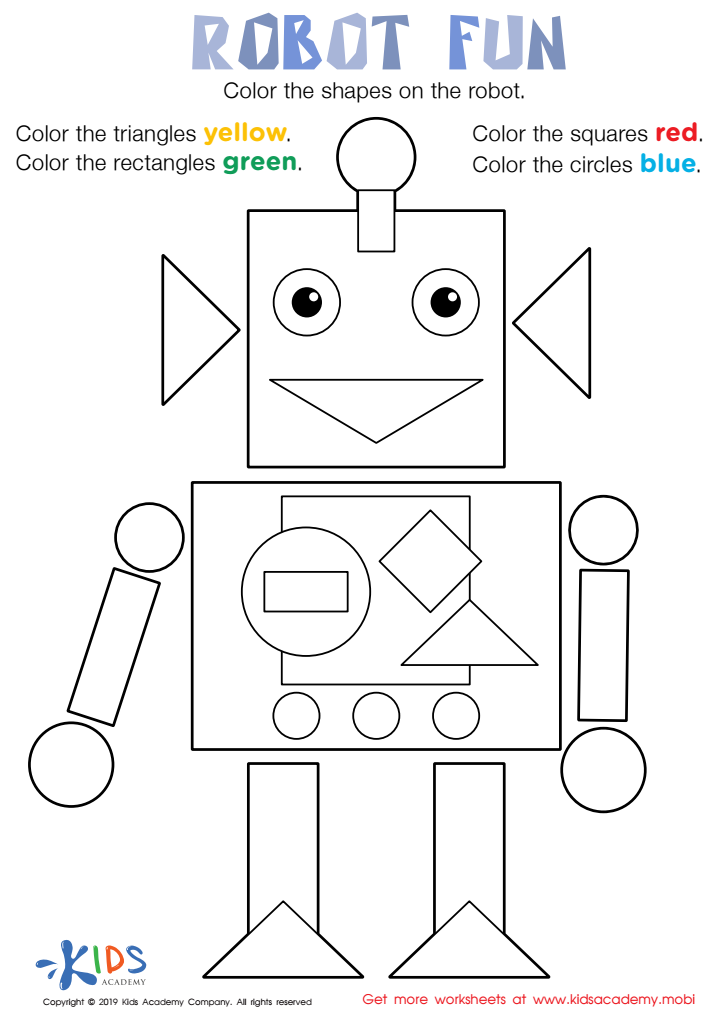
Robot Fun Worksheet
Help your child learn about basic shapes with this fun robot worksheet! Kids practice identifying circles, squares, rectangles and triangles, then color each shape according to directions. Make math practice enjoyable with this coloring page that teaches all four basic shapes - it's an important math skill!
Download (PDF)
 Assign to My Students
Assign to My Students
Robot Fun Worksheet
Worksheet
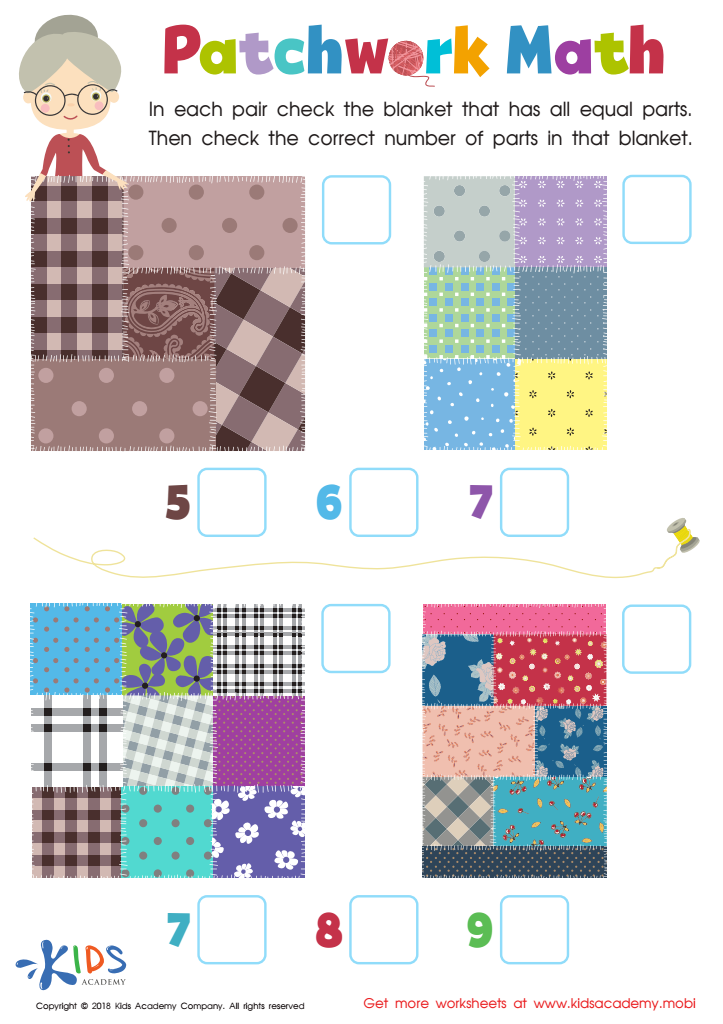
Patchwork Math Worksheet
Test your children's knowledge with this colorful worksheet. They'll need to identify which of the blanket pairs have been cut in equal parts and count the number of parts. Check the provided options to ensure the correct answer.
Patchwork Math Worksheet
Worksheet
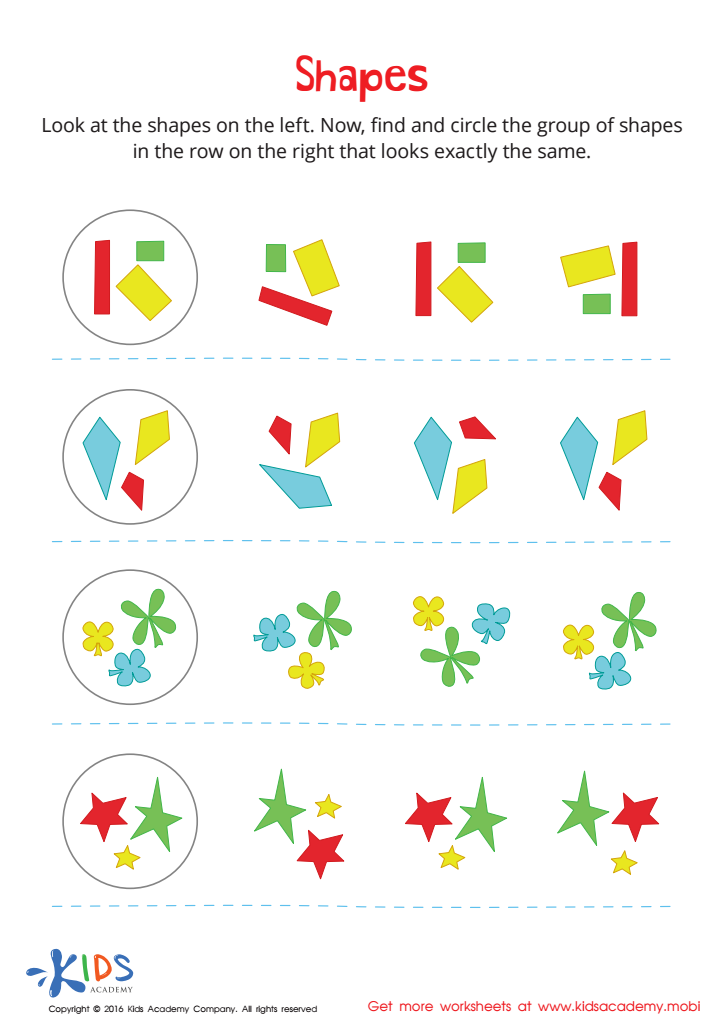
Shapes Worksheet
This fun worksheet will challenge your child to recognize tricky patterns, sort through similar ones, and create strategies to get the right answer. It'll also help them to strengthen problem-solving skills and build confidence. With more challenging tasks, your child will be ready to tackle higher level math and sequencing skills.
Shapes Worksheet
Worksheet
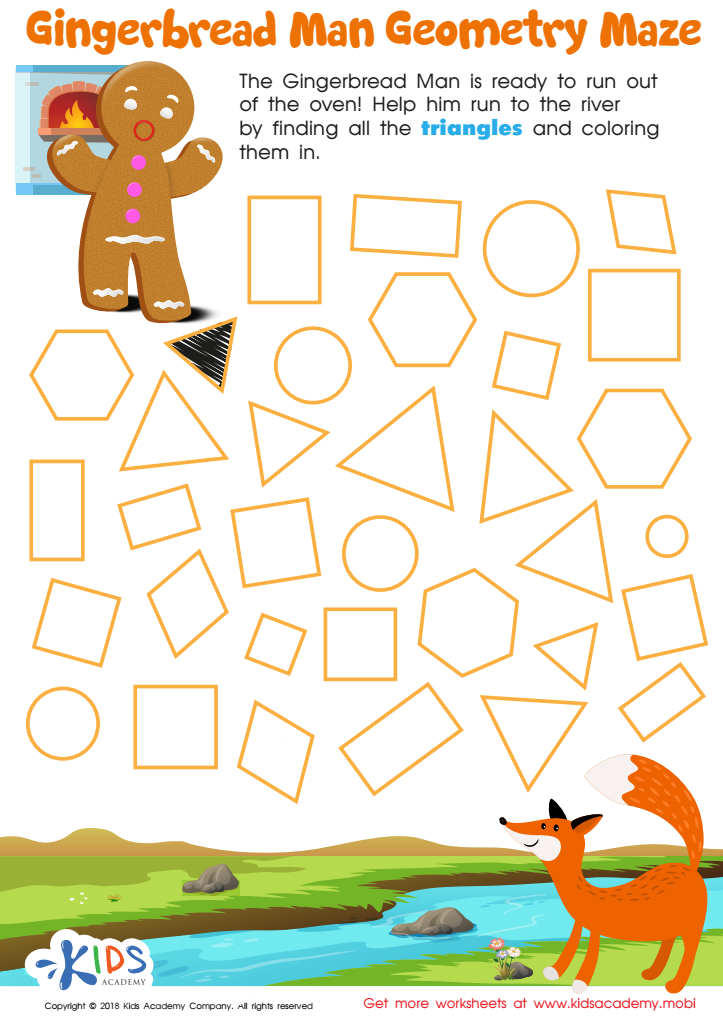
Gingerbread Man Geometry Maze Worksheet
Help a beloved character escape the oven! Kids race through a sea of geometrical shapes, searching for triangles of various sizes. With this free worksheet, they can have fun while learning about similarity of geometrical shapes concepts. Run, run, run as fast as they can!
Gingerbread Man Geometry Maze Worksheet
Worksheet
Join Kids Academy for Free
Who is primarily going to use this learning content?








Color recognition and basic geometry are foundational skills that serve as crucial building blocks in early childhood development. For children aged 4-8, mastering these concepts aids in enhancing both cognitive abilities and practical skills.
First, learning colors helps to improve language and communication proficiency. By recognizing and naming different colors, children expand their vocabulary and ability to describe the world around them. This skill is vital for effective interaction with peers and adults.
Geometry introduces children to shapes, patterns, and spatial reasoning. Recognizing and understanding shapes such as circles, squares, and triangles boost visual-spatial intelligence, which is essential for problem-solving and logical thinking. These skills are not only fundamental in math but also apply to other disciplines like science, technology, and even art.
Additionally, color recognition and geometry have significant social and emotional benefits. Participating in activities that include sorting shapes and colors can build confidence and foster independence. They also improve fine motor skills and hand-eye coordination through activities like drawing, cutting, and building.
Incorporating color and geometry into play and learning environments makes the educational process engaging and enjoyable. Parents and teachers who prioritize these skills are setting up children for academic success and aiding in their overall development, preparing them for more complex concepts and real-world applications in the future.








