Reading comprehension Geometry Worksheets for Ages 4-8
7 filtered results
-
From - To
Discover the perfect blend of math and literacy with our Reading Comprehension Geometry Worksheets for ages 4-8. These educational resources are designed to enhance both geometric understanding and reading skills concurrently. Kids will engage in exciting activities that introduce shapes, patterns, and spatial reasoning, while simultaneously strengthening their ability to comprehend written instructions and stories. Ideal for young learners, our well-crafted worksheets aim to make learning interactive and enjoyable. Empower your child's educational journey with tools that foster critical thinking and a love for both numbers and words. Explore our collection and watch your child's confidence and knowledge grow!
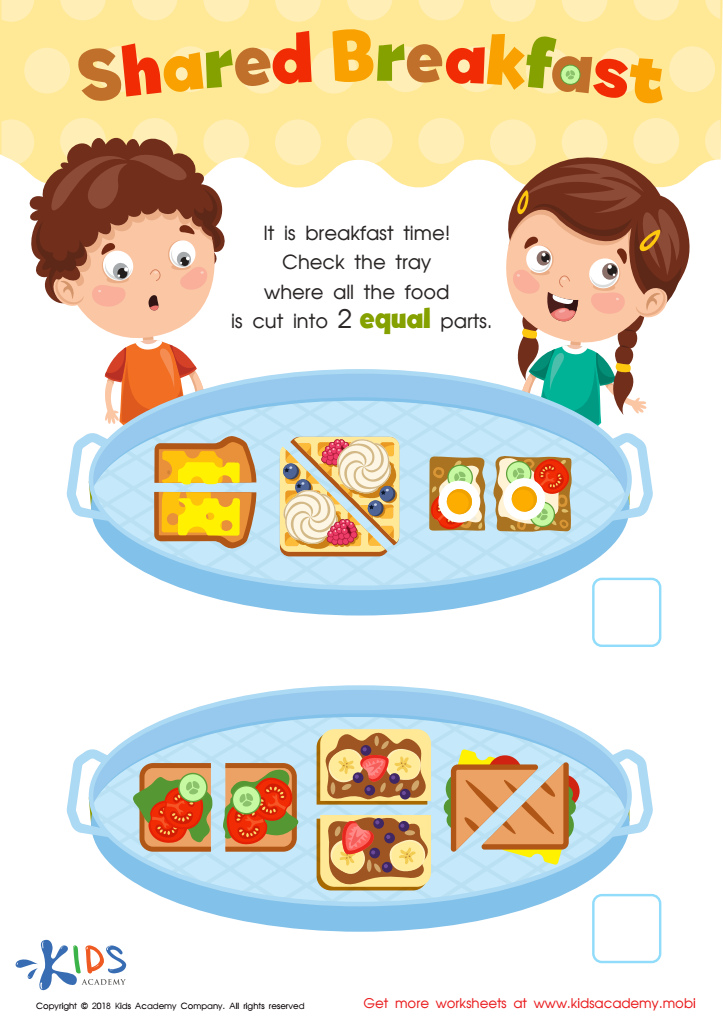
Shared Breakfast Worksheet
 Assign to My Students











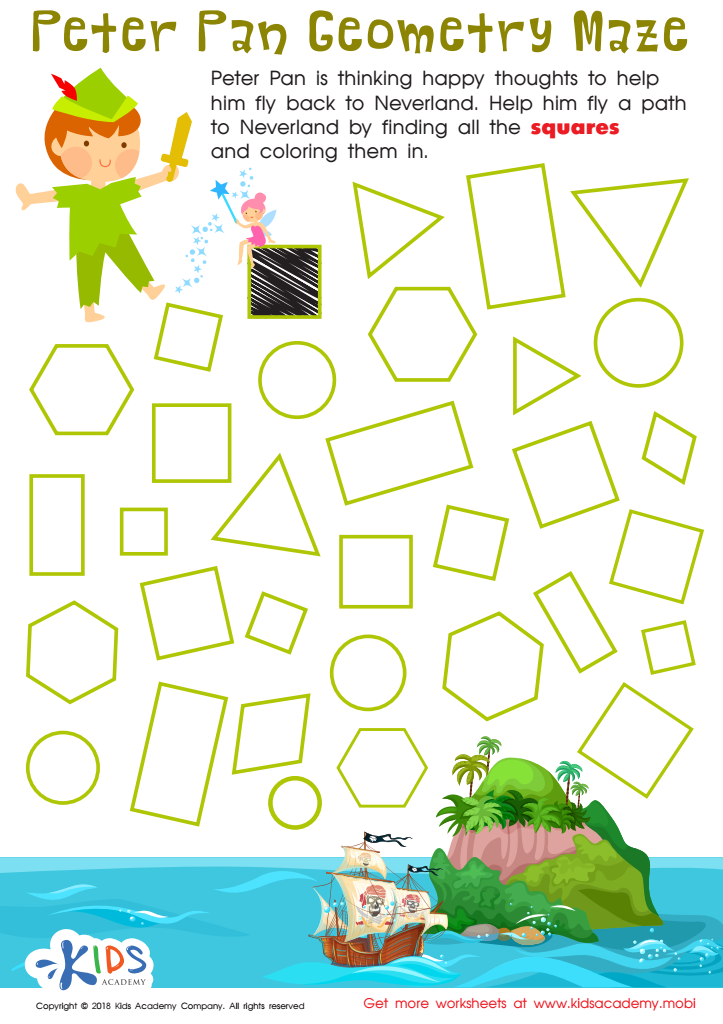
Peter Pan Worksheet
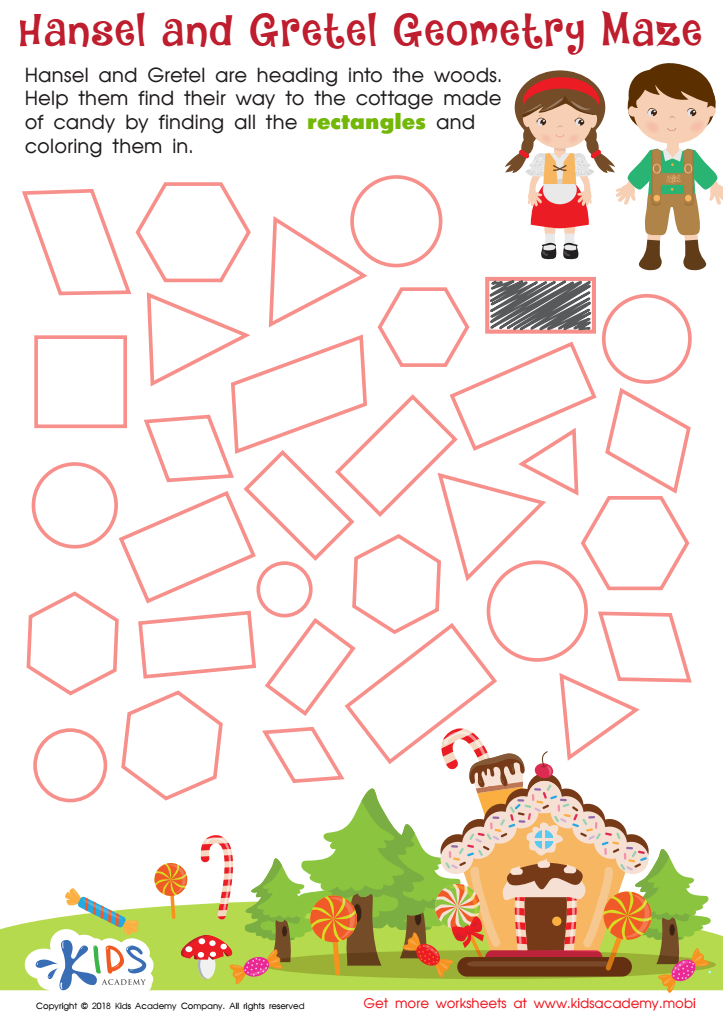
Hansel and Gretel Geometry Maze Worksheet
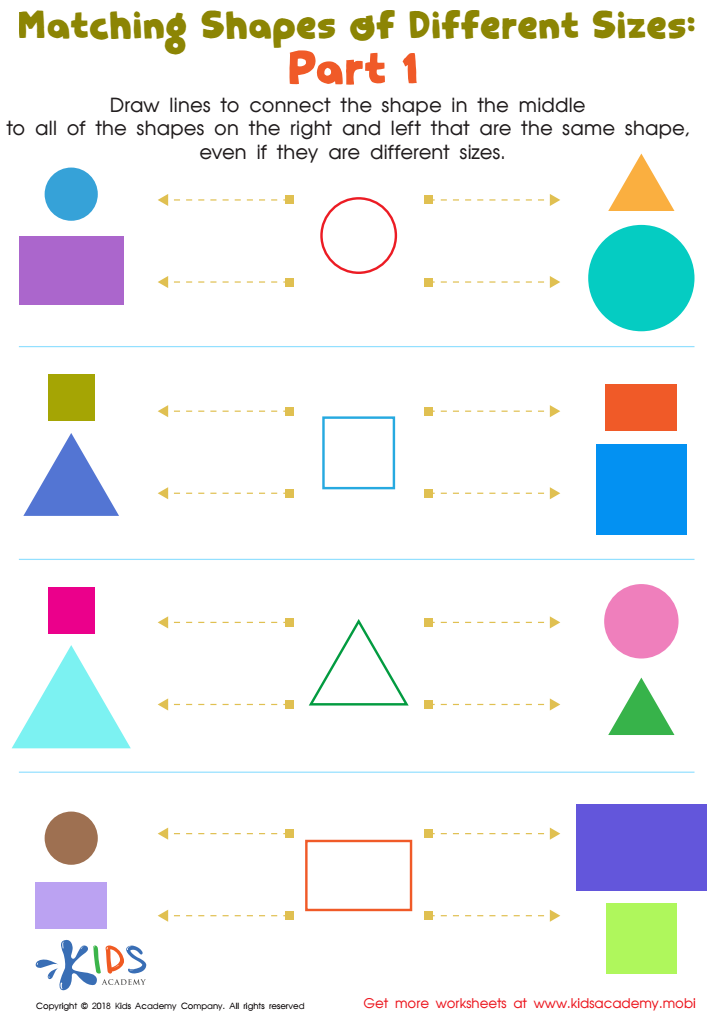
Geometry: part 1 Worksheet
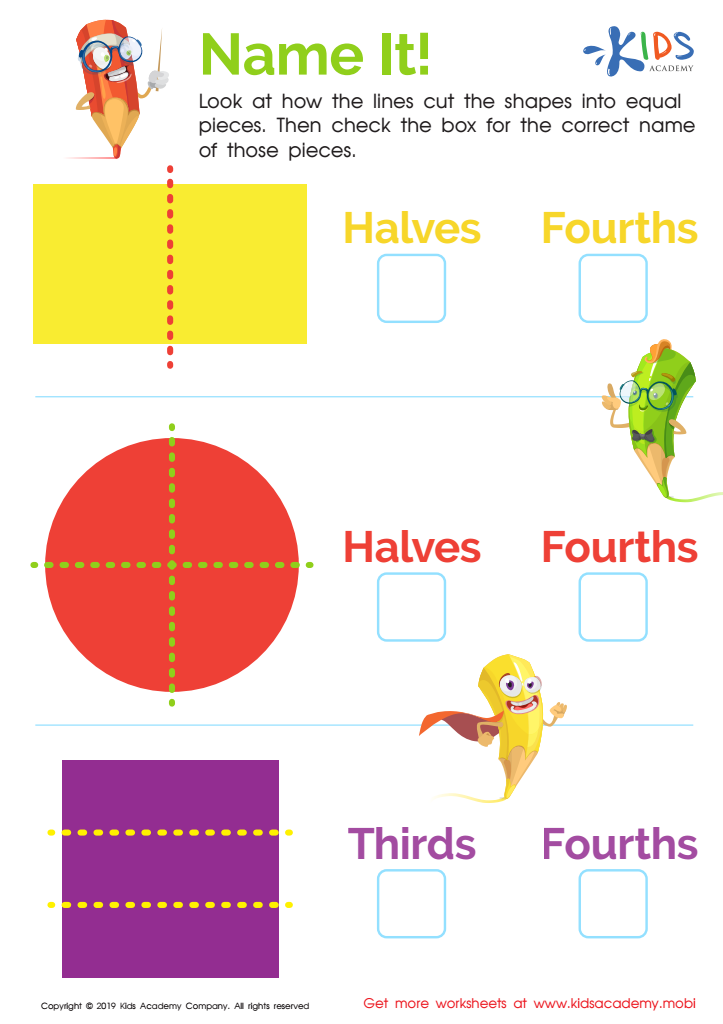
Name It! Worksheet
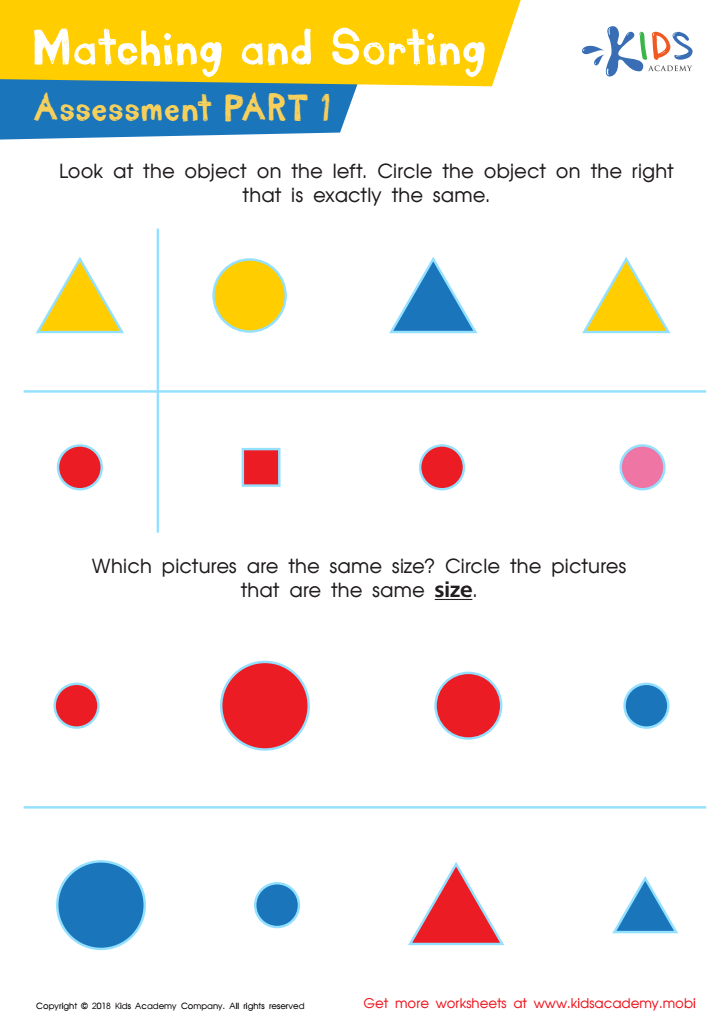
Matching and Sorting for Kindergarten: Assessment 1 Worksheet
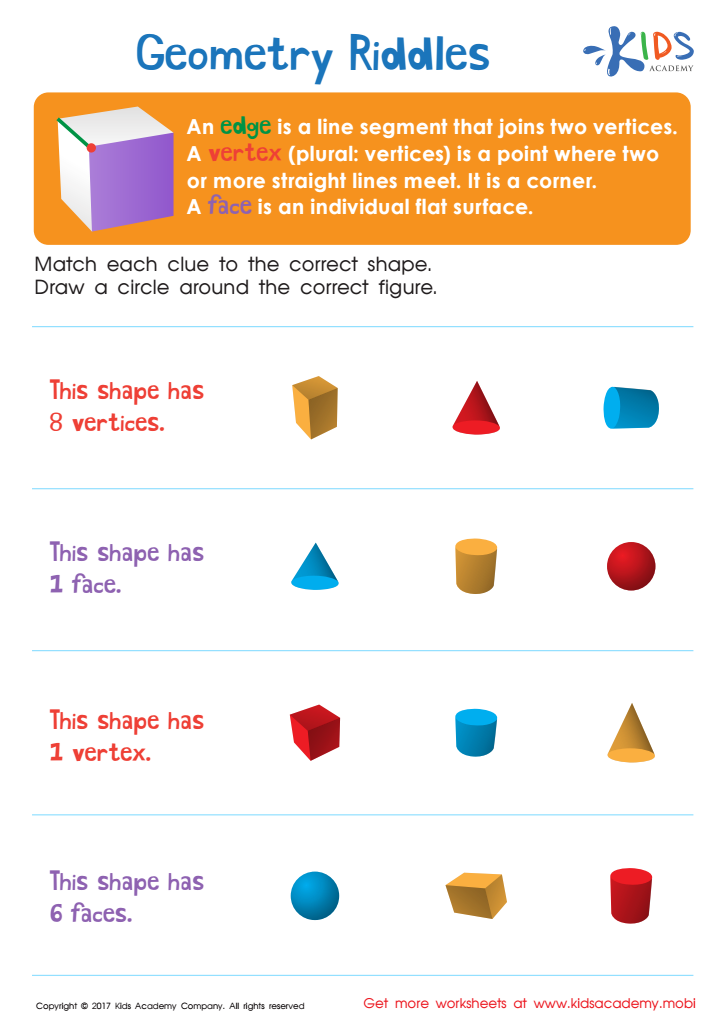
Geometry Riddles Printable








Reading comprehension and geometry might seem distinct, but both are crucial for young learners ages 4-8. Developing reading comprehension at an early age allows children to understand and derive meaning from text, building a foundation for future learning across all subjects. This skill nurtures curiosity, improves vocabulary, and enhances cognitive abilities, giving children the confidence and tools to explore new ideas.
Geometry, while often associated with higher grades, introduces essential spatial reasoning skills early on. When children grasp basic geometric concepts, they learn to identify shapes, understand spatial relationships, and recognize patterns. These skills are interconnected with everyday problem-solving and logic, supporting mathematical and critical thinking development.
Integrating these subjects cultivates well-rounded learners. For instance, when children read stories about shapes or follow instructions to construct objects, they engage both their comprehension and geometric understanding. Teachers and parents should care about this integration because it aids brain development, providing children with a multifaceted approach to learning.
Focusing on reading comprehension and basic geometry together ensures that children build a stable, interwoven foundation for learning, empowering them to excel both academically and in life. Thus, fostering these skills should be a priority during the formative years of education.








