Sorting skills Geometry Worksheets for Ages 4-8
5 filtered results
-
From - To
Enhance your child's sorting skills with our engaging Geometry Worksheets designed for ages 4-8! These worksheets provide a fun and interactive way for young learners to explore shapes, sizes, and colors while practicing their sorting abilities. Through a variety of exercises, kids will identify, categorize, and compare geometric figures, laying a strong foundation for critical thinking and organizational skills. Our user-friendly format keeps learning exciting, ensuring that educational activities are both enjoyable and effective. Perfect for homeschooling or classroom use, these printable worksheets help children develop essential skills in a playful environment. Start sorting and watching your child thrive today!
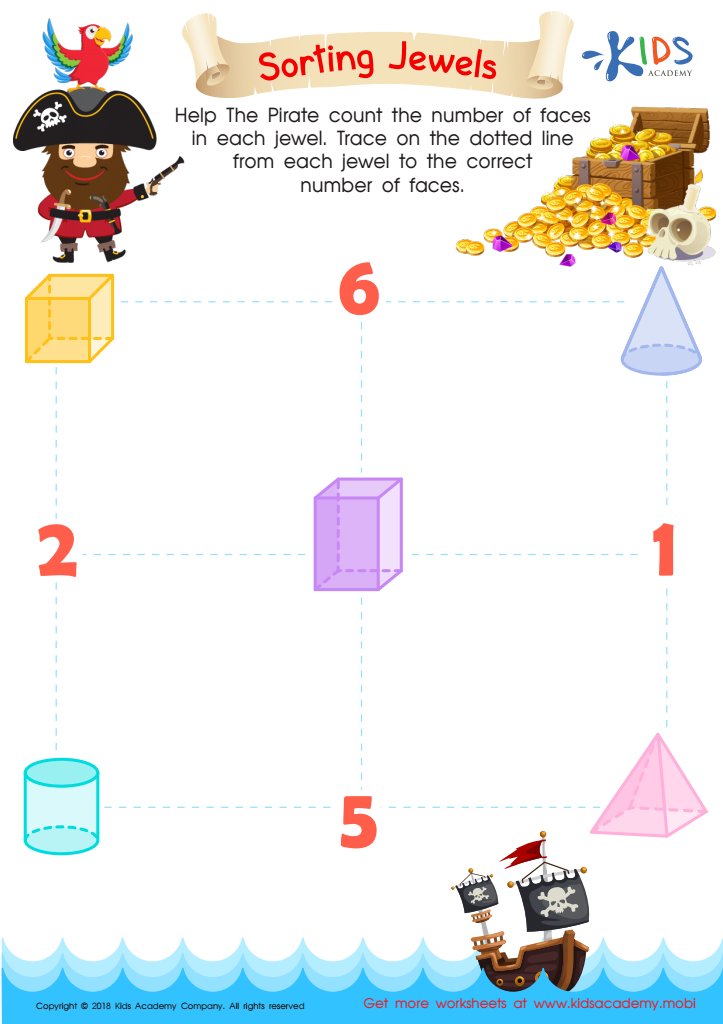
Sorting Jewels Worksheet
 Assign to My Students











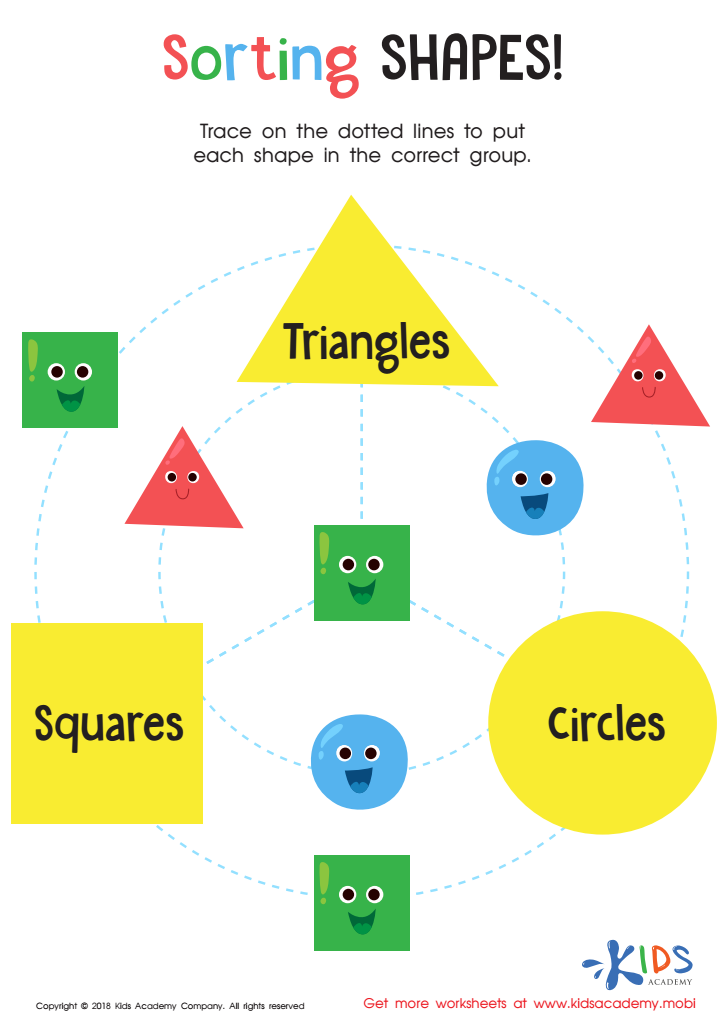
Sorting Shapes - Part 3 Worksheet
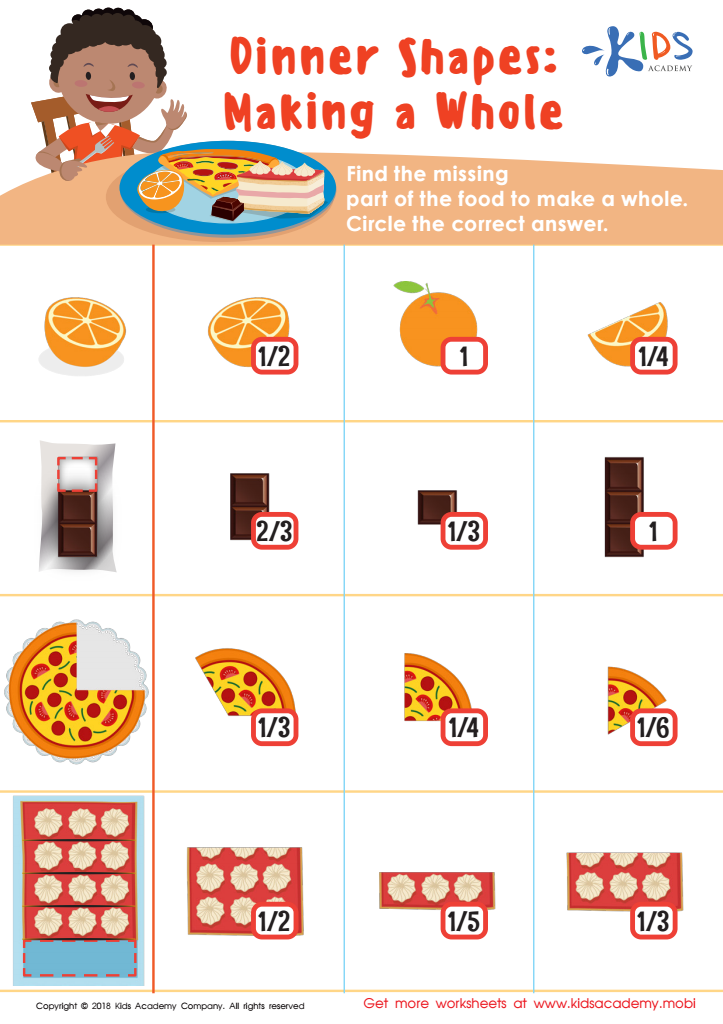
Dinner Shapes: Making a Whole Worksheet
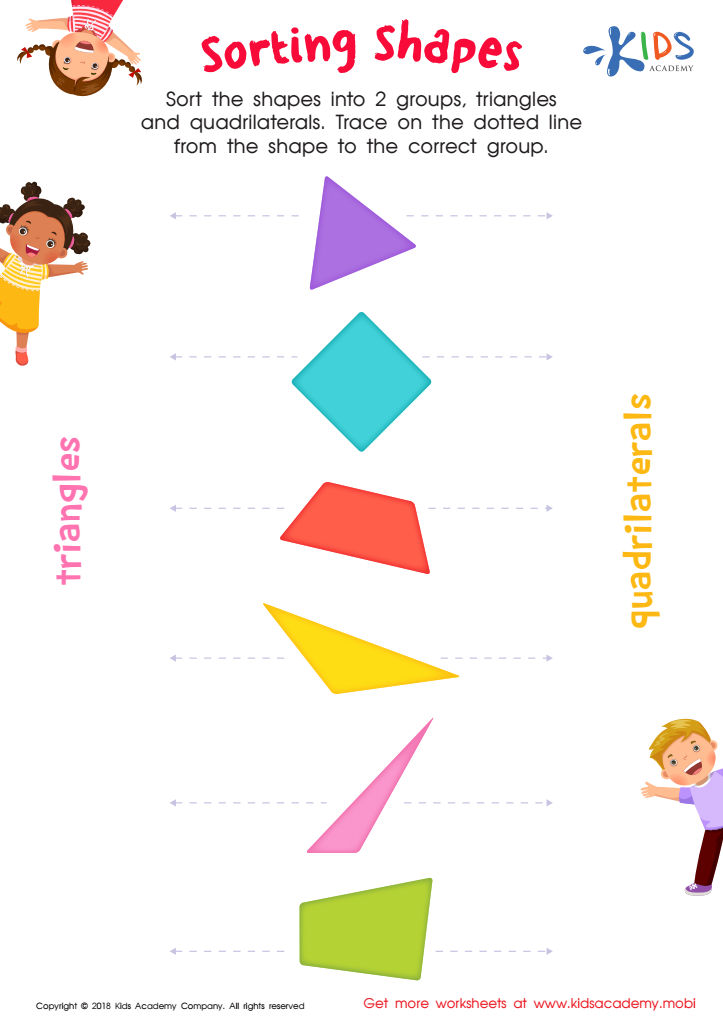
Sorting Shapes Worksheet
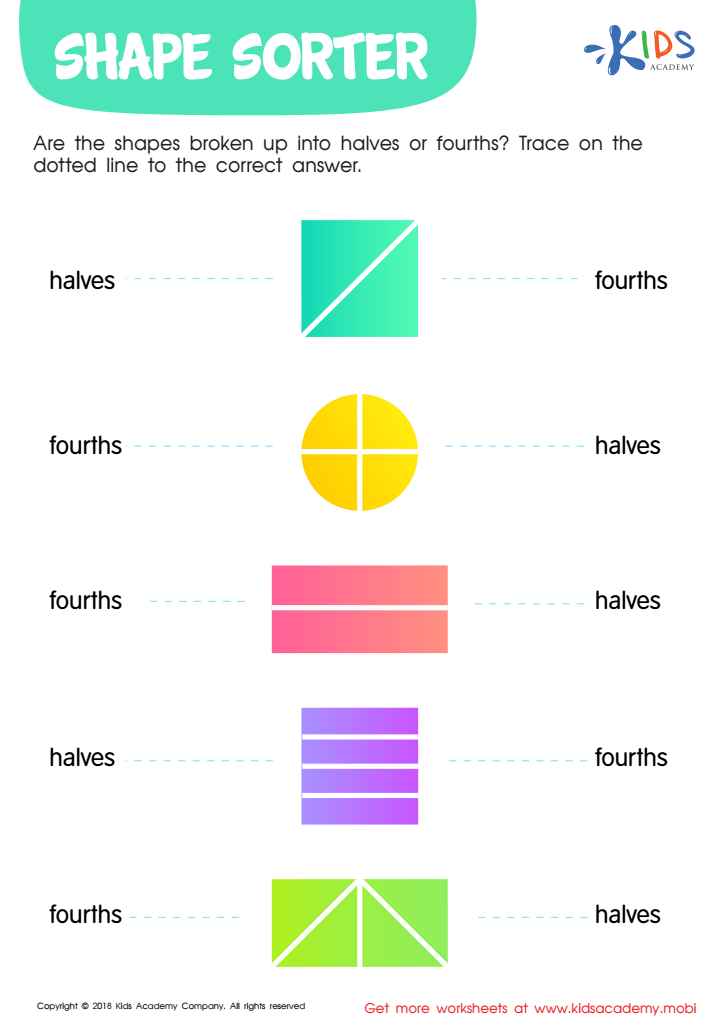
Shape Sorter Worksheet








Sorting skills in geometry are essential for children aged 4-8 as they form the foundation for critical thinking, problem-solving, and the ability to organize information effectively. At this stage, children are naturally curious and motivated to learn about their environment. By focusing on sorting geometric shapes based on characteristics such as size, color, and shape, educators and parents can help children develop cognitive skills that enhance their understanding of mathematics and spatial awareness.
Sorting fosters analytical thinking, allowing children to categorize and differentiate objects, which is a vital skill in both math and everyday life. By engaging in sorting activities, children also improve their hand-eye coordination and fine motor skills. Moreover, these activities encourage language development, as children articulate their reasoning and communicate their sorting criteria.
Incorporating sorting skills through playful activities—like games involving blocks, puzzles, or craft projects—makes learning enjoyable and positions children to build foundational skills for future mathematics concepts. This early exposure lays the groundwork for more complex topics, like geometry and data analysis, ensuring children have the necessary tools to succeed academically. Ultimately, sorting skills contribute significantly to a child's overall cognitive development, making them vital for parents and teachers to prioritize.








