Spatial Orientation Geometry Worksheets for Ages 4-8
3 filtered results
-
From - To
Unlock your child's potential with our "Spatial Orientation Geometry Worksheets for Ages 4-8" from Kids Academy. Designed to boost essential skills, these worksheets offer fun and engaging activities that help young learners understand spatial relationships, improve problem-solving abilities, and enhance critical thinking. Perfect for preschoolers and early elementary students, each worksheet is crafted to meet educational standards while stimulating curiosity and creativity. Dive into a world of shapes, angles, and patterns, guiding children through interactive exercises that strengthen foundational geometry knowledge. Equip your little ones with the tools for future success in math and beyond!
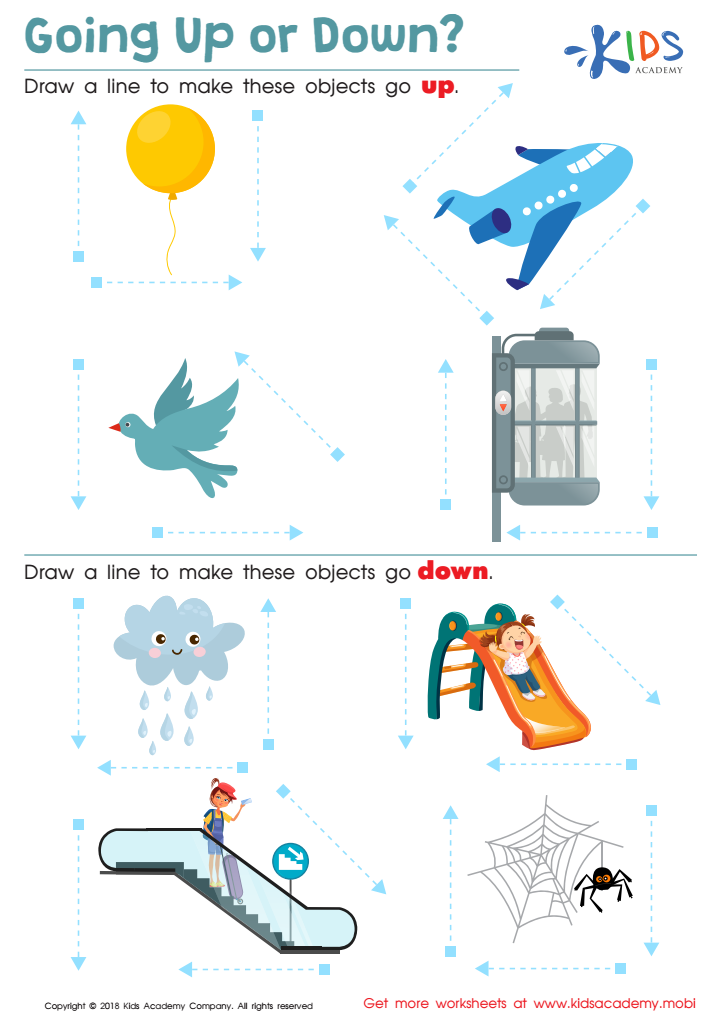
Going up or Down? Worksheet
 Assign to My Students











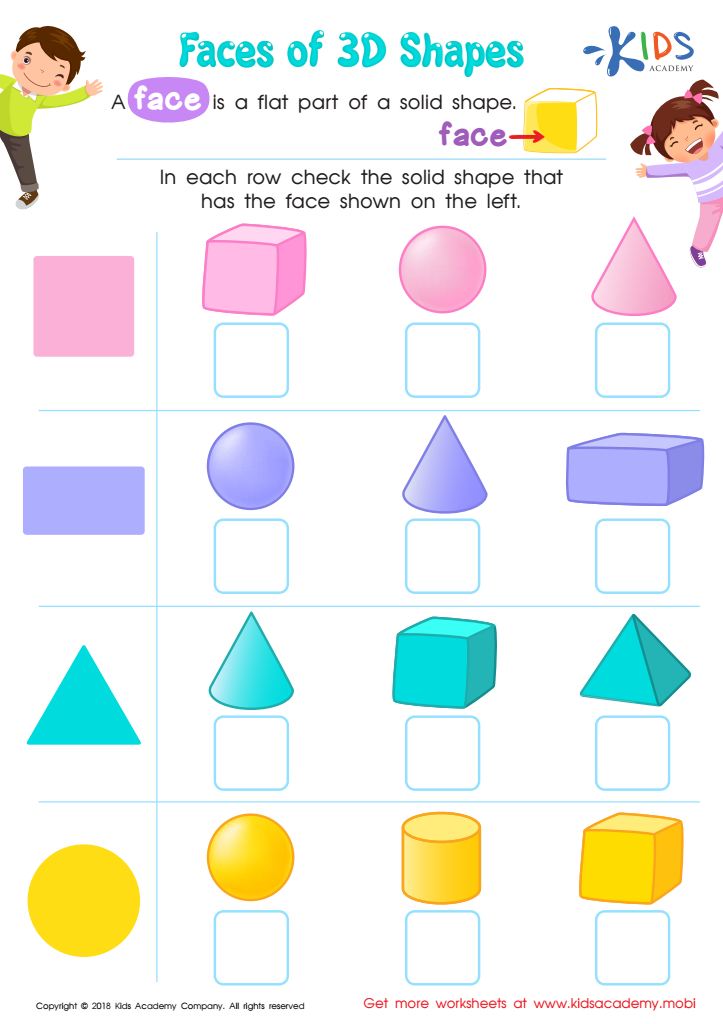
Faces of 3D Shapes Worksheet
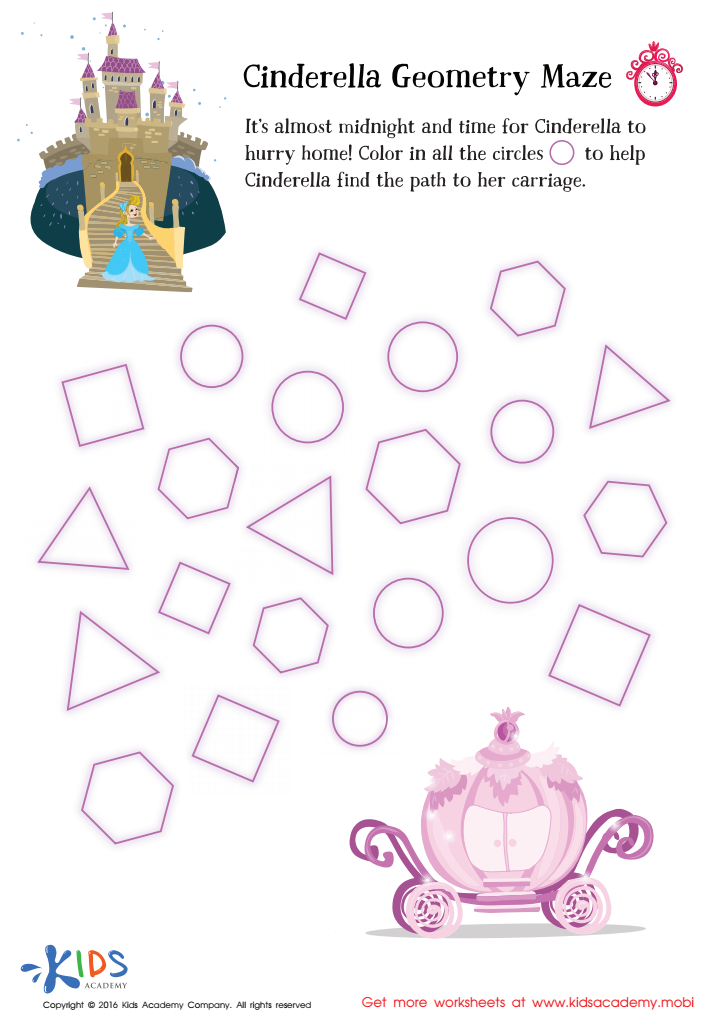
Cinderella Geometry Maze Worksheet








Spatial orientation geometry is essential for young children’s cognitive development. For ages 4-8, understanding this concept enhances their ability to comprehend and navigate the physical world around them. Parents and teachers should care about fostering these skills because early mastery of spatial orientation aids in the development of problem-solving abilities and critical thinking.
Firstly, spatial orientation lays the groundwork for mathematics and science. Comprehending shapes and their positions improves a child's ability to grasp more complex mathematical concepts like geometry, measurement, and data visualization. A strong sense of spatial orientation can make learning more advanced topics less intimidating and more intuitive later on.
Secondly, these skills are vital for everyday functioning. Tasks such as following directions, reading maps, and understanding the relationship between objects are significantly easier with a good grasp of spatial orientation. Children who excel in these skills tend to have better coordination, which is beneficial for physical activities and sports.
Lastly, fostering spatial orientation can contribute to a child’s creativity. Engaging in activities like building blocks, puzzles, and drawing helps children develop a sense of design and engineering, potentially sparking interest in related fields.
By valuing and promoting spatial orientation geometry, parents and teachers support holistic child development, making it crucial for both academic and real-world success.








