Problem-Solving Skills Graphs Worksheets for Ages 4-8
4 filtered results
-
From - To
Enhance your child's critical thinking with our engaging Problem-Solving Skills Graphs Worksheets tailored for ages 4-8. These printable resources from Kids Academy are designed to introduce young learners to graphing concepts through fun, educational activities. Each worksheet focuses on developing essential problem-solving skills, helping kids analyze data, identify patterns, and make informed decisions. With colorful visuals and interactive tasks, these worksheets are perfect for both classroom use and at-home practice, providing a strong foundation in math and logical reasoning. Give your child the tools they need to succeed with our expertly crafted graphing worksheets.
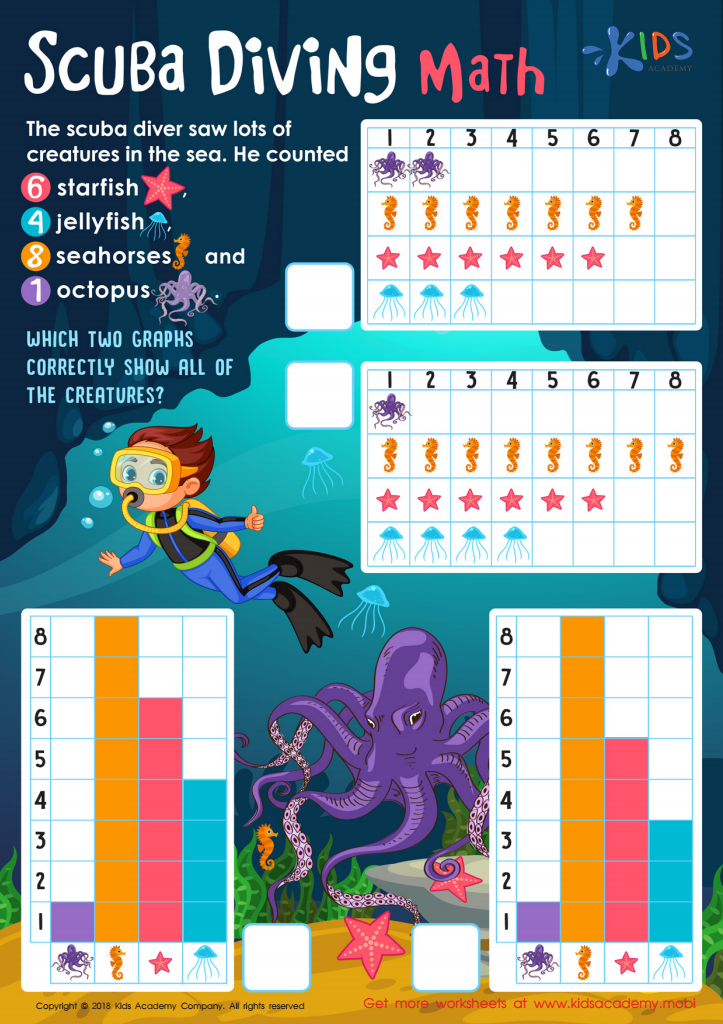
Scuba Diving Math Worksheet
 Assign to My Students
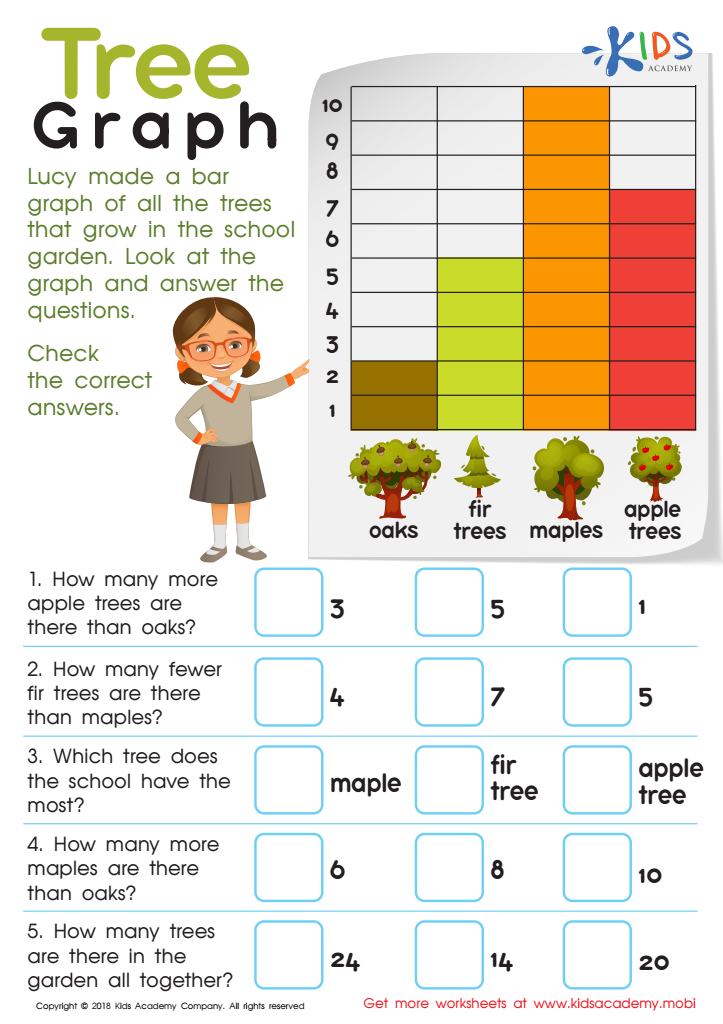
Tree Graph Worksheet
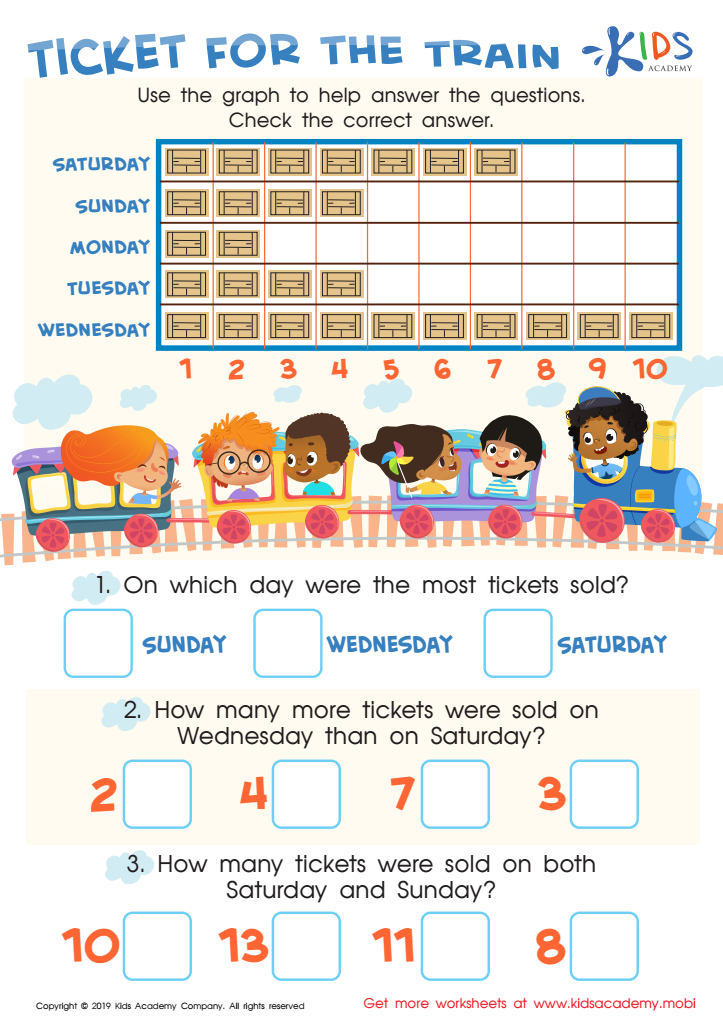
Ticket for the Train Worksheet
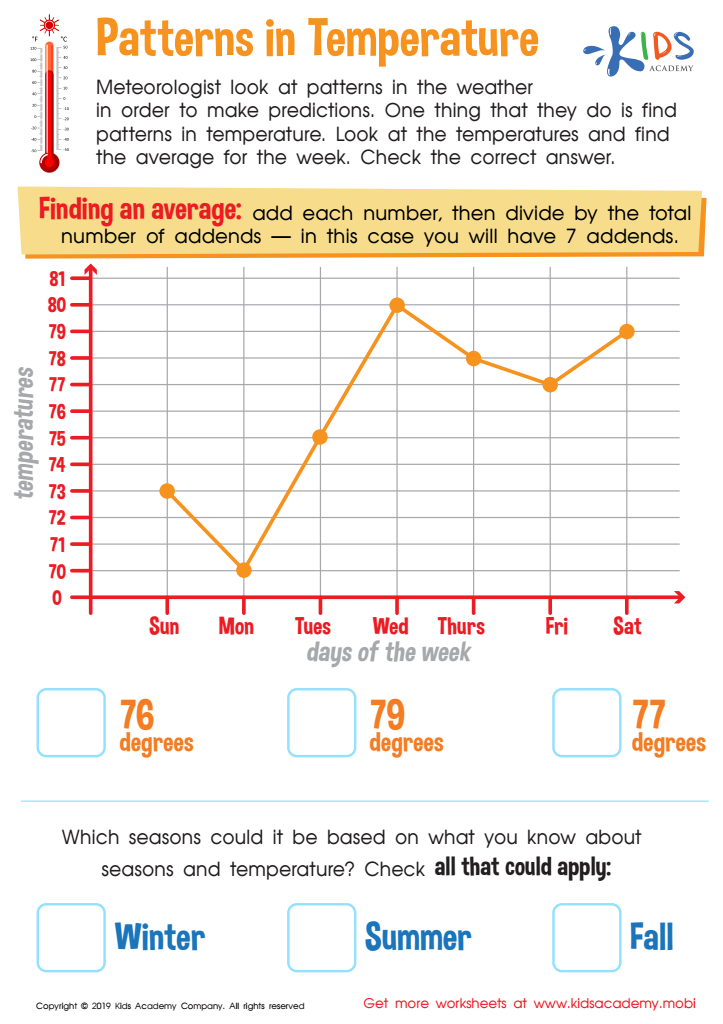
Patterns in Temperature Worksheet








Problem-solving skills are fundamental to a child's cognitive development and play a critical role in their ability to navigate challenges both in and out of the classroom. For children ages 4-8, these skills are rapidly evolving, and understanding their progress can impact future academic and social success. Parents and teachers should care about Problem-Solving Skills Graphs for this age group because they provide a visual representation of a child’s cognitive development over time. These graphs highlight a child’s strengths and areas needing improvement, enabling targeted interventions and support.
For teachers, such graphs are invaluable in tailoring instruction to meet individual student needs, making lessons more effective. They can identify which children need more hands-on activities, those who thrive in collaborative settings, and those who might benefit from additional resources.
Parents, on the other hand, gain insights into their child’s developmental milestones, helping them understand how to support learning at home. Engaging in activities that promote critical thinking, creativity, and persistence can further enhance problem-solving skills.
Overall, Problem-Solving Skills Graphs empower teachers and parents with data-driven information, fostering a cooperative approach to support the child’s growth. By focusing on these vital skills early, adults can contribute to developing resilient, capable young learners ready to tackle more complex challenges in the future.








