Basic arithmetic practice Numbers Worksheets for Ages 4-8
5 filtered results
-
From - To
Discover our engaging Basic Arithmetic Practice Worksheets designed for children aged 4-8! These interactive resources help young learners master essential math skills through a variety of fun activities. Each worksheet focuses on foundational concepts including addition, subtraction, and number recognition, making math enjoyable and accessible. Our printable materials encourage hands-on learning while reinforcing important early math skills necessary for future success. Perfect for classroom use or home practice, these worksheets promote confidence and proficiency in arithmetic. Explore our extensive collection today and support your child's journey to becoming a math whiz! Get started with Basic Arithmetic practice and make learning exciting!
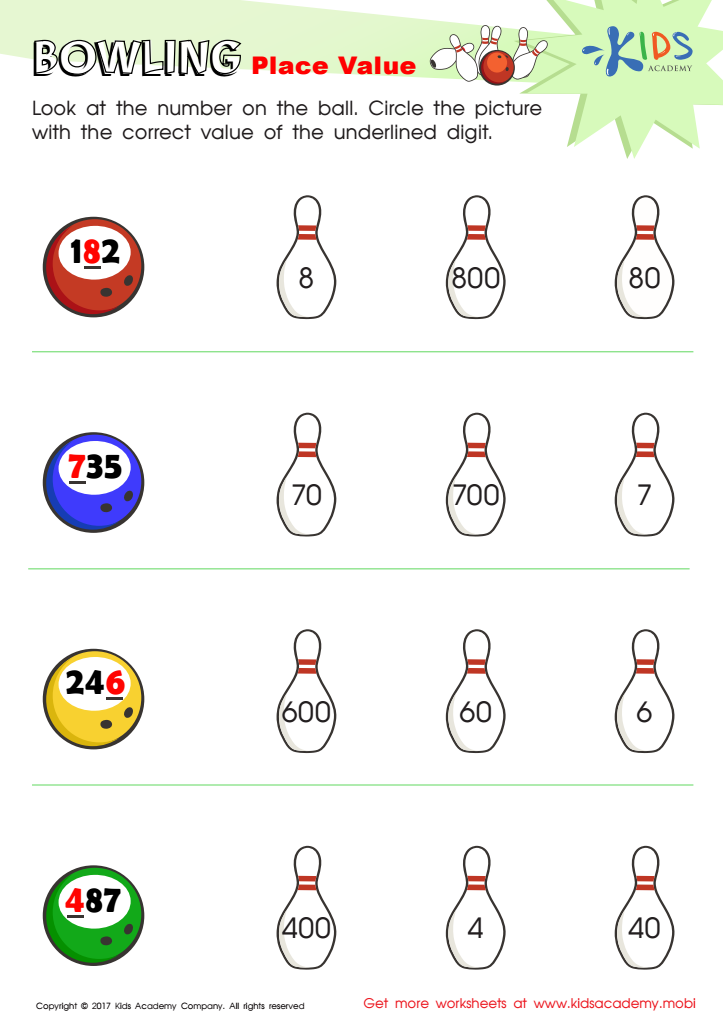
Place Value Worksheet
 Assign to My Students
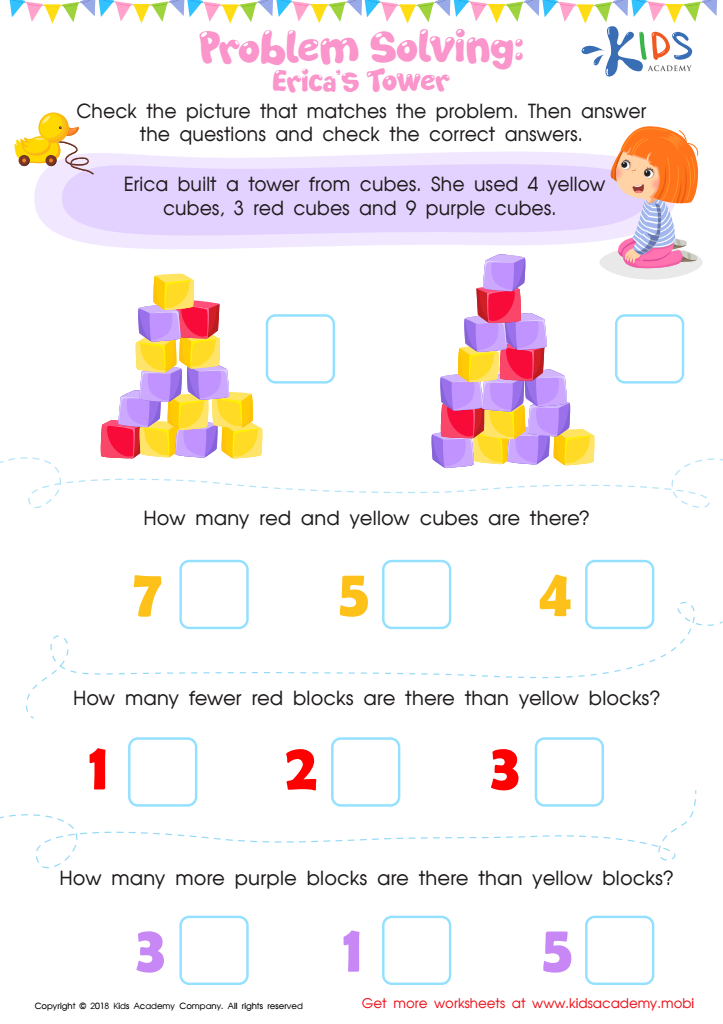
Problem Solving: Erica's Tower Worksheet
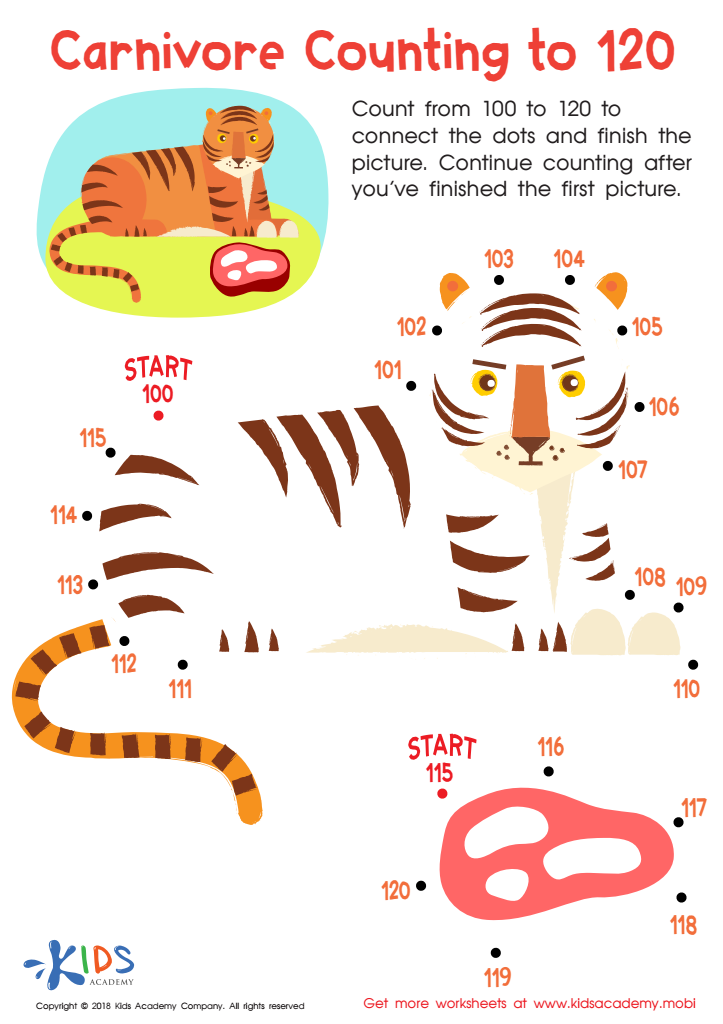
Carnivore Counting to 120 Worksheet
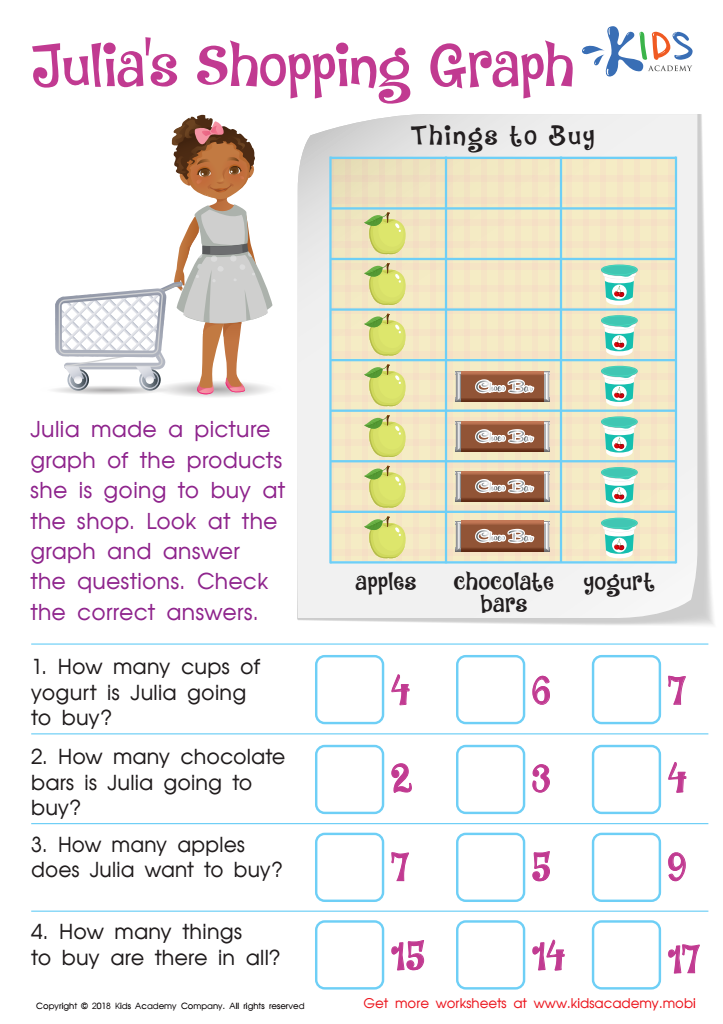
Julia's Shopping Graph Worksheet
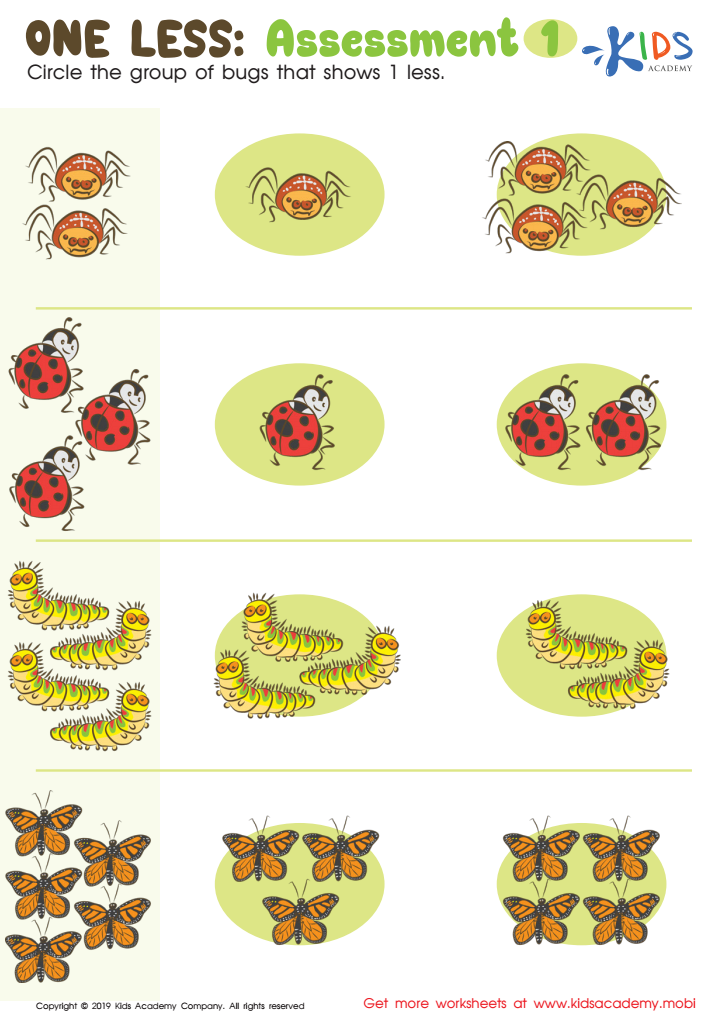
One Less: Assessment 1 Worksheet








Basic arithmetic practice for children aged 4-8 is crucial for several reasons. First, this foundational stage sets the groundwork for a strong mathematical understanding. At this age, children are developing essential cognitive skills, and engaging in simple arithmetic helps with critical thinking, problem-solving, and logical reasoning, which are fundamental in everyday life.
Moreover, early exposure to numbers enhances numerical fluency and confidence. When children practice basic arithmetic, such as addition and subtraction, they become more comfortable with numbers, which fosters a positive attitude towards math. This positivity is important, as a child's early math experiences can influence their future attitudes and performance in the subject.
Additionally, reinforcing these skills at home or in the classroom creates a supportive learning environment that encourages curiosity and exploration. Parents and teachers can use various engaging methods—like games, songs, and visual aids—to make arithmetic fun and accessible. By prioritizing these early math skills, caregivers can help children build a solid mathematical foundation that benefits them academically, socially, and emotionally throughout their education, preparing them for more complex concepts as they progress.








