Comparing quantities Numbers Worksheets for Ages 4-8
4 filtered results
-
From - To
Enhance your child's math skills with our "Comparing Quantities Numbers Worksheets" designed for ages 4-8. These engaging worksheets help young learners grasp the concept of comparison through fun activities and colorful illustrations. Students practice evaluating numbers, understanding greater than, less than, and equal to concepts, and recognizing numerical differences. Our worksheets cater to various proficiency levels, ensuring a solid foundation in early math skills. Boost your child's confidence and foster a love for learning with these tailored worksheets that make math enjoyable and accessible. Ideal for both classroom use and homeschooling environments.
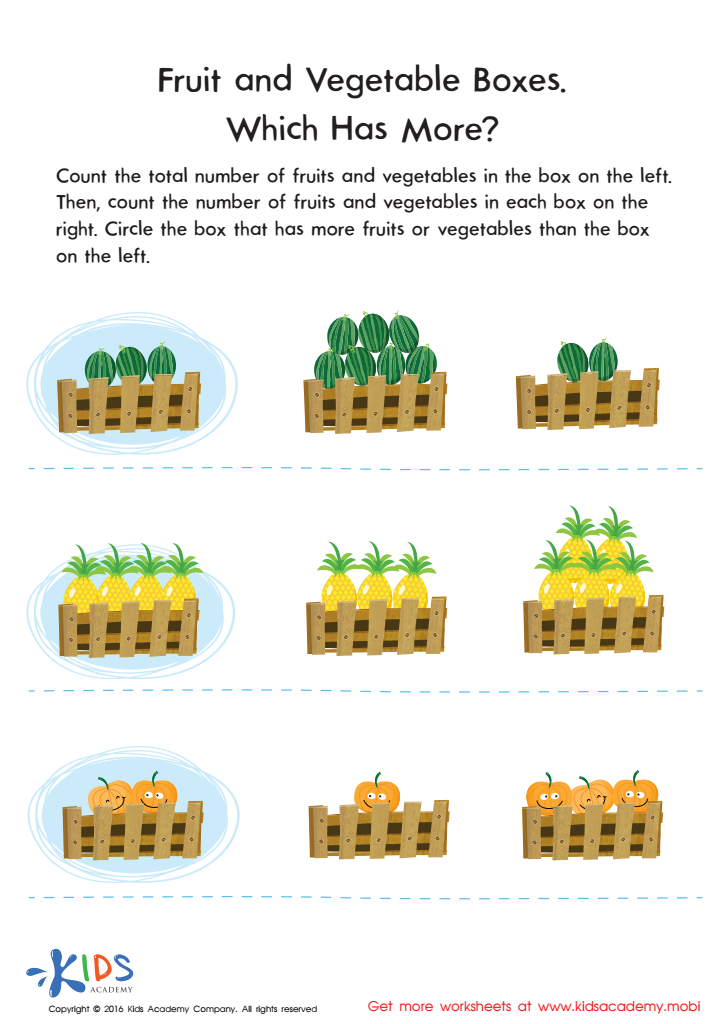
Which Has More? Size Worksheet
 Assign to My Students
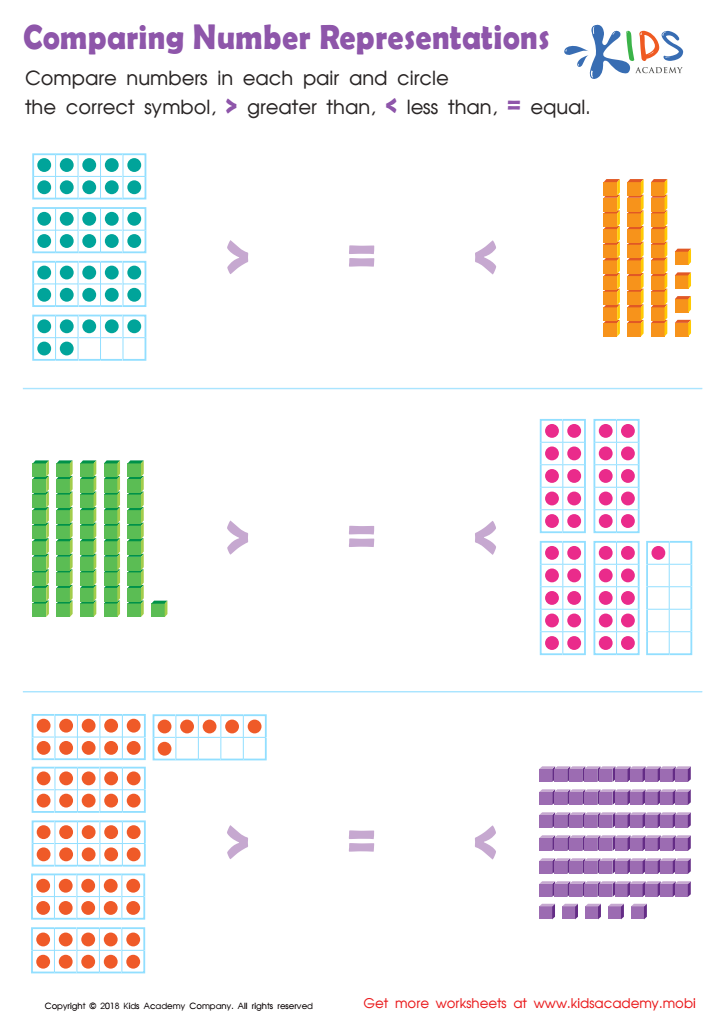
Comparing Number Representations Worksheet
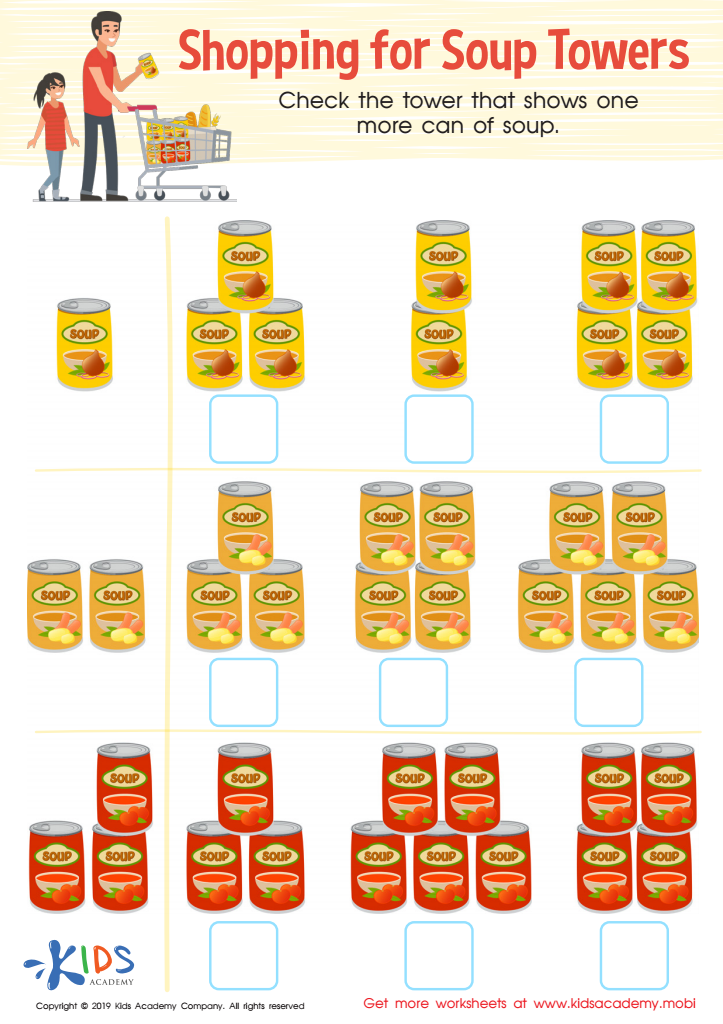
Soup Towers Worksheet
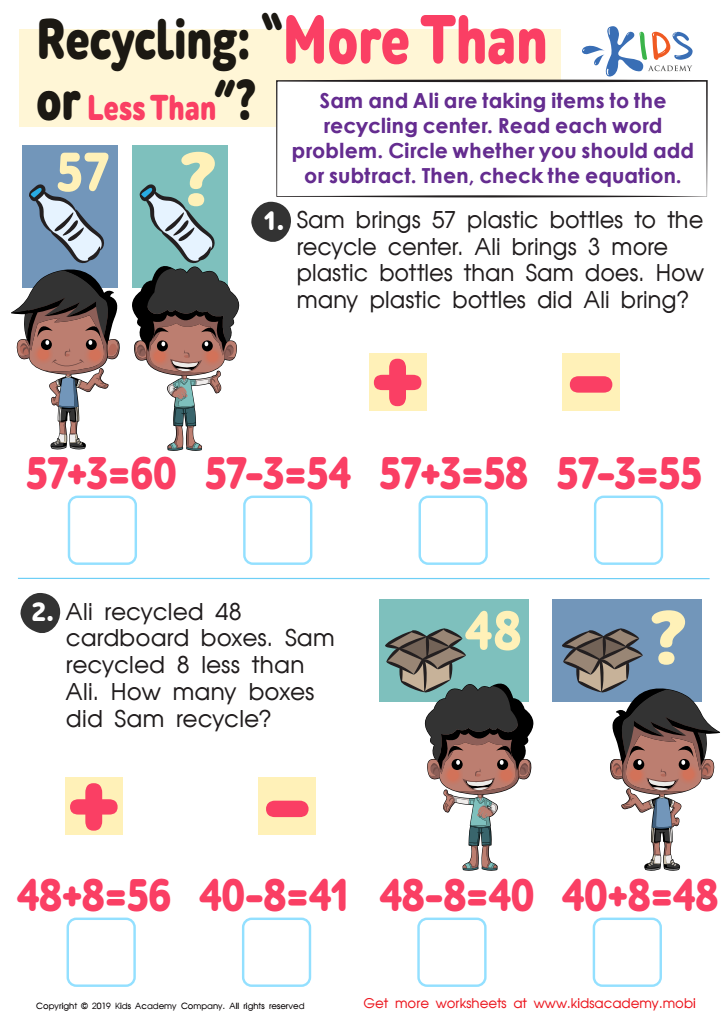
Recycling - More or Less Worksheet








Comparing quantities and numbers is a fundamental early math skill that sets the foundation for a child's cognitive and academic growth. For young children, typically ages 4-8, understanding how to compare quantities helps build crucial critical thinking and problem-solving abilities. It enables kids to make sense of the world around them by understanding concepts like more or less, bigger or smaller, and equality or difference, which play a significant part in everyday decision-making.
For parents and teachers, fostering this skill is essential because it aids children in grasping more complex mathematical concepts later on, such as addition, subtraction, and measurement. When children can compare quantities effectively, they develop number sense, which is the intuition about numbers and their relationships. This foundational competency is critical because it influences future success in more advanced math and science subjects.
Moreover, engaging in activities that compare quantities can be fun and interactive. Activities like sorting objects, estimating, or even games that involve counting and measuring are not only educational but also engaging for young minds. By prioritizing this skill in early education, parents and teachers can help build a solid, lifelong mathematical foundation. This practice nurtures analytical thought, inevitably contributing to a child's overall intellectual growth and academic achievement.








